Widely used pesticides have been linked to a 150% higher cancer risk according to groundbreaking research published in Nature Health in April 2026. Researchers identified subtle biological changes from everyday environmental exposure that emerge long before diagnosis. This sweeping study reshapes scientific thinking and exposes a silent threat to millions of Americans in agriculture and beyond.
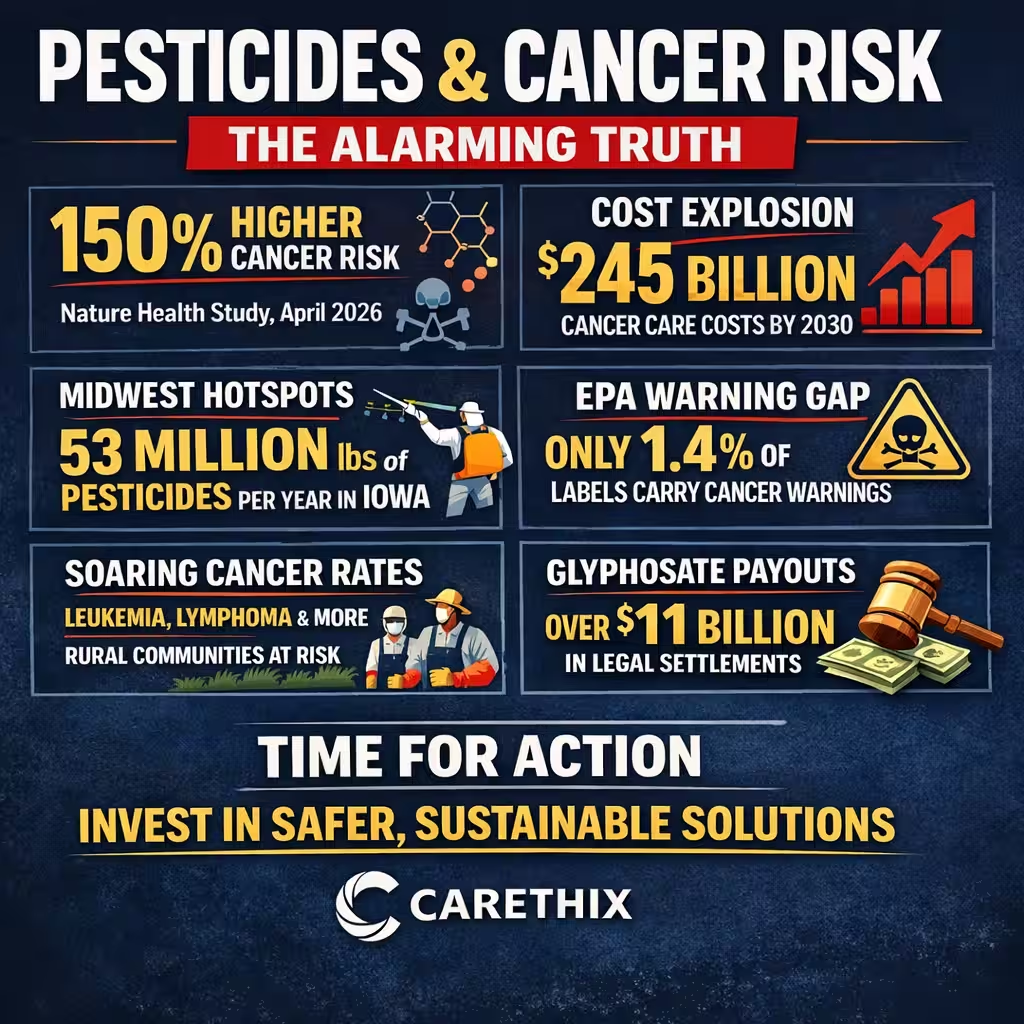
At Carethix, we see this as a defining moment for healthcare and business leaders. 60% of the top 500 U.S. counties with the highest pesticide use report cancer rates above the national average of 460 cases per 100,000 people. Midwest states like Iowa, applying 53 million pounds of pesticides yearly, now face some of the fastest-rising cancer incidences in the nation.
The pain point strikes hard at operational stability and human lives. Agricultural workers and nearby communities bear disproportionate burdens with elevated risks for leukemia, non-Hodgkin lymphoma, bladder, colon, lung, and pancreatic cancers. These links rival smoking in impact for certain types, per 2024-2026 analyses, driving up national cancer care projections beyond 245 billion dollars by 2030.
Yet solutions exist that transform this crisis into competitive advantage. Businesses adopting targeted alternatives can slash exposure while tapping into surging demand for safer practices. Our analysis at Carethix reveals how proactive shifts not only protect health but also deliver measurable financial returns through reduced liabilities and new market access.
Recent EPA data underscores the scale. Over one-third of 570 classified pesticide chemicals qualify as possible or likely human carcinogens. Only 1.4% of product labels carry cancer warnings despite agency findings of risks as high as one in 100 exposed individuals. This regulatory shortfall amplifies hidden costs for employers and insurers.
Cancer now ranks as the top driver of U.S. medical claims with 2026 healthcare inflation projected at 9.2% in North America. Employers face double-digit spikes in premiums tied to early-onset cases rising among those under 40. The 2026 Nature Health spatial exposomics model confirms pesticide mixtures correlate strongly with cancer incidence at a national scale.
Carethix views this case study as a call to action for resilient strategy. Forward-thinking firms in agribusiness and healthcare can lead by integrating data-driven interventions. The result is lower long-term costs and stronger stakeholder trust in an era of heightened scrutiny.
Carethix Critique: Exposing Gaps in Pesticide Regulation and Health Risks
The documented 150% elevation in cancer risk directly linked to pesticide exposure highlights profound systemic shortcomings that Carethix is obligated to address. Daily exposure via consumption of food, water, and air results in cumulative biological damage, a consequence largely disregarded by antiquated regulatory oversight. This regulatory deficit renders businesses susceptible to litigation, attrition of skilled personnel, and increasing liabilities stemming from insurance claims.
EPA approvals highlight glaring inconsistencies in risk management. Despite 35% of reviewed pesticides being classified as possible or likely carcinogens, only a small fraction—1.4% of 4,919 labels—actually includes cancer warnings for these likely hazardous substances. Just 1.1% warn for possible links despite permitted risks reaching one in 100 people exposed.
Pain points compound for agricultural communities and downstream industries. Farmworkers experience disproportionate impacts with studies showing 25 to 56% higher kidney cancer odds in exposed groups. Broader populations face residue drift and runoff that elevate leukemia and lymphoma rates comparable to smoking in high-use regions.
Regulatory gaps widen economic exposure for your operations. Glyphosate-related settlements have already exceeded 11 billion dollars in payouts while legacy chemicals persist in the environment. Healthcare systems absorb billions in avoidable costs as cancer drives 2026 medical inflation to 9.6% in the United States.
At Carethix we criticize the slow pace of enforcement and warning mandates. Current frameworks prioritize single-chemical assessments over real-world mixtures mapped in the 2026 Nature Health study. This approach underestimates chronic low-level exposures that trigger pre-diagnostic changes years before tumors appear.
Business risks extend beyond direct health claims to supply chain disruptions and reputational damage. Consumers increasingly demand transparency with organic sales hitting $76.6 billion in 2025. Companies slow to adapt face market share erosion and higher compliance costs under tightening state rules.
Critics demand urgent accountability from regulators and industry. Without addressing these voids your organization risks financial hits from rising premiums and litigation. Carethix urges immediate evaluation of exposure profiles to safeguard both people and profits.
| Related Analysis: 1700 Leptospirosis Risk: Solutions for Outbreak Management 120K ACA Drop Crisis: Solutions for Affordable Coverage Ballmer’s $110M Fund: Solutions For Workforce Mental Health |
Solutions: Strategic Business Approaches to Combat Pesticide-Related Cancer Risks
Businesses can neutralize the 150% cancer risk through targeted investments in safer alternatives and operational redesign. The biopesticide market is a proven growth area, projected to nearly double from $8.94 billion in 2025 to $17.68 billion by 2030, reflecting a 14.6% CAGR. North America holds 39.6% share and delivers residue-free protection that meets consumer demand while cutting synthetic reliance.
Precision agriculture tools reduce application volumes by up to 50% through data analytics and targeted spraying. Your farm or supply chain gains efficiency with lower input costs and documented exposure reductions that appeal to insurers. Integration with drone monitoring and soil sensors provides verifiable metrics for compliance and marketing claims.
Transitioning select acreage to organic practices unlocks premium pricing in a U.S. market that reached 70.1 billion dollars for food sales in 2025. Growth hit 6.9% outpacing conventional food by three times. Early movers capture loyalty from health-conscious buyers and secure contracts with retailers prioritizing pesticide-free sourcing.
Corporate wellness programs tailored for agricultural employees deliver measurable ROI. Routine biomonitoring and protective equipment upgrades lower incidence rates and absenteeism. Pairing these with telehealth cancer screenings catches issues early and trims long-term treatment expenses projected to surge with 9.2% healthcare inflation.
Insurance innovation provides another financial lever. Carriers now offer discounted premiums for verified low-pesticide operations backed by third-party audits. Your business can bundle this with liability coverage that shields against future claims tied to the Nature Health findings on mixture risks.
Collaborative research and development initiatives expedite the creation of bespoke solutions. Partnerships with biotechnology organizations result in microbial and biochemical products specifically formulated to address regional pest challenges. These offerings achieve superior margins within the biopesticides sector, which is expanding at an annual rate of 15%, while simultaneously establishing the brand as a leader in sustainable practices.
Policy advocacy at state and federal levels shapes favorable regulations. Supporting stricter warning labels and mixture assessments reduces industry-wide liability. Your voice in trade associations influences funding for alternatives and creates level playing fields that reward early adopters.
Supply chain transparency builds consumer trust and revenue. Blockchain tracking of pesticide-free batches commands 20 to 30% price uplifts in organic segments. Retail partnerships expand distribution and hedge against regulatory shifts expected in 2026.
Financial modeling at Carethix shows these solutions pay for themselves within two to three years. Reduced healthcare claims, premium pricing, and efficiency gains offset transition costs. Businesses that act now secure competitive edges in a market shifting rapidly toward safer practices.
Prevention: Proactive Measures to Avert Future Pesticide Health Crises
Preventing escalation of the 150% cancer link requires layered defenses starting with exposure monitoring. Deploy affordable sensor networks across fields and processing facilities to track real-time pesticide drift and residues. Data feeds into dashboards that trigger alerts and guide immediate adjustments keeping levels below EPA benchmarks.
Employee education programs build lasting behavioral change. Mandatory training on protective gear and application timing cuts accidental exposures by documented margins in Agricultural Health Study cohorts. Annual refreshers reinforced by mobile apps ensure compliance and empower workers to report concerns early.
Initial implementation of crop rotation and integrated pest management significantly reduces reliance on chemical treatments. The strategic integration of beneficial insects, cover crops, and resistant crop varieties contributes to a 30 to 40% decrease in the necessity for pesticides. Your operation maintains yields while lowering environmental load and future regulatory exposure.
Water and soil testing protocols catch contamination before it spreads. Quarterly sampling aligned with USGS guidelines identifies hotspots and informs remediation. Preventive filtration systems in irrigation protect downstream communities and shield your business from liability claims.
Community outreach strengthens local resilience. Partner with rural clinics to offer free screenings and informational sessions on early cancer signs. These initiatives improve workforce health, reduce absenteeism, and enhance your reputation as a responsible employer.
Technology adoption accelerates prevention at scale. AI-driven weather models predict optimal low-risk application windows. Satellite imagery monitors field health to preempt pest surges without blanket spraying. Such tools deliver cost savings and align with 2026 sustainability mandates.
Supply chain audits enforce standards upstream and downstream. Require vendors to certify biopesticide use or organic compliance through traceable documentation. Third-party verification protects your brand and creates a network effect that elevates industry norms.
Government collaboration unlocks resources for broader impact. Engage with USDA and EPA pilot programs funding precision equipment and training grants. These partnerships offset capital expenses while shaping policies that favor preventive innovators.
Long-term R&D investment secures future-proof operations. Fund development of RNA-based and peptide biopesticides that target specific threats without broad toxicity. Early involvement yields intellectual property advantages in a market projected to reach $36 billion globally by 2035.
At Carethix we emphasize that prevention today averts multimillion-dollar crises tomorrow. Consistent execution across these steps builds operational resilience and positions your business ahead of evolving health and environmental expectations.
Carethix Key Takeaways: Turning Pesticide Risks into Business Opportunities
The 150% cancer risk from pesticides is not an abstract headline but a direct threat to your bottom line and workforce vitality. Carethix believes inaction equals lost market share and ballooning costs in an era of 9.6% healthcare inflation and surging organic demand. Smart leaders view this moment as the catalyst for transformation rather than mere compliance.
You hold the power to lead by embracing biopesticides, precision tools, and organic transitions that already deliver double-digit growth. These moves slash liabilities, command premium prices, and attract talent seeking ethical employers. The data is clear: early adopters in high-use regions are already reporting lower insurance premiums and stronger consumer loyalty.
At Carethix, our perspective is direct yet optimistic. We anticipate that regulatory discrepancies will diminish and consumer examination will escalate. Companies that delay action risk becoming irrelevant, while those that are proactive stand to generate substantial new revenue. It is imperative to prioritize preventive measures and solutions now to safeguard well-being, financial stability, and corporate reputation.
Reference – Hidden Danger: Widely Used Pesticides Linked to 150% Higher Cancer Risk