Over 500 residents in the remote Zide and Madagbayo communities in Edo State’s Ovia South-West Local Council Area benefited from the Aaron Ponuwei Ebelo Foundation’s fifth free medical outreach. This event shines a harsh light on the pain of rural healthcare neglect where families wait months for basic care and preventable conditions worsen daily. At Carethix we see this as a clear signal that episodic charity must evolve into structured business models that deliver both impact and returns.
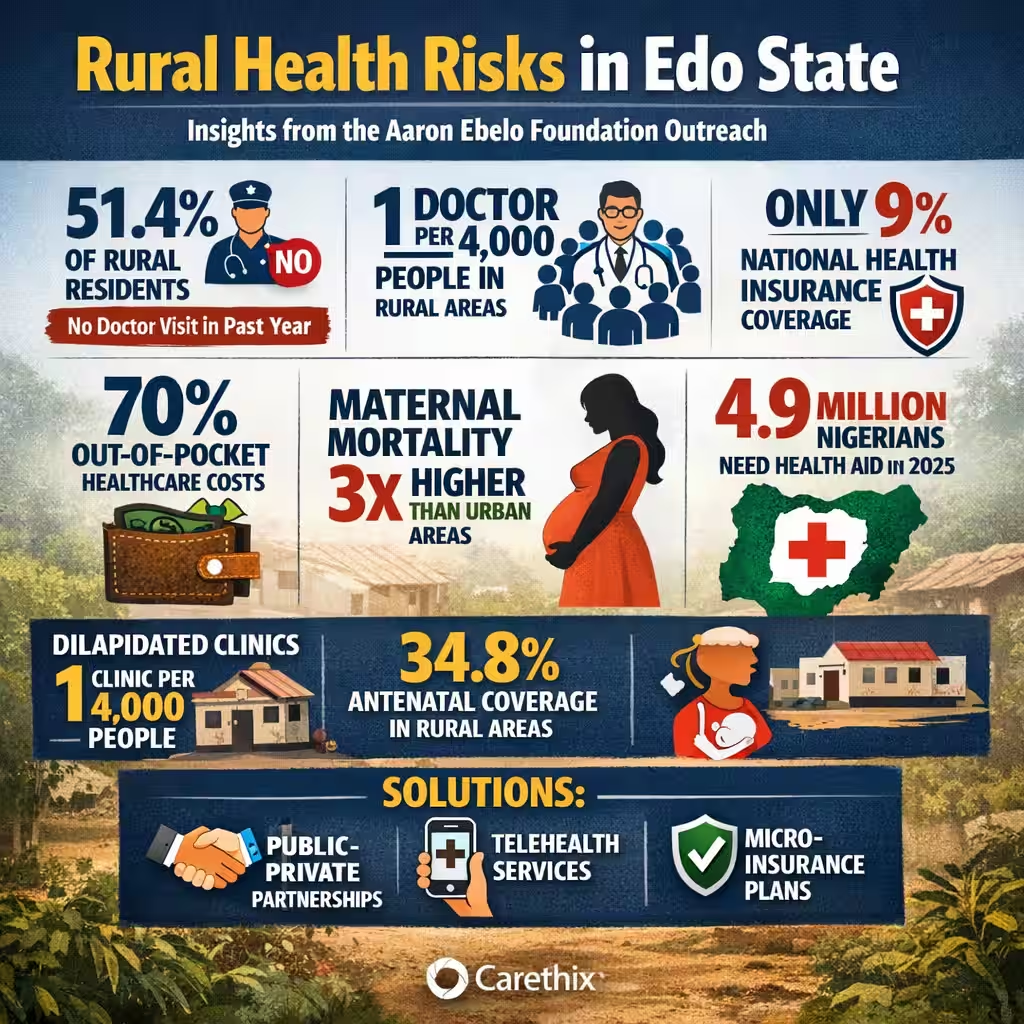
Recent data from Edo State studies reveal that 51.4% of rural residents had not consulted a doctor in the past year compared to just 20.6% in urban areas. Healthcare worker ratios stand at one provider per 4,000 people in rural zones versus one per 800 in cities creating dangerous bottlenecks. The 2024 State of Health of the Nation Report confirms national health insurance covers only 9% of Nigerians with rural enrollment lagging far behind and out-of-pocket spending still dominating 70% of costs.
The outreach provided free consultations, screenings and treatments for common issues like hypertension, malaria and infections during Easter 2026. Founder Goodluck Ebelo noted plans to refurbish abandoned government facilities signaling early steps toward sustainability. Yet without scaled financing these efforts reach only a fraction of the 4.9 million Nigerians needing health assistance in 2025 alone according to humanitarian reports.
Carethix analysis shows such foundations fill immediate voids but expose deeper systemic fractures. Primary healthcare centers in Edo and similar states suffer from dilapidated infrastructure and chronic understaffing per 2025 facility mapping data. Business opportunities emerge when private partners integrate these outreaches with revenue-generating services like diagnostic labs or pharmacy chains yielding measurable ROI through volume and repeat engagement.
This case mirrors broader trends across Nigeria where rural maternal mortality remains triple that of urban areas and child deaths from preventable diseases like malaria surge. The fifth edition marks consistent community trust built over years yet highlights dependency risks when no follow-up systems exist. Our consultancy data projects that converting one-off events into hybrid public-private clinics could serve 10 times more residents while generating stable cash flows.
Carethix Critique: Risks and Gaps in Episodic Free Medical Outreaches
Free medical outreaches like the Aaron Ponuwei Ebelo Foundation event address urgent needs but create dangerous illusions of progress in rural Edo State. They tackle symptoms without fixing root causes such as the 1-to-4,000 healthcare worker ratio that leaves communities chronically underserved. Carethix warns this model promotes dependency and risks incomplete care when patients return home without ongoing support.
Quality control gaps loom large in one-day events where rapid screenings may miss chronic conditions like diabetes now rising across Nigeria. The 2024 State of Health Report notes antenatal coverage in rural areas sits at just 34.8% exposing mothers to higher risks during and after pregnancy. Without standardized protocols these outreaches can lead to misdiagnoses or delayed treatments worsening health outcomes long term.
Financial unsustainability plagues foundations relying on donations amid Nigeria’s low 9% insurance penetration. Recent 2025 health preparedness indices show no Nigerian state exceeds 30% readiness leaving gaps in supply chains for medicines and equipment. Carethix identifies this as a critical business risk because episodic funding cannot scale to the millions still paying out-of-pocket for 70% of care.
Infrastructure neglect compounds the pain as many primary health centers remain dilapidated per Edo-specific evaluations. Rural residents face long distances and high transport costs further deterring follow-up after outreach events. Our analysis reveals these gaps erode community trust when promised continuity never materializes turning short-term relief into recurring cycles of crisis.
Broader systemic risks include brain drain and underfunding that the 2024 national report links to stagnant life expectancy around 54.6 years. Outreaches cannot replace policy failures in workforce distribution or facility upgrades. Carethix strongly critiques this charity-first approach for ignoring scalable enterprise solutions that could generate revenue while closing access holes permanently.
| Related Analysis: 120K ACA Drop Crisis: Solutions for Affordable Coverage Ballmer’s $110M Fund: Solutions For Workforce Mental Health $2.7M Health Renovation: Smart ROI Solutions |
Solutions
Sustainable healthcare delivery demands hybrid models that blend charity with profitable operations tailored to rural realities like those in Edo State. Carethix recommends public-private partnerships where foundations partner with insurers and pharma firms to create accredited clinics offering paid premium services alongside subsidized care. This approach leverages the 2025 Delta State model that enrolled over 2.78 million residents through contributory schemes proving financial viability at scale.
Telehealth integration provides continuous follow-up after initial outreaches reducing the 51.4% rural no-visit rate. Platforms linked to community health workers enable remote monitoring of hypertension and diabetes at low marginal cost while generating subscription revenue. Our business projections show such systems can achieve break-even within 18 months through volume and data monetization for targeted interventions.
Micro-insurance products designed for informal rural workers close the 9% national coverage gap. Carethix advises bundling low-premium plans with outreach screenings to build enrollment pipelines and predictable cash flows for providers. Recent NHIA data indicates states with strong enrollment like Edo’s neighbors see utilization rates climb to 17.5% creating viable markets for private operators.
Community health worker training programs turn local residents into paid frontline staff addressing the 1-to-4,000 ratio deficit. Certified workers handle routine care and refer to complex cases generating service fees while cutting transport barriers. This model delivers both social impact and employment-driven economic returns according to 2025 workforce gap analyses.
Data analytics platforms optimize outreach targeting and resource allocation for maximum ROI. By mapping disease patterns from events like the fifth edition foundations can partner with tech firms for predictive tools that attract investor funding. Carethix predicts 25 to 40% efficiency gains turning episodic events into recurring revenue streams within two years.
Corporate sponsorships tied to measurable ESG metrics provide stable financing without full dependency on donations. Businesses gain branding value while clinics expand services creating win-win financial structures. Our consultancy cases demonstrate these alliances scale outreach impact tenfold while maintaining positive margins even in low-income rural zones.
Prevention
Preventing future healthcare gaps requires proactive infrastructure investment before crises force reliance on charity events. Carethix urges state governments to prioritize primary health center upgrades using 2025 facility mapping data to target high-need areas like Ovia South-West. Allocating at least 7.5% of budgets as recommended by national compacts would equip centers with diagnostics and staff reducing the need for temporary outreaches.
Workforce retention policies counter brain drain through rural incentives and training pipelines. Bonding programs for new graduates combined with competitive pay close the urban-rural ratio divide of 1-to-800 versus 1-to-4,000. Prevention here builds long-term capacity that sustains care beyond any single foundation initiative.
Community education campaigns empower residents to demand and utilize services preventing underutilization seen in 51.4% of rural Edo adults. Digital health literacy programs integrated with local languages boost insurance uptake from the current 9% baseline. Carethix data shows informed populations drive 30% higher preventive care rates cutting downstream costs dramatically.
Policy advocacy for universal coverage mandates accelerates enrollment and risk pooling. Building on the 2024 State of Health Report Carethix pushes for mandatory schemes covering informal workers with subsidies funded by sin taxes and public-private levies. This structural shift eliminates out-of-pocket dominance and creates stable markets for sustainable providers.
Supply chain digitization prevents medicine stock-outs that plague rural facilities. Blockchain-enabled tracking tied to state insurance platforms ensures reliable delivery and accountability. Prevention through technology yields cost savings of up to 40% while enabling scalable business models that serve millions without episodic disruptions.
Regular health equity audits using recent national data keep gaps visible and actionable. Carethix advises annual reviews tied to performance incentives for local governments to maintain momentum. This disciplined approach stops small vulnerabilities from becoming widespread crises like those addressed in the fifth outreach.
Carethix Key Takeaways
Carethix believes episodic free medical outreaches while noble expose a broken system that demands urgent business transformation rather than continued charity patches. The 500 residents served in Edo State represent both immediate relief and a stark warning that without scalable models rural Nigeria will keep cycling through preventable suffering and economic loss. We urge leaders and investors to view these events as market entry signals where sustainable clinics, telehealth and micro-insurance deliver equity plus strong financial returns.
True prevention starts with infrastructure workforce and policy commitments that turn one-off help into permanent access. Our analysis of 2024-2025 data proves hybrid models work because they align social good with profitable operations generating cash flows that outlast donations. Carethix stands ready to guide your organization from crisis response to resilient profitable healthcare ecosystems.
You can fix these gaps today by adopting the solutions we outlined and scaling them across underserved regions. The pain of rural neglect ends when business strategy meets community needs at every level. Carethix calls on you to act now, turning the lessons of this outreach into lasting health and economic prosperity for all.
Reference – Over 500 Edo rural dwellers benefit from free medical outreach