81% AI adoption is reshaping healthcare risks and workflows: strengthen your compliance, efficiency, and cash flow.
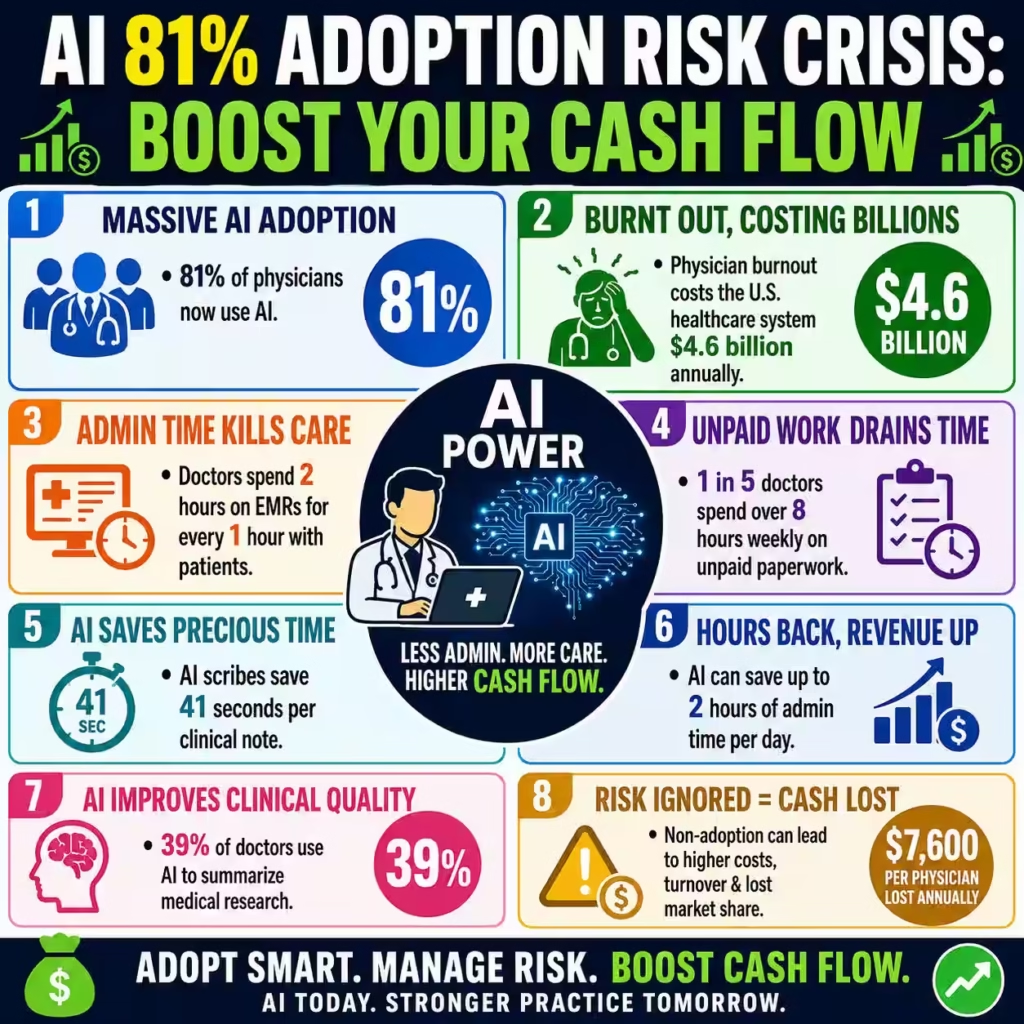
OpenAI has completely disrupted the highly lucrative medical technology market by making its advanced ChatGPT for Clinicians platform entirely free for verified United States physicians, pharmacists, physician assistants, and nurse practitioners. This aggressive strategic launch squarely targets the most stubborn healthcare business bottleneck in the modern industry, where highly skilled clinical specialists face overwhelming administrative workloads alongside severely limited direct patient care time. Validating this urgent market shift toward enterprise automation, the American Medical Association officially reported in March 2026 that an astonishing 81% of physicians now actively use artificial intelligence, drastically doubling the 38% digital adoption rate previously recorded in 2023.
This rapid technological expansion necessitates a significant operational paradigm shift in the functioning of healthcare organizations to ensure sustained corporate profitability within a highly competitive medical landscape. The newly launched clinical workspace specifically tackles high-volume administrative tasks like rapid evidence review, complex clinical documentation, deep medical research, and tedious prior authorization financial workflows. Consequently, hospital administrators can immediately leverage these free generative natural language processing algorithms to directly eliminate the severe cognitive overload that currently plagues their expensive, highly trained medical staff.
The direct financial implications of this sudden technological shift are absolutely staggering for the modern United States healthcare economy and independent medical practices alike. Clinical burnout currently costs the national healthcare system a massive $4.6 billion annually, driven almost entirely by sudden physician turnover and drastically reduced clinical working hours across major hospital networks. This systemic operational failure translates to an annual financial drain of approximately $7,600 per employed physician, severely impacting overall corporate profit margins and crippling long-term enterprise growth strategies.
Recent real-world statistical data clearly reveals the exact source of this systemic operational failure across both rural medical facilities and massive urban healthcare conglomerates. According to a highly detailed 2025 Peterson Health Technology Institute analytical report, physicians currently spend nearly two full hours in electronic medical record systems for every single hour of direct patient care. Furthermore, one in five clinical specialists spends over eight hours per week executing unpaid, tedious documentation tasks entirely outside of their regular, legally contracted working hours.
This unpaid administrative burden, commonly referred to as pajama time, creates a highly toxic corporate work environment that rapidly accelerates expensive clinical staff attrition and destroys organizational morale. By aggressively deploying these free artificial intelligence tools, medical practices can finally automate the severely burdensome task of comprehensive clinical documentation and complex billing code generation. A recent, highly acclaimed New England Journal of Medicine artificial intelligence study scientifically proved that digital machine learning scribes can successfully save physicians an average of 41 seconds per individual clinical note.
While 41 seconds might initially sound statistically minimal to corporate executives, this efficiency metric compounds massively across a standard daily schedule of twenty to thirty complex patient encounters. High-authority B2B business analysis indicates that comprehensive artificial intelligence adoption can realistically save medical providers up to two full hours of tedious administrative time every single operational day. This newly reclaimed clinical time directly translates into increased patient appointment volume, significantly better diagnostic accuracy, and massively higher billing revenue for your expanding healthcare enterprise.
The strategic enterprise integration of advanced natural language processing tools fundamentally shifts the operational focus back to generating actual positive patient outcomes rather than merely satisfying bureaucratic compliance metrics. Currently, an impressive 39% of practicing physicians actively use these advanced algorithms specifically to accurately summarize complex medical research and constantly changing global clinical standards. Meanwhile, nearly 30% of doctors now actively rely on these powerful digital platforms to rapidly generate safe discharge instructions and highly detailed, personalized clinical care plans for complex chronic diseases.
As a dedicated healthcare business analyst, I firmly view this entirely free OpenAI clinical platform as a massive operational catalyst for modern medical facilities looking to rapidly scale their operations. Clinical administrators and chief medical officers must act immediately to safely integrate these generative digital models into their daily enterprise workflows to remain financially competitive in a tight labor market. Failing to adopt these readily available administrative technology solutions will simply allow your market competitors to achieve higher corporate profitability and secure superior medical talent retention.
Carethix Critique: Assessing AI Risks and Strategic Gaps
Despite the undeniable operational financial benefits of free artificial intelligence tools, Carethix identifies several severe corporate risks that require immediate, highly focused executive leadership attention. The massive, unprecedented 81% digital adoption rate among frontline physicians creates a terrifying corporate vulnerability regarding patient data privacy and strict federal regulatory compliance standards. If doctors actively input protected health information into public generative models without utilizing strict enterprise-level cryptographic safeguards, hospital networks face absolutely catastrophic financial penalties under current HIPAA privacy laws.
Another major strategic operational gap lies in the widespread, dangerous lack of standardized algorithmic corporate governance across independent medical practices and massive regional health systems. While OpenAI provides a dedicated, specialized clinical workspace, individual physicians often lack the technical data science expertise required to properly validate the absolute accuracy of machine-generated medical research. Relying blindly on unverified, hallucination-prone algorithms for complex diagnostic assistance or legally binding referral letters introduces a massive layer of clinical malpractice liability that hospitals currently cannot financially survive.
The rapid, unmanaged enterprise deployment of these digital workflow tools also threatens to severely erode foundational, life-saving clinical skills among newly trained, impressionable medical residents. Current American Medical Association survey data explicitly reveals that 70% of practicing physicians are deeply concerned that modern medical students will completely lose their independent clinical judgment due to heavy artificial intelligence reliance. If our future doctors cannot independently and manually evaluate complex medical evidence, the entire national healthcare system risks a catastrophic, irreversible drop in actual clinical competence and patient safety.
Furthermore, the corporate promise of permanently solving clinical burnout simply by accelerating digital documentation speeds fundamentally ignores the deeply entrenched root cause of the initial administrative problem. While saving a verified 41 seconds per clinical note is undoubtedly helpful for daily efficiency, it does not actually fix the fundamentally broken electronic health record systems that initially created this massive administrative crisis. Hospital executives and financial officers must actively avoid the dangerous organizational trap of using advanced natural language processing merely as a temporary digital band-aid for fundamentally flawed, incredibly toxic operational workflows.
We must also critically address the severe, long-term financial business risk of proprietary vendor lock-in that typically follows these initial free enterprise technology offerings within the healthcare sector. By providing this highly advanced clinical platform at absolutely no cost, technology companies are aggressively building a massive, highly dependent enterprise user base among powerful, influential medical professionals. Once healthcare enterprises completely restructure their daily operational workflows around these specific proprietary tools, these powerful vendors will inevitably introduce highly aggressive, mandatory enterprise pricing subscription models.
This widely anticipated corporate monetization strategy will ultimately force hospital administrators to eventually pay massive premium software subscription fees just to maintain their newly established baseline operational efficiency. Therefore, healthcare businesses and procurement officers must immediately calculate the long-term total cost of ownership before fully committing their entire clinical workforce to a single proprietary algorithm ecosystem. Smart executives absolutely need to maintain highly flexible software architectures that allow them to seamlessly switch between competing artificial intelligence vendors when pricing structures inevitably and drastically change.
The rapid integration of automated patient instruction generation also presents a highly unique, deeply concerning communication risk for modern value-based medical providers. Generative text machine learning models frequently produce medical instructions at complex reading levels far above the average patient’s baseline comprehension ability, leading to dangerous, costly medication adherence failures. Clinical management teams must strictly mandate the manual human review of all machine-generated patient communications to ensure absolute clarity and maintain optimal health literacy standards across diverse populations.
Ultimately, the Carethix consultancy strongly warns that the unmanaged, chaotic adoption of these powerful clinical tools will drastically increase overall enterprise liability rather than sustainably reduce it. Healthcare corporate executives must immediately stop treating artificial intelligence algorithms as a magical, instant cure for deep-rooted systemic operational inefficiencies and massive clinical burnout crises. Instead, senior management teams must intelligently approach these digital platforms as highly volatile, incredibly powerful business assets that require rigorous oversight, continuous financial auditing, and extremely strict corporate governance.
| Related Analysis: $1B Aid Gap Crisis: Sustainable Funding Model Design $109M Deficit Crisis: Secure Your Cost Strategy Depression $210B Loss Crisis: Upgrade Your Diagnosis |
Strategic Solutions to Maximize Clinical AI Investments
To effectively capitalize on the massive 81% physician adoption rate without incurring catastrophic corporate liability, your healthcare organization must immediately implement highly structured, proactive strategic solutions. Executive leadership teams must immediately establish an internal artificial intelligence governance committee composed of chief medical officers, legal compliance experts, and senior information technology directors. This dedicated, high-level leadership board will systematically evaluate, strictly approve, and constantly monitor every single generative digital tool officially deployed within your expansive medical enterprise.
A primary, highly lucrative financial solution involves utilizing these free clinical platforms specifically to massively optimize highly repetitive, low-risk administrative revenue cycle management tasks. Medical billing departments can safely and legally leverage advanced natural language processing to drastically accelerate tedious prior authorization requests and instantly summarize complex, frustrating insurance denial letters. By successfully automating these specific financial operational bottlenecks, your organization can significantly accelerate daily cash flow and permanently reduce incredibly expensive administrative human resources overhead costs.
To successfully combat the massive $4.6 billion national physician burnout crisis, hospital administrators must mandate highly structured artificial intelligence technical training for all active clinical staff. Doctors must be specifically and rigorously taught exactly how to construct highly precise algorithmic prompts that consistently yield safe, clinically accurate, and fully compliant medical documentation. This specialized, continuous technological education guarantees that your physicians actually save valuable clinical time rather than wasting billable hours attempting to correct poorly generated, highly inaccurate digital text outputs.
Healthcare enterprises must also implement incredibly strict data anonymization cybersecurity protocols before allowing any physician to utilize external, cloud-based generative research tools for patient care. Your corporate technology department must aggressively deploy secure proxy servers that automatically and permanently strip all protected health information from physician queries before they ever reach external corporate cloud platforms. This aggressive, highly sophisticated technical safeguard completely neutralizes the severe regulatory compliance risks heavily associated with modern patient data privacy laws while simultaneously maintaining optimal operational efficiency.
Another highly effective, long-term B2B business solution involves deeply integrating these advanced clinical algorithms directly into your existing, expensive electronic health record digital infrastructure. Rather than actively forcing doctors to constantly and inefficiently toggle between external public websites and internal proprietary databases, administrators must utilize highly secure application programming interfaces. This seamless, intelligent digital integration instantly reduces severe cognitive fatigue and heavily streamlines the entire clinical documentation workflow for your completely exhausted, overworked medical staff.
To permanently and effectively solve the devastating issue of excessive unpaid pajama time, corporate management must aggressively enforce automated ambient listening technologies during all routine patient encounters. These highly advanced digital microphone systems can passively record confidential clinical conversations and instantly generate highly accurate draft medical notes the exact moment a patient leaves the examination room. Implementing this specific, revolutionary workflow modification can realistically and immediately eliminate up to two full hours of daily administrative burden for every single practicing physician within your network.
To maintain the absolute highest possible standards of medical safety and clinical quality, hospitals must strictly enforce a mandatory human in the loop operational policy for all digital outputs. Every single piece of machine-generated medical research, clinical referral letter, or patient discharge instruction must be manually reviewed and digitally signed by a fully licensed, legally responsible medical practitioner. This non-negotiable mandatory verification step completely shields your valuable healthcare enterprise from the massive, financially ruinous legal liabilities heavily associated with random algorithmic hallucinations and severe diagnostic errors.
Finally, healthcare corporate executives must aggressively and intelligently negotiate enterprise-level service agreements with these prominent artificial intelligence vendors while the current technology market remains highly competitive. By rapidly securing long-term, legally binding corporate software contracts right now, your organization can effectively lock in highly favorable pricing models before these technology companies inevitably abandon their promotional free tiers. This proactive, highly strategic financial strategy guarantees that your medical facility will successfully maintain its newly achieved operational efficiency without ever facing sudden, massive annual software budget increases.
Prevention Protocols to Mitigate Future AI Bottlenecks
Preventing future catastrophic operational disasters requires healthcare organizations to proactively build incredibly robust digital defense mechanisms against rapid, unpredictable technological industry shifts. Executive healthcare leadership must constantly and obsessively monitor the rapidly evolving federal regulatory environment surrounding artificial intelligence to preemptively adjust all internal corporate compliance protocols. By staying aggressively and intelligently ahead of major federal legislative changes, your medical facility can easily avoid massive financial compliance penalties and severe, crippling operational workflow disruptions.
To definitively prevent the critical, widespread degradation of foundational medical skills, academic teaching hospitals must drastically and immediately redesign their current residency training curriculums. Medical students and junior residents must be rigorously and constantly tested on their independent diagnostic abilities completely devoid of any algorithmic assistance or modern digital support tools. This mandatory, highly challenging analog evaluation ensures that the absolute next generation of physicians successfully maintains the necessary clinical judgment to safely override obviously incorrect machine learning recommendations.
Healthcare businesses must also aggressively prevent toxic, financially draining vendor dependency by actively diversifying their digital enterprise technology portfolios across multiple, highly competing software platforms. Your chief information technology officers should simultaneously deploy advanced solutions from OpenAI, Google Health, and highly specialized medical software startups to completely avoid relying on a single proprietary digital ecosystem. This strategic, highly intelligent vendor diversification guarantees absolute operational business continuity even if a primary technology partner suddenly experiences massive global server outages or enacts extreme corporate price hikes.
To successfully prevent systemic physician burnout from simply shifting to entirely different administrative tasks, hospital management must continuously and aggressively audit all clinical workflow efficiency metrics. Department administrators must strictly track exactly how many billable minutes physicians spend on digital documentation both immediately before and directly after deploying new generative natural language processing algorithms. If the quantitative financial data does not clearly show a massive, sustained reduction in unpaid physician pajama time, executives must immediately discard the failing technology and rapidly pivot corporate strategies.
Modern medical organizations must also actively enact incredibly strict prevention protocols to completely stop dangerous algorithmic bias from negatively impacting minority patient health care outcomes. Your dedicated internal data science teams must continuously and rigorously audit all machine-generated clinical recommendations to actively identify hidden, highly destructive racial, gender, or socioeconomic statistical disparities. By proactively and aggressively neutralizing these dangerous analytical programming biases, your healthcare enterprise actively protects its highly valuable public reputation and completely avoids massive, financially devastating discrimination lawsuits.
Preventing catastrophic, highly publicized patient data breaches requires implementing strict zero-trust cybersecurity architectures across your entire hospital network and highly vulnerable digital medical infrastructure. Every single external algorithm, application programming interface, and digital medical device must constantly and cryptographically verify its authorization status before accessing any internal, highly secured patient database. This aggressive, military-grade corporate security posture completely isolates potential digital network threats and actively prevents malicious external hackers from utilizing clinical chatbots as hidden enterprise network entry points.
To effectively prevent widespread physician resistance to newly deployed digital tools, executive corporate management must actively involve frontline doctors in the initial software vendor procurement process. Highly stressed clinical staff will completely and immediately reject any new administrative digital platform that is arbitrarily forced upon them by disconnected, purely financially driven corporate accounting officers. By heavily incorporating direct, honest physician feedback during the initial vendor selection phase, your organization absolutely guarantees rapid software adoption and a massive, immediate financial return on investment.
Finally, major hospitals must proactively establish incredibly comprehensive digital disaster recovery plans specifically designed for sudden, unexpected artificial intelligence global system failures. Clinical nursing and physician teams must be highly trained to instantly and flawlessly revert to traditional analog documentation methods the exact moment these cloud-based generative digital platforms crash. This extreme, highly disciplined operational corporate preparedness ensures that your medical facility can continuously deliver safe, completely uninterrupted patient care regardless of any external global technological catastrophes.
Carethix Key Takeaways: The Future of Health AI
The completely free corporate availability of powerful OpenAI clinical tools represents a massive, entirely unprecedented financial growth opportunity for modern, highly ambitious healthcare organizations. However, this aggressive 81% physician adoption rate is an incredibly dangerous, highly volatile double-edged sword that absolutely demands immediate, incredibly disciplined corporate leadership governance. You must absolutely and aggressively optimize your digital medical workflows today, but never at the catastrophic, irreversible expense of overall patient safety or enterprise data security.
The currently verified $4.6 billion annual national physician burnout crisis definitively proves that our existing medical administrative systems are fundamentally, deeply, and systemically broken. Advanced artificial intelligence clearly provides a highly powerful tactical corporate weapon, but it is absolutely not a permanent strategic cure for incredibly toxic corporate healthcare business cultures. You must actively and intelligently restructure your entire operational business model to actually value direct patient care significantly over endless, exhausting digital documentation compliance metrics.
Ultimately, the most financially successful healthcare enterprise corporations will be those that aggressively master the incredibly delicate balance between algorithmic workflow efficiency and empathetic human clinical judgment. You absolutely cannot simply automate away the profound, deeply emotional complexities of actual human medical practice and highly personalized, physical patient healing protocols. Therefore, you must strategically utilize these incredibly advanced generative digital models to fiercely protect your physicians’ time, drastically boost your corporate financial margins, and permanently elevate global healthcare quality.
FAQs:
Can AI-generated clinical documentation actually reduce physician burnout and pajama time permanently?
Only if hospitals simultaneously fix broken EHR workflows and administrative overload, otherwise AI merely masks deeper operational inefficiencies instead of eliminating them.
Will OpenAI’s free clinician platform eventually create dangerous vendor lock-in for hospitals and private practices?
Yes, healthcare enterprises risk long-term pricing dependency if they restructure operations around proprietary AI ecosystems without maintaining vendor diversification strategies.
Why is saving 41 seconds per clinical note still strategically important for healthcare profitability?
That seemingly small efficiency compounds across 20–30 daily patient encounters, potentially reclaiming up to 2 administrative hours per physician each day.
How can hospitals safely leverage the 81% physician AI adoption surge without triggering HIPAA compliance disasters?
Healthcare leaders must implement strict AI governance, data anonymization, and mandatory human review because uncontrolled AI use creates catastrophic enterprise liability risks.
Why are physicians spending 2 hours on EMRs for every 1 hour of patient care despite massive healthcare IT investments?
The $4.6 billion clinician burnout crisis stems from hospital systems prioritizing compliance reporting over efficiency, a systemic issue that artificial intelligence cannot resolve without substantial workflow redesign.