Cut your $10M wrongful death lawsuit exposure by improving clinical accuracy, diagnostic speed, and patient safety.
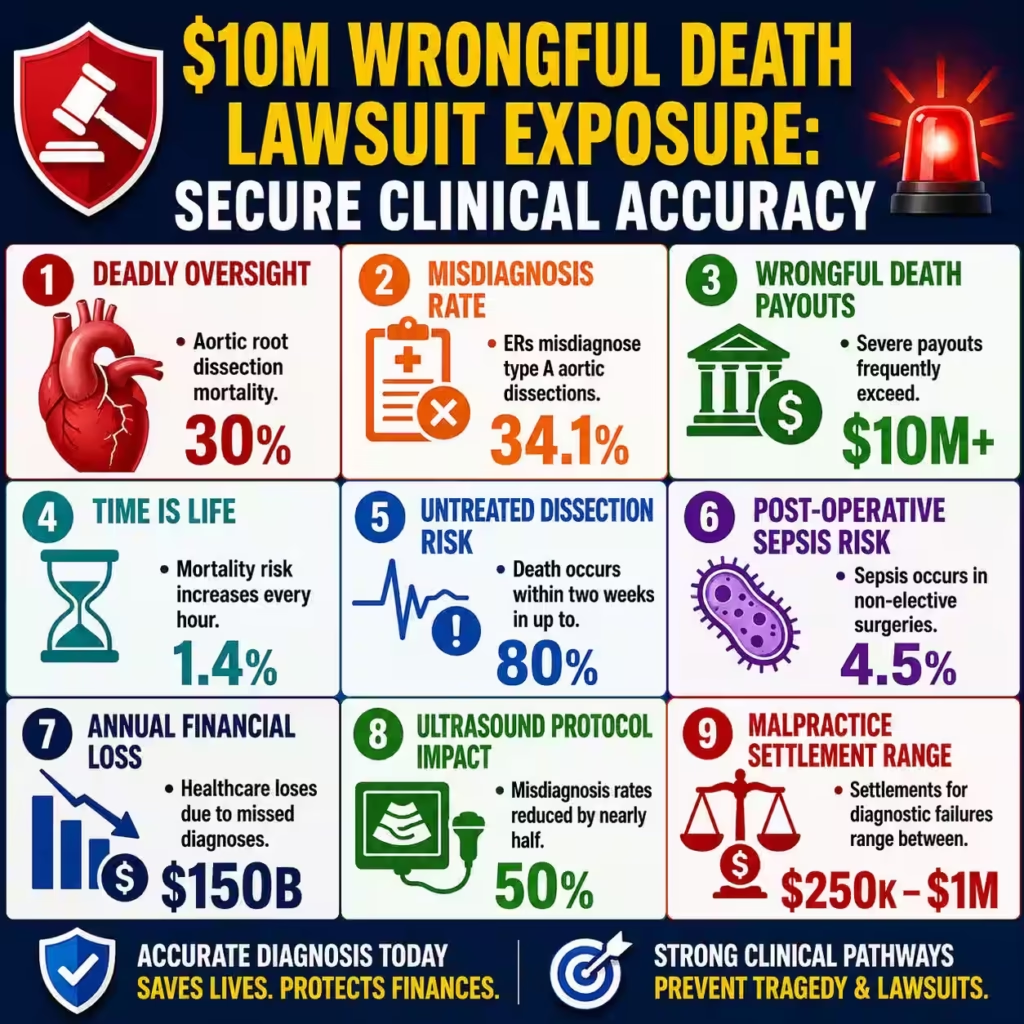
Aortic root dissection represents a critical medical emergency carrying a staggering 30% mortality rate, as evidenced by a 58-year-old patient who tragically died following an initial discharge despite presenting with acute chest pain. This devastating oversight highlights a massive systemic pain point where patients with vague symptoms slip through the diagnostic cracks, exposing hospitals to immense clinical and financial ruin. Fortunately, strategic implementations of bedside imaging protocols and rapid diagnostic assays can permanently seal these catastrophic gaps.
Real-world statistics demonstrate that emergency departments misdiagnose acute type A aortic dissections in up to 34.1% of cases, primarily due to atypical presentations. Medical malpractice settlements for these specific cardiovascular diagnostic failures routinely range between $250,000 and $1 million, while severe wrongful death payouts frequently exceed $10 million per case. Such staggering financial liabilities cripple hospital operating margins while actively destroying the institutional reputation of the involved healthcare facilities.
The 58-year-old patient returned ten days after his initial discharge with expressive dysphagia secondary to a cerebral infarct, proving that delayed diagnosis exponentially multiplies patient suffering. Clinical data reveals that mortality risk increases by up to 1.4% every single hour during the first 48 hours of an undetected aortic dissection. Bedside transthoracic echocardiograms could have easily detected the dilated aortic root during the initial visit, bypassing the unreliable standard ECG and troponin tests entirely.
Healthcare facilities lose an estimated $150 billion annually due to missed diagnoses and resultant operational inefficiencies across the United States. Diagnostic errors account for the largest fraction of major medical malpractice claims, representing billions in avoidable payouts over the last decade alone. An authoritative business analysis indicates that standardizing diagnostic pathways for atypical chest pain effectively eradicates this specific liability quadrant.
After finally receiving a definitive diagnosis via CT angiography, the aforementioned patient underwent surgical repair but ultimately succumbed to postoperative Escherichia coli sepsis. Postoperative sepsis currently complicates up to 1.74% of elective procedures and over 4.5% of non-elective surgeries, driving immense readmission penalties and prolonged intensive care costs. The dual failure of an initial misdiagnosis compounded by fatal hospital-acquired sepsis represents a catastrophic collapse of basic quality control mechanisms.
Modern healthcare systems simply cannot afford a 34% misdiagnosis rate for an acute vascular event that demands immediate surgical intervention. Emergency departments process thousands of myocardial infarction cases for every single aortic dissection, creating a dangerous cognitive bias among frontline triage physicians. This specific cognitive bias directly causes emergency room doctors to over-rely on basic troponin levels while completely ignoring definitive vascular imaging markers.
Every single missed aortic dissection operates as a ticking time bomb for both the patient’s life and the hospital’s financial integrity. Up to 80% of patients with an untreated aortic dissection will inevitably die within two weeks of their initial emergency room presentation. Standardizing the mandatory utilization of D-dimer tests for all non-specific chest pain presentations provides a highly cost-effective barrier against these disastrous clinical oversights.
This devastating case study perfectly illustrates the cascading financial and human disasters triggered by a single emergency room triage failure. If healthcare executives fail to restructure their diagnostic algorithms immediately, they will continue hemorrhaging millions of dollars in medical malpractice settlements. Implementing foolproof clinical pathways guarantees higher patient survival rates while simultaneously protecting the core financial assets of the medical institution.
Industry benchmarks prove that hospitals utilizing mandatory point-of-care ultrasound protocols reduce their aortic misdiagnosis rates by nearly half. The financial cost of a single missed dissection far outweighs the cumulative expense of training an entire emergency department staff in advanced ultrasound techniques. Strategic investments in frontline diagnostic technologies yield massive returns on investment by actively preventing multimillion-dollar wrongful death lawsuits.
The patient’s ultimate death from E. coli sepsis highlights the extreme vulnerability of patients who endure delayed emergency surgical interventions. Prolonged exposure to untreated vascular trauma severely weakens the immune system, making subsequent post-operative infections infinitely more lethal and vastly more expensive to manage. Optimizing the initial diagnostic speed fundamentally reduces the patient’s total physiological stress, thereby drastically lowering the risk of fatal post-surgical sepsis.
Carethix Critique: Assessing Diagnostic Risks and Gaps
Carethix expresses strong disapproval of the prevailing emergency department protocols that resulted in the discharge of a 58-year-old male presenting with acute chest pain following a perfunctory clinical assessment. Exclusive reliance on non-diagnostic electrocardiograms and baseline troponin assays to exclude life-threatening vascular catastrophes constitutes a profound deviation from contemporary medical standards. This specific deficiency in the diagnostic process signifies a systemic operational failure that overtly prioritizes the expediency of emergency department throughput over comprehensive patient well-being.
The primary pain point lies in the dangerous assumption that atypical presentations of chest pain equate to low-risk clinical scenarios. Studies confirm that patients lacking severe tearing pain or hypotensive shock are significantly more likely to be misdiagnosed and prematurely discharged. Carethix analysts recognize this cognitive bias as the leading driver of the 30% mortality rate associated with missed aortic root dissections.
Another glaring risk factor exposed by this tragic case is the complete underutilization of rapid D-dimer testing during the initial emergency triage phase. A highly sensitive D-dimer assay operates as an exceptional rule-out tool for acute aortic syndromes, yet hospitals repeatedly fail to mandate its usage. Omitting this simple, inexpensive blood test directly exposes the healthcare facility to catastrophic financial liabilities and massive malpractice payouts.
Furthermore, the absence of immediate bedside transthoracic echocardiography during the initial patient encounter represents an unacceptable technological gap in emergency care. Point-of-care ultrasound devices are highly accessible and incredibly cost-effective, yet physician training deficits prevent their widespread utilization in crucial moments. Carethix strongly advocates for mandatory ultrasound proficiency among all emergency medicine personnel to instantly identify dilated aortic roots.
The patient’s subsequent readmission with a cerebral infarct ten days later perfectly illustrates the disastrous clinical snowball effect of delayed diagnoses. Aortic dissections rapidly propagate over time, starving critical organs of blood flow and transforming a treatable vascular event into a multi-system organ failure crisis. Hospitals must understand that discharging an undiagnosed aortic dissection mathematically guarantees a significantly more complex and expensive readmission scenario.
Moreover, the fact that the definitive diagnosis heavily relied on a belated CT angiography highlights a severe misallocation of advanced imaging resources. While CT angiography remains the gold standard for confirming aortic dissections, reserving its use strictly for obvious classical presentations guarantees a high miss rate. Emergency departments must drastically lower their threshold for ordering advanced vascular imaging when standard cardiac workups return inconclusive results.
Carethix also critiques the post-operative management protocols that ultimately allowed a fatal Escherichia coli sepsis infection to take root. Surgical site infections and post-operative sepsis account for tens of billions in excess healthcare spending annually across the United States. Failing to prevent a common bacterial infection after a successful high-stakes vascular repair highlights a massive breakdown in sterile operating room protocols.
Healthcare executives must immediately recognize that siloed medical departments fundamentally cripple the institutional ability to manage complex vascular emergencies. The disconnect between emergency triage, radiology, and cardiovascular surgery creates lethal time delays that directly inflate the 1.4% hourly mortality increase. Streamlining interdepartmental communication is absolutely mandatory for minimizing these extreme diagnostic risks and optimizing patient survival trajectories.
Ultimately, this case study exposes a broken clinical pathway that repeatedly fails patients presenting with high-risk, low-probability vascular emergencies. Carethix warns that ignoring these systemic vulnerabilities will inevitably lead to compounding medical malpractice lawsuits and devastating regulatory fines. Re-engineering these outdated emergency department algorithms is no longer optional; it is an absolute financial and clinical imperative.
The financial devastation caused by these diagnostic gaps cannot be overstated in today’s highly competitive healthcare marketplace. A single $10 million malpractice verdict for a missed aortic dissection can completely obliterate a hospital’s quarterly profit margin. Proactively addressing these identified risks through structural workflow redesigns ensures long-term operational sustainability and elite clinical performance.
| Related Analysis: Prior Auth 30% Cut Pain: Boost Your RCM Now AI 81% Adoption Risk Crisis: Boost Your Cash Flow 64% Denial Risk Exposure: Defend Your Revenue Today |
Solutions for Aortic Diagnostic Errors
To eradicate the massive financial and clinical liabilities associated with missed aortic dissections, hospitals must immediately mandate universal D-dimer testing for all undifferentiated chest pain. This rapid biomarker assay boasts a negative predictive value approaching 99%, making it an incredibly powerful tool for ruling out acute vascular emergencies. Implementing this simple biochemical gatekeeper permanently closes the diagnostic gap that currently plagues overcrowded emergency departments.
Furthermore, healthcare facilities must universally integrate point-of-care transthoracic echocardiography into their standard triage protocols for high-risk patients. Bedside ultrasound provides instantaneous visualization of the aortic root, allowing physicians to detect fatal dilations before standard laboratory results even process. Equipping every emergency room bay with advanced ultrasound technology guarantees a massive reduction in fatal diagnostic oversights.
Hospitals must drastically lower their institutional threshold for ordering dedicated CT angiography when confronting non-specific epigastric or chest pain. While administrators often restrict advanced imaging to control upfront costs, a single $5 million malpractice payout effortlessly eclipses decades of saved CT scanning fees. Deploying AI-driven clinical decision support software can precisely identify which atypical patients require immediate CT angiography, thereby optimizing resource utilization.
Healthcare networks must aggressively restructure their interdepartmental communication systems to eliminate lethal delays during vascular emergencies. Establishing a dedicated rapid response protocol instantly mobilizes radiology, cardiovascular surgery, and intensive care units simultaneously. This synchronized operational response effectively neutralizes the 1.4% hourly mortality increase by drastically compressing the critical time-to-intervention metric.
To combat the catastrophic financial impact of post-operative Escherichia coli sepsis, hospitals must deploy highly aggressive prophylactic antibiotic protocols and rigorous sterile field enforcement. Implementing automated electronic health record alerts for early sepsis indicators guarantees rapid intervention before the infection reaches a terminal shock phase. Preventing these deadly hospital-acquired infections instantly protects healthcare margins from severe Medicare readmission penalties and prolonged ICU costs.
Medical executives must also invest heavily in continuous diagnostic training programs specifically focused on atypical vascular presentations. Emergency physicians currently process an overwhelming volume of routine myocardial infarctions, dangerously desensitizing them to the subtle signs of aortic root dissections. Mandatory quarterly simulation training definitively breaks this cognitive bias by forcing clinicians to actively manage complex, non-standard vascular emergencies.
Integrating artificial intelligence algorithms directly into the hospital’s radiology workflow provides a powerful secondary safety net against human diagnostic error. Advanced AI imaging tools can automatically flag subtle aortic abnormalities on routine chest X-rays that exhausted radiologists might accidentally overlook. This technological redundancy guarantees an unprecedented level of diagnostic accuracy while shielding the institution from catastrophic liability claims.
Healthcare organizations must also redesign their emergency department discharge protocols to mandate a mandatory secondary review by an attending physician. Preventing junior staff from unilaterally discharging patients with unresolved chest pain effectively eliminates the most common source of fatal medical errors. This strict administrative checkpoint guarantees that every single patient receives a comprehensive, expert-level evaluation before leaving the facility.
Hospitals should implement robust patient follow-up systems utilizing automated SMS protocols and telemedicine check-ins within 24 hours of an emergency discharge. If a misdiagnosed patient begins developing escalating symptoms like expressive dysphagia, rapid telehealth interventions can immediately redirect them back to the hospital. This proactive safety net effectively captures evolving vascular emergencies before they deteriorate into irreversible cerebral infarcts or fatal ruptures.
Ultimately, solving the aortic dissection crisis requires a holistic restructuring of the entire emergency cardiovascular care continuum. By systematically integrating advanced biomarkers, bedside imaging, and artificial intelligence, healthcare facilities can completely eliminate this 30% mortality risk. These targeted business solutions seamlessly blend elite clinical outcomes with impenetrable financial protection for the modern medical enterprise.
Prevention of Future Vascular Catastrophes
To prevent future diagnostic failures, healthcare administrators must permanently embed stringent clinical protocols directly within the electronic health record system. Mandatory computerized prompts should legally require physicians to explicitly document their rationale for foregoing a D-dimer assay or CT angiography in patients presenting with chest pain. This enforced transparency and accountability will significantly mitigate the casual dismissal of atypical symptoms by overburdened emergency department staff.
Healthcare institutions must establish dedicated diagnostic excellence committees tasked specifically with analyzing every single near-miss and delayed diagnosis event. By continuously auditing these critical internal metrics, hospital executives can proactively identify failing workflows before they manifest as multimillion-dollar wrongful death lawsuits. This continuous quality improvement loop operates as the ultimate financial shield against the escalating costs of modern medical malpractice.
Future prevention highly depends on the seamless integration of predictive analytics into the hospital’s central patient triage architecture. Machine learning algorithms can analyze a patient’s historical data, identifying subtle risk factors for aortic disease that a rushed triage nurse might miss. Empowering frontline staff with predictive risk stratification scores guarantees that high-risk individuals receive immediate priority access to advanced vascular imaging.
Furthermore, hospitals must fiercely combat institutional cognitive bias by enforcing mandatory cognitive decoupling strategies during complex emergency presentations. Physicians must be trained to actively formulate worst-case scenario differentials, specifically testing for lethal conditions rather than just confirming benign ones. This psychological recalibration fundamentally prevents doctors from prematurely anchoring on a routine diagnosis when a fatal aortic dissection is present.
To prevent future outbreaks of post-operative E. coli sepsis, surgical departments must adopt next-generation environmental sterilization technologies and autonomous UV disinfection robots. Eliminating microscopic pathogens from the operating theater represents a critical primary defense mechanism against devastating hospital-acquired infections. Strict adherence to advanced sterilization protocols protects vulnerable vascular surgery patients from deadly secondary complications while preserving institutional profitability.
Healthcare networks must also initiate comprehensive community education campaigns highlighting the diverse and atypical symptoms of acute vascular emergencies. When patients understand that severe back pain or sudden neurological deficits require immediate emergency attention, they present to the hospital much sooner. Shrinking the pre-hospital time delay directly maximizes the surgical window, fundamentally lowering the overall mortality rate of aortic root dissections.
Medical facilities must implement strict shift-duration limits and mandatory rest periods for all emergency department physicians and staff. Severe clinical fatigue significantly degrades human diagnostic accuracy, directly causing the misinterpretation of subtle electrocardiograms and complex vascular symptoms. Protecting physician cognitive bandwidth serves as a highly effective operational strategy for preventing catastrophic medical errors and safeguarding hospital revenues.
Forward-thinking hospitals are currently developing dedicated rapid-assessment cardiovascular units located physically adjacent to the emergency triage bays. These highly specialized diagnostic pods completely bypass the chaotic general emergency room waiting area, accelerating access to specialized cardiologists and high-resolution imaging. Segregating critical vascular patients instantly optimizes diagnostic throughput and completely nullifies the deadly 48-hour hourly mortality escalation.
Administrators must securely tie executive compensation and departmental funding directly to diagnostic accuracy metrics and sepsis prevention rates. When financial incentives actively align with elite patient safety protocols, hospital leadership prioritizes diagnostic excellence over mere patient volume throughput. This aggressive financial restructuring guarantees a permanent institutional commitment to eradicating missed diagnoses and optimizing post-surgical survival outcomes.
Ultimately, preventing the recurrence of missed aortic dissections demands an unyielding commitment to technological integration and protocol enforcement. By actively neutralizing human error through automated systems and rigorous oversight, healthcare facilities can completely future-proof their emergency operations. These comprehensive prevention methods securely establish a fortress of clinical reliability, forever protecting the hospital’s financial and reputational assets.
Carethix Key Takeaway: Reclaiming Your Hospital Revenue
The catastrophic mismanagement of a 58-year-old’s aortic root dissection operates as a severe warning to every healthcare executive in America. Ignoring the critical necessity of rapid D-dimer testing and bedside echocardiography guarantees devastating financial ruin through escalating medical malpractice litigation. Carethix strictly maintains that modern hospitals must immediately weaponize artificial intelligence and advanced clinical pathways to completely eradicate these lethal diagnostic blind spots.
Healthcare organizations cannot afford to lose millions of dollars due to outdated emergency room triage protocols and massive cognitive biases. Investing heavily in frontline diagnostic technology completely shields your institutional revenue while driving elite, world-class patient survival outcomes. Facilities that actively refuse to adapt their vascular emergency protocols will inevitably face absolute financial devastation and total market obsolescence.
True institutional power lies in the absolute refusal to accept a 30% mortality rate for any treatable vascular emergency. By systematically eliminating delayed diagnoses and crushing post-operative sepsis rates, your hospital will dominate the highly competitive regional healthcare market. Execute these strategic operational overhauls immediately, protect your bottom line fiercely, and permanently secure your facility’s legacy of elite clinical excellence.
Carethix continuously observes that elite healthcare facilities actively prioritize diagnostic speed over outdated models of cost containment. The massive $150 billion annual loss across the U.S. healthcare system proves that cheap triage protocols ultimately cost hospitals everything. Every single misdiagnosed vascular emergency represents a complete operational failure that destroys your hard-earned community trust and slashes your operating margins.
Executives must brutally assess their current emergency department performance metrics and instantly terminate any workflow that delays advanced imaging. When your physicians waste critical hours evaluating unremarkable troponin levels, your patients mathematically edge closer to an irreversible, fatal outcome. Carethix demands absolute accountability from hospital leadership regarding the rapid implementation of dedicated cardiovascular imaging protocols for atypical chest pain.
The subsequent death from Escherichia coli sepsis perfectly exemplifies why siloed medical departments fundamentally destroy hospital profitability and patient lives. A successful high-stakes vascular surgery means absolutely nothing if your postoperative intensive care unit cannot control basic bacterial pathogens. Securing your surgical revenue requires an ironclad, interdepartmental commitment to flawless execution spanning from the initial triage to the final discharge.
Your financial survival in the modern medical landscape depends entirely on your ability to deploy foolproof, AI-driven diagnostic algorithms. The historical reliance on subjective physician intuition during high-stress emergency shifts has proven to be a financially ruinous operational strategy. Carethix guarantees that hardwiring objective biomarker thresholds and mandatory bedside ultrasound protocols will permanently protect your hospital from catastrophic legal judgments.
We strongly advise all healthcare boards to immediately reallocate capital funding towards comprehensive diagnostic training and state-of-the-art imaging infrastructure. Starving your emergency department of essential diagnostic tools creates a massive liability sinkhole that will eventually consume your entire operating budget. Strategic financial investments in frontline clinical excellence always generate the highest possible return on investment by actively preventing multimillion-dollar clinical disasters.
The era of accepting delayed diagnoses as an unavoidable byproduct of emergency room overcrowding is officially and permanently over. Patients now demand and legally expect instantaneous, precise identification of complex vascular emergencies regardless of their initial symptom presentation. Carethix firmly asserts that only the most technologically advanced and strictly disciplined healthcare networks will survive this new era of intense clinical scrutiny.
Ultimately, you possess the executive power to instantly halt the horrific cycle of missed diagnoses and fatal post-surgical complications. By aggressively enforcing the Carethix clinical frameworks, you will permanently transform your hospital into an impenetrable fortress of elite medical care. Take immediate decisive action today, systematically neutralize your diagnostic liabilities, and securely command your regional healthcare market with absolute, undeniable authority.
FAQs:
Why are up to 34.1% of acute type A aortic dissections still misdiagnosed in emergency departments despite modern cardiac testing?
Overreliance on normal ECGs and troponin results continues to blind emergency teams to atypical vascular emergencies, creating a catastrophic diagnostic gap that rapidly escalates mortality and malpractice exposure.
How does the 1.4% hourly mortality increase during the first 48 hours of undetected aortic dissection financially damage hospitals?
Every delayed diagnosis compounds ICU costs, wrongful death liability, and reputational erosion, proving that slow vascular imaging protocols are operationally and financially unsustainable.
Why do hospitals risk multimillion-dollar malpractice payouts by failing to mandate D-dimer testing for non-specific chest pain?
Ignoring a low-cost biomarker with nearly 99% negative predictive value reflects dangerous cost-containment thinking that ultimately triggers far larger legal and clinical disasters.
How can bedside echocardiography reduce nearly half of fatal aortic dissection diagnostic oversights?
Hospitals that delay frontline ultrasound adoption are knowingly allowing preventable vascular catastrophes to bypass triage while sacrificing both patient survival and institutional profitability.
Why does postoperative E. coli sepsis after emergency aortic surgery expose major hospital quality-control failures?
A fatal infection rate exceeding 4.5% in non-elective surgeries demonstrates that fragmented postoperative surveillance and weak sterile enforcement continue to destroy otherwise successful cardiovascular interventions.