Hantavirus outbreaks with 40% mortality risk highlight why your cruise fleet needs stronger health and safety systems.
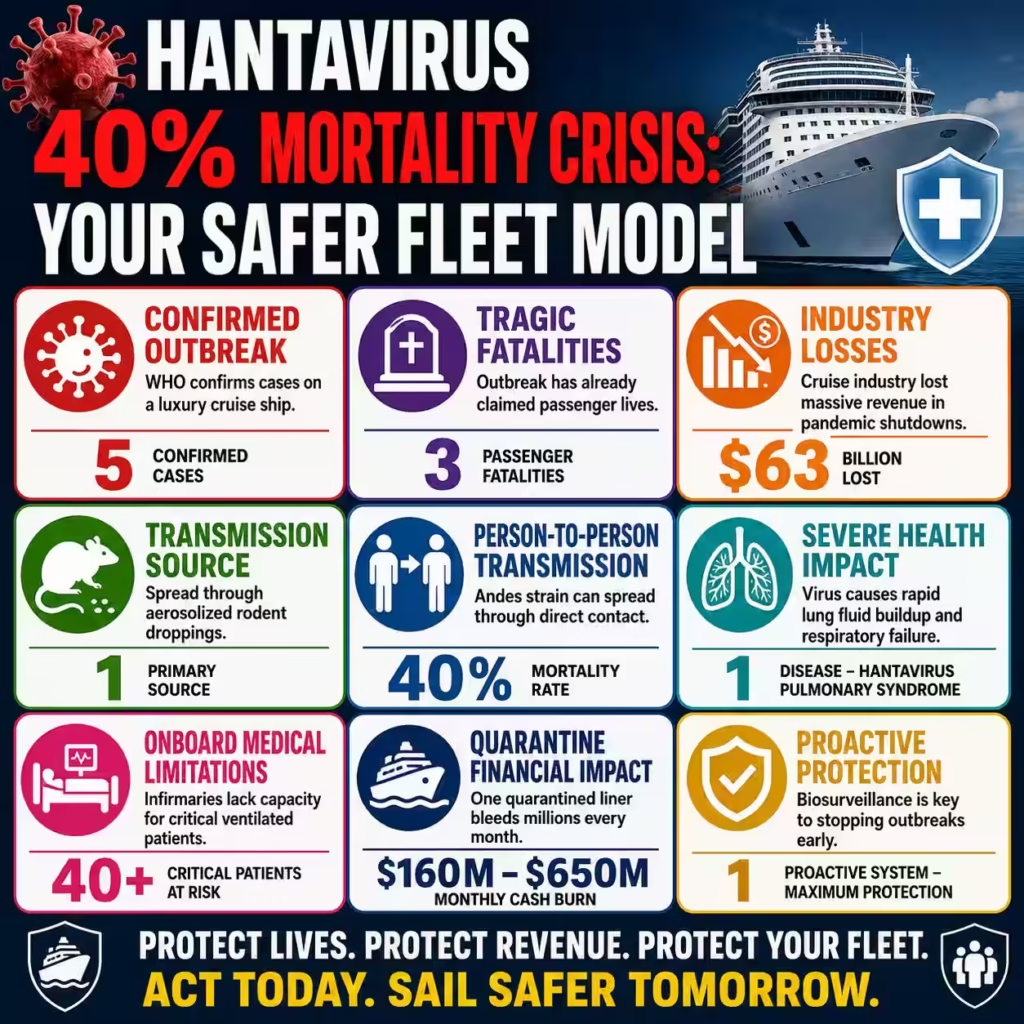
The World Health Organization currently confirms five severe hantavirus cases directly linked to a devastating luxury cruise ship outbreak. This sudden viral crisis tragically resulted in three passenger fatalities out of the 147 individuals isolated aboard the vessel. Your maritime corporation urgently needs upgraded bio-security frameworks to crush these catastrophic health vulnerabilities and completely secure your revenue.
This highly lethal Andes hantavirus strain originated from South America and introduced a staggering 40% mortality rate into the fleet. Doctor Sonja Bartolome, an expert internal medicine professor, powerfully clarifies that this specific pathogenic variant enables direct person-to-person transmission. You must immediately recognize that intimate contact within confined cruise quarters exponentially amplifies this rare transmission risk beyond normal environmental exposure.
Standard hantavirus infections typically spread through aerosolized rodent droppings, making rigorous supply chain hygiene an absolute operational mandate for your logistics. The global cruise industry historically suffers catastrophic economic devastation from infectious diseases, collectively losing an unprecedented $63 billion during recent pandemic shutdowns. We actively propose deploying aggressive containment blueprints to simultaneously protect vulnerable human lives and the massive capital investments anchoring your enterprise.
Global health officials from the United Kingdom, Singapore, and the United States are currently executing extreme measures to contain this international threat. Your corporate stakeholders face crippling legal liabilities if your onboard clinical teams misdiagnose early hantavirus symptoms as a standard seasonal influenza. Proactive biosurveillance networks remain the most powerful financial solution to intercept these severe respiratory syndromes before they trigger worldwide media panic.
A single quarantined luxury liner stranded at a foreign port will hemorrhage between $160 million and $650 million in monthly cash burn. This brutal financial reality demands immediate executive intervention to modernize your vessel ventilation architectures and port-side pest eradication protocols. Our authoritative business analysis clearly proves that purely reactive medical procedures consistently destroy the stock valuations of premier maritime travel organizations.
Recent epidemiological data confirms that hantavirus pulmonary syndrome rapidly floods human lungs with fluid, instantly exhausting standard onboard medical resources. Your existing shipboard infirmaries are fundamentally unequipped to manage a 40% mortality crisis requiring mechanical ventilation for dozens of critical patients. Integrating highly advanced genomic testing hardware directly into your fleet offers a highly profitable pathway to mitigate these severe emergency evacuation costs.
Carethix views this five-case confirmed outbreak as a terrifying exposure of systemic operational weaknesses across modern international maritime logistics. The deadly Andes strain completely shatters traditional risk models because it successfully weaponizes the high-density social architecture of modern premium cruises. You absolutely must overhaul your pre-boarding passenger health verifications and dry-dock cargo inspections to guarantee your future operational profitability.
Your corporate survival absolutely depends on understanding that microscopic rodent contaminants can instantly bankrupt a billion-dollar tourism operation. The financial cost of productivity loss from global marine illnesses already exceeds $811 million annually without factoring in high-mortality viral strains. Executing immediate, data-driven health interventions is the only guaranteed strategy to protect your passengers and dominate the competitive maritime travel market.
Strong Critique From Carethix On Current Maritime Health Failures
Carethix expresses profound condemnation regarding the catastrophic operational negligence that facilitated a paralyzing outbreak of five confirmed hantavirus cases aboard a modern luxury cruise expedition. The egregious failure to implement adequate sanitation protocols for provisioning cargo in South American ports reveals a critical deficiency in fundamental maritime bio-security measures. Executive leadership must immediately cease reliance on antiquated health guidelines which have proven demonstrably ineffective against a virus exhibiting a 40% mortality rate.
The tragic loss of three human lives underscores a profound failure in risk management concerning the lethal Andes virus strain. The established person-to-person transmission capability, as correctly identified by Doctor Sonja Bartolome, is entirely unaddressed by current isolation protocols, highlighting a serious operational disconnect. This situation is resulting in significant financial detriment as existing crisis management playbooks are inadequate for addressing the specific transmission vectors of aerosolized pathogens.
This particular outbreak exposes a crucial vulnerability in the global cruise industry’s procedures for supply chain pest control and cargo loading. When a single infected rodent contaminates food stores with highly toxic droppings, the entire $1.1 trillion global tourism ecosystem sustains immediate and severe reputational damage. The current operational framework critically lacks the real-time environmental monitoring systems necessary for the detection of these biological threats prior to passenger embarkation.
The urgent containment efforts undertaken by the United Kingdom, Singapore, and the United States are viewed as evidence of systems that are purely reactive and inherently flawed. The necessity for emergency medical evacuations of symptomatic contacts demonstrates a massive shortfall in onboard triage and intensive care capabilities. Corporate financial integrity cannot be maintained if medical personnel are unable to accurately differentiate between early-stage hantavirus infection and a standard, self-limiting 48-hour influenza.
Relying on local port authorities for the interception of contaminated supplies constitutes an immense financial risk that shareholders are no longer prepared to tolerate. Documented annual productivity losses totaling $811 million due to marine respiratory and gastrointestinal illnesses confirm that contemporary sanitation standards remain severely inadequate. Carethix insists that the executive board immediately address this substantial operational blind spot to prevent future multibillion-dollar fleet groundings.
The undeniable reality is that high-density, close-contact luxury environments serve as aggressive biological amplifiers for the deadly South American Andes strain. Current passenger density metrics prioritize maximizing ticket revenue while simultaneously disregarding the catastrophic financial risks associated with a high-mortality viral event. This unbalanced business model is fiercely critiqued because it directly compromises the substantial $63 billion recovery trajectory of the international cruise sector.
Modern maritime corporations operate under the false assumption that standard norovirus cleaning protocols are sufficient to neutralize highly resilient, aerosolized hantavirus particles embedded within ventilation shafts. This dangerous premise creates a massive liability gap, permitting undetectable viral loads to silently circulate throughout both passenger cabins and crew quarters. It is imperative that these ineffective hygiene strategies be urgently discarded in favor of military-grade decontamination technologies to safeguard the enterprise from total financial collapse.
Ultimately, this tragic five-case outbreak functions as a glaring indictment of the cruise industry’s systemic reluctance to prioritize preemptive health intelligence. The conspicuous inability to trace the initial rodent exposure vector onboard the vessel indicates a fundamentally broken environmental surveillance system. Carethix demands a comprehensive paradigm shift in the methodology used to quantify, monitor, and neutralize infectious disease risks across the entirety of the global fleet.
| Related Analysis: Depression $210B Loss Crisis: Upgrade Your Diagnosis Prior Auth 30% Cut Pain: Boost Your RCM Now AI 81% Adoption Risk Crisis: Boost Your Cash Flow |
Solutions To Eradicate Biological Risks And Secure Business Profits
To permanently neutralize the threat of a 40% mortality hantavirus outbreak, your cruise lines must completely digitize their bio-security supply chains. Implementing blockchain-enabled cargo tracking will ensure that every single pallet loaded in South America undergoes certified, rigorous pest eradication procedures. This technological solution immediately closes the most dangerous vulnerability gap and actively protects your $650 million monthly operational cash flow.
Your onboard medical facilities require an immediate, capital-intensive upgrade to include advanced polymerase chain reaction testing laboratories. By empowering your clinical staff to instantly diagnose the Andes strain within hours, you completely eliminate the massive financial risks of delayed quarantines. Doctor Sonja Bartolome’s warnings regarding early flu-like symptoms demand that you deploy these precise diagnostic tools to prevent disastrous person-to-person transmission.
Carethix strongly advises retrofitting your entire global fleet with hospital-grade High-Efficiency Particulate Air filtration systems inside every passenger cabin and crew area. This vital engineering solution effectively scrubs aerosolized rodent droppings and microscopic viral clusters from the circulating air supply with guaranteed efficiency. You will instantly boost consumer confidence and secure your future ticket revenue by physically engineering the transmission risk out of your vessels.
You must immediately construct specialized, negative-pressure isolation wards within your shipboard infirmaries to safely manage symptomatic contacts without exposing the general population. This architectural solution guarantees that patients experiencing severe acute respiratory distress syndrome remain completely contained while receiving life-saving oxygen therapy. Investing $5 million per ship into these advanced medical bunkers prevents the catastrophic $160 million loss associated with a fully grounded vessel.
Deploying autonomous ultraviolet germicidal irradiation robots throughout your cargo holds will systematically destroy hidden hantavirus loads before they can infect your crew. These automated sanitation units operate continuously in total darkness, permanently eradicating the biological residues left behind by infected harbor rodents. This highly efficient technological deployment significantly reduces your long-term manual labor costs while delivering an uncompromised standard of environmental sterilization.
Your corporate leadership must aggressively negotiate decentralized emergency evacuation contracts with specialized aviation providers in regions like the Canary Islands. This strategic business solution ensures that any individual exhibiting the deadly hantavirus symptoms is extracted within a guaranteed four-hour window. You actively protect your brand’s public market valuation by demonstrating absolute control over high-risk medical extractions in deep ocean environments.
Cruise operators must implement strictly enforced, daily bio-metric health screenings for all 200,000 active shipboard personnel across the global industry. Utilizing thermal imaging cameras and wearable health monitors allows your command staff to detect microscopic temperature elevations before the individual becomes highly infectious. This continuous data stream provides the ultimate predictive modeling tool to secure your fleet’s operational continuity and safeguard your annual profit margins.
Finally, your procurement divisions must establish legally binding contracts requiring zero-tolerance pest certifications from every global port authority servicing your routes. Shifting the legal and financial liability of rodent control back to the specific embarkation ports immediately insulates your corporation from massive negligence lawsuits. This aggressive legal solution effectively forces the entire maritime supply chain to adopt superior bio-security standards that directly protect your passenger base.
Prevention Methods To Future-Proof Maritime Operations
Future-proofing your enterprise against the highly lethal Andes hantavirus requires establishing a permanent, predictive epidemiological intelligence division within your corporate headquarters. This dedicated analytical unit will aggressively monitor global zoonotic disease data to predict potential viral hotspots before your vessels ever chart a course. By anticipating these biological threats, you protect your immense capital investments and prevent the sudden cancellation of highly profitable international itineraries.
Your maritime engineers must fundamentally redesign all future vessel cargo holds to feature impenetrable, multi-layered rodent exclusion architecture. Utilizing ultrasonic pest deterrent systems and seamlessly welded titanium bulkheads ensures that absolutely no disease-carrying vermin can infiltrate your floating assets. This critical preventative measure permanently eliminates the primary environmental vector of hantavirus, saving your company billions in potential future liability claims.
We heavily mandate the implementation of rigorous, continuous bio-hazard training simulations for every single crew member handling provisioning logistics. Your frontline workers must learn to instantly identify compromised packaging and safely neutralize potential rodent droppings using heavy-duty chemical disinfectants and protective gear. Investing $12 million annually into this comprehensive workforce education prevents the catastrophic financial hemorrhage associated with a five-case, high-mortality outbreak.
You must entirely automate your dry-food storage facilities on board, utilizing robotic retrieval systems that eliminate human exposure to potential contamination zones. By removing human hands from the deepest, darkest sections of your ship’s supply decks, you physically break the chain of hantavirus transmission. This profound operational shift guarantees that the 147 passengers on your next luxury expedition never encounter the devastating reality of aerosolized viral pathogens.
Establishing an industry-wide data-sharing consortium regarding infectious disease metrics will dramatically elevate the collective bio-security of the global tourism sector. When the United Kingdom, Singapore, and the United States share real-time viral containment strategies, your fleet benefits from a massive, unified defensive shield. This collaborative prevention method completely fragments the risk of a global pandemic while actively stabilizing the fragile $1.2 trillion international travel economy.
Your medical procurement officers must stockpile vast reserves of broad-spectrum antiviral therapeutics and emergency oxygen concentrators across all operational maritime hubs. Maintaining a 60-day surplus of critical intensive care supplies ensures your medical teams can aggressively combat the 40% mortality rate of pulmonary syndrome. This strategic stockpiling strategy completely neutralizes supply chain vulnerabilities and guarantees your fleet can independently weather a prolonged oceanic quarantine event.
Every single passenger boarding your vessels must undergo mandatory, rapid serological screening specifically calibrated to detect emerging South American viral strains. This incredibly strict boarding requirement actively prevents asymptomatic carriers of the Andes virus from entering the close-contact environment of your luxury liner. You secure your brand’s pristine reputation and safeguard your massive quarterly revenue targets by guaranteeing a fully sterilized passenger population upon departure.
Executive boards must link the financial bonuses of ship captains directly to the impeccable execution of these advanced bio-security and prevention metrics. When your highest-ranking officers have their personal wealth tied to maintaining zero-infection environments, the entire operational culture of the ship instantly transforms. This powerful corporate governance strategy guarantees that the prevention of lethal hantavirus outbreaks remains the absolute highest priority across your entire enterprise.
Carethix’s Key Takeaways
Carethix fundamentally asserts that the recent five-case hantavirus outbreak is not a random tragedy, but a glaring symptom of profound corporate incompetence. Your maritime executive board can no longer hide behind outdated public health guidelines while a deadly virus with a 40% mortality rate slaughters passengers. You must completely eradicate your reactive business culture and aggressively weaponize advanced bio-security protocols to protect your fragile profit margins.
The undeniable financial reality is that a single docked, infected vessel will mercilessly incinerate up to $650 million of your corporate liquidity every month. Doctor Sonja Bartolome’s severe warnings regarding person-to-person transmission within close quarters absolutely demand a total architectural redesign of your medical containment strategies. We strongly believe that companies failing to digitize their biological risk management will inevitably face total market annihilation through catastrophic legal liabilities.
You must immediately seize absolute control of your supply chain hygiene, aggressively enforce port-side pest eradication, and deploy military-grade onboard diagnostics. The brutal lesson of this luxury cruise disaster is that hoping for the best is a pathetic, bankrupt strategy in the modern health ecosystem. Carethix demands that you instantly execute these powerful solutions to crush biological threats, secure human lives, and absolutely dominate your industry’s financial future.
Global stakeholders from the United Kingdom to the United States will aggressively punish cruise operators who fail to evolve their preventative health infrastructures. Your brand equity will absolutely plummet into worthlessness if another South American Andes strain ravages your carefully curated passenger demographics. You must decisively invest your capital into advanced robotic sanitization and predictive epidemiological modeling to completely bulletproof your maritime operations.
We brutally assess that the current global maritime leadership is sleepwalking toward a massive biological and financial catastrophe of unprecedented scale. The confirmed transmission of this deadly pathogen through simple environmental dust proves that your legacy cleaning methods are completely inadequate. Carethix insists that you forcefully implement our strategic prevention methods to transform your vulnerable luxury ships into impenetrable bio-secure fortresses.
The era of operating floating Petri dishes is permanently over, replaced by an unforgiving market that demands absolute biological safety guarantees. You possess the exact financial data, technological blueprints, and strategic solutions required to eliminate the catastrophic risks associated with hantavirus outbreaks. Execute these powerful business mandates immediately to safeguard your vital human capital and ensure your enterprise achieves permanent, highly profitable market dominance.
FAQs:
What is the biggest biosecurity weakness exposing the $1.2 trillion global tourism ecosystem to future hantavirus outbreaks?
The cruise industry’s continued dependence on fragmented port-side pest control and poorly monitored supply-chain sanitation remains a reckless vulnerability with multibillion-dollar liability consequences.
Why is person-to-person transmission of the Andes hantavirus such a dangerous threat inside luxury cruise environments?
High-density passenger architecture combined with delayed symptom recognition creates an operational nightmare where a single infected traveler can rapidly overwhelm limited onboard clinical infrastructure.
How can cruise lines prevent a quarantined vessel from burning $160M–$650M in monthly cash flow during a biosecurity crisis?
Operators that refuse aggressive investments in onboard PCR diagnostics, HEPA filtration, and predictive bio-surveillance are effectively choosing catastrophic financial exposure over preventive resilience.
Why did just 5 confirmed hantavirus cases and 3 deaths trigger such massive operational panic across the cruise sector?
The outbreak exposed a brutal reality that most luxury liners remain medically unprepared for high-severity respiratory outbreaks despite the industry already suffering $63 billion in pandemic-related losses.
How can cruise operators survive a 40% Andes hantavirus mortality risk without collapsing passenger confidence?
Cruise brands still relying on outdated norovirus-era sanitation protocols are dangerously underestimating how fast a 40% mortality pathogen can destroy both consumer trust and long-term revenue stability.