Unison’s recent study reveals that at least 21,000 NHS roles across England are due to be cut by 2028 in hospitals, community, and mental health services as trusts struggle to balance books amid a £1.1 billion deficit last year. These reductions strike at the heart of patient care delivery while devastating staff morale already strained by high workloads. Strategic financial and operational solutions explored later can reverse this trend and secure long-term healthcare sustainability.
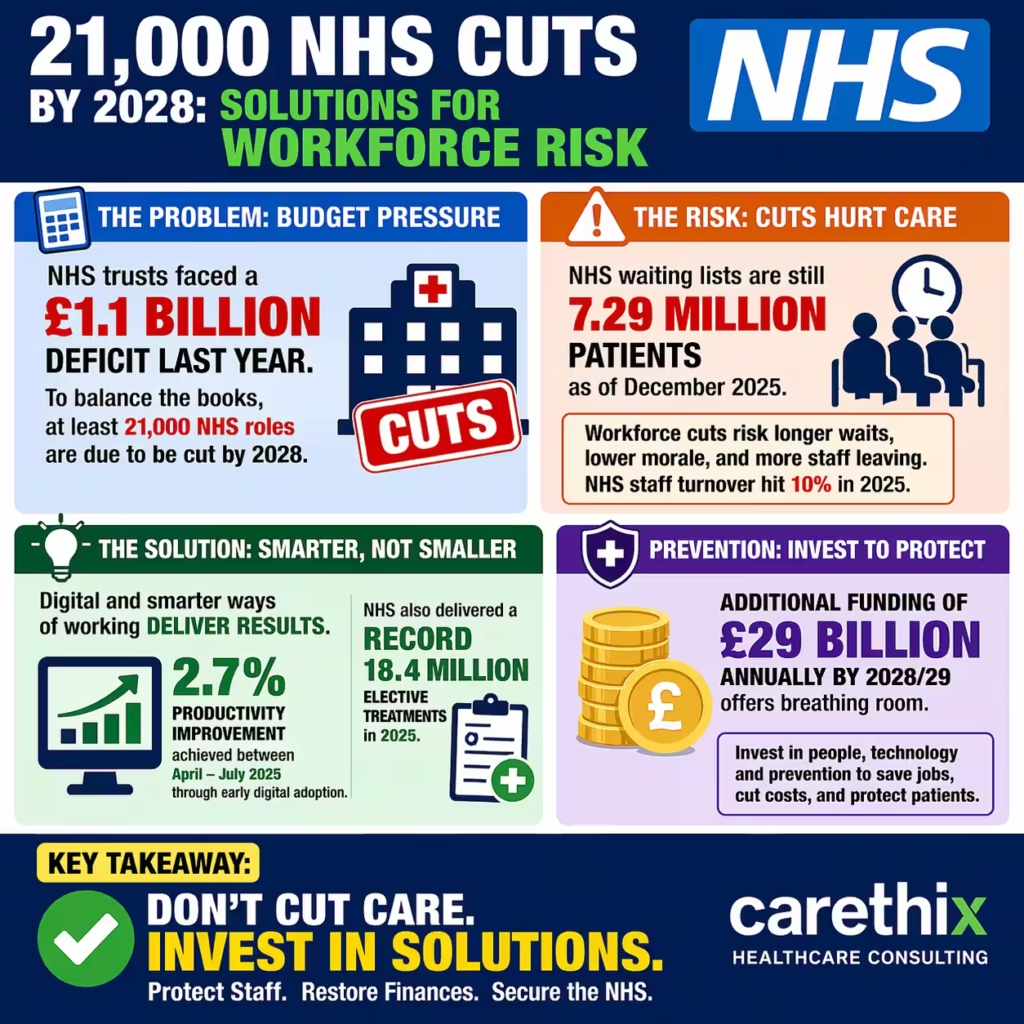
NHS providers reported a combined £1.1 billion deficit last year according to the union’s freedom of information responses. This figure compounds earlier shortfalls with 119 trusts still in deficit during quarter three of 2025/26. The cuts add to prior losses at NHS England and integrated care boards totaling thousands of administrative and managerial positions announced in 2025.
England’s hospital and community health services workforce stands at 1.55 million headcount or 1.38 million full-time equivalents as of January 2026. Planned reductions target clinical roles including an estimated 3,600 frontline positions alongside support staff. Community and mental health services face disproportionate impacts despite rising demand for integrated care.
The government demands break-even budgets from 2026 onward to meet fiscal targets. Trusts responded with vacancy freezes and restructuring plans that risk service quality. At Carethix we view this as a symptom of deeper systemic pressures rather than isolated mismanagement.
NHS waiting lists reached 7.29 million by December 2025 yet remain historically high despite recent drops of over 370,000 since mid-2024. Staff turnover hit 10% in the year to November 2025 with 130,200 full-time equivalents leaving the service. These figures highlight how workforce cuts could exacerbate backlogs and compromise timely care.
Our analysis at Carethix shows that short-term balancing acts ignore productivity opportunities. NHS England delivered 18.4 million elective treatments in 2025 marking a record high. Yet without targeted efficiencies the projected 21,000 job losses by 2028 will undermine these gains and patient outcomes.
Additional funding of £29 billion annually by 2028/29 offers breathing room if paired with reform. Trusts spent billions on agency staff in prior years before recent controls. The pain point remains clear: reactive cuts erode trust in the system and deter future talent.
Carethix consultants emphasize data-driven foresight here. Recent productivity improvements reached 2.7% between April and July 2025 through early digital adoption. This case study sets the stage for practical solutions that protect staff while restoring financial health.
Carethix Critique: Risks and Gaps Exposed in the NHS Job Cut Strategy
The 21,000 planned NHS job losses expose critical vulnerabilities in current financial reset efforts. Short-term deficit elimination through workforce reductions creates immediate risks to patient safety and care continuity across hospital, community, and mental health settings. At Carethix we see this approach as fundamentally flawed because it prioritizes balance sheets over sustainable service delivery.
Clinical role cuts estimated at 3,600 positions directly threaten elective care progress where waiting lists still exceed 7.25 million cases as of January 2026. Support staff reductions compound the issue by limiting administrative capacity needed for efficient operations. These gaps widen existing pressures with one in ten NHS staff leaving annually and vacancy rates hovering near 6% in nursing.
Mental health and community services suffer outsized impacts despite national priorities for prevention and integrated care. Staff morale has plummeted with nearly half reporting job-related mental health strain in recent surveys. The critique from Carethix highlights how such cuts accelerate burnout and drive higher long-term attrition costs.
Financial gaps persist because deficits reached £780 million across trusts in 2024/25 even after prior savings. Government demands for break-even ignore chronic underfunding relative to demand growth from an aging population. This reactive strategy fails to address root causes like fragmented data systems that hinder accurate forecasting.
Risks extend to regulatory compliance and quality standards as reduced headcount strains oversight functions. Previous ICB and NHS England cuts of over 12,500 roles already created coordination challenges. Carethix analysis warns that further reductions could reverse productivity gains of 2.7% seen in mid-2025.
The union data reveals vacancy freezes masking deeper recruitment failures in key specialties. This approach risks higher agency reliance ironically inflating costs despite recent £1 billion savings from controls. Our critique underscores the absence of robust scenario planning in many trusts.
Broader systemic gaps include limited investment in workforce development amid rapid technological change. Patient satisfaction remains at record lows while public confidence erodes with visible service pressures. Carethix believes these cuts represent a missed opportunity for transformative rather than reductive financial management.
| Related Analysis: 150% More Cancer Risk from Pesticides: Safer Agri Strategies 500 Outreach Cases Reveals Scalable Healthcare Opportunity 70p Fish Lunch Lowers BP: Solve $219B Cost Crisis |
Solutions to NHS Staffing and Financial Challenges
Healthcare organizations can deploy targeted financial strategies to avert or minimize the 21,000 NHS job cuts projected by 2028. At Carethix we recommend immediate adoption of digital transformation tools that deliver measurable productivity lifts without sacrificing care quality. These solutions balance budgets while preserving essential frontline capacity across trusts.
Productivity plans targeting 2% efficiency gains annually show strong returns through unified data platforms. Recent 2.7% improvements from April to July 2025 stemmed directly from better digital foundations in hospitals and primary care. Trusts that invest in AI-assisted diagnostics and analytics reduce administrative burdens and free staff for patient-facing roles.
Agency staff controls offer another proven lever with nearly £1 billion saved nationally in 2024/25 via stricter limits. Expanding internal bank systems and flexible rostering eliminates premium rates while maintaining coverage. Carethix modeling demonstrates that full elimination of agency use by parliament’s end could redirect funds to permanent hires and training.
Workforce optimization through skill-mix reviews protects clinical roles by upskilling support staff for advanced tasks. Integrated care models shift activity to community settings where lower-cost multidisciplinary teams handle chronic conditions effectively. This approach aligns with national plans to move care closer to home and reduces hospital admissions by up to 20% in pilot programs.
Revenue diversification via strategic partnerships with technology providers and private sector collaborators generates new income streams. Value-based contracting rewards outcomes rather than volume and improves financial predictability. Data analytics for demand forecasting prevents overstaffing in low-need areas while identifying growth opportunities.
Prevention-focused programs funded through reallocated budgets lower long-term demand pressures. Early intervention in mental health and community services cuts downstream hospital costs significantly. Carethix advises trusts to pilot neighborhood nursing models that span primary, community, and social care for holistic efficiency.
Capital investment in modern facilities and equipment yields rapid returns through reduced length of stay. The £10 billion digital transformation allocation supports scalable solutions like remote monitoring that cut unnecessary visits. These combined measures enable break-even targets without broad job losses.
Implementation requires strong governance and change management to realize benefits quickly. Training programs build staff capability in data and AI applications for sustained gains. Our solutions framework at Carethix ensures financial sustainability while safeguarding the 1.55 million strong NHS workforce.
Prevention Strategies to Avoid Future NHS Financial Crises
Proactive financial planning forms the cornerstone of preventing recurring NHS budget shortfalls and associated job risks. Carethix recommends establishing rolling three-year scenario models that incorporate demographic shifts and demand forecasts. These tools allow trusts to adjust staffing dynamically rather than through blunt cuts.
Long-term workforce pipelines built through expanded apprenticeships and medical degree programs address shortages before they escalate. Targeted recruitment in deprived areas combined with retention incentives reduces turnover currently at 10%. Prevention here means investing early in talent development aligned with future service needs.
Policy advocacy at national level secures stable multi-year funding settlements that match rising costs. Linking budgets to productivity targets with reinvestment clauses encourages innovation over austerity. Carethix urges integrated care boards to collaborate on shared back-office functions that deliver economies of scale without localized pain.
Robust governance frameworks with real-time financial dashboards prevent deficit surprises. Regular audits of agency and temporary spend maintain the £1 billion savings trajectory achieved recently. Embedding these practices creates resilience against economic shocks.
Digital infrastructure investment acts as a preventive shield by enabling predictive analytics for capacity planning. Unified patient records reduce duplication and administrative overhead across the 1.38 million full-time equivalent workforce. Prevention strategies here focus on technology that scales care delivery efficiently.
Community and prevention programs funded upfront lower acute demand and ease financial pressure over time. Mental health early intervention initiatives demonstrate clear returns through reduced hospitalizations. Trusts that prioritize these areas build sustainable models resistant to future cuts.
Cross-sector partnerships with local government and voluntary organizations distribute risk and resources effectively. Joint commissioning for social care integration prevents cost-shifting that burdens NHS budgets. Carethix prevention playbook emphasizes collaboration as a force multiplier for financial health.
Continuous monitoring of key performance indicators including waiting lists at 7.25 million and staff satisfaction ensures early warning of emerging issues. Adaptive budgeting processes respond to data rather than rigid targets. These strategies position the NHS for enduring stability beyond 2028.
Carethix Key Takeaways: Bold Leadership Can Transform NHS Financial Challenges
We at Carethix firmly believe the 21,000 NHS job cuts by 2028 are entirely avoidable with decisive action on financial sustainability and workforce optimization. Short-term pain from reactive measures will only deepen long-term problems in patient access and staff retention. Healthcare leaders must choose innovation-driven budgets that protect frontline roles while delivering break-even results.
The evidence is clear from recent £1 billion agency savings and 2.7% productivity gains. Digital tools and integrated models offer proven pathways to efficiency without compromising care for the 7.25 million people on waiting lists. You can implement these strategies today to safeguard your teams and services.
Prevention through data-led planning and prevention-focused care will future-proof the NHS against repeating deficits of £1.1 billion or more. Our consultancy stands ready to partner with trusts on customized roadmaps that blend financial rigor with compassionate leadership. The time for transformation is now.
Reference – At least 21,000 NHS jobs to be axed by 2028, Unison bosses claim