The 5-agent AI data gap urges healthcare leaders to strengthen their trial strategy and improve patient outcomes.
Case Study: Five-Agent AI Highlights the Cost of Traditional Clinical Trial Design
A new study from Weill Cornell Medicine published in Nature Communications introduced EmulatRx, a five-agent artificial intelligence system designed to improve clinical trial design using real-world patient records. The research addresses one of the largest barriers in pharmaceutical innovation, where trial planning remains slow, resource-intensive, and dependent on multiple specialist teams. For healthcare organizations, sponsors, contract research organizations (CROs), and regulators, this development signals that AI-assisted protocol engineering is becoming an operational capability rather than a future concept.
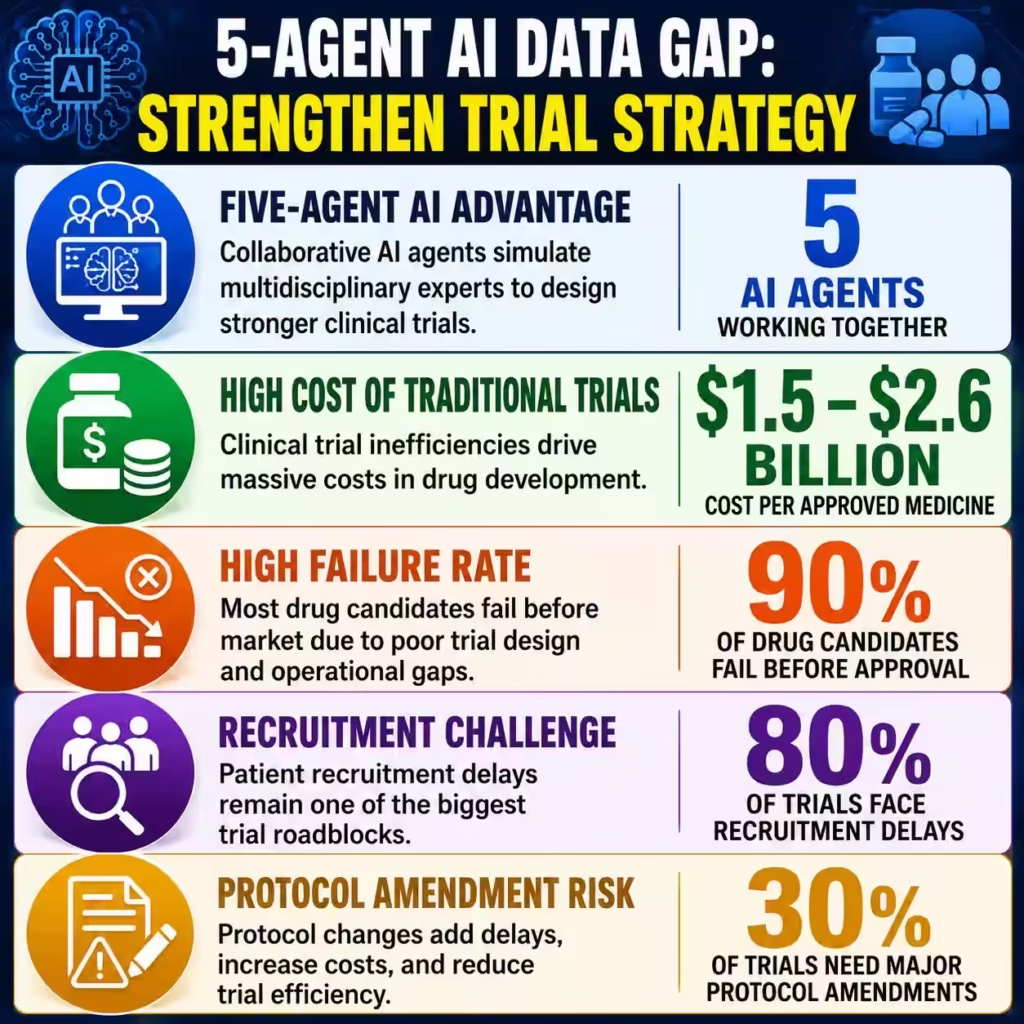
Clinical trial design remains one of the most expensive phases of drug development. Recent industry estimates place the average cost of developing a successful medicine between US$1.5 billion and US$2.6 billion, while bringing a therapy from discovery to regulatory approval often requires 10–15 years. Approximately 90% of drug candidates entering clinical testing never reach market approval, with poor trial design, patient recruitment challenges, protocol amendments, and operational inefficiencies contributing significantly to these failures.
Protocol complexity has continued to increase across therapeutic areas. Modern Phase III trials commonly include 150–300 eligibility criteria, substantially increasing screening failures and reducing enrollment efficiency. Studies have shown that approximately 80% of clinical trials experience recruitment delays, while nearly one-third require major protocol amendments, each amendment adding months of delay and millions of dollars in additional operational expenditure.
The Weill Cornell research proposes that collaborative AI agents can simulate multidisciplinary decision-making normally performed by clinicians, statisticians, epidemiologists, medical informaticians, and trial operations specialists. Instead of relying solely on historical assumptions, EmulatRx evaluates real-world patient records, exchanges reasoning among specialized AI agents, identifies weaknesses in proposed protocols, and continuously refines recommendations before trial execution.
The broader healthcare environment makes this innovation particularly relevant. Global clinical trial spending is estimated to exceed US$65 billion annually, while the real-world evidence (RWE) market continues expanding at a double-digit annual growth rate as regulators increasingly recognize high-quality real-world data for evidence generation. The combination of electronic health records, claims databases, genomic information, imaging datasets, wearable device monitoring, and AI reasoning provides an opportunity to redesign protocol development with substantially better evidence before the first participant is enrolled.
From Carethix’s perspective, the greatest value of systems like EmulatRx is not simply automation. Their strategic importance lies in improving protocol quality, reducing avoidable operational risk, identifying recruitment bottlenecks earlier, strengthening endpoint selection, and improving evidence generation through structured multidisciplinary reasoning supported by large-scale patient data.
Carethix Analysis: AI Alone Will Not Solve Clinical Trial Failure
Carethix believes the EmulatRx announcement represents meaningful progress, but healthcare executives should avoid assuming AI alone will solve clinical trial inefficiencies. Clinical development still requires 10–15 years on average, costs US$1.5–2.6 billion per approved therapy, and nearly 90% of investigational medicines entering human clinical testing ultimately fail before commercialization. AI can improve protocol design, but fragmented healthcare data, operational execution gaps, regulatory complexity, and poor governance continue to drive costly failures throughout the development lifecycle.
Electronic health record (EHR) quality remains one of the largest operational constraints. More than 96% of U.S. non-federal acute-care hospitals have adopted certified EHR systems, yet healthcare organizations still struggle with incomplete laboratory results, inconsistent diagnosis coding, duplicate patient records, missing medication histories, and unstructured physician notes. Studies estimate that healthcare data quality issues consume 20–30% of clinical research preparation time, while poor-quality source data can reduce AI prediction accuracy by 15–25%, limiting the value of collaborative AI systems such as EmulatRx.
Healthcare organizations also underestimate interoperability limitations despite widespread digitalization. The United States generates more than 2.3 billion healthcare transactions annually, yet patient information remains distributed across thousands of hospitals, clinics, laboratories, imaging centers, pharmacies, and payer systems using different interoperability standards. Research indicates that clinical researchers spend approximately 60–80% of AI project timelines collecting, cleaning, harmonizing, and validating data before meaningful model development can begin, delaying protocol optimization despite advanced AI capabilities.
Patient representation remains another major structural weakness. Approximately 75–80% of clinical trials fail to achieve planned enrollment timelines, while minority populations remain consistently underrepresented across many therapeutic areas despite representing a substantial share of disease burden. Nearly 30% of clinical trials require protocol amendments after initiation because initial eligibility criteria prove too restrictive or operationally impractical, adding 3–6 months to study timelines and increasing development costs by US$250,000 to over US$500,000 per substantial amendment, depending on trial complexity.
Regulatory expectations continue evolving alongside AI adoption. Global regulators increasingly recognize real-world evidence and AI-supported decision-making, but sponsors must still demonstrate model validation, reproducibility, explainability, auditability, cybersecurity, bias monitoring, and human oversight before regulatory confidence can be achieved. Carethix believes organizations implementing collaborative AI without enterprise governance risk replacing manual inefficiencies with automated compliance risks that delay submissions rather than accelerate approvals.
Operational governance therefore becomes the defining success factor. AI-generated protocol recommendations should remain decision-support tools reviewed by physicians, clinical pharmacologists, statisticians, epidemiologists, regulatory specialists, pharmacovigilance experts, ethics committees, and patient representatives before implementation. Healthcare organizations should evaluate AI using measurable operational KPIs, including reducing protocol amendments by 20–40%, lowering screen failure rates below 25%, improving enrollment diversity by 15–30%, shortening database lock timelines by 20–30%, and reducing overall trial planning time by several months.
Solutions: Building an AI-Enabled Clinical Trial Strategy
Healthcare organizations should establish enterprise-wide AI governance before deploying collaborative systems such as EmulatRx. The global AI in clinical trials market is projected to expand at a compound annual growth rate exceeding 20% throughout this decade, while the real-world evidence market continues growing rapidly as regulators increasingly accept high-quality external clinical data. Organizations that combine AI adoption with governance, standardized workflows, and measurable performance indicators are more likely to achieve sustainable improvements than those implementing AI as a standalone technology project.
The highest priority should be improving healthcare data quality. Structured EHR documentation, standardized clinical terminologies such as SNOMED CT, ICD-10, LOINC, and RxNorm, complete medication reconciliation, validated laboratory mapping, and continuous data quality monitoring substantially improve AI reliability. Even improving structured data completeness from 85% to above 98% can significantly increase patient eligibility identification, reduce manual chart review, and improve predictive accuracy during protocol simulation.
Healthcare sponsors should integrate multiple real-world evidence sources instead of relying on isolated datasets. Combining electronic health records, insurance claims, pharmacy databases, disease registries, genomic sequencing, imaging repositories, laboratory information systems, wearable devices, and patient-reported outcomes enables AI systems to evaluate millions of longitudinal patient records rather than isolated institutional datasets. Larger and more representative populations improve recruitment forecasting, endpoint optimization, adverse event prediction, and feasibility assessments before trial initiation.
Organizations should establish multidisciplinary AI governance committees consisting of physicians, biostatisticians, epidemiologists, pharmacists, clinical informaticians, regulatory experts, cybersecurity specialists, legal advisors, ethics committees, and patient advocates. Structured governance can reduce protocol redesign cycles by 20–30%, improve regulatory submission quality, and strengthen confidence in AI-generated recommendations. Every AI recommendation affecting eligibility criteria, endpoint selection, statistical assumptions, or safety monitoring should undergo documented human validation before protocol approval.
Digital twin technologies and simulation modeling should become standard components of protocol development. AI simulations can evaluate hundreds to thousands of protocol scenarios before the first participant is enrolled, allowing sponsors to compare recruitment feasibility, projected dropout rates, endpoint sensitivity, site performance, statistical power, and expected operational costs. Identifying recruitment bottlenecks before trial activation can reduce enrollment delays by several months while lowering operational expenditure across multicenter studies.
Patient recruitment should transition toward predictive analytics supported by real-world healthcare records. Machine learning algorithms can identify eligible participants earlier, estimate investigator productivity, evaluate competing studies, predict geographic recruitment performance, and estimate participant retention probability. Since nearly 80% of trials experience recruitment delays and approximately 20% terminate because of inadequate enrollment, predictive recruitment analytics represent one of the highest-return investments available in AI-supported clinical development.
Healthcare organizations should also prioritize explainable AI. Transparent algorithms with documented reasoning pathways improve physician confidence, regulatory acceptance, and audit readiness while reducing implementation risk. Organizations should continuously monitor measurable KPIs, including recruitment cycle time, protocol amendment frequency, enrollment diversity, participant retention exceeding 85–90%, monitoring efficiency, database lock duration, submission readiness, and cost per randomized participant to demonstrate measurable return on investment.
Prevention: Reducing Future Clinical Trial Design Risks
Healthcare organizations should implement comprehensive AI governance before scaling collaborative AI across clinical development programs. Governance frameworks should define algorithm validation standards, documentation requirements, cybersecurity controls, accountability structures, human review checkpoints, bias monitoring, and regulatory audit procedures. Organizations with mature AI governance consistently achieve faster implementation while reducing compliance-related operational disruptions during clinical development.
Continuous AI validation should become mandatory rather than optional. Clinical practice evolves continuously through updated treatment guidelines, new biomarkers, emerging therapies, and changing disease epidemiology, causing predictive models to deteriorate over time. Healthcare organizations should schedule model recalibration every 6–12 months or after major dataset expansion, monitoring prediction drift, calibration accuracy, sensitivity, specificity, and false-positive performance throughout deployment.
Healthcare systems should strengthen interoperability using internationally recognized data exchange standards. Standardized FHIR, HL7, SNOMED CT, LOINC, and ICD-10 implementation enables AI systems to integrate information from hospitals, ambulatory clinics, laboratories, imaging facilities, pharmacies, and payer databases with greater consistency. Improving interoperability can reduce manual data harmonization efforts by 30–50%, allowing researchers to focus more resources on protocol optimization instead of data preparation.
Cybersecurity requires equal strategic attention because healthcare remains among the world’s most targeted critical infrastructure sectors. Healthcare data breaches affected more than 275 million patient records in the United States during 2024, while ransomware attacks continue disrupting hospitals, research institutions, and clinical trial operations worldwide. AI platforms processing real-world patient data should therefore implement end-to-end encryption, multi-factor authentication, continuous threat monitoring, penetration testing, zero-trust architecture, and documented incident response plans to protect sensitive research information.
Organizations should continuously monitor demographic fairness throughout protocol optimization. AI recommendations should be evaluated against enrollment targets across sex, race, ethnicity, age, socioeconomic status, geographic location, and chronic disease burden to ensure broader external validity. Expanding representative enrollment by 20–30% can significantly improve evidence quality while increasing confidence that approved therapies perform consistently across real-world patient populations.
Healthcare workforce capability must evolve alongside technology investments. Clinical investigators, physicians, statisticians, regulatory professionals, research coordinators, and data scientists should receive continuing education in AI governance, real-world evidence methodology, explainable AI, cybersecurity, and ethical clinical research. Carethix believes organizations combining skilled professionals, validated AI systems, standardized healthcare data, and measurable governance will consistently reduce development timelines, improve protocol quality, lower operational costs, and accelerate patient access to safe and effective therapies.
SWOT Analysis: Measuring the Strategic Value of Five-Agent AI Clinical Trial Design
The introduction of the five-agent EmulatRx system represents an important advancement in AI-assisted clinical trial design, but healthcare organizations should evaluate it through measurable strategic performance rather than technological novelty. Global pharmaceutical research and development spending now exceeds US$300 billion annually, while the global clinical trials market is estimated at US$65–75 billion and continues expanding as precision medicine, biologics, and cell and gene therapies increase protocol complexity. Carethix believes a structured SWOT analysis provides executives with a practical framework for determining whether collaborative AI can deliver measurable operational, financial, and regulatory value.
Strengths
The greatest strength of collaborative AI lies in its ability to consolidate multidisciplinary clinical reasoning into a single coordinated workflow. Traditional protocol development requires physicians, statisticians, epidemiologists, clinical operations leaders, regulatory specialists, and data scientists to collaborate across several weeks or months, whereas AI agents can evaluate hundreds to thousands of protocol scenarios within hours using large real-world patient datasets. With nearly 90% of investigational drugs failing before approval and approximately 75–80% of clinical trials experiencing recruitment delays, earlier identification of recruitment barriers, eligibility limitations, and endpoint weaknesses can substantially improve protocol quality before study initiation.
AI also improves evidence utilization. More than 96% of U.S. hospitals now use certified electronic health records, generating billions of clinical observations annually that historically remained underutilized for protocol optimization. By analyzing longitudinal patient histories, laboratory trends, medication exposure, comorbidities, and treatment outcomes simultaneously, collaborative AI can support more representative eligibility criteria, stronger endpoint selection, and improved recruitment forecasting.
Weaknesses
Collaborative AI remains dependent on healthcare data quality. Industry analyses estimate that 20–30% of clinical research preparation effort is devoted to correcting incomplete, inconsistent, or duplicated healthcare records before meaningful analysis begins. Missing laboratory values, inconsistent diagnosis coding, fragmented healthcare systems, and unstructured physician documentation continue limiting prediction accuracy despite advances in AI reasoning.
Healthcare interoperability also remains a structural limitation. Thousands of hospitals, laboratories, imaging centers, pharmacies, and payer systems continue operating across different software platforms, reducing seamless access to comprehensive patient records. Organizations implementing AI without standardized data governance may experience limited improvements despite substantial investments in digital infrastructure.
Opportunities
The commercial opportunity is substantial. The global AI in healthcare market is projected to exceed US$180 billion within the next decade, while the real-world evidence market continues expanding at double-digit annual growth rates as regulators increasingly recognize high-quality observational evidence. Organizations capable of integrating AI, electronic health records, genomics, wearable devices, imaging data, and claims databases can significantly improve protocol feasibility assessments and accelerate development decisions.
Operational improvements also create measurable financial value. Reducing protocol amendments by 20–40%, shortening recruitment timelines by several months, lowering screen failure rates below 25%, increasing participant retention above 90%, and reducing monitoring costs can collectively save pharmaceutical sponsors tens of millions of dollars across large multinational Phase III clinical programs. Earlier market entry by even 3–6 months can generate hundreds of millions of dollars in additional revenue for therapies addressing high-demand therapeutic areas.
Threats
Regulatory, cybersecurity, and ethical risks remain significant. Healthcare data breaches affected more than 275 million U.S. patient records during 2024, highlighting the growing cybersecurity challenges associated with large-scale AI implementation. AI systems processing sensitive patient information must comply with privacy regulations, maintain explainable decision-making, and demonstrate continuous validation to satisfy regulatory expectations.
Algorithmic bias presents another important threat. If AI models are trained using incomplete or demographically unbalanced datasets, they may unintentionally reduce enrollment diversity or introduce systematic bias into eligibility recommendations. Since regulatory agencies increasingly scrutinize population representation and external validity, healthcare organizations that fail to monitor fairness, transparency, and model performance risk delayed approvals, additional regulatory reviews, increased operational costs, and reduced confidence from investigators, sponsors, and patients.
Carethix Assessment: The strategic outlook remains favorable because the strengths and opportunities significantly outweigh current weaknesses and threats. However, measurable value will depend on maintaining 98%+ structured data completeness, robust AI governance, standardized interoperability, continuous model validation every 6–12 months, strong cybersecurity controls, and multidisciplinary human oversight throughout the clinical trial lifecycle.
Carethix Key Takeaway
The five-agent EmulatRx platform demonstrates how collaborative AI can transform protocol engineering by combining multidisciplinary reasoning with real-world patient data, but its value will depend on the quality of the healthcare ecosystem supporting it. With nearly 90% of investigational drugs failing before approval, average development timelines of 10–15 years, development costs approaching US$2 billion or more, and 75–80% of trials facing recruitment delays, healthcare organizations cannot rely on AI alone to improve clinical research performance.
Carethix believes the organizations that will lead the next generation of drug development will not necessarily deploy the largest AI models, but those that build trusted healthcare data infrastructures, maintain 98%+ structured data quality, strengthen interoperability, establish multidisciplinary AI governance, improve representative patient recruitment, and continuously measure operational outcomes. When collaborative AI is integrated with high-quality real-world evidence, transparent governance, rigorous regulatory compliance, and measurable performance metrics, clinical trial design can become faster, more precise, more cost-efficient, and more capable of delivering effective treatments to patients.