99% lesser cervical cancer risk demands to secure Human Papillomavirus vaccine uptake strategy and cancer elimination.
Case Study: Historic Mortality Reduction Analysis
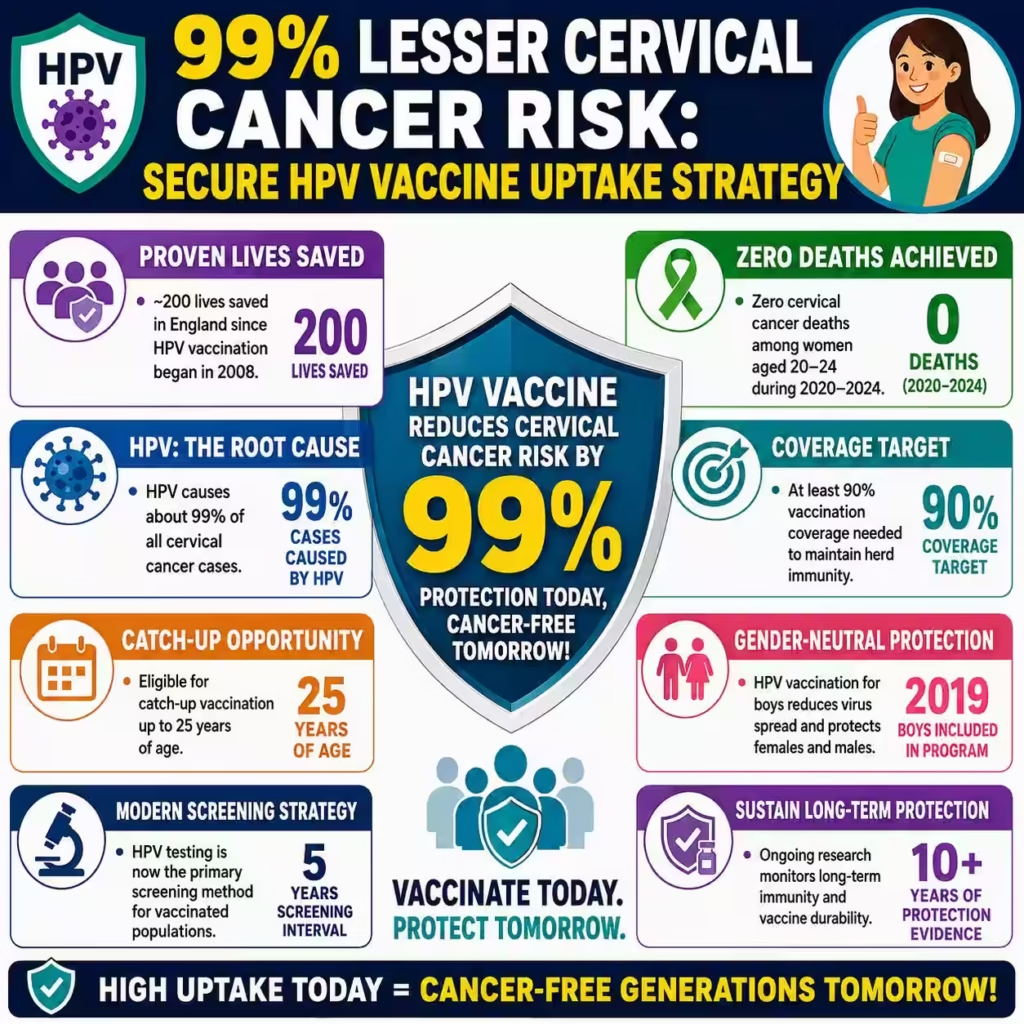
Recent landmark research confirms that children vaccinated against Human Papillomavirus (HPV) at ages 12–13 now face close to zero risk of dying from cervical cancer before age 30. This unprecedented study, funded by Cancer Research UK, reveals that approximately 200 lives have been saved in England alone since the vaccination program began in 2008. The data specifically highlights that between 2020 and 2024, there were absolutely no recorded cervical cancer deaths among women aged 20 to 24, a demographic that would have expected around 23 deaths in the absence of vaccination.
The study, led by Professor Peter Sasieni at Queen Mary University of London, provides the first direct mortality evidence supporting the global elimination targets. While cervical cancer remains the 14th most common cancer among females in the UK with 3,300 annual diagnoses, the vaccine targets the root cause, as HPV drives 99% of these cases. By preventing the abnormal cell changes that precipitate malignancy, the vaccine has effectively severed the link between infection and fatal outcomes in the fully vaccinated cohort.
Analyzing the broader impact, the reduction in mortality is not merely a statistical anomaly but a robust demonstration of immunological efficacy. The research indicates that while most HPV infections clear naturally, the persistent high-risk strains responsible for cellular mutations are being systematically blocked in the immunized population. This success in the 20–24 age bracket serves as a proof-of-concept for older cohorts as they advance in age, suggesting that the “zero death” trend could expand upward if coverage remains high.
However, the data also presents a critical strategic baseline for healthcare systems globally. The 200 lives saved figure represents only the initial wave of impact, with projected benefits expected to compound as the vaccinated population ages into their 40s and 50s. The challenge now shifts from proving efficacy to maintaining the herd immunity required to suppress viral transmission permanently across all demographics.
Carethix Critique: The Vaccination Gap Risk
Despite the celebratory nature of the “zero deaths” milestone, a rigorous analysis reveals a concerning trajectory in recent vaccination uptake rates. Cancer Research UK has explicitly warned that vaccination rates in England have drifted below the recommended thresholds required to sustain this level of protection. This decline poses a severe latent risk, as the protection of future cohorts depends entirely on maintaining high coverage levels in schools today.
The “vaccine fatigue” observed post-pandemic has created a dangerous complacency that threatens to unravel decades of oncological progress. While the current data shows 100% mortality reduction in the fully vaccinated, the emergence of unvaccinated pockets creates reservoirs for the virus to persist and mutate. Public health narratives have failed to effectively counter the drop in uptake, leading to a silent accumulation of risk that will only manifest in cancer statistics a decade from now.
Furthermore, the reliance on school-based delivery systems has shown fragility during periods of systemic disruption. The data indicates that when school attendance or medical access is interrupted, catch-up programs often fail to bridge the immunization gap completely. This systemic vulnerability suggests that the current operational model lacks the resilience needed to guarantee the eradication of cervical cancer in the long term.
Carethix analysis suggests that the disconnect between the “zero death” reality and public perception is widening. The lack of visible cervical cancer deaths in young women may paradoxically reduce the perceived urgency of vaccination among parents and guardians. This inverse relationship between success and compliance is a classic public health paradox that requires immediate, high-level intervention to prevent a resurgence of preventable mortality.
Strategic Solutions: Optimizing Uptake & Access
To reverse the declining trend, healthcare systems must immediately implement robust, data-driven catch-up campaigns targeting the specific cohorts with low coverage. These initiatives should move beyond passive availability and utilize direct digital engagement to notify unvaccinated individuals of their eligibility up to age 25. By integrating vaccination status into the NHS app and primary care alerts, clinicians can capture missed opportunities during routine health encounters.
School-based programs require a supplementary infrastructure to ensure continuity regardless of educational disruptions. Mobile vaccination units and community-based clinics should be deployed to reach adolescents who are absent from the traditional school setting or who have been excluded from the standard schedule. This multi-channel approach ensures that the delivery mechanism is resilient enough to maintain the 90% coverage target required for elimination.
Educational strategies must pivot from general awareness to targeted behavioral reinforcement. Messaging should leverage the “zero deaths” statistic as a powerful, non-theoretical proof point to combat vaccine hesitancy effectively. Communication campaigns must explicitly link the vaccination decision today with the specific, proven outcome of survival, transforming the abstract concept of prevention into a tangible life-saving measure.
Finally, administrative barriers to consent must be streamlined to facilitate higher throughput in school settings. Simplifying the consent process through secure digital platforms can reduce the administrative burden on schools and parents alike. By removing friction from the authorization workflow, health authorities can significantly increase the conversion rate of eligible students to fully vaccinated status.
Prevention Protocols: Future-Proofing Elimination
Long-term prevention requires fully integrating HPV vaccination with modernized cervical screening protocols. As the population becomes increasingly vaccinated, the primary screening modality must shift entirely to HPV testing, which is more sensitive than cytology for this cohort. This synergistic approach allows for longer screening intervals while maintaining high sensitivity for the few breakthrough cases or unvaccinated individuals.
Expanding the gender-neutral vaccination strategy is critical to reducing the overall viral reservoir in the general population. Since 2019, the inclusion of boys in the vaccination program has been a vital step, but uptake in this group must be monitored with equal rigor. Reducing viral circulation in males directly protects females and simultaneously prevents HPV-related head, neck, and anal cancers in men.
Healthcare providers must be equipped with real-time data dashboards to monitor local vaccination coverage at a granular level. Identifying geographic “cold spots” allows for the rapid deployment of resources to areas where herd immunity is threatened. This proactive surveillance model transitions the system from reactive cancer treatment to predictive, precision public health management.
Sustained investment in research is necessary to monitor the long-term durability of protection provided by the vaccine. While current evidence suggests immunity is long-lasting, continuous serological monitoring will determine if booster doses are ever required. Ensuring the biological longevity of protection is the final pillar in securing a cervical cancer-free future for the next generation.
SWOT Analysis: Historic Mortality Reduction and Long-Term Cervical Cancer Elimination Strategy
The greatest strength of this public health intervention is its measurable reduction in mortality supported by national population-level evidence rather than surrogate clinical endpoints. Updated evidence from England shows that girls vaccinated at ages 12–13 experienced virtually no cervical cancer deaths before age 30, with approximately 200 lives already saved since the HPV vaccination program began in 2008, while zero deaths were recorded among women aged 20–24 during 2020–2024, compared with an estimated 23 expected deaths without vaccination. Since high-risk HPV causes about 99% of cervical cancers, preventing persistent infection directly interrupts disease progression, while the UK continues to report roughly 3,300–3,400 new cervical cancer cases annually, demonstrating the vaccine’s strong preventive value.
The principal weakness lies in uneven vaccination coverage, delayed uptake, and persistent global disparities that limit population-wide benefits. The World Health Organization (WHO) continues to target 90% HPV vaccination coverage for girls by age 15, yet many countries remain well below this threshold, and millions of adolescents worldwide still lack access to routine immunization, reducing herd immunity and delaying elimination timelines. In addition, cervical cancer screening participation remains inconsistent across several healthcare systems, creating residual risks among unvaccinated cohorts despite substantial vaccine effectiveness.
The opportunity extends far beyond mortality reduction into long-term healthcare cost optimization and cancer elimination. The WHO’s 90-70-90 Cervical Cancer Elimination Strategy aims for 90% vaccination coverage, 70% screening coverage, and 90% treatment access, with modelling studies projecting that coordinated implementation could prevent more than 74 million cervical cancer cases and avert over 62 million deaths globally by 2120. As vaccinated cohorts continue aging into their 30s, 40s, and 50s, cumulative reductions in cancer incidence, treatment expenditure, productivity losses, and premature mortality are expected to accelerate, strengthening healthcare system sustainability.
The primary threat is complacency following early success, as declining vaccination confidence or funding interruptions could reverse decades of progress. Global disruptions to routine immunization during recent years created coverage gaps in several regions, while misinformation continues to influence vaccine acceptance and may reduce future uptake if left unaddressed. Sustaining high vaccination rates, expanding gender-neutral immunization programs, maintaining robust screening participation, and continuously monitoring epidemiological outcomes remain essential to preserving the observed near-zero mortality trend and achieving permanent cervical cancer elimination.
Key Takeaway
The achievement of zero cervical cancer deaths in young women is a definitive validation of evidence-based public health strategy. Carethix asserts that this milestone proves cervical cancer is not an inevitability but a solvable logistical challenge. The technology to save lives exists and is proven; the only remaining variable is our collective will to deliver it.
Allowing vaccination coverage to erode beneath the critical threshold of 90% constitutes a severe, systemic failure of public health administration. It is economically and ethically indefensible to enable preventable malignancies to develop when the mechanism for eradication is already fully realized and clinically validated. Policymakers must treat declining immunization rates not as a minor trend variance, but as an active crisis that demands immediate operational intervention.
True clinical leadership requires an unyielding commitment to data-driven proactive interventions and the dismantling of administrative barriers to care. We must move past passive patient outreach models and transition into an era of aggressive, digitally managed population health deployment. Absolute elimination of this disease requires absolute operational accountability at every single level of the healthcare delivery system.
The financial return on investment for high-coverage vaccination campaigns vastly outweighs the long-term clinical costs associated with oncological care. Eradicating cervical cancer eliminates the immense economic strain of late-stage therapies, complex surgical interventions, and extended palliative treatments. Investing heavily in robust delivery infrastructure today secures a massive reduction in future healthcare expenditures and societal grief.
Ultimately, the definitive success documented in this landmark study serves as a universal blueprint for future viral oncology elimination strategies. If we can successfully replicate this rigid structural model, other virus-driven malignancies can be targeted with the exact same level of precision. The path toward a cancer-free future is explicitly clear, and it requires nothing less than total, sustained execution.