Depression drives $210B in losses annually—upgrade your diagnostics now to improve outcomes and cut rising costs fast.
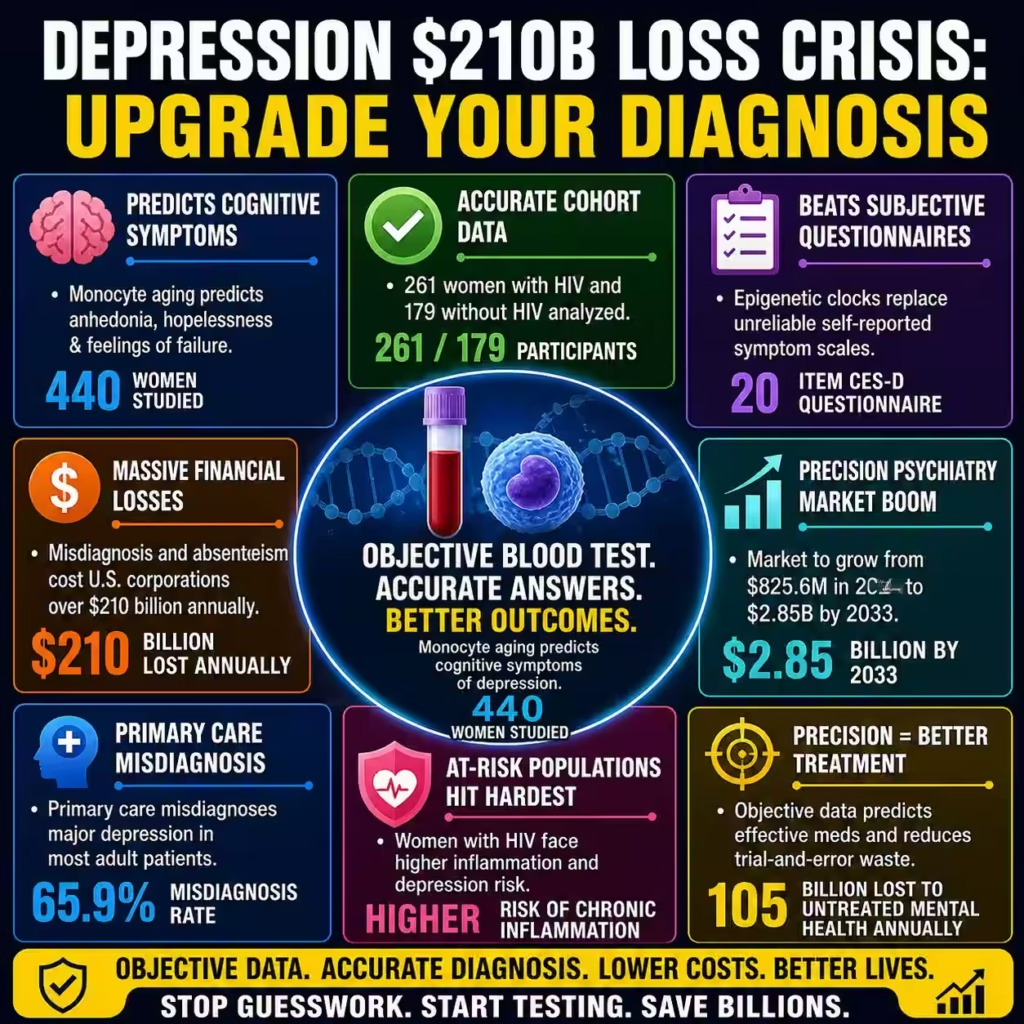
Blood tests measuring the aging of certain white blood cells can now predict cognitive symptoms of depression, disrupting a flawed diagnostic model that currently fails nearly one in five United States adults. This epigenetic biomarker breakthrough provides a definitive financial solution for corporations actively losing over $210 billion annually to massive diagnostic errors and prolonged mental health absenteeism. Published in The Journals of Gerontology, this authoritative study fundamentally shifts clinical psychiatry away from subjective guesswork toward highly quantifiable, objective cellular metrics.
Researchers successfully identified that accelerated monocyte aging serves as a highly sensitive biological indicator for clinical anhedonia, extreme hopelessness, and overwhelming feelings of failure. The clinical trial analyzed concrete data from 440 women, dividing the cohort strictly into 261 patients living with HIV and 179 without the virus. By tracking chemical modifications to DNA using advanced epigenetic clocks, the clinical team completely bypassed the traditional reliance on highly inaccurate self-reported patient questionnaires.
The historical reliance on self-reported symptom scales routinely costs the United States economy massive financial losses through extended medical leaves and reduced corporate output. Introducing objective blood diagnostics directly hints at a highly lucrative solution for corporate healthcare sponsors battling runaway mental health inflation across their workforce. Objective biological testing will immediately reduce the financial bleed caused by prolonged diagnostic timelines and notoriously ineffective trial-and-error pharmaceutical protocols.
Depression inherently lacks a universal presentation, making subjective clinical labels exceptionally dangerous and financially draining for both psychiatric patients and corporate healthcare payers. Many patients experience severe physical symptoms like fatigue and agitation, which frequently mask the underlying cognitive deterioration and severe mood dysregulation. This new biological framework finally separates somatic physical complaints from actual cognitive mood disorders, providing an unprecedented and highly precise diagnostic roadmap for physicians.
The global precision psychiatry market size reached $825.6 million in 2024 and currently projects massive commercial growth targeting $2.85 billion by the year 2033. This explosion in market value directly correlates with the urgent business need to implement strict biomarker-guided treatment pathways across global healthcare systems. As companies hemorrhage $105 billion annually due directly to untreated mental health conditions, deploying objective diagnostic tools becomes an absolute financial necessity for survival.
Populations suffering from immune-affecting disorders face significantly higher risks of chronic inflammation, which directly triggers accelerated biological aging and profound clinical depression. Women managing HIV exhibit incredibly high rates of these mood disorders, historically complicating their adherence to vital antiretroviral therapy protocols and driving up medical claims. Detecting mental health decay through routine blood work allows clinical teams to intervene aggressively before systemic illness completely destroys the patient’s overall productivity and health.
Utilizing two distinct epigenetic clocks allowed researchers to isolate the exact cellular pathways responsible for severe cognitive psychiatric decline in vulnerable patient demographics. The biological clock measuring multiple tissue types failed to show a correlation, proving that specific monocyte aging holds the exclusive key to accurate mental health diagnostics. Monocytes heavily govern human immune responses, and elevated monocyte counts historically align perfectly with patients suffering from severe major depressive disorder.
Translating subjective emotional agony into hard biological data points transforms modern mental healthcare into a purely objective, financially scalable medical science. Identifying this unique biological underpinning creates an aspirational goal where corporate healthcare plans can accurately predict which medications will yield the highest clinical success. This elite level of precision medicine definitively protects high-risk patient populations while simultaneously shielding corporate balance sheets from compounding pharmaceutical waste.
The current clinical dependence on the twenty-item Center for Epidemiologic Studies Depression Scale drastically limits diagnostic accuracy during initial patient assessments. Replacing this outdated subjective questionnaire with hard monocyte data fundamentally upgrades the basic diagnostic architecture of modern corporate medicine. This crucial scientific transition empowers clinicians to diagnose underlying hopelessness long before the patient even recognizes their own emotional deterioration.
Carethix Critique: The Catastrophic Failure of Subjective Medicine
The current psychiatric diagnostic model represents a catastrophic operational failure that routinely jeopardizes patient safety and devastates corporate healthcare budgets. Carethix views the prevailing clinical reliance on the Center for Epidemiologic Studies Depression Scale and similar self-reported questionnaires as heavily outdated and medically negligent. Expecting patients suffering from severe cognitive impairment to accurately articulate their complex biological distress creates a fundamentally flawed foundation for corporate healthcare treatment.
Primary care facilities currently exhibit a shocking 65.9% misdiagnosis rate when evaluating adult patients for major depressive disorder across the United States. This unacceptable margin of error leads directly to highly inappropriate pharmaceutical interventions, prolonged patient suffering, and explosive corporate healthcare claims. Treating misdiagnosed mental illness subjects vulnerable patients to dangerous medication side effects while generating massive long-term financial liabilities for their global employers.
Misdiagnosing complex psychiatric conditions actively drives the massive $48 billion annual financial burden associated specifically with treatment-resistant depression in the commercial sector. When clinicians mistakenly identify chronic viral fatigue as clinical depression, the resulting mistreatment severely damages the patient’s immune system and destroys workforce productivity. Objective biomarker testing eliminates this incredibly dangerous guesswork by clearly differentiating between viral somatic physical symptoms and genuine neurological mood disorders.
The alarming 300% surge in mental health-related workplace leaves of absence since 2017 blatantly exposes the glaring operational gaps in our current psychiatric infrastructure. Corporate benefit plans bleed capital daily because clinical teams lack the objective diagnostic tools necessary to catch depression before it triggers a complete functional collapse. Without concrete epigenetic markers, primary care clinicians continuously fail to identify high-risk employees until those workers require extended and incredibly expensive medical leave.
Relying exclusively on verbal symptom reporting completely ignores the intersecting biological factors of chronic human inflammation and accelerated cellular aging. Carethix strongly condemns the mainstream medical community’s historical reluctance to strictly integrate blood diagnostics into standard mental health evaluation protocols. This systemic failure disproportionately harms vulnerable corporate demographics, particularly women managing chronic conditions who constantly face intense societal stigma and severe socioeconomic barriers.
Lost productivity linked specifically to generalized anxiety and clinical depression currently destroys over $1 trillion in global economic value every single year. Employees battling severe treatment-resistant depression miss an astonishing average of 35.8 work days annually, completely destabilizing corporate operational efficiency and team morale. This devastating loss of human capital demands an immediate pivot away from subjective behavioral therapy toward highly aggressive biological medical management.
The total lack of an objective diagnostic biomarker forces psychiatrists to utilize a highly inefficient trial-and-error methodology when prescribing heavy psychotropic medications. Patients frequently endure long months of debilitating side effects before discovering that their prescribed medication fails to correct their specific biological cellular deficit. Corporate healthcare sponsors ultimately finance these completely failed medical experiments, paying premium insurance rates for clinical treatments that deliver absolutely zero medical value.
We must ruthlessly dismantle the completely false dichotomy separating physical somatic health from cognitive psychiatric medicine in modern corporate environments. The scientifically proven link between monocyte aging and clinical anhedonia shatters the outdated illusion that mental illness exists purely within the subjective human mind. Carethix demands that the healthcare industry aggressively adopt mandatory epigenetic profiling to bridge this dangerous clinical gap and permanently protect corporate payers.
Corporate financial structures continuously crack under the immense pressure of funding psychiatric treatments that lack definitive, measurable biological endpoints. Without cellular blood diagnostics, physicians essentially throw incredibly expensive pharmaceutical darts at a moving, completely invisible neurological target. This highly reckless approach to mental medicine guarantees astronomical failure rates while continuously extracting exorbitant fees from desperately struggling commercial employers.
| Related Analysis: 70% Workforce Retention Risk: Secure Rural Viability 840K Deaths Crisis: Strategic Workforce Stabilization $1B Aid Gap Crisis: Sustainable Funding Model Design |
Financial Solutions: Monetizing Precision Psychiatric Diagnostics
Implementing mandated biomarker testing for depression immediately streamlines clinical care pathways and drastically reduces unnecessary corporate medical expenditures. Healthcare executives must prioritize funding precision diagnostics. Employees with treatment-resistant depression cost approximately $17,261 annually compared to just $4,782 for healthy workers. Transitioning rapidly to objective blood tests eliminates wasteful pharmaceutical spending by predicting exact medication efficacy directly based on the patient’s unique cellular profile.
The global personalized medicine market, currently valued well over $214 billion, provides a massive financial framework for quickly integrating psychiatric blood diagnostics. Businesses must rapidly restructure their employer-sponsored health plans to aggressively cover next-generation sequencing and specific monocyte aging laboratory assessments. Funding these highly advanced diagnostic technologies upfront completely eliminates the catastrophic downstream costs associated with prolonged psychiatric hospitalizations and chronic workforce absenteeism.
Adopting mandatory genetic testing and biomarker analysis allows corporations to massively reduce the $4,700 average cost associated with replacing burned-out employees. Targeted biological interventions keep highly skilled personnel fully engaged in the workforce, neutralizing the severe presenteeism that silently destroys organizational output. Precision mental healthcare directly protects human capital investments by ensuring employees receive the exact biological support required to maintain peak cognitive performance.
Pharmaceutical companies must immediately pivot their lucrative research and development budgets toward companion diagnostics tailored specifically for complex mental health disorders. Creating bundled diagnostic and therapeutic packages guarantees that incredibly expensive psychiatric medications only reach patients biologically verified to respond favorably. This highly targeted distribution model maximizes pharmaceutical profit margins while protecting insurers from blindly funding completely ineffective clinical treatment plans.
The expansive digital biomarkers market will reach an estimated $35.83 billion by 2035, offering corporations unprecedented opportunities to track workforce mental health objectively. Integrating commercial wearable technology with routine blood panels creates a robust, continuous monitoring ecosystem that spots depressive biomarkers before behavioral symptoms ever emerge. This precise data-driven approach allows human resources departments to deploy preventive mental health resources with surgical precision and absolute maximum financial efficiency.
Health insurance carriers must completely redesign their corporate reimbursement policies to heavily incentivize the use of epigenetic clocks in primary care settings. Paying premium reimbursement rates for initial blood-based psychiatric screening directly prevents the astronomical costs generated by misdiagnosed bipolar and major depressive disorders. Financial actuaries can accurately model these exact savings, proving mathematically that precision diagnostics yield a vastly superior return on investment compared to standard subjective therapy.
Corporate business leaders must aggressively negotiate with health management organizations to guarantee that monocyte aging tests become standard preventative care inclusions. Catching elevated monocyte counts early effectively halts the biological progression of clinical depression, drastically reducing massive long-term disability claims for employers. Treating depression strictly as a quantifiable inflammatory disease rather than a mysterious emotional failing immediately rationalizes corporate healthcare spending across the board.
Investing heavily in artificial intelligence algorithms capable of rapidly decoding complex epigenetic modifications remains crucially vital for scaling precision psychiatry globally. Advanced AI-driven clinical decision support tools instantly analyze blood test results, providing primary care physicians with absolutely definitive, error-free diagnostic outputs. This automated precision removes flawed human bias from psychiatric evaluations, completely standardizing care delivery and highly optimizing financial outcomes across the entire healthcare spectrum.
Venture capital firms currently pour billions of dollars into biotechnology startups explicitly focused on mapping the complex intersection of human immunology and psychology. Employers partnering strategically with these aggressive diagnostic firms secure immediate access to revolutionary healthcare technologies that drastically cut annual insurance premiums. This lucrative strategic alignment directly transforms mental health management from an unpredictable financial liability into a highly controlled, fixed operational expense.
Prevention Methods: Engineering a Biologically Resilient Workforce
Establishing mandatory baseline epigenetic testing during all routine corporate health screenings serves as the ultimate preventive strike against catastrophic mental health crises. Tracking monocyte aging metrics annually allows corporate medical teams to identify subtle biological shifts long before an employee experiences clinical anhedonia or hopelessness. This early detection matrix empowers organizations to address cellular inflammation proactively through highly targeted lifestyle interventions and incredibly precise medical support.
Employers must actively combat chronic systemic inflammation by completely overhauling their archaic corporate wellness initiatives and employee nutritional support programs. Since elevated monocytes directly correlate with severe depression, reducing occupational stress and workplace environmental toxins functionally acts as a highly potent psychiatric preventive measure. Providing specialized anti-inflammatory protocols specifically protects high-risk corporate employees from developing the severe cognitive degradation inextricably linked to accelerated biological aging.
Corporate medical providers must strictly integrate comprehensive immune system monitoring into every single preventative psychiatric evaluation moving forward. Recognizing that viruses like HIV dramatically accelerate epigenetic aging demands a heavily coordinated prevention approach between infectious disease specialists and psychiatric professionals. Preventing severe depression requires clinical teams to aggressively manage the underlying immune dysfunction rather than simply waiting for highly destructive mood symptoms to materialize.
Corporations must proactively utilize advanced predictive analytics to perfectly identify specific demographic cohorts most vulnerable to accelerated monocyte degradation. Understanding that women with chronic health conditions face highly disproportionate risks allows human resources to deploy highly specialized, preemptive support structures. Delivering targeted financial and medical resources directly to these vulnerable groups prevents the compounding socioeconomic stressors that historically trigger severe depressive episodes.
The global healthcare industry must rapidly standardize the deployment of specific blood tests capable of precisely mapping multiple distinct epigenetic pathways. While the current medical breakthrough focuses specifically on monocytes, future corporate prevention relies entirely on developing comprehensive panels that track total cellular immune health. Building this massive biological database will eventually enable sophisticated algorithms to predict exact dates of potential psychiatric failure with astonishing clinical accuracy.
Educating the global commercial workforce about the undeniable biological reality of mental illness effectively dismantles the toxic stigma preventing early medical treatment. When employees clearly understand that depression stems directly from quantifiable cellular aging, they become significantly more likely to participate in preventive blood screening programs. Normalizing psychiatric biomarkers perfectly equates mental health management with routine cholesterol checks, driving massive protocol compliance across all corporate demographic segments.
Regulatory bodies like the United States Food and Drug Administration must quickly establish heavily streamlined approval pathways for emerging psychiatric blood diagnostic tools. Accelerating the rapid commercialization of these epigenetic clocks ensures that primary care physicians receive the vital tools necessary to prevent costly misdiagnosis immediately. Removing bureaucratic bottlenecks directly empowers the medical community to deploy these incredibly life-saving preventative technologies on a massive, highly profitable national scale.
Organizations must strictly audit their internal health benefit utilization data to accurately identify departments suffering from unusually high rates of mental health claims. Cross-referencing this specific claims data with anonymized corporate epigenetic profiles quickly exposes highly toxic work environments that actively accelerate cellular aging and depression. Executive management can then surgically restructure these specific operational divisions, neutralizing the exact psychosocial hazards actively driving immense biological decay among staff.
Establishing automated clinical workflows that instantly trigger epigenetic testing upon the diagnosis of any major immune disorder remains absolutely essential for prevention. Since chronic conditions rapidly accelerate cellular aging, integrating immediate psychiatric blood monitoring creates a highly seamless, completely impenetrable medical defensive perimeter. This automated vigilance entirely prevents the devastating secondary mental health complications that typically shatter patient resilience and destroy corporate productivity entirely.
Carethix Key Takeaway: The Eradication of Guesswork in Psychiatry
The outdated era of diagnosing severe psychiatric illnesses exclusively through subjective, self-reported questionnaires is definitively dead and fundamentally mathematically bankrupt. Carethix firmly asserts that ignoring the objective, undeniable reality of monocyte aging constitutes a catastrophic breach of corporate fiduciary and medical duty. Healthcare networks that stubbornly refuse to adopt epigenetic blood testing will ultimately drown in the massive financial liabilities generated by rampant, unchecked misdiagnosis.
Global businesses can no longer afford to blindly finance the $210 billion economic inferno actively fueled by outdated trial-and-error psychiatric methodologies. Relying entirely on compromised patients to accurately grade their own cognitive decline while actively suffering from severe anhedonia defies basic scientific logic and financial sense. Transforming mental health evaluation into a purely quantifiable, biological metric represents the absolute only viable strategy to protect global workforce productivity.
The groundbreaking medical discovery linking specific white blood cell aging directly to hopelessness completely obliterates the societal stigma surrounding major depressive disorder. Corporate leaders now possess the indisputable biological proof that mental illness constantly operates as a severe, measurable physical disease requiring highly aggressive medical intervention. We must permanently banish the highly archaic notion that clinical depression merely represents a temporary emotional weakness or an easily correctable character flaw.
Precision mental health care firmly stands as the absolute most lucrative and highly impactful medical revolution of the current technological decade. Identifying deeply unique biological underpinnings allows the commercial healthcare industry to manufacture highly targeted therapeutics that completely bypass traditional somatic side effects. This hyper-focused medical strategy firmly guarantees that every single corporate healthcare dollar spent delivers a highly measurable, scientifically validated return on corporate investment.
Carethix ruthlessly demands that commercial insurance carriers completely eliminate coverage for psychiatric facilities blatantly refusing to implement baseline epigenetic testing protocols. Subsidizing outdated medical providers who operate blindly without tracking objective biomarkers financially rewards clinical incompetence and actively endangers highly vulnerable patient populations. The medical market must force absolute diagnostic compliance, ensuring that hard biological testing dictates every single pharmaceutical decision currently made in modern psychiatry.
The complex intersection of immunology and psychiatry fundamentally rewrites the operational rules for managing chronic workplace illnesses and expensive disability claims. Tracking specific inflammatory markers enables highly aggressive preemptive strikes against the exact biological mechanisms that silently destroy high-performing corporate teams from the inside out. Organizations aggressively leveraging this advanced cellular data will effortlessly dominate their respective commercial markets by maintaining an unshakeable, biologically optimized global workforce.
What gets measured strictly gets managed. Corporate medicine must now meticulously measure the exact chemical modifications occurring within our cellular DNA. The highly aspirational goal of combining subjective human experience with hard objective biological testing has successfully materialized into a highly profitable commercial reality. Corporate executives must rapidly integrate these precise epigenetic clocks directly into their operational DNA, permanently securing both their immense financial margins and their human capital.
We are currently witnessing the ultimate global transformation of psychiatry from a soft behavioral art directly into a brutal, exact biological science. The monumental discovery of monocyte aging as a highly sensitive biomarker for depression signals the permanent end of unchecked, runaway mental healthcare inflation. Carethix strongly advises every single corporate entity to mandate blood-based psychiatric screening today, fully embracing the unstoppable, highly lucrative financial power of precision medicine.
The undeniable biological truth firmly embedded within monocyte aging data completely validates the severe silent suffering endured by millions of working professionals globally. Corporate entities now finally possess the exact financial and scientific blueprints heavily required to systematically eradicate the expensive plague of misdiagnosed mental illness. We demand the immediate global implementation of highly precise biomarker testing to permanently protect our absolute most valuable corporate asset: pristine human cognition.
FAQs:
Why does a 65.9% misdiagnosis rate in major depressive disorder still persist in modern healthcare systems?
Reliance on subjective symptom scales rather than validated biological markers invariably leads to diagnostic inconsistency and expensive clinical errors.
How is the $210 billion annual economic loss from depression misdiagnosis impacting corporate healthcare ROI?
It exposes a structurally broken system where delayed, inaccurate diagnoses drain productivity and inflate long-term treatment costs.
Can epigenetic monocyte aging biomarkers reduce the $48 billion burden of treatment-resistant depression?
Yes—but only if healthcare systems abandon trial-and-error prescribing and adopt precision diagnostics as a mandatory baseline.
Why has a 300% surge in mental health-related leave since 2017 not triggered diagnostic reform?
Institutions are constrained by outdated, low-accuracy assessment models that are insufficient for the early detection of biological deterioration.
Is the projected $2.85 billion precision psychiatry market enough to offset $105 billion in untreated mental health costs?
Not unless adoption accelerates rapidly, as market growth without systemic implementation delivers minimal real-world financial relief.