Menopause’s 80% VMS burden urges healthcare leaders to build better care strategies and improve patient outcomes.
Case Study: Menopause-Related Vasomotor Symptoms Demand a New Standard of Care
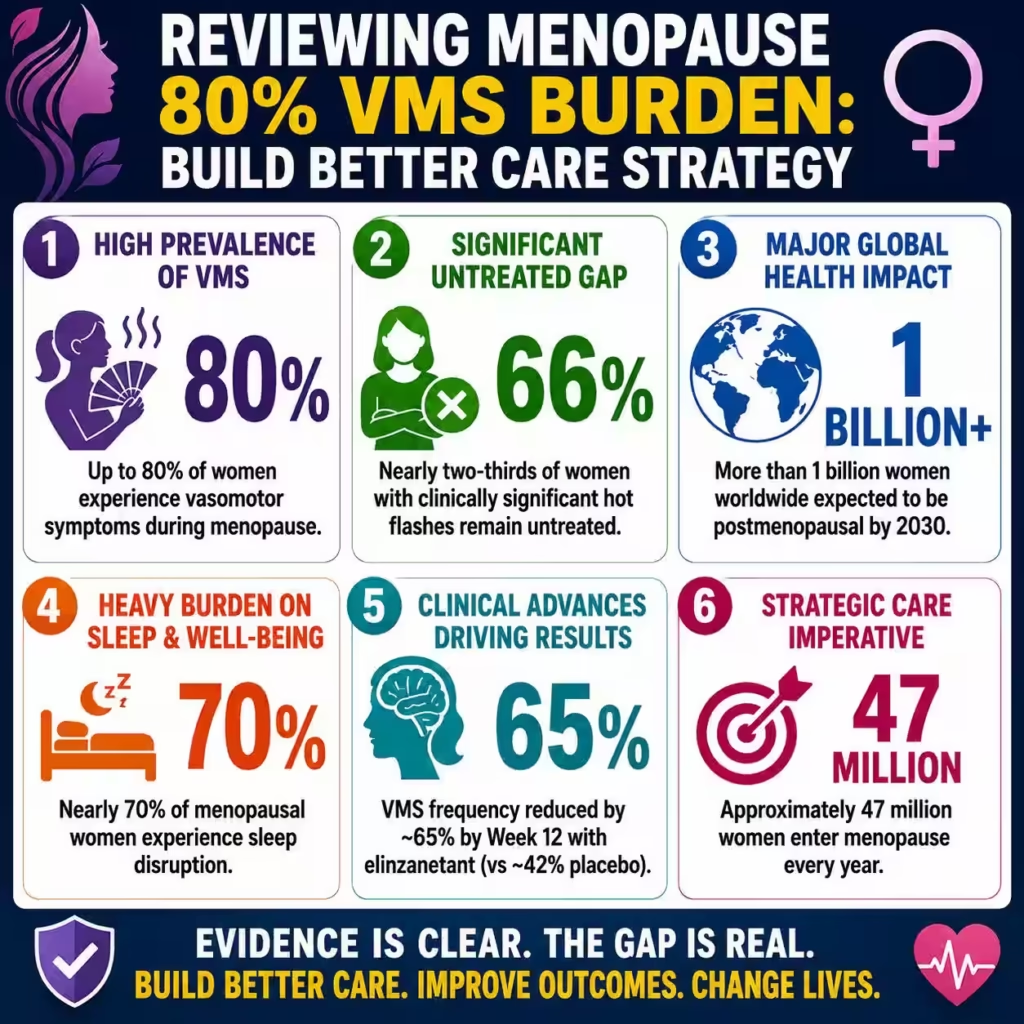
Vasomotor symptoms (VMS) affect up to 80% of women during menopause, while nearly 40% experience moderate-to-severe symptoms, yet almost two-thirds of women with clinically significant hot flashes remain untreated worldwide, creating a major gap between disease burden and evidence-based care. This treatment gap contributes to avoidable sleep impairment, workplace productivity loss, mental health concerns, healthcare utilization, and declining quality of life. Healthcare organizations, clinicians, employers, and policymakers should now shift from symptom normalization toward structured menopause care pathways supported by modern clinical evidence.
Menopause represents a significant public health issue rather than a temporary life event. More than 1 billion women worldwide are expected to be postmenopausal by 2030, and approximately 47 million women enter menopause every year, making menopause management an increasingly important healthcare priority. In the United States, the average age of natural menopause remains approximately 51 years, while millions of women continue working during this transition, increasing the economic impact of untreated symptoms across healthcare systems and employers.
Sleep disruption affects nearly 70% of menopausal women, while vasomotor symptoms are associated with fatigue, impaired concentration, anxiety, depression, mood instability, and cognitive complaints. Multiple observational studies have linked persistent hot flashes with reduced workplace performance, increased absenteeism, greater healthcare visits, and lower overall health-related quality of life. The cumulative burden extends beyond individual patients to employers, insurers, and national healthcare expenditures.
Recent advances in neurobiology have clarified why these symptoms occur. During menopause, declining estrogen results in hyperactivity of KNDy neurons, causing increased signaling through neurokinin B (NKB) and substance P (SP) pathways that activate NK-3 and NK-1 receptors. These pathways disrupt hypothalamic thermoregulation, trigger vasodilation and sweating, and interfere with sleep regulation, making VMS a biologically driven neurological condition rather than simply a hormonal inconvenience.
The development of elinzanetant, a dual NK-1/NK-3 receptor antagonist, represents a targeted therapeutic strategy based on disease biology instead of solely hormone replacement. The global Phase III OASIS clinical program, involving approximately 1,900 women across 25 countries, demonstrated statistically significant improvements in vasomotor symptom frequency beginning as early as Week 1. By Week 12, patients achieved approximately 65% reduction in VMS frequency, compared with roughly 42% among placebo recipients, while also demonstrating clinically meaningful improvements in sleep outcomes.
These findings indicate an important transition in menopause management. Rather than treating only hormone deficiency, emerging therapies increasingly target the neural mechanisms responsible for symptoms. For healthcare providers, this expands treatment options for women who cannot use menopausal hormone therapy or who remain dissatisfied with existing interventions.
Carethix Critique: Menopause Care Still Falls Short of Clinical Need
Carethix believes the largest failure in menopause management is no longer scientific understanding but healthcare execution. While up to 80% of women experience vasomotor symptoms (VMS), nearly 40% develop moderate-to-severe symptoms, almost 70% report sleep disruption, and approximately two-thirds of women with significant hot flashes remain untreated globally, many healthcare systems still classify menopause as a routine life event rather than a major clinical condition. This disconnect affects millions of women entering menopause every year and delays evidence-based interventions despite decades of published clinical research.
The healthcare burden extends well beyond hot flashes. More than 1 billion women worldwide are projected to be postmenopausal by 2030, while approximately 47 million women transition into menopause annually, creating one of the largest chronic women’s health populations globally. Persistent sleep loss, fatigue, anxiety, depression, impaired executive function, and reduced cognitive performance contribute to increased healthcare utilization, lower treatment adherence, higher cardiovascular risk profiles, metabolic dysfunction, and declining quality-of-life scores, yet these outcomes remain inadequately measured across routine clinical practice.
Fragmented healthcare delivery continues to undermine patient outcomes. Women commonly move between primary care physicians, gynecologists, endocrinologists, psychiatrists, sleep medicine specialists, behavioral health providers, and cardiologists before receiving coordinated menopause management, increasing consultation frequency, duplicated investigations, delayed diagnosis, inconsistent prescribing, and avoidable healthcare expenditure. Although menopause affects nearly half of the adult female population during aging, dedicated multidisciplinary menopause clinics remain limited across many healthcare systems.
Treatment hesitancy represents another systemic weakness. Despite recommendations from major professional organizations supporting individualized menopause management, safety concerns, historical misconceptions regarding hormone therapy, clinician knowledge gaps, inconsistent guideline implementation, insurance restrictions, and widespread misinformation continue to limit treatment adoption. Consequently, millions of symptomatic women either receive no therapy or discontinue treatment prematurely despite persistent impairment in sleep, workplace productivity, emotional health, and daily functioning.
Healthcare inequality further widens outcome disparities. Rural populations, underserved communities, minority groups, and lower-income patients frequently experience reduced access to menopause specialists, evidence-based counseling, behavioral interventions, and newly developed nonhormonal therapies. Workforce shortages, reimbursement barriers, socioeconomic inequalities, and limited continuing medical education collectively prevent equitable access to modern menopause care despite rapid scientific progress.
Carethix identifies a substantial implementation gap between clinical evidence and healthcare delivery. The global Phase III OASIS clinical program enrolled approximately 1,900 women across 25 countries, demonstrating statistically significant reductions in vasomotor symptom frequency beginning in Week 1, reaching approximately 65% reduction by Week 12 compared with 42% for placebo, alongside meaningful sleep improvements. Scientific innovation has advanced considerably, but healthcare systems have not modernized clinical pathways, reimbursement strategies, physician education, quality metrics, or patient awareness at the same pace.
Healthcare Advisory Solutions: Building Comprehensive Menopause Care
Healthcare organizations should establish standardized menopause care pathways comparable to established chronic disease management programs. Every woman entering the menopausal transition should undergo structured assessment covering vasomotor symptom frequency, sleep quality, fatigue, depression, anxiety, cognition, cardiovascular risk, metabolic status, osteoporosis risk, sexual health, and quality-of-life indicators, allowing earlier intervention before symptoms significantly affect clinical outcomes. Standardized screening across primary care could improve early diagnosis among millions of women who currently remain untreated.
Clinical decision-making should follow evidence-based risk stratification rather than generalized treatment approaches. Patients should receive individualized care based on symptom severity, age, time since menopause onset, cardiovascular profile, breast cancer history, thromboembolic risk, patient preferences, and treatment goals. Modern care pathways should integrate menopausal hormone therapy where appropriate, behavioral interventions, cognitive behavioral therapy for insomnia, lifestyle medicine, nonhormonal pharmacotherapy, and targeted neurokinin receptor antagonists, enabling precision medicine rather than uniform prescribing.
Healthcare systems should substantially strengthen clinician education. More than 80 million women are currently estimated to be in the menopausal transition across developed economies, yet menopause education remains inconsistent within undergraduate medical education, residency training, and continuing professional development. Mandatory continuing medical education covering menopause physiology, neurokinin biology, pharmacology, updated clinical guidelines, contraindications, shared decision-making, and long-term monitoring would reduce treatment variation while improving patient confidence and physician competency.
Healthcare should increasingly leverage digital medicine. Electronic patient-reported outcome measures, wearable sleep monitoring, digital symptom diaries, telemedicine follow-up, artificial intelligence-supported clinical decision support, and predictive analytics can continuously monitor symptom trajectories instead of relying solely on episodic office visits. Digital platforms also improve medication adherence, identify treatment failure earlier, reduce unnecessary consultations, and support value-based healthcare performance measurement.
Employers should recognize menopause as a workforce health issue rather than solely a medical concern. Women represent nearly half of the global workforce and constitute substantial proportions of healthcare professionals, executives, educators, researchers, and organizational leadership. Workplace accommodations—including flexible scheduling, improved environmental temperature control, mental health support, occupational health services, menopause education, and manager training—can reduce absenteeism, presenteeism, burnout, staff turnover, and productivity losses while improving employee retention.
Healthcare payers should adopt value-based reimbursement models supporting earlier intervention instead of delaying treatment until symptoms become disabling. Economic analyses consistently demonstrate that untreated menopause increases physician consultations, diagnostic investigations, prescription changes, sleep disorder management, mental health utilization, and productivity losses. Investing in comprehensive menopause care has the potential to reduce long-term healthcare expenditure while improving patient-reported outcomes across large populations.
Patient education should become a measurable quality indicator. Every woman should receive evidence-based counseling regarding symptom biology, expected menopause progression, available treatment options, realistic therapeutic expectations, medication safety profiles, cardiovascular health, nutrition, exercise, bone protection, and long-term follow-up. Better-informed patients demonstrate higher treatment adherence, improved shared decision-making, lower anxiety, and reduced reliance on inaccurate health information.
Future Prevention: Creating Sustainable Menopause Care Systems
Preventive menopause care should begin 5 to 10 years before the average menopause age of approximately 51 years through structured midlife women’s health assessments. Women entering their forties should routinely receive counseling regarding vasomotor symptoms, sleep hygiene, cardiovascular prevention, osteoporosis risk reduction, metabolic health, mental well-being, nutrition, exercise, cognitive health, and available treatment options. Earlier education enables faster recognition of symptoms and reduces unnecessary delays in seeking evidence-based care.
Healthcare organizations should integrate menopause into broader preventive medicine frameworks. Following menopause, cardiovascular disease becomes the leading cause of mortality among women, while osteoporosis affects approximately 1 in 3 women over age 50, increasing fracture risk and long-term disability. Comprehensive menopause clinics should therefore combine cardiovascular screening, diabetes risk assessment, lipid management, bone density evaluation, weight management, hypertension screening, cancer prevention, and mental health services within a coordinated care model.
Healthcare quality improvement should incorporate measurable performance indicators. Organizations should monitor screening rates, diagnosis rates, treatment initiation within 30 days, symptom reduction, sleep improvement, patient satisfaction, treatment adherence, quality-of-life scores, referral timelines, adverse events, and follow-up compliance. Benchmarking these metrics across healthcare systems supports continuous improvement while identifying disparities requiring targeted intervention.
Clinical practice guidelines should evolve rapidly as emerging evidence becomes available. Long-term safety surveillance, comparative effectiveness studies, pharmacoeconomic evaluations, real-world registries, precision medicine research, and implementation science should continuously inform clinical recommendations. Accelerated evidence translation reduces the traditional delay between clinical trial publication and routine healthcare adoption.
Investment in menopause research should continue expanding. Future studies should include larger multiethnic populations, extended follow-up beyond five years, comparative studies between hormonal and nonhormonal therapies, biomarker-guided personalized treatment, digital health integration, and health economic modeling. Stronger evidence improves payer confidence, clinician adoption, and regulatory decision-making while supporting more individualized care.
Healthcare technology should become central to preventive monitoring. Artificial intelligence, wearable biosensors, digital symptom tracking, remote patient monitoring, and predictive algorithms can identify worsening vasomotor symptoms before significant deterioration occurs. These technologies support proactive intervention while reducing emergency consultations, fragmented care, and avoidable healthcare utilization.
National public health strategies should elevate menopause to a recognized healthcare priority. Educational campaigns, standardized clinician training, employer engagement, patient advocacy initiatives, and improved insurance coverage collectively reduce stigma while encouraging timely diagnosis and evidence-based treatment. Sustainable prevention requires coordinated action across healthcare providers, policymakers, employers, researchers, insurers, and patient organizations.
Gap Analysis: Closing the Distance Between Evidence and Clinical Practice
Carethix identifies four strategic healthcare gaps limiting menopause outcomes. Gap one is disease recognition, where up to 80% of women develop vasomotor symptoms, nearly 40% experience moderate-to-severe disease, yet approximately two-thirds remain untreated globally, demonstrating a substantial failure in early diagnosis and clinical intervention. Routine menopause screening within primary care could significantly narrow this diagnostic gap.
Gap two involves treatment accessibility. Modern evidence now supports multiple evidence-based therapeutic approaches, including individualized hormone therapy, behavioral interventions, cognitive behavioral therapy, selective nonhormonal medications, and dual neurokinin receptor antagonists such as elinzanetant. However, reimbursement limitations, clinician uncertainty, regulatory variation, workforce shortages, and patient misinformation continue to restrict access despite strong Phase III evidence involving 1,900 women across 25 countries.
Gap three concerns healthcare integration. Menopause simultaneously affects endocrine function, neurological regulation, cardiovascular risk, metabolic health, sleep quality, mental health, sexual health, and workplace performance, yet healthcare delivery remains fragmented across multiple specialties. Integrated multidisciplinary menopause clinics can reduce duplicated testing, shorten diagnostic timelines, improve care coordination, and enhance patient satisfaction while lowering long-term healthcare costs.
Gap four focuses on healthcare measurement. Many organizations continue measuring prescriptions written or clinic visits completed rather than meaningful patient outcomes such as ≥50% reduction in hot flash frequency, sleep quality improvement, cognitive recovery, workplace productivity, treatment adherence, patient satisfaction, and health-related quality-of-life scores. Transitioning toward value-based outcome measurement will better align menopause care with modern healthcare quality standards.
Closing these four gaps would transform menopause management from reactive symptom control into proactive, longitudinal population health management. Carethix believes healthcare systems that integrate standardized screening, multidisciplinary care pathways, evidence-based therapeutics, digital monitoring, continuous quality measurement, and preventive health strategies will achieve superior clinical outcomes while improving healthcare efficiency, workforce productivity, and long-term women’s health.
Carethix Key Takeaway
Carethix concludes that menopause-associated vasomotor symptoms should no longer be viewed as an unavoidable consequence of aging that women simply tolerate. The combination of high disease prevalence, substantial quality-of-life impairment, emerging understanding of neurokinin biology, and strong Phase III clinical evidence supporting targeted therapies demonstrates that healthcare systems possess the knowledge needed to improve outcomes. Organizations that invest in standardized screening, evidence-based treatment pathways, multidisciplinary coordination, clinician education, preventive care, and continuous quality measurement will deliver more effective menopause care while strengthening long-term patient health, workforce participation, and healthcare system performance.