22.1M lost workdays expose your workforce risk—protect your teams with stronger sleep health strategies.
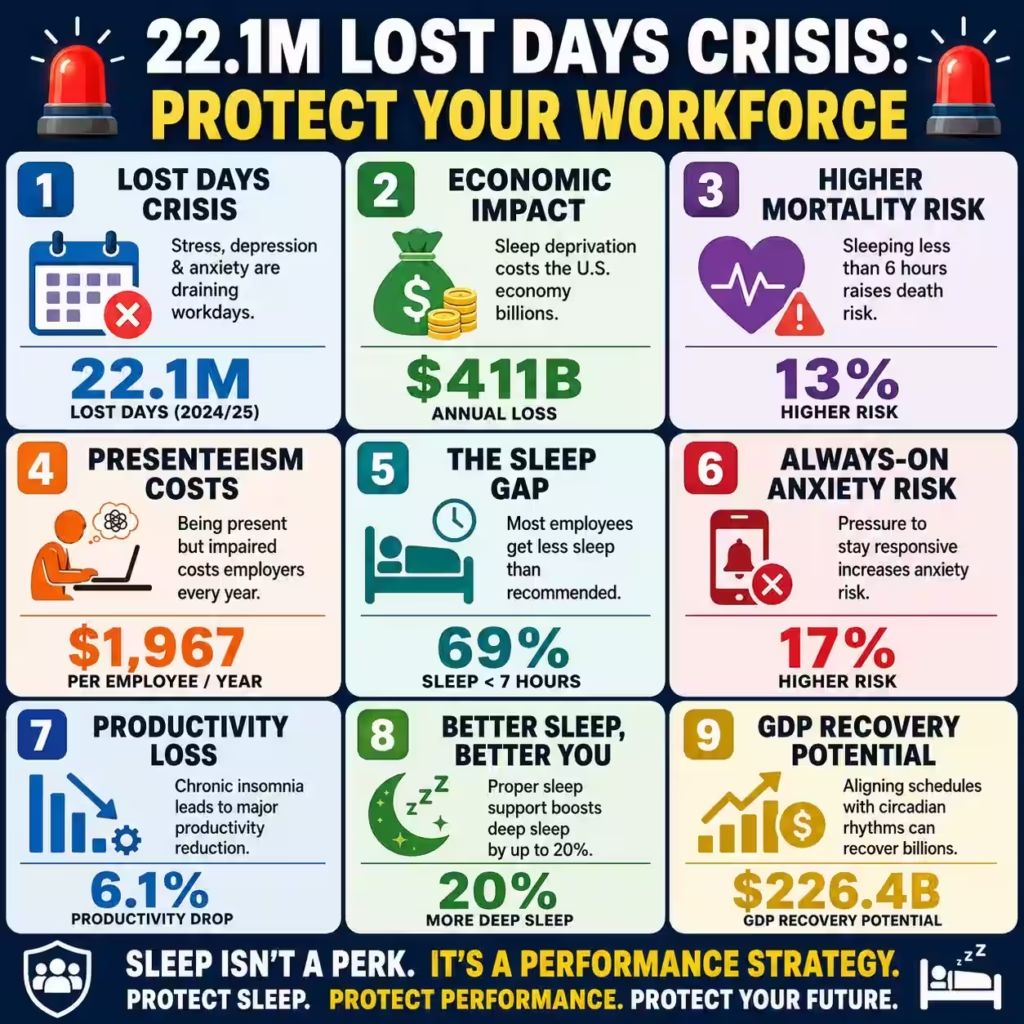
In the 2024/2025 fiscal period, the Health and Safety Executive reported a staggering 22.1 million working days lost specifically to stress, depression, and anxiety. Labor market disruption shows a systemic failure to prioritize high-quality, restorative sleep, a foundational biological pillar of human performance. Organizations often ignore the fact that sleep deprivation costs the United States economy approximately $411 billion annually in lost productivity.
This financial detriment is exacerbated by an estimated 1.23 million lost working days annually within the American workforce alone. Current clinical data indicates that an individual sleeping less than six hours per night faces a 13 percent higher mortality risk compared to those maintaining seven to nine hours. From a business standpoint, “short sleepers” exhibit a 2.4 percentage point greater loss of productivity, which stems from both absence from work (absenteeism) and the more subtle reduction in effectiveness while at work (presenteeism).
Presenteeism occurs when employees are physically present but cognitively impaired, costing employers an estimated $1,967 per employee annually. When the brain lacks consistent, high-quality rest, it loses the capacity to regulate cortisol and other vital stress hormones effectively. This biological deficit renders teams more reactive, less rational, and substantially more susceptible to strategic misjudgments during high-stakes negotiations.
The economic reality is that sleep is not a personal lifestyle choice but a critical organizational asset that requires active management. We observe that 69% of the modern workforce is currently operating with fewer than the recommended seven hours of sleep per night. This gap creates an “exhaustion tax” that erodes deep work capacity and emotional intelligence across entire leadership tiers.
By starting the workday sleep-deprived, your human capital is essentially operating on the back foot before a single email is opened. Strategic investment in sleep health constitutes one of the few underutilized opportunities for achieving immediate and sustained improvements in organizational financial performance. These benefits manifest through augmented cognitive acuity and a substantial mitigation of operational hazards associated with fatigue.
The Carethix Critique: Identifying the Risks and Gaps in Current Corporate Wellness
Carethix asserts that contemporary corporate wellness programs are insufficient because they treat sleep as a secondary amenity rather than an essential operational necessity. Most organizations erroneously focus on daytime interventions such as gym stipends or nutritional supplements while ignoring the nocturnal recovery phase that validates those efforts. Our analysis reveals a significant oversight: the widespread praise of “tired but wired” work environments inadvertently encourages and validates practices that are detrimental to sustainable, long-term cognitive performance.
This “always-on” mentality leads to a 17% higher risk of clinical anxiety among employees who feel pressured to remain responsive after hours. Reliance on wearable tracking devices often exacerbates “orthosomnia”—obsessive tracking of sleep metrics that increases anxiety and further degrades sleep quality. Carethix critiques the industry’s obsession with sleep quantity over sleep quality and structural support.
Achieving the eight hours in bed is insufficient; the body must enter the deep, N3-stage sleep vital for memory consolidation and emotional processing. Furthermore, musculoskeletal misalignment during sleep poses a risk, contributing to the 511,000 workers who experienced work-related physical ailments during the 2024/25 period. The lack of formal “Right to Disconnect” policies creates a persistent cognitive load that prevents the brain from entering the necessary “wind-down” state before sleep.
This policy gap is directly correlated with an average productivity reduction of 6.1% among employees experiencing chronic insomnia, compared to a mere 2.5% in cohorts who report sufficient rest. Organizations are effectively paying for 100% of an employee’s time while receiving only a fraction of their cognitive potential due to these unmanaged risks. Carethix demands a shift from passive awareness to active structural reform that prioritizes the biological necessity of rest.
| Related Analysis: 64% Denial Risk Exposure: Defend Your Revenue Today Hantavirus 40% Mortality Crisis: Your Safer Fleet Model $10M Wrongful Death Lawsuit Exposure: Secure Clinical Accuracy |
Strategic Solutions: Engineering the High-Performance Recovery Environment
To curb the $411 billion loss, organizations need a multi-layered Sleep Health Architecture addressing behavior and environment. The first step involves adopting “No-Meeting Recovery Windows” for employees returning from international travel or those working irregular shift patterns. This protocol ensures that high-stakes decision-making is deferred until cognitive functions have stabilized through at least two full sleep cycles.
Data suggests that optimizing work schedules to align with natural circadian rhythms has the potential to recover an estimated $226.4 billion in annual GDP for the United States. Furthermore, corporations ought to incorporate subsidies for premium recovery technology and advanced ergonomic sleep equipment into their standard employee health benefits portfolio. When the body is supported properly at night, the likelihood of entering deep, restorative sleep stages increases by approximately 20%, directly improving next-day emotional regulation.
We recommend replacing generic “wellness apps” with targeted sleep coaching that focuses on consistent wake-sleep timing and environment optimization. These interventions move beyond surface-level intent and deliver tangible, measurable improvements in employee engagement and retention. Leadership should champion the “Power of the Pause” by formalizing after-hours communication boundaries to protect pre-sleep time.
Implementing an organizational “dark hour,” during which internal servers cease pushing notifications, is anticipated to substantially mitigate the “wired” condition that impedes effective recovery. Empirical data suggests that workplace mental health programs centered on these fundamental principles yield a return of $4 for every $1 invested. By recognizing sleep as a strategic performance metric, organizations can transform their workforce from a liability prone to fatigue into a competitive asset characterized by heightened clarity.
Future Prevention: Proactive Protocols for Sustainable Organizational Health
It all starts with checking our workplace culture to spot and get rid of “Sleep Heroism”—that belief that working yourself to the bone equals being a dedicated star performer. We need to shift to a “Rest-to-Perform” mindset, making sleep health a fundamental part of how we manage risks in the company. This includes using diagnostic tools in primary care settings to identify sleep apnea and other disorders before they manifest as workplace accidents or burnout.
Early detection and intervention for sleep disorders can reduce healthcare spending by as much as $149.6 billion across the national economy. Integrated HR technologies should be utilized to monitor “Fatigue Risk” markers such as increased absenteeism or a sudden spike in error rates within specific teams. These insights enable managers to step in with supportive options like flexible scheduling or mandatory breaks, helping to prevent burnout and a complete mental health crisis.
Proactive organizations are implementing “Right-to-Disconnect” clauses in contracts, legally and culturally protecting recovery time. This structural prevention enforces a biological boundary, combating the “tired but wired” phenomenon. Long-term prevention also necessitates redesigning hybrid home-offices to physically maintain “work-sleep” separation.
To genuinely support their employees’ well-being, companies should offer financial aid for tools like light-filtering glasses and quality noise-canceling headphones. These resources help people build a personal “sleep sanctuary,” a restful space where they can truly disconnect from the digital world and get the restorative sleep they need.
Educating the workforce on the impact of late-night screen exposure—which disrupts melatonin production—is essential for preventing the chronic sleep shortfalls of the future. By institutionalizing these prevention measures, you build a resilient, high-capacity organization that is immune to the cascading costs of exhaustion.
Carethix Key Takeaway
The 22.1 million workdays lost due to mental health issues directly expose the failure of a corporate culture that champions “exhaustion as a status symbol.” Sleep is the most powerful, cost-effective, and practical tool available to support your workforce’s mental health and your company’s financial stability. If you fail to prioritize sleep health as a foundational business strategy, you are choosing to accept a 2.28% tax on your total organizational output.
Success in business isn’t just about the eight hours spent working; it’s also about the eight hours spent resting. Think of sleep as a crucial investment. If your team is tired, they’ll make poor choices, be less productive, and lose their competitive edge. The best way to achieve long-term, healthy financial growth is by making sure your people are well-rested and operating at their best.
FAQs:
Why are 22.1 million lost workdays from stress and anxiety still treated as an HR issue instead of a boardroom financial crisis?
As organizations persist in prioritizing immediate output over biological recovery, they are inadvertently absorbing substantial productivity decline, heightened burnout rates, and avoidable operational vulnerabilities.
How is the $411 billion annual productivity loss from sleep deprivation damaging long-term business growth?
Organizations ignoring sleep health are effectively accepting a hidden performance tax that weakens decision-making quality, innovation capacity, and workforce resilience at scale.
Why does sleeping less than 6 hours increase both a 13% mortality risk and workplace performance failure?
Chronic sleep restriction destabilizes cognitive accuracy, emotional regulation, and stress recovery, creating a workforce that is physically present but strategically impaired.
How does presenteeism costing employers $1,967 per employee annually expose the failure of modern corporate wellness programs?
Most wellness initiatives focus on surface-level perks while neglecting restorative sleep, the core biological system that determines mental clarity, productivity, and sustainable performance.
Why are 69% of employees operating below the recommended 7 hours of sleep becoming a major competitive threat for businesses?
A chronically exhausted workforce increases error rates, weakens leadership judgment, and reduces deep-work efficiency, causing companies to lose both profitability and strategic agility.