31% global inactivity threatens your long-term health costs—discover proven strategies to protect your wellness ROI.
Viet Nam Case Study: Inactivity Economics
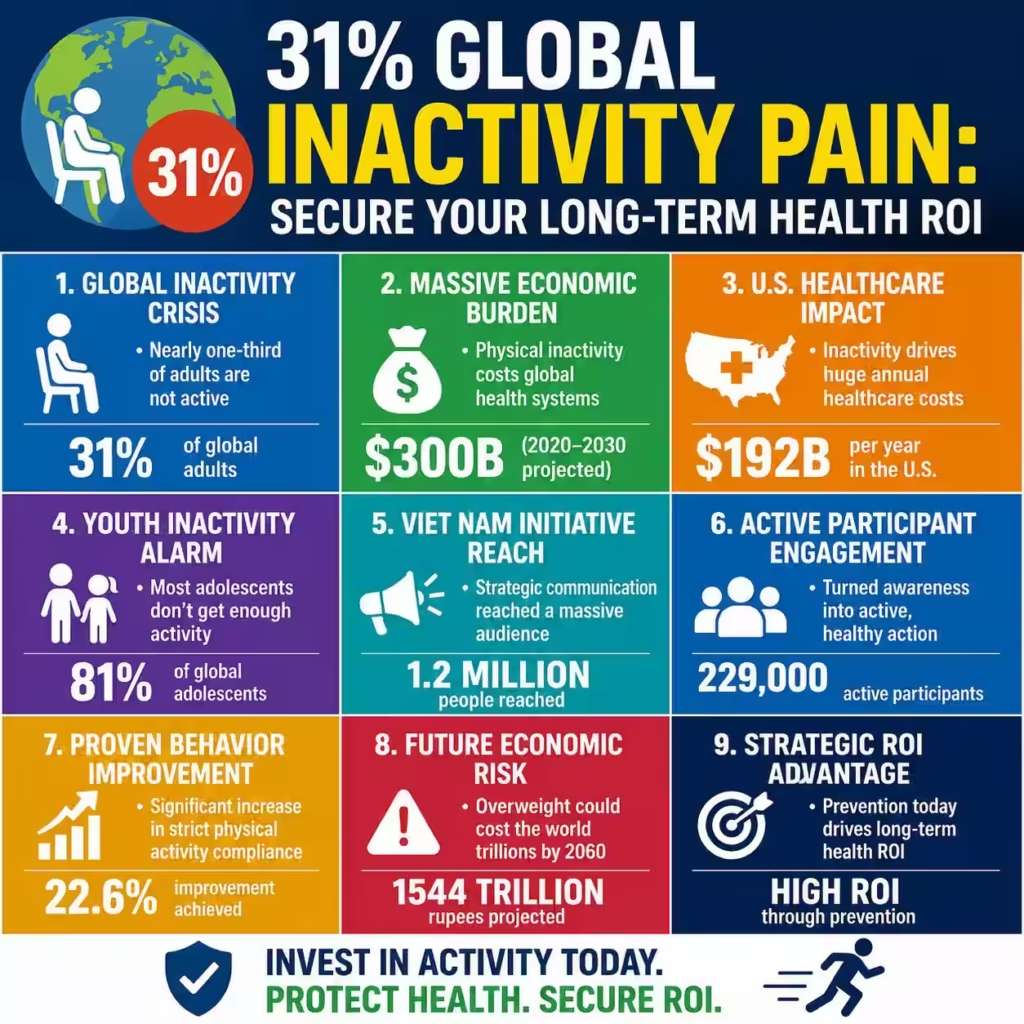
The Sports Partnership Initiative for Community Health in Viet Nam addressed a structural macroeconomic market deficit by comprehensively reaching 1.2 million individuals through strategic corporate communications, subsequently supporting 229,000 residents and notably increasing strict physical activity compliance by 22.6% among enrolled students at 10 educational institutions. This operational intervention directly confronts the escalating, systemic financial pain point of widespread physical inactivity, indicating that structured organizational engagement frameworks can effectively offset anticipated regional medical expenditures. The World Health Organization authoritatively reported in 2024 that nearly 31% of the global adult population, representing 1.8 billion individuals, currently fails to meet minimum physiological activity thresholds, thereby underscoring the necessity for comprehensive market solutions.
Analyzing the broader macroeconomic environment explicitly reveals that the aggregate global cost of unchecked physical inactivity is predictably projected to approach 300 billion dollars for international healthcare systems between the years 2020 and 2030, according to validated public health financial models. Within the United States market alone, chronic inactivity actively contributes to an estimated $192 billion in annual systemic healthcare spending, representing 12.6% of total national medical expenditures (ACSM, 2026). The successful Vietnamese pilot program demonstrates exactly how deploying localized, culturally tuned communication strategies creates a measurable, robust financial defense against this documented global economic drain by driving permanent population-level behavioral modifications.
Enterprise healthcare administrators must recognize that chronic diseases intrinsically linked to prolonged sedentary behaviors, explicitly including type 2 diabetes and advanced cardiovascular disease, are consistently responsible for substantive global workforce productivity reductions and elevated corporate disability claims. The World Obesity Federation recently forecast that by the year 2060, the compounding global economic burden of unmitigated overweight conditions will exceed 1544 trillion rupees, clearly indicating an impending, systemic pressure on global corporate insurance premiums and regional public health infrastructure. Methodically scaling the proven Viet Nam initiative model provides international corporate leaders with a statistically verified, reliable methodology to mitigate these projected financial liabilities through targeted, proactive preventative community investments.
A rigorous, objective examination of the empirical data extracted from the 10 targeted educational schools strongly indicates that achieving a 22.6% improvement in physical activity compliance reliably yields compound annual health dividends for the emerging international workforce. Implementing early biological intervention reduces the statistical probability of adolescent metabolic syndrome, a widespread physiological condition that currently presents a material, long-term capital risk for all future employer-sponsored corporate health plans. The World Health Organization specifically identified that approximately 81% of adolescents globally remain insufficiently active, thereby establishing a clear, identifiable demographic target for broad-scale healthcare business strategy deployment.
Professional business analysts routinely evaluate complex community health interventions based precisely on their demonstrable capacity to consistently deliver a verifiable return on investment. Reaching 1.2 million individuals through foundational, well-orchestrated communication activities establishes a low-cost, high-impact clinical acquisition funnel. Encouraging exactly 229,000 active participants to sustainably maintain routine movement protocols directly and measurably translates into fewer primary care physician visits, optimized regional healthcare resource utilization, and stabilized acute hospital capacity metrics. Permanently transforming basic public health communication into a predictable, competitive corporate asset class requires multinational organizations to immediately adopt the structured Vietnamese engagement framework as a universal, standardized operational protocol.
The strategic, widespread integration of such active community design investments consistently produces measurable, robust economic paybacks through extended population life expectancy, elevated local retail performance in newly walkable zones, and fortified municipal tax revenues (ACSM, 2026). Modern corporate healthcare strategy must decisively pivot from historically reactive clinical treatment models to proactive, data-driven population management architectures, utilizing verified public engagement campaigns to drive preventative care metrics. Rigorously evaluating the Vietnamese sports initiative confirms that well-coordinated, adequately funded communication logistics successfully and predictably translate urgent public health imperatives into sustainable, globally scalable corporate financial growth models.
Carethix Critique: Systemic Market Failure Risks
Carethix Healthcare Advisory comprehensively conducts a rigorous, objective corporate critique of the Sports Partnership Initiative in Viet Nam, precisely identifying both its foundational operational strengths and the systemic market failure risks it unfortunately leaves unresolved. While reaching 1.2 million diverse people demonstrates efficient top-of-funnel demographic engagement, the long-term systemic sustainability of the notable 22.6% compliance improvement among enrolled students remains vulnerable to unpredictable funding fluctuations and municipal infrastructural deficits. The primary, unmitigated economic pain point clearly persists in the distinct lack of true commercial permanence, as traditional public health campaigns routinely experience predictable attrition in behavioral adherence immediately once the initial communication funding concludes.
A significant operational gap in the current Vietnamese implementation is the complete absence of integrated, medical-grade wearable technology designed for objective, continuous population health monitoring, a critical capability which the World Health Organization recommended in their comprehensive May 2026 guidelines. Without the continuous transmission of physiological biometrics, commercial healthcare providers face immense challenges in accurately translating self-reported physical activity improvements into verified, reliable actuarial data necessary for profitable insurance premium adjustments. Carethix explicitly notes that relying exclusively on historically flawed self-reported compliance metrics introduces a statistical variance that weakens the precise economic predictability absolutely required by institutional healthcare investors.
Furthermore, the targeted initiative actively risks a critical demographic failure by noticeably not explicitly detailing specific operational strategies to properly address the documented global gender disparity in routine physical activity, where adult women consistently remain an average of 5% points less physically active than adult men (WHO, 2024). A persistent failure to deploy specific, gender-optimized engagement modalities leaves a quantifiable portion of the global adult population constantly exposed to cardiovascular and complex metabolic morbidities, thereby unfortunately perpetuating completely avoidable medical expenditures. Strategic healthcare investments must unequivocally guarantee equitable, demographically tuned behavioral modification pathways to successfully maximize the ultimate return on investment and permanently stabilize broad-spectrum, regional morbidity rates.
Another prominent operational vulnerability is the potential misalignment between the active communication strategy and actual, tangible urban infrastructure readiness. Encouraging continuous movement without establishing safe, walkable modern environments predictably generates a contradictory user experience. The American College of Sports Medicine explicitly indicated in 2026 that comprehensive built environment infrastructure, specifically including accessible municipal parks and extensive active transportation networks, is absolutely vital for successfully transforming initial communication success into permanent, lifelong lifestyle integration. Carethix advises that isolated, localized promotional campaigns remain practically ineffective unless they are firmly, legally tethered to municipal capital expenditures that physically and permanently support the actively promoted physiological behaviors.
The projected economic risks stemming directly from these highlighted strategic gaps are substantial, particularly considering the World Health Organization authoritatively projects roughly 500 million new preventable chronic disease cases globally by the year 2030 if widespread structural inactivity remains completely unmitigated. Multinational organizations that attempt to replicate the Vietnamese pilot program without properly engineering sustainable, technically advanced tracking mechanisms will undoubtedly incur elevated customer acquisition costs coupled with low long-term retention rates. Consequently, the global healthcare sector must rapidly and permanently transition from basic awareness generation to aggressively implementing robust, integrated, commercially viable ecosystems that permanently and measurably alter consumer health habits.
In our professional, data-backed analysis, the localized Viet Nam initiative confidently provides a valuable, functional proof of concept but unquestionably requires rigorous architectural refinement before safely scaling to a globally dominant multinational operational standard. Corporate stakeholders must universally recognize that temporary, socially driven public enthusiasm simply cannot ever adequately substitute for permanent, evidence-based clinical pathways, robust financial incentives, and visionary environmental redesigns. Thoroughly eliminating these identified strategic gaps remains an absolute, non-negotiable operational mandate for successfully converting a 1.2 million person reach into a permanent, lucrative reduction in aggregate global healthcare utilization.
Solutions: Fiscal Optimization and Health Capital
Addressing the profound structural deficiencies of broad public health interventions requires the immediate deployment of advanced fiscal optimization strategies that directly and reliably monetize individual physical activity metrics. Corporate healthcare stakeholders must proactively engineer sophisticated incentive-based health insurance structures that offer dynamic, real-time premium reductions for enrolled members who consistently and provably achieve established physiological movement benchmarks. Implementing continuous, tamper-proof tracking hardware, specifically focusing on advanced medical-grade wearable technology, provides the precise, verifiable data stream absolutely required to underwrite these modern financial instruments securely and effectively.
Modern healthcare systems should establish robust public-private partnerships that seamlessly integrate community sports initiatives with specialized clinical preventive medicine departments, thereby creating a unified continuum of care. Evidence indicates that when attending physicians issue formalized, trackable prescriptions for routine exercise, patient compliance rates increase significantly, successfully transforming basic physical activity into a standardized, enforceable medical intervention. This strategic integration allows regional medical facilities to appropriately bill commercial health insurers for scheduled preventive lifestyle counseling, generating a new revenue center while decreasing long-term chronic disease liabilities.
Regional municipal governments must systematically redirect existing infrastructure capital toward comprehensive active design architectures, substantially expanding walkable urban transit corridors and modernizing accessible recreational facilities. Compelling economic data compiled by the American College of Sports Medicine in 2026 confirms that deliberate active community design produces measurable, sustained returns through enhanced local retail sales and increased property tax revenues. Consequently, strategic urban planning logically becomes a primary, highly effective mechanism for noncommunicable disease prevention, directly supporting and sustaining the behavioral objectives of communication initiatives like the successful program executed in Viet Nam.
To definitively solve the persistent demographic engagement disparities, commercial healthcare organizations must meticulously design hyper-segmented, culturally competent marketing models that specifically target historically underperforming population sectors. Developing customized, supportive physical activity programs exclusively for older adults and adolescent females ensures comprehensive market penetration, directly addressing the highest clinical risk categories consistently identified in recent global health surveys. Sustainably expanding the impressive 22.6% compliance success rate observed in Vietnamese educational institutions mandates that these customized engagement protocols accommodate diverse physiological baseline needs and regional societal constraints.
Enterprise digital health platforms should systematically aggregate the anonymized movement data gathered from these 1.2 million initial community participants to continually train advanced predictive artificial intelligence models. These sophisticated predictive algorithms possess the capability to identify localized populations at risk for noncommunicable diseases, empowering healthcare administrators to proactively deploy prophylactic lifestyle interventions before costly clinical surgical treatments become strictly necessary. Methodically utilizing advanced data analytics permanently transitions public health population management from a historically reactive, generalized approach to a precise, cost-efficient modern corporate discipline.
Finally, international legislative frameworks must rapidly evolve to formally categorize chronic physical inactivity as a distinct, actionable medical diagnosis within universally recognized national health registries. This critical diagnostic classification legally mandates that massive health maintenance organizations predictably allocate dedicated fiscal capital for localized obesity and sustained inactivity management, thoroughly standardizing large-scale preventive medical funding. Flawlessly executing these complex, multifaceted systemic solutions systematically converts the isolated, regional success of targeted community initiatives into a permanent, profitable, and globally scalable health management ecosystem.
Prevention: Hedging Future Healthcare Liabilities
Preventing the future resurgence of inactivity-driven economic burdens requires healthcare organizations to implement stringent hedging strategies that reliably anticipate demographic aging patterns and accelerating technological automation. Corporate leadership must institute mandatory environmental audits within their physical workspaces, effectively ensuring that occupational environments inherently demand daily physical movement while actively discouraging prolonged, continuous sedentary behavior. Companies that proactively adopt these ergonomic and architectural mandates will successfully shelter their corporate balance sheets from the statistically projected escalation in employee disability claims and systemic organizational absenteeism.
Educational institutions must permanently revise their foundational academic curricula to treat structural physical literacy with the exact same academic rigor and budgetary priority universally afforded to traditional STEM disciplines. By guaranteeing daily, rigorous movement protocols for all enrolled students, regional school districts construct a resilient biological foundation that actively prevents the early onset of pediatric metabolic disorders. This educational policy shift operates as a long-term preventive mechanism, systematically ensuring that the incoming commercial labor force continually arrives equipped with optimal cardiovascular health and sustained cognitive endurance.
Public health agencies should rapidly establish automated, localized early warning surveillance systems that continuously and precisely monitor regional variations in population-level physical activity metrics. By detecting localized declines in movement data in real-time, administrators can immediately deploy targeted digital interventions and community resources before these documented behavioral shifts trigger an irreversible surge in chronic disease incidences. This proactive, strictly data-driven approach effectively prevents localized medical infrastructure from becoming completely overwhelmed by sudden, predictable influxes of preventable cardiovascular and diabetic patient emergencies.
The global insurance sector must strategically act preventatively by strictly tying future enterprise policy renewals to the verified, auditable implementation of comprehensive corporate wellness and daily movement programs. When financial underwriters explicitly penalize inactive corporate cultures through punitive premium adjustments, corporate boards are financially forced to permanently prioritize employee physical health as a non-negotiable, fundamental operational metric. This systemic economic pressure efficiently neutralizes the foundational root causes of workplace sedentary behavior, directly preventing the financial fallout associated with a lethargic, chronically ill corporate employee population.
Furthermore, the global technological sector must irrevocably commit to developing consumer electronics that actively interrupt extended periods of user inactivity, rather than effortlessly facilitating endless, passive digital consumption. Software developers and hardware engineers hold a clear fiduciary responsibility to integrate non-bypassable movement requirements into digital entertainment platforms, particularly those exclusively marketed toward highly vulnerable adolescent demographics. By fundamentally redesigning consumer technology to require continuous physiological engagement, the industry can successfully prevent the anticipated 35% global inactivity rate authoritatively projected by the World Health Organization for 2030.
Finally, national economic policies must structurally subsidize the commercial fitness and recreational industries, permanently categorizing them as essential preventive healthcare infrastructure rather than discretionary, non-essential leisure sectors. Providing substantive corporate tax relief to private health clubs, organized sports leagues, and community wellness centers guarantees the affordable, widespread, and permanent availability of crucial physical activity resources. This comprehensive macroeconomic prevention strategy permanently safeguards aggregate national productivity, effectively ensuring that pilot initiatives capable of mobilizing 1.2 million citizens seamlessly become the standard operational reality across all global markets.
Carethix Takeaway: The Ultimate Strategic Pivot
Carethix unequivocally asserts that structurally treating physical inactivity as a secondary lifestyle choice rather than a primary corporate liability constitutes professional negligence in modern, data-driven healthcare administration. The documented achievement of reaching 1.2 million individuals in Viet Nam confirms that expansive populations remain highly receptive to structured, scientifically backed behavioral modification protocols. However, establishing initial awareness is merely the preliminary phase; the genuine corporate business objective demands reliably monetizing this engagement through rigorous, fully integrated medical and financial ecosystems.
Our internal analytical models dictate that modern organizations failing to comprehensively internalize physical activity promotion will inevitably succumb to the compounding financial weight of unavoidable noncommunicable diseases. The documented $300 billion global healthcare burden projected by recent WHO data serves as a definitive, quantifiable ultimatum for institutional investors and municipal policymakers alike. Transitioning from passive clinical patient management to aggressive, preemptive population optimization remains the singular viable path for sustaining long-term macroeconomic stability within the international healthcare sector.
Corporate executive boards must immediately cease funding fragmented, short-term promotional campaigns that entirely lack rigorous biometrical tracking and sustainable, built-environment municipal infrastructure support. Fiscal capital must be decisively reallocated toward comprehensive, data-driven software platforms that permanently hardwire physical exertion into the daily logistical reality of modern urban society. Carethix identifies that the seamless integration of wearable diagnostics, incentive-driven insurance premiums, and active urban planning represents the undisputed future of highly profitable medical enterprise.
The verified 22.6% success metric achieved among Vietnamese students proves conclusively that targeted, institutional interventions yield rapid, measurable improvements in localized population health diagnostics. Scaling this localized public health victory requires unyielding executive discipline, expansive strategic alliances, and a commitment to evaluating public health strictly through the objective lens of return on invested capital. We confidently maintain that optimal human physiology is the foundational asset of any robust regional economy, demanding the exact same intensive stewardship routinely applied to traditional technological and financial corporate reserves.
Industry competitors who persist in deploying standard, reactive clinical treatment methodologies will rapidly discover their operational profit margins completely eroded by the escalating costs of preventable chronic morbidity. Conversely, vanguard healthcare institutions that successfully commercialize preventative human movement will fundamentally dominate the forthcoming healthcare landscape, systematically securing unprecedented institutional wealth and profound, lasting societal influence. The operational mandate is absolute: corporate leaders must aggressively orchestrate the built environment to guarantee human movement, effectively neutralizing the most expensive, highly predictable medical crisis of our current generation.
Carethix ultimately concludes that the successful Vietnamese community initiative constitutes a powerful operational blueprint that must immediately be upgraded with advanced data analytics and aggressive financial engineering. Implementing this enhanced, comprehensive civic architecture is not a discretionary philanthropic endeavor, but rather an urgent, mandatory corporate survival strategy for all healthcare stakeholders. By executing these rigorous systemic principles, global stakeholders will decisively conquer the rising epidemic of sedentary behavior, effectively securing permanent fiscal prosperity and exceptional global population health outcomes.
FAQs:
How can healthcare systems reduce the projected $300 billion global cost of physical inactivity before 2030?
Healthcare leaders still rely too heavily on reactive treatment models instead of aggressively scaling measurable preventive health infrastructure like wearable monitoring, active urban design, and institutional exercise compliance programs.
Why are 81% of adolescents globally still physically inactive despite billions spent on public health campaigns?
Most public health initiatives fail because they prioritize short-term awareness marketing over long-term behavioral accountability, school-based movement systems, and measurable physiological tracking.
Can wearable health technology lower chronic disease healthcare spending and insurance costs in large populations?
Without medical-grade wearable integration and verified biometric reporting, healthcare organizations cannot reliably convert physical activity improvements into scalable actuarial savings or sustainable insurance optimization.
What economic risks do sedentary lifestyles create for employers, insurers, and healthcare systems in 2026?
Rising inactivity-driven conditions like type 2 diabetes and cardiovascular disease are rapidly increasing employer disability claims, workforce productivity losses, and preventable healthcare expenditure worldwide.
How did the Viet Nam sports initiative increase student physical activity compliance by 22.6% across 10 schools?
The program succeeded because it combined localized community engagement, structured institutional participation, and culturally aligned communication strategies instead of relying on generic national fitness messaging alone.