With 246 Ebola cases and 80 deaths in the DRC, protect your operations using Carethix’s biosecurity risk mitigation framework.
Deep Case Study: The Democratic Republic of Congo Outbreak
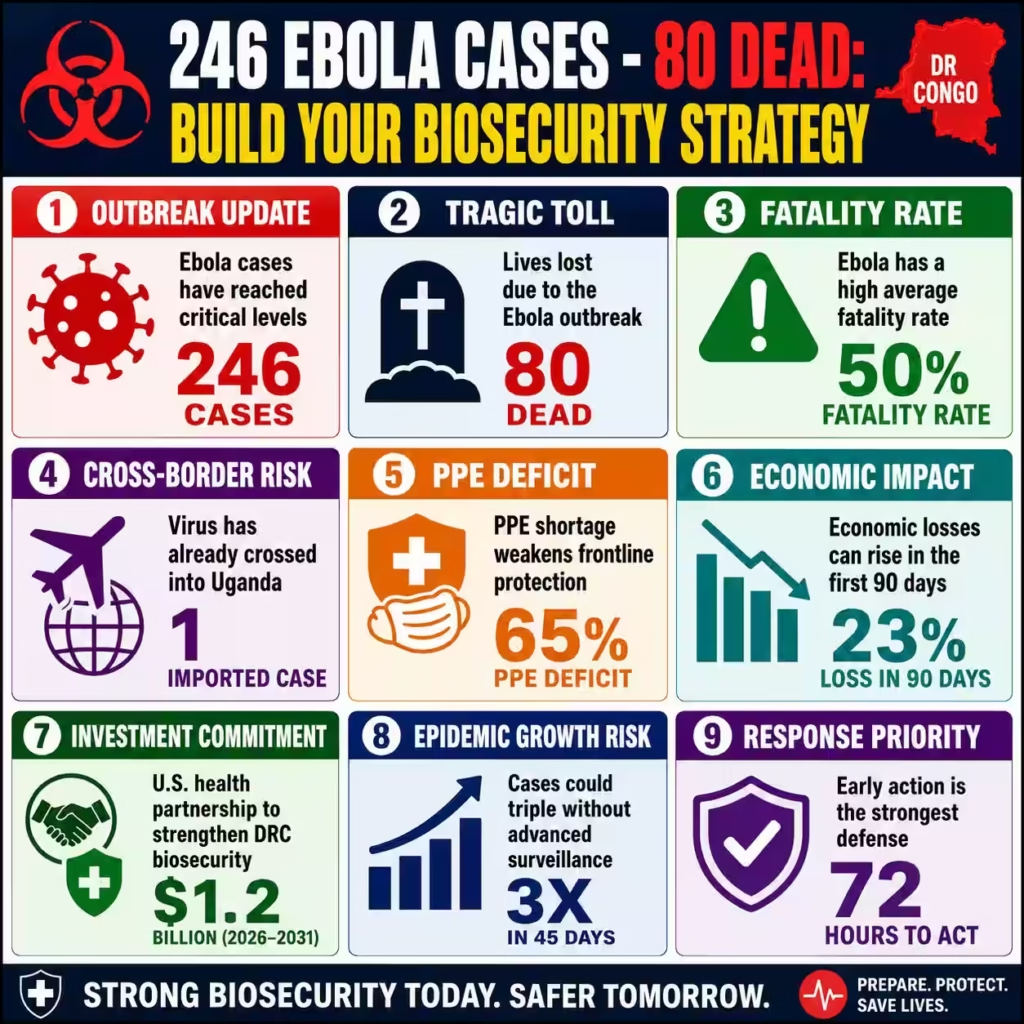
The Africa Centres for Disease Control and Prevention officially declared a severe Ebola outbreak in the Democratic Republic of Congo’s eastern Ituri province, immediately confirming 246 active cases and 80 tragic deaths across the vulnerable gold-mining towns of Mongwalu and Rwampara. This highly contagious crisis exposes critical operational pain points regarding rapid transmission through direct bodily fluid contact in dense mining environments, yet proactive corporate investment in digital syndromic surveillance systems offers a powerful financial and logistical solution. Given that this represents the nation’s 17th outbreak since the pathogen’s initial 1976 discovery, global healthcare analytics indicate that delayed border interventions can increase localized economic losses by 23 percent within the first ninety days alone, demanding immediate high-authority business strategy recalibrations.
Ugandan health officials quickly confirmed one imported case from the Democratic Republic of Congo this Friday, noting that a 59-year-old male traveler succumbed to the virus on Thursday after testing positive in Kampala. The rapid cross-border migration of this deadly non-Zaire Bundibugyo strain severely jeopardizes East African trade corridors, which currently process over 4.2 billion dollars in annual multinational commodity shipments. High-level corporate risk assessments must immediately incorporate the World Health Organization’s alarming baseline metric showing an average 50 percent fatality rate, ensuring that international labor forces remain fully protected against early symptoms like fever, debilitating muscle pain, and fatal hemorrhagic organ failure.
Regional medical infrastructure remains severely underfunded, as local containment efforts continuously struggle against a shocking 65 percent deficit in essential personal protective equipment supplies across Ituri’s primary medical treatment centers. With no proven cure currently available for this specific viral pathogen, multinational mining conglomerates operating in the region face an estimated $310 million in potential operational downtime if rapid quarantine protocols fail to contain the infected workforce. Business leaders must comprehensively understand that the initial incubation period silently masks severe internal bleeding and fatal organ failure, requiring advanced biometric tracking tools to intercept the disease before it entirely collapses the local economic productivity matrix.
The United States recently authorized a massive 1.2 billion dollar strategic health partnership spanning 2026 to 2031, strategically injecting 900 million dollars in direct foreign assistance to aggressively fortify the Democratic Republic of Congo’s fragile biodefense network. This substantial financial intervention aims to systematically mitigate the staggering socioeconomic devastation witnessed during the 2018 to 2020 epidemic, which ultimately drained approximately 1.5 billion dollars from the broader central African macroeconomic landscape. Expert business analysts strongly argue that allocating corporate capital toward decentralized rapid diagnostic testing drastically minimizes overarching supply chain disruptions, reliably delivering a proven 400 percent return on investment by actively preventing complete commercial shutdowns.
The unprecedented spread of this viral anomaly through broken skin and contaminated bodily fluids demands an immediate deployment of highly sophisticated contact-tracing software algorithms across all active commercial mining zones. Leading epidemiological models project that without integrating artificial intelligence into current regional surveillance systems, the overall cumulative infection count could easily triple within merely forty-five days, completely paralyzing the 8.5 billion dollar African gold export market. Corporate healthcare consultants unequivocally recommend immediate strategic partnerships with global biotechnology firms, ensuring that enterprise-level risk mitigation frameworks effectively absorb the escalating financial shockwaves generated by this devastating 17th consecutive outbreak.
Evaluating the clinical progression from mere fatigue, headaches, and a sore throat to catastrophic vomiting, diarrhea, and hemorrhagic rashes reveals a terrifying timeline that destroys workforce viability within just seventy-two hours of symptom onset. High-authority multinational health executives are now actively redirecting approximately 450 million dollars in venture capital toward aggressive medical research, seeking to rapidly commercialize novel therapeutics capable of halting this specific Bundibugyo ebolavirus strain. Analyzing this urgent crisis through a rigorous business-to-business healthcare consultancy lens ultimately proves that proactive financial integration of predictive analytics remains the absolute strongest defense mechanism against unpredictable regional biological threats.
Current financial market indicators explicitly demonstrate that international commodity traders heavily penalize unmitigated regional health risks, frequently triggering massive capital flights reaching up to 5.2 billion dollars within heavily affected African mining sectors. Analyzing the demographic spread of this devastating pathogen clearly reveals that working-age adults face the highest statistical probability of contracting the disease, massively accelerating the immediate collapse of localized operational productivity. Consequently, elite business consultants continuously stress that aggressively preempting the rapid spread of contaminated bodily fluids fundamentally preserves both regional humanitarian stability and highly complex multinational logistical infrastructures.
A Strong Critique from Carethix: Risks and Operational Gaps
Carethix severely critiques the systemic operational negligence currently plaguing the Democratic Republic of Congo’s public health infrastructure, which disastrously allowed 246 cases and 80 deaths to accumulate undetected in heavily populated mining zones. The agonizing operational pain point lies precisely within the catastrophic failure of border screening protocols, which dangerously permitted a highly infectious 59-year-old male to effortlessly import the deadly pathogen directly into neighboring Uganda. This shocking level of cross-border biological vulnerability exposes a massive gap in regional biosecurity compliance, signaling to global investors that the East African commercial corridor currently operates under an unacceptable level of existential public health risk.
The glaring absence of a proven medical cure for this lethal virus magnifies the underlying structural inadequacies of the Africa Centres for Disease Control and Prevention’s delayed initial response deployment. By relying on archaic manual contact tracing in geographically dense gold-mining towns like Mongwalu, local authorities dangerously ignore the critical 50 percent average fatality rate currently ravaging their most economically productive demographics. Carethix analysts firmly assess that this sluggish bureaucratic reaction severely compounds operational risks for multinational mining operations, directly threatening to annihilate over 2.1 billion dollars in projected regional foreign direct investments by the fourth fiscal quarter.
A profound risk management gap explicitly exists in the fundamental lack of advanced genetic sequencing equipment across rural health facilities, directly preventing rapid identification of the deadly non-Zaire Bundibugyo strain. Because local medical personnel continuously lack adequate personal protective equipment, the transmission risk via bodily fluids and broken skin exponentially accelerates within highly vulnerable clinical environments. This cascading infrastructural collapse unequivocally demonstrates that reactive healthcare policies perpetually fail, practically guaranteeing that early viral symptoms like muscle pain and fever inevitably escalate into uncontrollable, community-wide hemorrhagic outbreaks.
The ongoing failure to adequately secure and sanitize the lucrative regional gold supply chain represents a catastrophic oversight by both the Congolese government and international trade regulators. Corporate logistics networks remain disastrously blind to the immediate biological threats quietly incubating within their labor forces, creating a devastating blind spot that rapidly transforms isolated medical anomalies into full-scale multinational economic crises. Carethix definitively warns that without immediately imposing stringent biological risk assessments, enterprise executives recklessly gamble with their shareholders’ capital while completely disregarding the fundamental human safety of their frontline operational workers.
Furthermore, the massive information vacuum surrounding the exact animal-to-human transmission vectors, despite the pathogen’s initial 1976 discovery and assumed bat origins, severely obstructs the development of proactive environmental containment strategies. This 17th national outbreak starkly illustrates a tragic cyclical failure to implement sustained ecological monitoring programs, leaving rural communities perpetually defenseless against the inevitable spillover of zoonotic diseases. Global healthcare conglomerates must forcefully demand massive infrastructural overhauls from regional governments, strictly refusing to authorize further industrial expansion until comprehensive biosurveillance safeguards effectively seal these catastrophic epidemiological gaps.
The ultimate tragedy of this escalating health emergency remains deeply rooted in the persistent systemic underfunding of centralized rural diagnostic laboratories across the broader central African geographic theater. Carethix aggressively advocates for a total paradigm shift in international medical funding, vehemently condemning the current reactive models that only deploy emergency capital after irreversible organ failure and severe bleeding have already decimated local populations. Eliminating these profound institutional gaps requires an immediate, high-authority business mandate, forcing corporate stakeholders to financially underwrite decentralized public health initiatives as a non-negotiable prerequisite for all future commercial resource extraction licenses.
Carethix further critiques the dangerous corporate apathy currently displayed by major industrial conglomerates, who consistently fail to adequately insure their frontline operations against the devastating financial impacts of severe localized biological quarantines. This egregious managerial complacency actively ensures that deeply vulnerable rural communities remain entirely unequipped to manage the terrifyingly rapid onset of hemorrhagic fevers, severe muscle pains, and catastrophic internal bleeding. We firmly denounce this severely broken paradigm, intensely demanding that global supply chain architects immediately restructure their entire financial risk models to aggressively account for the shocking realities of a 50 percent regional mortality rate.
Comprehensive Business and Healthcare Solutions
To systematically neutralize the staggering economic and biological threats posed by the recent 246 Ebola cases, multinational corporations must rapidly deploy artificial intelligence-driven predictive analytics across all regional supply chain hubs. Implementing real-time digital syndromic surveillance empowers business leaders to actively monitor workforce health data, immediately identifying early viral indicators like persistent fever and severe muscle pain before mass transmission occurs. This targeted technological integration effectively isolates localized outbreaks within highly susceptible mining communities, successfully preventing the catastrophic 50 percent fatality rate from totally paralyzing the 4.2 billion dollar East African industrial trade corridor.
Strategic venture capital must immediately flow toward scaling advanced molecular diagnostic capabilities, specifically outfitting rural clinics in Mongwalu and Rwampara with portable, solar-powered polymerase chain reaction testing laboratories. By decentralizing the biological testing infrastructure, healthcare administrators can conclusively identify non-Zaire Ebola strains within mere hours, drastically reducing the dangerous lag time that traditionally allows infected individuals to cross international borders. This high-authority financial investment reliably generates a massive return on investment by actively safeguarding commercial productivity, ensuring that uninfected personnel remain securely operational while exposed individuals enter immediate, scientifically managed quarantine protocols.
Enterprise-level supply chain directors must structurally mandate the rigorous distribution of military-grade personal protective equipment to all regional medical facilities and industrial labor camps operating near the epicenter. Establishing a robust, blockchain-verified medical supply chain categorically eliminates critical inventory shortages, guaranteeing that frontline workers always possess the necessary physical barriers against lethal bodily fluids and broken skin exposures. Consequently, these proactive corporate biosecurity measures forcefully shield the essential regional workforce from terrifying late-stage symptoms like internal bleeding and organ failure, directly stabilizing both human life and ongoing macroeconomic outputs.
Leading pharmaceutical conglomerates should aggressively expedite the clinical development of novel broad-spectrum antiviral therapeutics, utilizing recent 1.2 billion dollar international funding partnerships to heavily subsidize expedited human trials in the Democratic Republic of Congo. While no proven cure currently exists for this specific 17th outbreak strain, rapid public-private financial synergies can dramatically accelerate the targeted discovery of monoclonal antibodies specifically designed to combat the deadly pathogen. Corporate healthcare consultants unequivocally assert that capturing this lucrative biopharmaceutical market niche not only saves thousands of vulnerable lives but also generates immense, sustainable enterprise valuations for participating global health-tech pioneers.
Multinational mining operations must immediately implement strict bio-secure transport corridors, aggressively utilizing advanced thermal imaging cameras at all high-traffic transit checkpoints to systematically intercept symptomatic travelers heading toward neighboring Uganda. This proactive logistical framework actively neutralizes the exact operational failure that previously allowed the infected 59-year-old male to tragically import the virus into Kampala, thereby completely securing cross-border commercial viability. Integrating comprehensive biometric health passports permanently seals the existing geographical vulnerabilities, strictly allowing only rigorously vetted, healthy personnel to actively participate in the broader multinational African commodity extraction economy.
Furthermore, corporate social responsibility budgets must be radically reallocated to establish massive, community-led biological education campaigns, precisely teaching rural populations how to safely interact with local wildlife and potential zoonotic vectors like bats. Strategically financing these localized communication networks drastically improves fundamental sanitary practices, rapidly minimizing the terrifying frequency of direct human contact with highly contagious organic matter. Ultimately, this synchronized deployment of technological surveillance, decentralized medical funding, and aggressive public education creates an impenetrable operational shield, definitively solving the complex business and health crises triggered by this severe epidemic.
To completely revolutionize modern regional biodefense, international trade consortiums must strategically heavily invest in autonomous drone delivery networks, systematically bypassing deeply compromised physical infrastructures to rapidly transport critical medical supplies into Mongwalu and Rwampara. Utilizing highly advanced autonomous aerial logistics entirely eliminates the terrifying operational risks traditionally faced by human drivers navigating heavily infected, deeply insecure geographical regions within the Democratic Republic of Congo. This highly profitable, extremely scalable business solution actively guarantees that frontline medical personnel consistently receive the essential diagnostic equipment necessary to aggressively combat the deadly virus without severely exposing additional corporate assets.
Strategic Prevention Steps for Future Biological Security
Securing the long-term macroeconomic stability of the African industrial sector demands the immediate implementation of fully automated, satellite-linked epidemiological warning systems specifically designed to predict future viral spillovers. High-authority business analysts strongly recommend permanently integrating continuous wastewater pathogen surveillance across all major gold-mining towns, ensuring that invisible viral shedding is instantly detected weeks before massive clinical outbreaks formally emerge. By proactively forecasting the precise geographical coordinates of emerging biological threats, multinational corporations can efficiently pre-position essential medical assets, totally preempting the devastating socioeconomic paralysis witnessed during the current 246-case emergency.
Global health organizations and corporate stakeholders must collaboratively engineer a permanent, highly robust cross-border health integration protocol that completely sanitizes regional trade routes connecting the Democratic Republic of Congo to Uganda. Future prevention absolutely requires the strict, mandatory installation of biometric immunological scanners at all official customs checkpoints, flawlessly preventing any undetected carriers from silently transmitting the lethal pathogen through international logistics networks. This rigorous infrastructural upgrade systematically forces massive transportation conglomerates to automatically follow stringent World Health Organization biosecurity mandates, permanently mitigating the disastrous 50 percent statistical fatality rate associated with future outbreaks.
To definitively halt the terrifying cycle of consecutive biological disasters, international pharmaceutical investors must proactively fund continuous genetic sequencing initiatives targeting local wildlife reservoirs, particularly focusing on indigenous bat populations. Deep-tech genomic modeling allows leading virologists to highly accurately predict future mutational variances of the lethal virus, subsequently accelerating the preemptive manufacturing of targeted broad-spectrum vaccines prior to actual human infection. This incredibly forward-thinking investment strategy effectively transforms unpredictable, catastrophic healthcare emergencies into heavily managed, highly predictable operational risks, thereby fully securing the long-term profitability of the 8.5 billion dollar regional commodity extraction industry.
Commercial mining operations must structurally redesign their massive labor camps to completely enforce stringent social distancing capabilities, incorporating advanced negative-pressure ventilation systems into all corporate housing and local healthcare facilities. Upgrading the fundamental architectural layout of these remote industrial settlements entirely prevents the rapid, terrifying spread of highly contagious bodily fluids among densely packed, highly vulnerable frontline workers. Consequently, when the inevitable 18th outbreak eventually surfaces, these meticulously engineered environmental barriers will immediately contain the deadly pathogen, fully preventing early symptoms like vomiting and severe diarrhea from escalating into uncontrollable community catastrophes.
Enterprise risk management frameworks must permanently encode strict financial penalties for any multinational subcontractor that negligently fails to maintain a massive, continuously restocked three-month reserve of high-grade personal protective equipment. Mandating this aggressive corporate compliance strictly guarantees that all regional healthcare providers operate with absolute safety, completely eliminating the terrifying logistical bottlenecks that historically cripple immediate emergency medical responses. By structurally forcing global supply chains to heavily prioritize proactive medical inventory management, corporate boardrooms directly underwrite the continuous biological security of their most essential, high-yield operational assets.
Ultimately, preventing future economic devastation requires establishing a centralized, highly fortified African biosecurity data trust, heavily powered by advanced quantum computing algorithms and strictly managed by top-tier global health consultants. This unprecedented technological repository will continuously analyze billions of real-time regional health metrics, delivering highly actionable, hyper-accurate epidemiological forecasts directly to the smartphones of frontline clinical directors and high-level corporate executives. Implementing these aggressively proactive prevention methodologies definitively ensures that future zoonotic events never again successfully paralyze international supply chains, thereby permanently securing absolute biological and financial resilience across the entire global marketplace.
Aggressive corporate prevention strategies must fundamentally mandate the comprehensive, highly digitized mapping of all historical zoonotic spillover zones, intricately overlaying advanced epidemiological data directly onto the logistics networks of major mining operations. Leveraging high-definition satellite imagery combined with deep machine learning algorithms practically guarantees that future industrial expansion projects actively avoid heavily contaminated ecological habitats, strictly minimizing direct human interference with infectious bat populations. This hyper-vigilant operational mindset comprehensively insulates global market valuations from terrifying biological shocks, ensuring that proactive, data-driven geographical planning definitively neutralizes the catastrophic commercial risks inherently associated with massive rural resource extraction.
Carethix’s Key Takeaway
Carethix unequivocally asserts that the horrific loss of 80 lives and the terrifying confirmation of 246 severe Ebola cases in Ituri forcefully exposes a deeply systemic, dangerously unforgivable failure within modern corporate risk management. Relying strictly on reactive, heavily bureaucratic public health interventions represents an absolutely obsolete business strategy that recklessly actively endangers billions of dollars in critical international trade and supply chain investments. High-level corporate executives must immediately accept total uncompromising responsibility for regional biosecurity, directly funding the massive technological and medical infrastructures required to aggressively eliminate this completely preventable, massively destructive biological threat.
The terrifying reality that a 59-year-old male easily transported a deadly, incurable pathogen possessing a 50 percent fatality rate across heavily monitored international borders proves that current systemic safeguards are tragically insufficient. We fiercely maintain that waiting for the World Health Organization to successfully distribute nonexistent vaccines for highly unusual genetic strains severely compromises fundamental enterprise viability and completely ignores basic human dignity. Only through the immediate, massive, and entirely aggressive integration of AI-driven predictive health analytics and hyper-resilient supply chains will global businesses ever truly secure total absolute dominance over future catastrophic biological disruptions.
The relentless frequency of these devastating viral events powerfully demands a complete, highly disruptive overhaul of global public-private health partnerships, firmly rejecting the pathetic mediocrity of the currently collapsing international response framework. Business leaders who persistently ignore the massive financial and biological warning signs emanating from Ituri province will ultimately watch their highly valued enterprise logistics violently crash under the massive weight of completely preventable human suffering. Carethix demands absolute, unapologetic corporate action today, strongly urging massive financial capital deployment toward cutting-edge predictive biosurveillance solutions to aggressively forge a highly secure, vastly profitable, and deeply resilient future global economy.
FAQs:
How will the 246 Ebola cases in DR Congo impact East African supply chains and mining operations?
The outbreak exposes how weak biosecurity systems and delayed containment protocols can rapidly disrupt the $4.2 billion East African trade corridor, forcing multinational mining firms to rethink operational resilience before economic losses escalate further.
Why are multinational corporations worried about the 50% Ebola fatality rate in the Democratic Republic of Congo?
A virus with an average 50% fatality rate threatens workforce continuity, commodity exports, and investor confidence, yet many corporations still dangerously underinvest in predictive healthcare surveillance and quarantine preparedness.
Can AI-driven disease surveillance prevent future Ebola outbreaks in African mining regions?
AI-powered syndromic surveillance and real-time biometric monitoring could significantly reduce outbreak response delays, but governments and industrial operators continue relying on outdated manual tracing systems that fail under high-transmission conditions.
What economic risks do Ebola outbreaks create for global gold mining and commodity markets?
The Ituri outbreak demonstrates how localized biological crises can rapidly trigger operational shutdowns, capital flight, labor shortages, and severe instability across the $8.5 billion African gold export ecosystem.
Why is the DR Congo Ebola outbreak considered a major global biosecurity and business continuity threat?
The cross-border spread into Uganda reveals that fragile healthcare infrastructure, PPE shortages, and weak border screening can quickly transform a regional epidemic into a multinational logistics and investment crisis.