4 California hospitals earned alarming D grades for safety—learn how your organization can strengthen care stability.
Case Study On 4 Hospitals D-Grade Crisis:
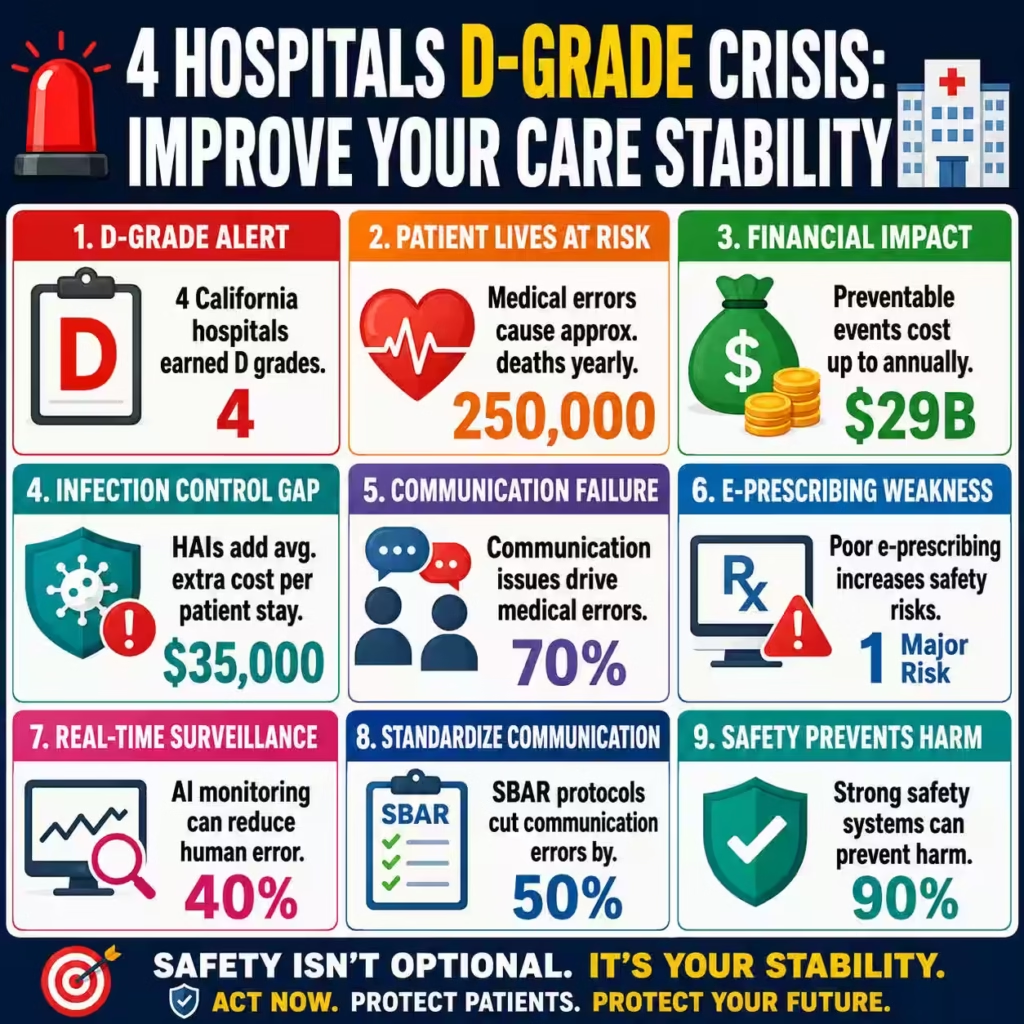
Spring 2026 Leapfrog Group data reveals that four California hospitals failed to meet essential safety standards, earning alarming D grades for patient protection. This deficiency across 285 statewide facilities highlights a critical breakdown in infection control, communication, and medication safety protocols. To secure your facility’s reputation and financial health, we must pivot toward aggressive clinical surveillance and systemic accountability.
Medical errors currently represent the third leading cause of death in the United States, claiming approximately 250,000 lives annually. The financial fallout is equally staggering, with preventable adverse events costing the domestic healthcare system between $17 billion and $29 billion each year. This analysis identifies El Centro Regional, Los Angeles Community, Norwalk Community, and Pioneers Memorial as centers requiring immediate operational restructuring.
Leadership must recognize that a D grade acts as a leading indicator of deep-seated fiscal and clinical volatility. When a facility fails 30 distinct performance measures, it invites federal scrutiny and erodes the trust of high-value commercial payers. We will explore how your organization can bypass these pitfalls through robust electronic prescribing systems and enhanced bedside care initiatives.
These ratings serve as a public indictment of legacy administrative processes that prioritize volume over verifiable patient outcomes. High-performing institutions utilize real-time data to mitigate infections, whereas these four hospitals struggled with basic hygiene and staff-to-patient communication. We must analyze these gaps as business failures rather than mere clinical oversights.
The Leapfrog review is no suggestion. It is a market-moving data set that influences where $3.5 trillion in annual healthcare spending flows. Investors and stakeholders are increasingly utilizing these safety scores to determine the viability of healthcare real estate and management contracts. This case study proves that safety is the primary currency of the modern healthcare marketplace.
Ignoring these trends leads to a rapid decline in patient volume and a subsequent increase in malpractice insurance premiums. The specific failures in e-prescribing at these California sites suggest a dangerous disconnection between technology investment and clinical execution. We recommend a full audit of all health information technology to ensure that digital tools actually prevent human error.
The Carethix Critique: Addressing Gaps in the California Safety Landscape
Carethix views the D ratings of these four California institutions as a profound failure of executive oversight and organizational culture. While the state saw no F grades, the presence of D ratings signifies a “near-miss” status that should alarm every board member and healthcare stakeholder. These facilities are operating on the razor’s edge of clinical catastrophe and significant legal liability.
The primary pain point identified in the Leapfrog report is the systemic inability to control hospital-acquired infections (HAIs). Data shows that HAIs add an average of $35,000 to the cost of a single patient stay, directly impacting the bottom line. By failing infection control, these hospitals are essentially leaking capital through preventable biological complications.
We must address the risk of communication breakdown, which is cited as a leading factor in 70% of all medical errors. When staff and patients fail to synchronize information, the probability of medication mismatches and surgical site errors increases exponentially. Carethix identifies this specific gap as a lack of investment in human capital and standardized operational language.
Electronic prescribing systems were flagged as a weakness, representing a failure to leverage modern technological safeguards. In a B2B context, utilizing outdated or poorly integrated EHR systems is an operational liability that negates any progress made in bedside care. We see this as a critical gap where capital expenditure was likely misallocated toward aesthetics rather than infrastructure.
Furthermore, the variation in safety levels across California institutions creates a fragmented market where quality is unpredictable. This inconsistency devalues the entire regional healthcare brand and complicates negotiations with large-scale employee benefit managers. Carethix asserts that any grade below a B is an unacceptable risk for institutional investors.
The critique extends to the lack of transparency in how these hospitals handled their federal health database reporting. Facilities that score poorly often have reactive management styles that ignore data until a public report forces their hand. Proactive risk mitigation is the only way to avoid the public shaming associated with a national D grade.
| Related Analysis: $10M Wrongful Death Lawsuit Exposure: Secure Clinical Accuracy Norovirus 3.3% Crisis: Protect Your Guests Fast 22.1M Lost Days Crisis: Protect Your Workforce |
Strategic Solutions for Clinical and Operational Excellence
To reverse the damage of a poor safety rating, hospitals must first implement an AI-driven clinical surveillance system. These platforms analyze real-time data to identify early signs of sepsis and medication conflicts before they reach the patient. By automating the monitoring process, your organization can reduce human error by up to 40% within the first fiscal year.
Standardization of communication through the SBAR (Situation, Background, Assessment, Recommendation) framework is a non-negotiable solution for staff interactions. Studies indicate that hospitals using standardized protocols experience a 50% reduction in communication-related adverse events. This change requires no capital investment, focusing instead on a cultural shift toward high-reliability organizational behavior.
Optimizing electronic prescribing systems (e-prescribing) must be a top priority for IT and clinical pharmacy teams. Ensuring that these systems have robust decision-support tools can prevent 1.5 million preventable medication errors annually across the US. We advise integrating these tools directly into the clinician’s natural workflow to ensure 100% compliance.
Improving infection control requires the deployment of automated UV-C disinfection technologies alongside traditional cleaning protocols. These systems have been shown to reduce the presence of multidrug-resistant organisms by over 30% in high-traffic clinical areas. Investing in these technologies provides a clear ROI by slashing the costs associated with extended hospital stays.
Enhancing patient experience surveys through real-time feedback loops allows management to address grievances before they impact Leapfrog scores. When patients feel heard, their compliance with clinical instructions increases, leading to better outcomes and higher safety ratings. This solution transforms the patient from a passive recipient of care into an active participant in safety.
Finally, we recommend a mandatory executive-level “Safety Walkaround” program to bridge the gap between the boardroom and the bedside. Leadership must witness frontline challenges to understand why safety protocols might be ignored or circumvented in high-stress situations. This direct engagement fosters a culture where safety is prioritized over speed or administrative convenience.
Prevention Methods to Secure Future Institutional Stability
Preventing future D grades starts with the implementation of a “Just Culture” where staff are encouraged to report near-misses without fear of retribution. Research shows that organizations that track near-misses can predict and prevent 90% of actual patient harm incidents. This shift turns every employee into a risk management agent, creating a self-healing organizational structure.
We must prioritize predictive analytics to forecast staffing needs and ensure appropriate nurse-to-patient ratios at all times. Burnout is a leading driver of medical errors, and data confirms that adequate staffing correlates directly with higher Leapfrog safety scores. By utilizing data to balance workloads, you prevent the fatigue-driven mistakes that lead to D ratings.
Third-party consultants should conduct regular, unannounced internal audits of all safety protocols to ensure objective assessment. These audits simulate the Leapfrog and CMS evaluation processes, allowing you to identify weaknesses long before public reports are published. Proactive identification of gaps is significantly cheaper than the reputational repair required after a public failure.
Investment in continuous professional development focusing on “Soft Skills” and crisis resource management is essential for all clinical staff. High-authority leadership must realize that clinical competence is insufficient if it is not paired with effective team coordination. Training programs that simulate high-stress scenarios can improve team performance by 25% during actual medical emergencies.
Interoperability between different medical devices and the central EHR must be strictly enforced during the procurement process. When devices communicate seamlessly, the chance of data entry errors is virtually eliminated, securing the integrity of the patient’s clinical record. This preventative step ensures that the foundation of your safety data is accurate and verifiable.
Finally, hospital boards should tie executive compensation directly to verifiable patient safety metrics and Leapfrog performance. When financial incentives align with clinical outcomes, safety ceases to be a secondary concern and becomes a core business objective. This accountability structure ensures that the entire organization remains focused on the mission of “First, Do No Harm.”
Key Takeaway: The Carethix Final Mandate
- The accountability structure ensures the organization remains focused on the mission of “First, Do No Harm.”
- A Leapfrog Group D grade serves as a loud, expensive alarm signaling a failing business model rather than a badge of shame.
- Safety is the primary metric for long-term contract stability and patient loyalty in B2B healthcare; it must be treated as a competitive advantage rather than a compliance burden.
- The 2026 California data reveals persistent gaps in care quality, indicating that payers demanding value and transparency will phase out facilities that fail to innovate safety protocols.
- Findings mandate an immediate, data-driven transformation across all clinical and administrative departments.
- Bottom-line success depends on community trust and reliable clinical outcomes.
- Facilities can be transformed from liabilities into market leaders by closing communication gaps and leveraging advanced health information technology (HIT).
- The future of healthcare is defined by safety, transparency, and hyper-accountability.
FAQs:
Why did 4 California hospitals receive dangerous D safety grades in the 2026 Leapfrog Hospital Safety Report?
Poor infection control, weak e-prescribing systems and communication failures across 30+ patient safety measures reveal how outdated hospital operations can rapidly escalate clinical risk, payer distrust and financial instability.
How do hospital-acquired infections costing $35,000 per patient impact healthcare profitability and patient safety performance?
The rising cost of preventable HAIs exposes how inadequate clinical surveillance and weak sanitation accountability are silently destroying hospital margins, increasing readmissions and damaging long-term healthcare brand trust.
Why are medical errors causing nearly 250,000 US deaths annually still a major hospital operational risk in 2026?
Many healthcare organizations continue prioritizing administrative volume and legacy workflows over real-time patient safety analytics, creating dangerous gaps in medication management, staffing coordination and bedside communication.
How can AI-driven clinical surveillance systems reduce hospital medication errors and improve Leapfrog safety scores?
Healthcare providers adopting predictive analytics, automated sepsis monitoring and integrated electronic prescribing workflows are building stronger operational resilience while reducing preventable adverse events and compliance exposure.
Why are healthcare investors and commercial payers using Leapfrog safety grades to evaluate hospital financial stability?
Hospital safety scores now function as high-value operational intelligence indicators because poor clinical outcomes, weak infection prevention and inconsistent patient care directly threaten reimbursement strength, contract retention and institutional reputation.