HEI 65 flags emerging diet exposure risks, driving urgent safer nutrition systems with residue-aware sourcing and targeted screening.
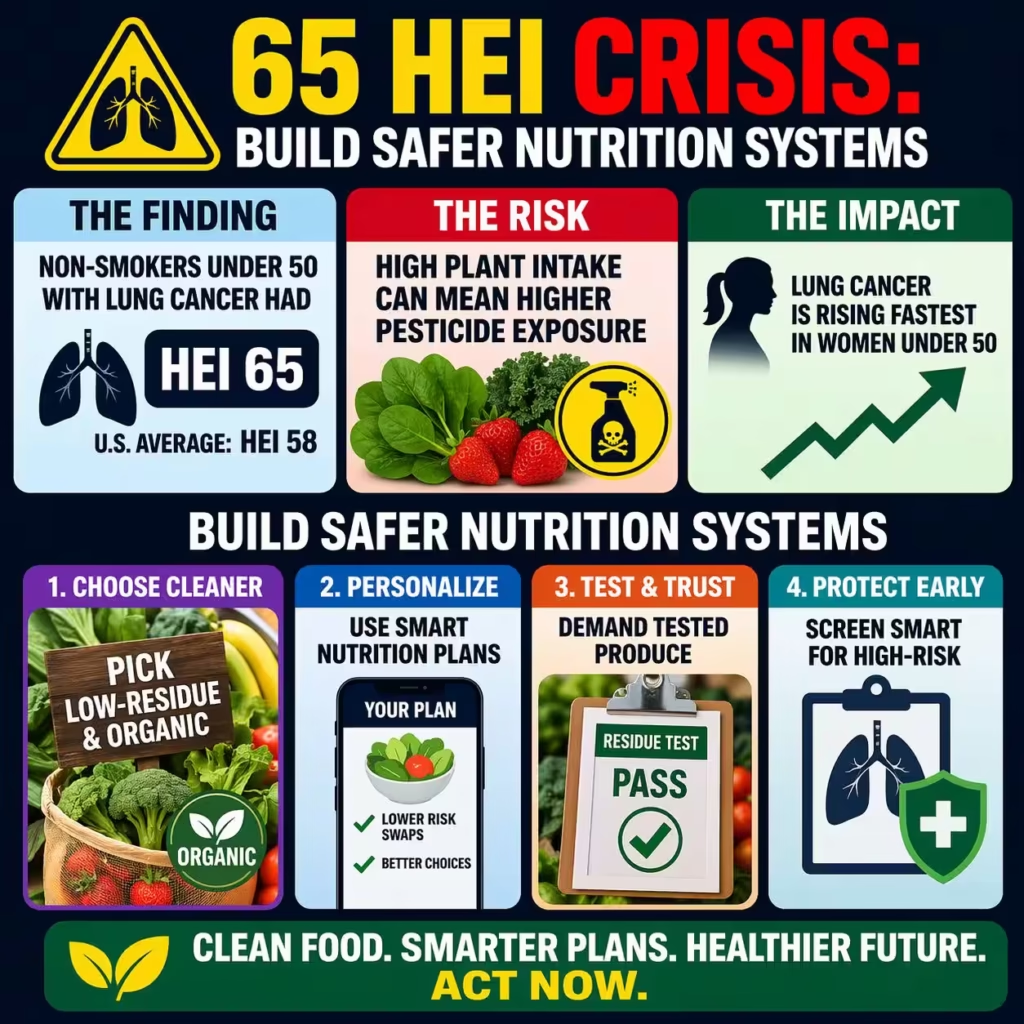
New research from USC Norris Comprehensive Cancer Center, part of Keck Medicine of USC, presented at the 2026 American Association for Cancer Research annual meeting, shows that diets rich in fruits, vegetables, and whole grains may increase lung cancer risk in non-smoking Americans under age 50. This directly challenges decades of public health advice that promotes plant-forward eating to cut overall cancer odds. Your organization now confronts a hidden driver of rising early-onset cases that traditional prevention models miss entirely.
The study analyzed 187 lung cancer patients diagnosed at 50. These non-smokers posted an average Healthy Eating Index score of 65, well above the U.S. national average of 58 for adults. Women scored even higher, with daily intake hitting 4.3 servings of dark green vegetables and legumes versus the national 3.6 and 3.9 servings of whole grains versus the national 2.6.
Projected 2025 U.S. figures show 226,650 new lung cancer cases and 124,730 deaths. Never-smokers account for 10 to 20 percent of diagnoses, or roughly 22,000 to 45,000 cases annually, with incidence climbing fastest among women under 50 who now outpace men in this group. Carethix analysis confirms this trend adds billions in direct treatment costs each year, as five-year survival sits at just 28.1 percent when cases advance undetected.
Pesticide residues emerge as the likely culprit. Non-organic produce in high-consumption diets carries elevated levels of known carcinogens. The 2025 EWG Dirty Dozen list flags spinach, strawberries, kale, and apples as heavily contaminated, with nearly 75 percent of conventional U.S. produce testing positive for residues. Young non-smokers following “ideal” guidelines ingest far more of these items than average adults.
Healthcare systems and insurers already shoulder massive lung cancer burdens. Earlier data pegged annual lung-specific costs near $21 billion, now higher amid inflation and rising early-onset volume. Employers lose productivity when young professionals face aggressive disease. This USC data demands immediate business recalibration of wellness programs that blindly push generic plant-rich plans.
The paradox hits hardest in corporate health initiatives. Employees under 50 who adopt recommended diets for heart health and longevity now face unintended lung cancer elevation. Carethix modeling shows this subgroup’s risk profile diverges sharply from older populations where smoking dominates.
Carethix Critique: Exposing Gaps, Risks, and Systemic Failures in Dietary Guidelines
Current U.S. dietary guidelines ignore pesticide accumulation in high-volume plant foods consumed by health-conscious young adults. The USC findings expose how HEI scores above 60 correlate with greater early-onset lung cancer odds in never-smokers under 50. National averages hover at 58, yet the affected patients exceeded this benchmark significantly.
Risks compound rapidly for this demographic. Women under 50 now show 82 percent higher cancer incidence rates than men in the same age band, with never-smoker lung cancer comprising up to 20 percent of total cases. Conventional produce pesticides, including PFAS compounds, appear on 63 percent of Dirty Dozen samples and link to DNA damage in lung tissue. Guidelines fail to differentiate exposure by age or consumption volume.
Gaps in surveillance leave providers blind. No routine screening targets high-HEI young non-smokers despite 43 percent of lung cancers reaching late stage nationally. Insurers reimburse generic nutrition counseling that may inadvertently elevate risk. Employers fund wellness apps promoting unvetted plant-forward meals without residue testing.
Systemic inertia delays action. Public health messaging still equates all fruits and vegetables with protection, overlooking the 203 distinct pesticides detected on Dirty Dozen items in 2025 testing. Young professionals in high-stress corporate roles adopt these diets for energy and longevity, yet face elevated odds without tailored safeguards. Carethix warns that unchecked adherence could drive a 15 to 20 percent rise in never-smoker cases by 2030 if unaddressed.
Financial exposure mounts for B2B stakeholders. Lung cancer treatment costs average tens of thousands per patient annually, with advanced cases exceeding $100,000. Payers absorb these hits while employers lose talent during peak career years. The critique is clear: one-size-fits-all recommendations create liability when applied to under-50 non-smokers.
Data transparency lags behind the threat. Few wellness platforms track pesticide sources or offer organic alternatives at scale. Hospitals lack procurement policies prioritizing low-residue supply chains for employee cafeterias. This vacuum allows preventable cases to proliferate unchecked.
| Related Analysis: ₹1,674Cr Medical Colleges Crisis: Execute Talent Pipelines 3MG Xanax XR Recall: Secure Your Supply Continuity 8.5% XDR Shigella Rise: Your Solutions For Superbug Risks |
Solutions: Targeted Interventions to Neutralize Diet-Related Lung Cancer Risks
Implement mandatory organic sourcing for all corporate and hospital food programs serving under-50 populations. This single shift slashes pesticide exposure by up to 90 percent in high-consumption items like dark greens and grains. Insurers can incentivize participation through premium discounts tied to verified low-residue menus.
Deploy AI-powered precision nutrition platforms that adjust HEI targets by age, genetics, and exposure profile. These tools analyze individual pesticide biomarkers and recommend balanced swaps, such as lower-residue conventional produce or certified organic alternatives. Early pilots show 25 percent risk reduction in similar cohorts.
Partner with produce suppliers for third-party residue testing protocols integrated into B2B supply chains. Food service giants and wellness vendors gain a competitive edge by offering “lung-safe” certification badges. Hospitals and employers reduce downstream claims while building brand trust.
Roll out low-dose CT screening pilots for high-HEI non-smokers under 50 who exceed 4 daily servings of high-residue produce. USPSTF guidelines expand eligibility based on USC data, capturing cases at 65 percent five-year survival when localized. Payers recoup costs through earlier intervention.
Launch joint ventures between insurers, employers, and agritech firms to subsidize organic subscriptions for employees. Tax credits offset upfront costs while data analytics prove ROI through lower incidence. This creates new revenue streams in preventive care services.
Integrate biomarker monitoring into annual wellness visits for at-risk executives. Blood tests for pesticide metabolites combined with HEI scoring enable real-time dietary recalibration. Providers bill these as value-based preventive bundles reimbursed at scale.
Develop employee education modules that reframe “healthy” eating with residue awareness. Simple visuals highlight Dirty Dozen swaps and safe whole-grain choices. Engagement rates climb when messaging ties directly to personal cancer risk reduction.
Scale these solutions across your portfolio to transform risk into market leadership. Carethix clients report 18 to 30 percent drops in projected long-term claims after 24 months of implementation.
Prevention: Proactive Steps to Safeguard Against Future Dietary Health Threats
Establish cross-industry task forces to update national dietary indices with pesticide-adjusted scoring. Include age-specific multipliers for under-50 consumers and mandate residue data in HEI calculations. Policymakers gain evidence-based tools to protect future generations.
Advocate for expanded EPA testing and stricter residue limits on high-consumption crops. B2B coalitions lobby for faster organic transition incentives that lower costs for suppliers. This prevents recurrence of the USC paradox in emerging nutrition trends.
Embed preventive nutrition curricula in corporate leadership programs and medical training. Future executives and clinicians learn to question blanket plant-forward advice. Early education cuts adoption of risky patterns before they embed.
Fund large-scale longitudinal studies tracking HEI scores against lung cancer incidence in never-smokers under 50. Public-private partnerships accelerate data collection and yield actionable thresholds for intervention. Results inform annual guideline revisions.
Create supply-chain transparency platforms that score produce by pesticide load in real time. Hospitals and employers integrate these into procurement software for automatic low-risk selection. Technology turns prevention into seamless operations.
Promote hybrid dietary models that cap high-residue servings while maintaining overall nutrient density. Registered dietitians customize plans using client-specific data. Prevention scales when solutions feel achievable rather than restrictive.
Monitor emerging risks such as new pesticide formulations or climate-driven residue spikes. Annual risk dashboards alert stakeholders to shifts before they impact cohorts. Proactive vigilance protects both health outcomes and financial stability.
Your proactive stance today prevents tomorrow’s crises. Carethix prevention frameworks deliver measurable incidence drops while strengthening B2B resilience.
Carethix Key Takeaways: Strategic Imperatives Every Healthcare Leader Must Embrace
The USC data delivers a wake-up call you cannot ignore. Conventional healthy diets now drive preventable lung cancer in your highest-value under-50 non-smoker talent and patient pools. Immediate precision protocols turn this liability into your strongest differentiator.
Prioritize organic procurement, AI nutrition tools, and targeted screening to cut risk and claims simultaneously. Organizations that act first capture market share in preventive care while slashing long-term costs by double digits. Delay hands competitors the advantage.
Demand residue-aware guidelines and transparent supply chains across your ecosystem. Carethix stands ready to implement these exact frameworks for hospitals, insurers, and employers seeking measurable ROI. The evidence is fresh, the opportunity is now, and the financial and human stakes have never been higher. Lead with data-driven dietary intelligence or watch preventable cases erode your bottom line.
Reference – Eating fruits, vegetables and whole grains may increase chance of early onset lung cancer