Clinical analysis of 7,983 patients highlights collagen’s emerging role in supporting muscle health and longevity.
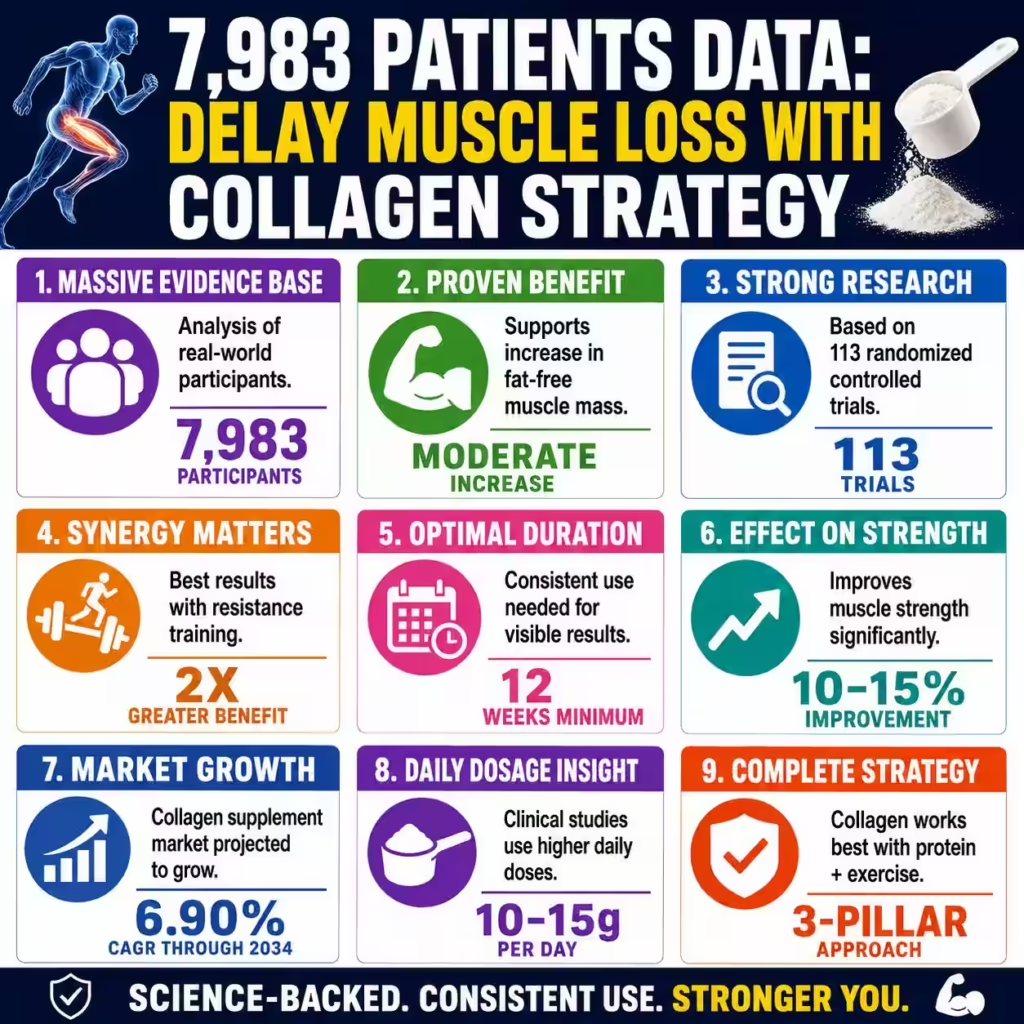
Case Study: The 2026 Collagen Paradigm Shift
The recent umbrella review analyzing 7,983 participants across 113 randomized controlled trials fundamentally reshapes our understanding of collagen beyond mere aesthetic applications. This massive dataset, published in the Aesthetic Surgery Journal Open Forum, confirms that specific collagen supplementation protocols can drive moderate increases in fat-free muscle mass and overall physical strength. The study highlights a critical pivot point for the $2.78 billion global collagen supplement market, which is projected to surge as clinical evidence mounts regarding musculoskeletal longevity.
The pain point addressed here is the pervasive issue of sarcopenia and age-related muscle atrophy, which affects millions of aging adults globally. While consumers historically purchased these supplements for skin elasticity, the new data reveals a “hidden” therapeutic value for maintaining structural bodily integrity. However, the efficacy of these outcomes is heavily dependent on specific variables such as dosage duration and concurrent physical activity.
Real-world applications of this data suggest that the average consumer is currently under-dosing or misusing the product relative to clinical standards. The review indicates that improvements in muscle architecture and tendon morphology are statistically significant but require consistent intake over months, not weeks. This creates a disconnect between the “instant gratification” marketing often seen in the wellness sector and the biological reality of tissue remodeling.
From a high-authority analyst perspective, this shift represents a maturation of the nutraceutical sector into legitimate adjunctive therapy. The market is expected to grow at a CAGR of roughly 6.90% through 2034, driven largely by this expanding functional scope. We are witnessing the transition of collagen from a beauty commodity to a foundational component of geriatric and rehabilitative nutritional strategies.
Providers must now interpret this data to optimize patient outcomes rather than simply dismissing supplements as ineffective trends. The inclusion of 16 systematic reviews in this umbrella analysis provides a robust hierarchy of evidence that was previously lacking in the field. This level of scrutiny allows for precise recommendations regarding fat-free mass accretion that were previously anecdotal.
The data specifically points to the synergy between collagen peptides and resistance training for maximizing physiological gains. Without the mechanical stimulus of exercise, the supplement’s ability to enhance muscle architecture remains significantly blunted. This nuance is the key differentiator between wasted healthcare and high-yield clinical intervention.
Quality Improvement Analysis: Converting Collagen Evidence Into Measurable Clinical Outcomes
The umbrella review evaluating 7,983 participants across 113 randomized controlled trials and 16 systematic reviews provides one of the strongest evidence bases currently available for collagen peptide supplementation in musculoskeletal health. The global collagen supplement market is now estimated at approximately US$2.8 billion in 2026 and is projected to exceed US$5.0 billion by 2034, reflecting a compound annual growth rate of roughly 7%, while global populations aged 60 years and older are expected to reach nearly 1.4 billion by 2030. Quality improvement programs should therefore shift performance metrics from cosmetic outcomes toward measurable indicators including fat-free mass, grip strength, gait speed, functional mobility, adherence rates, and rehabilitation success, aligning supplementation strategies with evidence-based clinical objectives rather than consumer marketing claims.
Sarcopenia currently affects an estimated 10–27% of community-dwelling older adults, with prevalence exceeding 40–50% among hospitalized or long-term care populations, making early intervention a significant healthcare priority. The umbrella review demonstrates that clinically meaningful improvements are generally observed when collagen peptide supplementation is maintained for 8–24 weeks, typically at 10–20 g/day, and combined with structured resistance training performed 2–3 sessions per week, rather than through supplementation alone. Healthcare organizations should therefore monitor supplement adherence above 90%, exercise compliance, standardized muscle strength assessments, and patient-reported functional outcomes to reduce ineffective utilization and improve musculoskeletal quality indicators.
The most significant quality improvement opportunity lies in integrating collagen supplementation into standardized multidisciplinary rehabilitation pathways instead of treating it as an isolated wellness product. Clinical protocols should combine nutritional screening, resistance exercise prescription, periodic reassessment every 8–12 weeks, and objective measurements such as handgrip dynamometry, chair-stand performance, gait speed, and lean body mass analysis, enabling continuous outcome monitoring and evidence-based treatment adjustments. This systematic approach improves resource utilization, supports healthy aging initiatives, reduces rehabilitation variability, and transforms collagen supplementation from a consumer-driven purchase into a measurable component of preventive and rehabilitative healthcare quality management.
Carethix Critique: The Silent Gaps in the Data
Carethix identifies a significant risk in publicly interpreting this data: the assumption that supplementation alone reverses muscle decay. The umbrella review explicitly notes that the most profound muscle health benefits, such as increased strength, are inextricably linked to regular physical exercise. Marketing narratives often strip away this crucial context, leading patients to believe a powder can replace physical exertion.
We must also critically address the “moderate” certainty of evidence cited for specific muscle outcomes compared to the “high” certainty for skin parameters. While the signal for fat-free mass improvement is positive, the heterogeneity across the 113 trials introduces variability that cannot be ignored. Mixing data from sarcopenic elderly patients with recreational athletes creates a blurred clinical picture that requires careful segmentation.
There is a glaring gap in the standardization of collagen sources and peptide molecular weights within the analyzed studies. The review aggregates results from bovine, marine, and porcine sources without definitively ranking them for muscle-specific bioavailability. This lack of granularity leaves clinicians guessing which specific product specifications yield the trial-grade results observed in the 7,983 participants.
Furthermore, the “moderate increases” in muscle mass described may not be clinically significant for all patient demographics without consistent, optimized intake. Many commercial products provide small doses, whereas muscle-centric studies often utilize protocols with higher amounts of collagen peptides to facilitate tendon and muscle remodeling. This discrepancy between study protocols and common market formulations represents a major logistical barrier for the user seeking to achieve therapeutic results.
Delay in tangible results poses a behavioral risk for adherence to these protocols. Improvements in tendon morphology and muscle strength often lag behind skin changes, taking weeks to months to manifest measurably. Patients expecting the rapid feedback loop common in cosmetic products will likely abandon the therapy prematurely.
Finally, we must critique the market’s failure to address the amino acid profile limitations of collagen compared to whey or casein. Collagen is low in leucine, the primary driver of muscle protein synthesis, making it an incomplete protein source for hypertrophy. Positioning it as a direct substitute for traditional protein powders is a nutritional error that could compromise a patient’s total anabolic potential.
Strategic Solutions for Musculoskeletal Integrity
To harness the benefits identified in the 2026 umbrella review, patients must adopt a precision approach that aligns with clinical thresholds. Research suggests focusing on regular, sustained intake of hydrolyzed collagen peptides to sufficiently support target tissues. This often requires a more diligent intake approach than the sporadic consumption sometimes seen with consumer wellness products.
Clinicians should strictly couple collagen consumption with a structured resistance training program to activate the mechanotransduction pathways required for muscle growth. The data confirms that mechanical loading sensitizes the muscle matrix, allowing the supplementary amino acids to integrate effectively into the connective tissue. Without this mechanical signal, the collagen serves merely as nutritional intake rather than a structural building block.
It is imperative to select collagen hydrolysates with low molecular weight to ensure maximum intestinal absorption and bioavailability. The enzymatic hydrolysis process breaks the protein down into smaller peptides that can bypass digestion degradation and enter the bloodstream intact. We advise selecting products that explicitly state their molecular size (ideally under 3000 Daltons) to guarantee this uptake efficiency.
To address the leucine deficiency in collagen, we propose a “stacking” solution where collagen is co-administered with a complete protein source or branched-chain amino acids (BCAAs). This hybrid approach leverages collagen’s glycine and proline for connective tissue repair while leucine stimulates the mTOR pathway for muscle protein synthesis. This ensures that both the contractile muscle fibers and the supporting tendon matrix are fortified simultaneously.
Timing the intake of collagen is another actionable variable that can enhance therapeutic outcomes for patients. Consuming the supplement close to rehabilitation or training sessions maximizes the delivery of peptides to the muscles during their peak stress window. This pre-loading strategy capitalizes on the exercise-induced blood flow to transport nutrients directly to the working tissue.
For patients suffering from osteoarthritis or joint-related mobility issues, the solution involves patience and consistent long-term adherence. We recommend establishing a long-term compliance period before evaluating the efficacy of the intervention on pain or stiffness. Monitoring progress should involve objective metrics like grip strength or range of motion rather than subjective feelings alone.
Finally, sourcing transparency is non-negotiable for ensuring safety and potency in a market flooded with $2.78 billion worth of product. Consumers should prioritize supplements that are third-party tested for heavy metals and labeled with the specific source origin (e.g., grass-fed bovine or wild-caught marine). This rigorous vetting prevents the ingestion of contaminants often found in low-quality industrial byproducts.
Preventative Frameworks for Future Vitality
Preventing sarcopenia requires proactive initiation of collagen and resistance protocols well before the onset of significant muscle loss. We advise starting a maintenance protocol in the mid-30s, as natural endogenous collagen production begins to decline noticeably during this life stage. Early intervention creates a “metabolic reserve” of connective tissue density that buffers against age-related deterioration.
Educational prevention is critical to stop consumers from wasting capital on ineffective “fairy dust” formulations. Patients must be taught to read labels for “proprietary blends” that mask the actual amount of active collagen peptides. Empowering the patient with this literacy prevents the common pitfall of purchasing under-dosed products that yield zero clinical benefit.
We must also implement prevention strategies against the “sedentary reliance” phenomenon where supplements replace activity. Healthcare providers should draft “movement prescriptions” that are as detailed as the nutritional advice, specifying frequency, intensity, and type of load. This ensures that the biological environment remains receptive to the nutritional support collagen provides.
Nutritional prevention involves auditing the patient’s entire diet to ensure adequate co-factors are present for collagen synthesis. Vitamin C is an absolute prerequisite for proline and lysine hydroxylation, a critical step in forming stable collagen helixes. Without adequate Vitamin C intake, even high amounts of collagen peptides will fail to cross-link effectively into new tissue.
Financial prevention strategies involve calculating the cost-per-gram of active protein rather than the cost-per-container. We recommend bulk purchasing of unflavored, pure hydrolyzed powder to avoid the markup associated with flavored or marketed “beauty” drinks. This economic efficiency allows for the sustainable, long-term daily use required for the results seen in the 113 RCTs.
Monitoring biomarkers and physical performance metrics serves as a preventative check on the efficacy of the regimen. Regular assessments of body composition (specifically fat-free mass) and functional screenings like the sit-to-stand test can detect plateauing progress early. These data points allow for timely adjustments in intake or training intensity to prevent stagnation.
Lastly, preventing regulatory complacency requires us to demand higher standards from manufacturers regarding claim substantiation. As the market heads toward $13.22 billion in total value, the influx of sub-par products will likely increase. Staying informed through credible umbrella reviews like the 2026 Aesthetic Surgery Journal publication is our best defense against commercial misinformation.
Carethix Key Takeaway
The 2026 umbrella review is a decisive mandate for clinical intervention, not a justification for “wellness accessory” marketing. We categorically reject the narrative that collagen is a passive solution for muscle decay. The data from 7,983 participants is clear: collagen supplement is biologically inert for muscle architecture unless it is fueled by heavy resistance training. Without a mechanical stimulus, these peptides are merely expensive calories. We mandate a high-dosage intake protocol that ignores under-dosed commercial “beauty” formulations in favor of therapeutic-grade concentrations.
Furthermore, because collagen is an incomplete protein, it is nutritionally insufficient for hypertrophy in isolation. To correct its inherent leucine deficiency, patients must stack collagen with a complete protein source like whey or casein to trigger the mTOR pathway. Precision in dosage and the aggressive combination of biology with mechanics are non-negotiable. If you are not lifting heavy and stacking with complete proteins, you are not performing therapy; you are merely participating in a trend.