Glucosamine 25% Alzheimer’s risk underscores emerging evidence, demanding safer brain health planning.
Deep Case Study: The Hidden Metabolic Risk in Joint Supplements
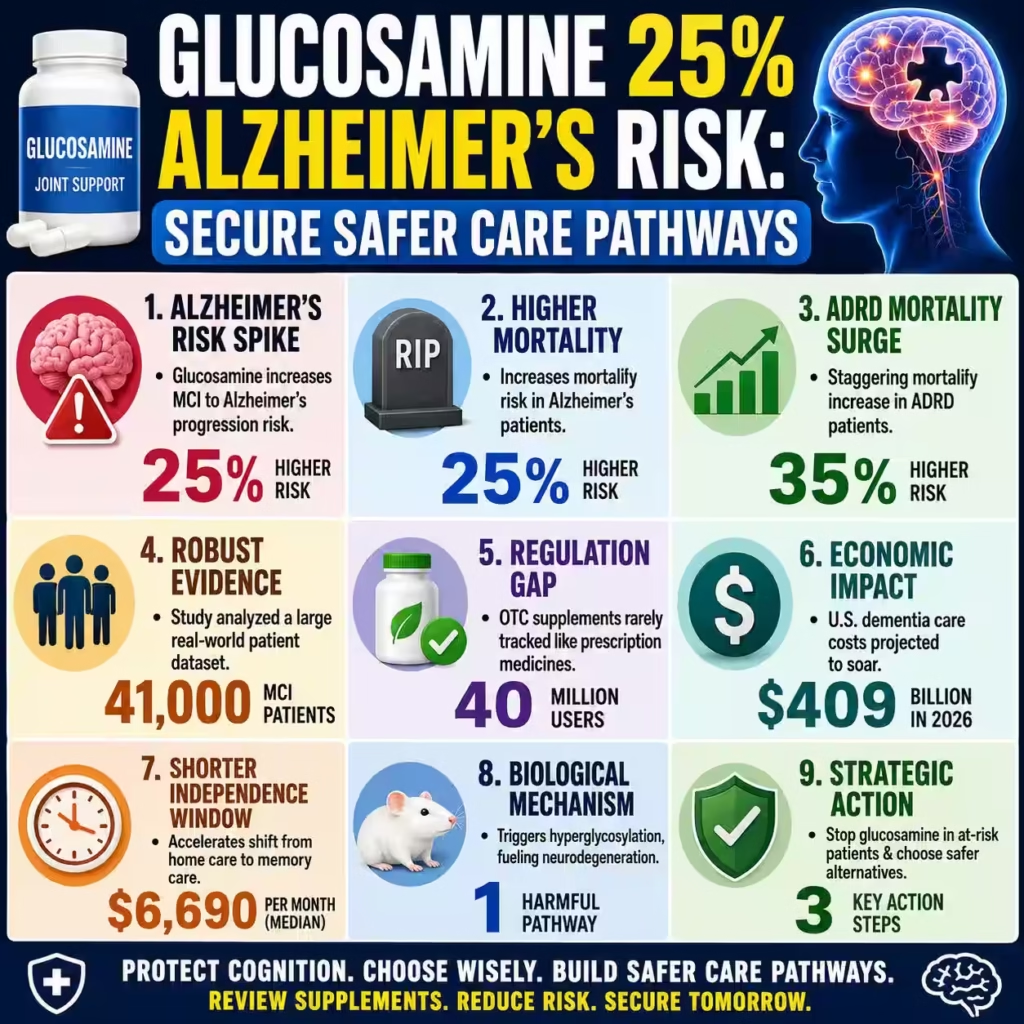
Recent analysis of 41,000 patient records reveals that glucosamine supplementation correlates with a 25% increased probability of progressing from Mild Cognitive Impairment (MCI) to Alzheimer’s disease. This finding, published in Nature Metabolism by researchers Matt Gentry and Ramon Sun from the University of Florida, fundamentally challenges the safety profile of a supplement consumed by nearly 40 million Americans annually for joint pain relief. The study identifies a specific biological mechanism called hyperglycosylation, where excess sugar molecules interfere with protein function in the brain, effectively accelerating neurodegeneration rather than preventing it.
The data further indicates a 25% increase in mortality risk for patients with established Alzheimer’s disease who take glucosamine, and a staggering 35% mortality increase for those with Alzheimer’s Disease Related Dementias (ADRD). This mortality spike was notably absent in the mild cognitive impairment group after age adjustment, suggesting that the supplement acts as a fuel for disease progression specifically once neurodegenerative pathology has begun. While glucosamine is marketed to reduce inflammation and protect cartilage, these results imply that in vulnerable brains, it overactivates the hexosamine biosynthetic pathway, leading to the accumulation of toxic sugar “tags” on proteins.
For healthcare organizations and insurers, this represents a critical blind spot in medication reconciliation. Over-the-counter (OTC) supplements are rarely tracked with the rigor of prescription pharmaceuticals.
The study utilized artificial intelligence to systematically parse a large longitudinal cohort of deidentified health records from 2012 to 2024, identifying that 8% of both cohorts—including 1,896 ADRD patients and 2,750 MCI patients—consistently utilized the supplement. This stark exposure of widespread usage demands an immediate strategic audit of patient supplement regimens across all managed care populations to mitigate this hidden metabolic liability.
The economic implications of this accelerated progression are severe, with the baseline valuation of informal care for dementia in the U.S. tracking at $413.5 billion, driven heavily by the rapid transition from home environments to institutional care settings. Accelerating the shift from MCI to full dementia effectively shortens the “independence window” for patients, precipitating earlier entry into memory care facilities that cost a median of $6,690 per month. By inadvertently speeding up this timeline, widely used joint supplements may be increasing the aggregate financial burden on families and health systems by billions annually.
Beyond the human toll, this case study highlights a failure in “metabolic psychiatry,” where the systemic effects of dietary compounds on brain chemistry are overlooked in favor of localized symptom management. The researchers validated their human data with mouse models, showing that blocking the enzyme responsible for sugar-tagging improved memory, while feeding mice glucosamine worsened social recognition deficits. This confirms that the risk is not merely correlational but rooted in a definable, modifiable metabolic pathway that links joint health interventions to neurological decline.
Carethix Critique: The Dangerous Gap in Supplement Regulation
At Carethix, we view these findings as a catastrophic failure of the “natural equals safe” heuristic that currently dominates the consumer wellness market. The fact that a compound can simultaneously support cartilage health and degrade neurological function reveals the critical lack of organ-specific toxicity testing for over-the-counter supplements. Millions of seniors are self-prescribing a product that may actively dismantle their cognitive reserve, operating under the false security of FDA “Generally Recognized As Safe” (GRAS) designations that do not account for neurodegenerative interactions.
The risk stratification in this study is particularly alarming because it targets the exact demographic—older adults with joint pain—who are most likely to have undiagnosed or early-stage cognitive impairment. The clinical gap is widened by the fact that primary care providers rarely ask about supplement use, and even when they do, they lack the data to warn against specific metabolic interactions like hyperglycosylation. This silence from the medical community effectively sanctions the use of a pro-dementia agent among the most vulnerable populations, turning a therapeutic attempt into a neurotoxic event.
Furthermore, the disparity between these findings and previous studies, such as those from the UK Biobank which suggested protective effects, underscores the danger of applying population-level data to pathological states. The Carethix analysis suggests that what is safe for a healthy brain becomes toxic to a brain in early stages of metabolic dysfunction. This nuance is entirely lost in mass-market advertising, which sells glucosamine as a universal preventative rather than a conditionally hazardous modulator of cellular metabolism.
We must also critique the financial toxicity introduced by this accelerated decline, as families unknowingly purchase products that hasten the depletion of their own assets. With the lifetime cost of dementia care averaging $405,262, any agent that speeds progression represents a direct threat to generational wealth and healthcare sustainability. The industry’s failure to label these products with neuro-metabolic warnings constitutes a breach of consumer trust that requires immediate rectification through policy and clinical practice changes.
Strategic Solutions for Risk Mitigation and Care
Clinical and Pharmacological Alternatives
The immediate clinical solution is the deprecation of glucosamine for any patient exhibiting signs of cognitive decline or possessing a family history of dementia. Physicians must pivot to alternative joint management strategies that do not influence the hexosamine biosynthetic pathway, such as topical non-steroidal anti-inflammatory drugs (NSAIDs) or physical therapy. Weight management remains the most effective non-pharmacological intervention for osteoarthritis, reducing joint load without introducing systemic metabolic risks. For patients requiring supplementation, alternatives like chondroitin sulfate—often paired with glucosamine but distinct in its metabolic processing—should be evaluated for safety, though total cessation of sugar-based supplements is the most prudent course until further data emerges.
Corporate and Payer Strategies
Employers and health plan administrators must immediately audit their wellness formularies and flexible spending account (FSA) allowances to flag or remove glucosamine products for members over age 50. Health insurers should implement automated warnings in their pharmacy benefit management systems that trigger an alert when a patient with an MCI or dementia diagnosis purchases these supplements using HSA/FSA funds. This data-driven intervention can prevent thousands of cases of accelerated progression, directly reducing the long-term care liability for the insurer. Corporations can also redirect wellness stipends toward ergonomic workplace assessments and subsidized physical therapy, which address the root cause of joint pain without the neurological liability.
Financial Defense for Patients
For individuals already diagnosed with Mild Cognitive Impairment, the financial solution involves immediate legal and asset protection steps to prepare for a potentially faster decline. Families should execute a durable financial power of attorney and consolidate liquid assets, as research shows that financial decision-making abilities deteriorate rapidly in the transition from MCI to dementia. The 25% increased progression risk necessitates a revision of long-term care insurance riders to ensure coverage kicks in earlier than originally planned. Wealth managers must treat this medical finding as a material risk to their clients’ portfolios, adjusting withdrawal rates to account for the high costs of memory care facilities, which can exceed $100,000 annually.
Technological and Diagnostic Implementation
Healthcare systems must leverage Electronic Health Record (EHR) AI to retrospectively scan patient panels for the co-occurrence of “Osteoarthritis” and “Memory Complaint” codes. These patients should be proactively contacted with a specific advisory to discontinue glucosamine, utilizing the same population health algorithms that track opioid or antibiotic stewardship. Additionally, investment in “metabolic psychiatry” diagnostics is essential to identify patients with elevated baseline glycosylation levels who are most at risk from sugar-based supplements. This precision medicine approach moves beyond generic advice, offering targeted protection for those with the specific metabolic phenotype that reacts poorly to glucosamine.
Educational and Community Outreach
Consultancies and provider groups must launch “Joint & Brain” educational campaigns that explain the link between metabolic health and neurodegeneration to the lay public. These campaigns should empower pharmacists to act as the first line of defense, advising customers at the point of sale about the cognitive risks associated with joint supplements. By integrating this knowledge into routine senior care, we can dismantle the information asymmetry that currently endangers millions of well-meaning consumers.
Future Prevention: Systemic Safeguards and Innovation
Biomarker Development and Screening
The most effective prevention against future metabolic-driven neurodegeneration lies in the commercialization of biomarkers that can measure protein glycosylation rates in real-time. If a simple blood panel could identify patients with “hyperactive” sugar-tagging machinery, they could be strictly contraindicated for glucosamine and similar compounds before damage occurs. This creates a new preventative market segment for diagnostics companies, focusing on metabolic resilience rather than just amyloid plaque detection. Integrating these markers into annual senior wellness exams would allow for true personalized supplement safety profiles, preventing the “one-size-fits-all” errors of the past.
Regulatory Reform and Labeling
The FDA must create a new category of “Neuro-Metabolic Warnings” for dietary supplements that cross the blood-brain barrier. Just as products are labeled for potential liver toxicity or interaction with blood thinners, glucosamine packaging must carry a mandatory warning: “May accelerate cognitive decline in individuals with memory impairment.” This regulatory shift would force manufacturers to conduct safety studies on neurodegenerative cohorts, closing the loop on the current lack of rigorous post-market surveillance. Such labeling would also shield manufacturers from future liability litigation as the causal links between supplements and dementia progression become undeniable.
Dietary and Lifestyle Engineering
Prevention also requires a broader shift toward low-glycemic lifestyles that reduce the overall burden on the hexosamine biosynthetic pathway. Since glucosamine effectively bypasses normal regulation to fuel this pathway, reducing dietary sugar intake offers a complementary preventative strategy for preserving cognitive function. Public health nutrition guidelines should evolve to recommend “brain-sparing” diets for joint pain sufferers, emphasizing anti-inflammatory foods like berries and omega-3s instead of isolated sugar compounds. This holistic approach treats the patient’s metabolism as a unified system, preventing the compartmentalization that led to the glucosamine crisis.
Advanced Pharmacovigilance Models
The methodology used in the University of Florida study—combining EHR data with basic science validation—should become the gold standard for monitoring all OTC supplements. Artificial intelligence models can continuously mine medical records for unexpected correlations between supplement use and disease progression, acting as an early warning system for “silent” toxins. By automating this surveillance, we can detect signals like the glucosamine-dementia link years earlier, preventing widespread exposure. This proactive digital vigilance is the only scalable way to protect a population increasingly reliant on unregulated health products.
Research and Clinical Trial Design
Future clinical trials for joint health interventions must include cognitive endpoints as a standard safety measure. We can no longer assume orthopedics are neurologically inert. Therefore, cognitive assessments must be mandatory in Phase 2 and 3 trials for arthritis therapeutics.
This prevention step ensures that no future drug or supplement is approved for joint pain without proving it is safe for the aging brain. Funding bodies should prioritize grants that investigate the “brain-joint axis,” encouraging cross-disciplinary research that breaks down the silos between rheumatology and neurology.
GAP Analysis: OTC Supplement Governance vs Neuro-Metabolic Risk Management
Healthcare systems continue to invest heavily in dementia screening, yet most medication reconciliation workflows still fail to capture over-the-counter supplement exposure with the same rigor as prescription medicines. A longitudinal AI-driven analysis of approximately 41,000 deidentified patient records from 2012–2024 identified regular glucosamine use in nearly 8% of both study cohorts, including around 2,750 patients with Mild Cognitive Impairment (MCI) and 1,896 patients with Alzheimer’s Disease Related Dementias (ADRD). This exposes a significant governance gap where millions of clinical encounters annually document prescription therapy while overlooking metabolic agents capable of influencing disease progression through the hexosamine biosynthetic pathway and protein hyperglycosylation.
The operational gap becomes more significant when clinical outcomes are compared with existing supplement safety assumptions. Patients with MCI using glucosamine demonstrated approximately 25% higher risk of progression to Alzheimer’s disease, while established Alzheimer’s patients experienced roughly 25% higher mortality and ADRD patients approximately 35% higher mortality compared with non-users in the analyzed population. Despite these findings, most electronic health record systems still lack automated clinical decision support for OTC supplement interactions, allowing potentially high-risk metabolic exposures to remain invisible during neurological risk assessment and chronic disease management.
The financial gap is equally substantial because dementia already generates one of the largest long-term healthcare burdens in the United States. Recent national estimates place the annual economic burden of Alzheimer’s disease and related dementias at well above $360 billion in direct healthcare and long-term care expenditures, while the estimated value of unpaid family caregiving exceeds $400 billion annually, with median U.S. memory care costs remaining around $6,000–$7,500 per month depending on region. Without systematic OTC supplement surveillance, healthcare organizations, insurers, and value-based care networks risk accelerating disease progression, increasing institutionalization rates, and expanding avoidable costs that could otherwise be reduced through earlier metabolic risk identification and evidence-based supplement governance.
Carethix Key Takeaway: The Metabolic Pivot
The revelation that a common joint supplement acts as a metabolic accelerator for Alzheimer’s is a watershed moment for modern healthcare. It forces us to abandon the simplistic view of supplements as harmless “natural” aids and recognize them as potent metabolic modulators with systemic consequences. For the healthcare industry, this is a mandate to integrate orthopedic and neurological care plans, ensuring that we do not sacrifice the mind to save the knee.
For the individual, the message is stark but empowering. Your cognitive trajectory is sensitive to inputs you control, including the supplements in your medicine cabinet.
Carethix advises an immediate “Supplement Audit” for anyone over 50: if you have memory concerns, glucosamine is a liability you cannot afford. The future of brain health is not just about new drugs, but about the strategic removal of hidden metabolic stressors that silently erode our cognitive capital.
Crucially, while the data establishes a profound metabolic association rather than immediate clinical proof of causality, it uncovers a modifiable biological mechanism that demands proactive clinical caution.