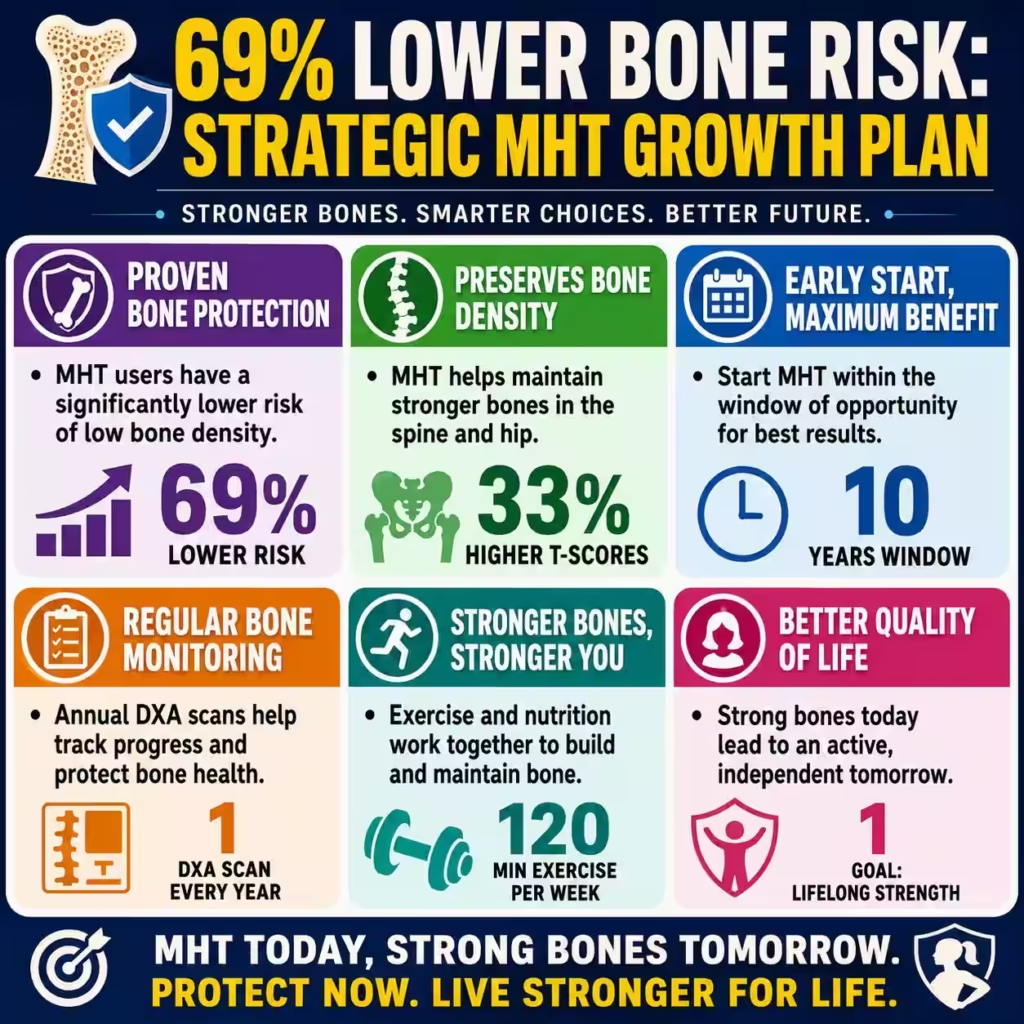
69% lower bone risk highlights the value of a strategic menopause hormone therapy plan.
Deep Case Study: MHT Efficacy in Mitigating Bone Density Loss
A pivotal 2026 retrospective cohort study presented at the Endocrine Society’s annual meeting reveals that postmenopausal women utilizing menopausal hormone therapy (MHT) experience a massive 69% lower risk of low bone mineral density compared to non-users. The research analyzed clinical data from 387 postmenopausal women who underwent dual-energy X-ray absorptiometry (DXA) scans between 2021 and 2025 to determine the efficacy of hormonal intervention on skeletal integrity. Principal investigator Dr. Diego Espinoza-Peralta highlights that this protection is independent of other variables, suggesting MHT is a primary driver for preserving bone mass in the lumbar spine and total hip regions.
The study cohort, with a mean age of 59.8 years, demonstrated that 33% of participants on hormone therapy maintained significantly higher T-scores, effectively shielding them from osteopenia and osteoporosis. This data directly counters the prevailing hesitation stemming from the 2002 Women’s Health Initiative (WHI) findings, which previously emphasized cancer risks over skeletal benefits. While the WHI study notably reported a 34% reduction in hip fractures among hormone users, that data point was historically overshadowed by fear-mongering regarding adverse outcomes.
Current clinical landscapes show that millions of women enter menopause annually, facing a drastic decline in estrogen that accelerates bone resorption rates beyond the body’s natural renewal capacity. The new data indicates that MHT acts as a critical brake on this deterioration, preserving micro-architectural bone structure during the most vulnerable years. Without intervention, postmenopausal women face a heightened susceptibility to fragility fractures, which serve as a leading cause of morbidity and loss of independence in geriatric populations.
This 69% risk reduction offers a statistically significant argument for re-evaluating the risk-benefit ratio for symptomatic women in early menopause. The study controlled for major clinical risk factors including age, years since menopause, Vitamin D levels, and smoking status, ensuring the validity of the hormonal impact. By isolating the hormone factor, the analysis confirms that estrogen therapy is not merely a symptom-relief mechanism but a foundational structural preservative.
Real-world evidence from this cohort underscores the necessity of timely intervention, as bone mass lost during the initial menopausal transition is often chemically irretrievable. Dr. Espinoza-Peralta asserts that these findings should shift the clinical narrative from “avoid if possible” to “reconsider for the right patient,” specifically for those under age 60. The data implies that delaying therapy until fracture occurrence is a strategic failure in preventative women’s health management.
Carethix Critique: The Cost of Hesitation and Systematic Gaps
The medical community’s lingering reluctance to prescribe MHT, driven by outdated interpretations of risk, has inadvertently exposed a generation of women to preventable skeletal degradation. Carethix analysts identify a critical “treatment gap” where the fear of rare oncological side effects paralyzes decision-making, ignoring the high-probability event of osteoporotic fracture. We observe that while the 69% reduction in low bone density risk is transformative, it remains inaccessible to patients whose providers rigidly adhere to conservative, risk-averse protocols established two decades ago.
The focus on “lowest dose for shortest duration” often results in sub-therapeutic management that fails to provide adequate skeletal protection for the necessary duration. Our analysis suggests that the current standard of care frequently treats bone health as a secondary consideration, addressed only after a catastrophic fracture occurs. This reactive approach disregards the physiological reality that estrogen receptors in bone tissue require consistent stimulation to maintain osteoblast activity and suppress osteoclast resorption.
Furthermore, the lack of distinction between different formulations of hormone therapy in public discourse exacerbates patient anxiety and non-compliance. The 2026 study reinforces that systemic estrogen, regardless of the specific regimen, provides a robust defense against the rapid bone turnover characteristic of menopause. Carethix critiques the failure of public health communication to effectively convey that the risks of hip fracture often equal or exceed the risks of hormone-related adverse events in selected populations.
We note a significant gap in baseline screening, as many women enter the menopausal transition without a recent DXA scan to establish their bone density trajectory. Without baseline data, clinicians lack the necessary context to aggressively recommend MHT as a preventative measure for osteopenia. This systemic oversight allows “silent” bone loss to progress unchecked until it manifests as a clinical fracture.
The critique extends to the siloing of menopausal care, where gynecologists manage symptoms and endocrinologists manage bone health, often without cohesive strategy. Carethix advocates for an integrated model where bone preservation is a primary endpoint of menopausal hormone therapy, rather than a side effect. The 69% statistic must serve as a mandate for re-engineering clinical guidelines to prioritize skeletal longevity alongside symptom management.
GAP Analysis: Closing the Bone Protection Gap Through Earlier Menopausal Hormone Therapy
A major clinical gap persists between the biological onset of accelerated bone loss and the timing of therapeutic intervention. Women lose approximately 5%–10% of bone mineral density (BMD) during the first 5 years after menopause, while nearly 1 in 3 women older than 50 years will experience an osteoporotic fracture during their lifetime, yet MHT remains substantially underutilized because of historical risk perceptions. The latest ENDO 2026 retrospective cohort of 387 postmenopausal women demonstrated that MHT users had 69% lower odds of low BMD (OR 0.31; 95% CI 0.19–0.50), with significantly higher lumbar spine (T-score −0.62 vs −1.02; p<0.001) and total hip (−0.32 vs −0.81; p<0.001) measurements despite adjustment for age, years since menopause, vitamin D, smoking, BMI, and metabolic comorbidities.
The diagnostic and treatment pathway also reveals a substantial prevention gap. In the ENDO 2026 cohort, 48.1% (186 of 387) women already met criteria for osteopenia or osteoporosis at DXA assessment, while only 33.3% (129 women) were receiving MHT, indicating that many eligible women remain untreated during the period when skeletal preservation is most achievable. Current international menopause guidance continues to support MHT as the most effective therapy for vasomotor symptoms and recognizes fracture prevention as an important benefit for appropriately selected women younger than 60 years or within 10 years of menopause, yet delayed referral frequently shifts care from prevention to fracture management.
The strategic gap therefore extends beyond symptom control into long-term healthcare economics and population health. Fragility fractures are associated with increased hospitalization, disability, institutional care, and mortality, whereas early risk stratification using DXA, FRAX, and individualized MHT eligibility can preserve skeletal integrity before irreversible microarchitectural deterioration occurs. Healthcare systems that integrate earlier menopause assessment, standardized osteoporosis screening, and evidence-based hormone therapy discussions are better positioned to reduce fracture burden, improve healthy life expectancy, and optimize long-term resource utilization while maintaining individualized risk-benefit decision making.
Strategic Solutions: Optimizing Hormonal Interventions
The primary solution involves immediate risk stratification for all perimenopausal women to identify candidates for early MHT initiation. Clinicians must utilize the “window of opportunity” theory, starting therapy within 10 years of menopause onset to maximize cardiovascular and skeletal safety profiles. We recommend standardizing the use of transdermal 17-beta estradiol patches, which offer bone-protective benefits while bypassing first-pass hepatic metabolism, thereby lowering thrombotic risk.
For women with an intact uterus, the integration of micronized progesterone is essential to protect the endometrium without negating the osteogenic effects of estrogen. Carethix advises that therapy plans should be personalized, using annual DXA scans to monitor T-score stability or improvement. If bone density continues to decline despite standard dosing, clinicians should consider adjusting serum estradiol targets to levels known to suppress bone turnover markers.
Another critical strategy is the incorporation of tissue-selective estrogen complex (TSEC) therapies for women who cannot tolerate traditional progestogens. These newer formulations pair conjugated estrogens with selective estrogen receptor modulators (SERMs) to deliver bone benefits while antagonizing estrogen’s effect on breast and uterine tissue. This approach expands the eligible patient population, allowing those with specific risk factors to still access the 69% risk reduction potential.
Healthcare systems must implement automated flagging within electronic health records to prompt bone health discussions for every woman reporting vasomotor symptoms. Providers should present MHT not just as a remedy for hot flashes, but as a proactive investment in future mobility and independence. This reframing is essential for improving patient adherence and shifting the psychological burden of treatment.
Finally, for women who are absolutely contraindicated for MHT, we propose the immediate deployment of non-hormonal antiresorptive agents like bisphosphonates or denosumab upon the first sign of density loss. However, MHT remains the superior first-line solution for younger postmenopausal women due to its dual efficacy in symptom control and fracture prevention. The goal is a seamless therapeutic transition that leaves no bone protection gap.
Prevention Steps: Building Long-Term Skeletal Resilience
Prevention of osteoporotic fractures requires a multi-modal approach that pairs MHT with rigorous lifestyle modifications. Patients must maintain optimal Vitamin D levels, targeting serum concentrations above 30 ng/mL to ensure adequate calcium absorption. We recommend a daily intake of 1200 mg of calcium, preferably through dietary sources like fortified dairy or leafy greens, to support the mineralization process stimulated by hormone therapy.
Weight-bearing and resistance exercises are non-negotiable adjuncts to pharmaceutical treatment, as mechanical stress signals bone remodeling. Carethix protocols suggest a minimum of 150 minutes of moderate activity per week, specifically targeting the lumbar spine and femoral neck regions. This physical load works synergistically with estrogen to enhance cortical thickness and trabecular density.
Fall prevention strategies must be implemented early, focusing on balance training and home safety assessments to reduce the external risk factors for fracture. Eliminating hazards such as loose rugs and ensuring adequate lighting can significantly lower the incidence of traumatic impact on fragile bones. Even with improved density from MHT, mechanical protection against falls remains a critical layer of defense.
Regular monitoring of thyroid function and parathyroid hormone levels is crucial, as disorders in these systems can silently accelerate bone loss independent of estrogen status. We advise comprehensive metabolic panels annually to detect secondary causes of osteoporosis that might undermine the efficacy of hormone therapy. Early detection of metabolic outliers ensures that the protective effects of MHT are not negated by comorbid conditions.
Finally, avoiding bone-toxic substances such as tobacco and excessive alcohol is imperative for preserving the gains achieved through therapy. Smoking cessation programs should be mandatory for any patient initiating MHT, as nicotine restricts blood flow to bone tissue and antagonizes estrogen. This holistic prevention model ensures that the biological advantage provided by the 69% risk reduction is fully realized.
Carethix Key Takeaway
The data is unequivocal: Menopausal Hormone Therapy offers a massive, 69% reduction in the risk of low bone density, a benefit that far outweighs the theoretical risks for the vast majority of symptomatic women under 60. We firmly believe that withholding this treatment due to outdated fears constitutes a failure of duty, condemning millions to preventable frailty and fracture. It is time to modernize the standard of care, viewing estrogen not as a danger to be avoided, but as a critical nutrient for the aging skeleton.
The historical over-reliance on a single, broadly generalized data point from the turn of the century has restricted clinical innovation and harmed patient outcomes. Forward-thinking healthcare systems must now aggressively overhaul internal care pathways, transitioning from a posture of defensive medicine to one of proactive skeletal preservation. By failing to integrate this 69% risk reduction into standard postmenopausal assessments, institutions unnecessarily burden the future healthcare infrastructure with manageable orthopedic crises.
True modernization requires an unyielding commitment to patient education that dismantles legacy biases at the point of care. Providers must confidently present these contemporary findings, ensuring that fear does not dictate the long-term mobility of aging populations. Ultimately, stabilizing the structural foundation of the human body through timely hormonal optimization is a clinical necessity for healthy aging.