EXO1 30% cancer threat urges healthcare leaders to strengthen targeted care strategy and secure better outcomes.
Case Study: The EXO1 Overdrive & Therapeutic Vulnerability
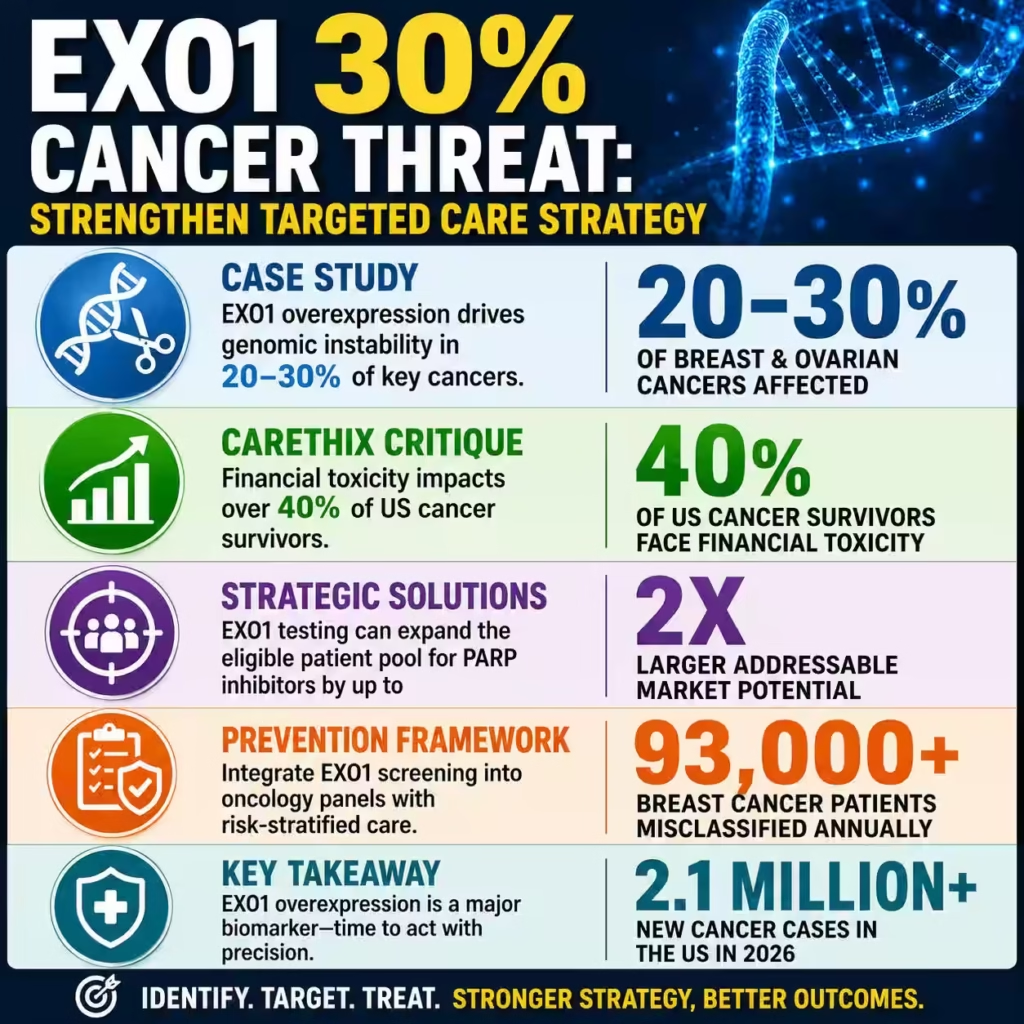
A groundbreaking discovery by Penn State College of Medicine researchers in May 2026 has exposed a critical vulnerability in 20% to 30% of breast and ovarian cancers, potentially revolutionizing precision oncology for millions globally. The study, published in Nature Communications, reveals that the EXO1 gene—typically a “good guy” responsible for DNA repair—becomes a genomic saboteur when overexpressed, acting like “molecular scissors” that shred DNA strands instead of fixing them. This phenomenon creates a unique “BRCA-like” instability in tumors even when the patient has no inherited BRCA mutations, effectively expanding the eligibility for highly potent targeted therapies like PARP inhibitors and platinum-based chemotherapy to a massive, previously ineligible patient cohort.
The implications of this finding are staggering when analyzed against the backdrop of the 2026 cancer statistics, which project over 2.1 million new cancer cases in the United States alone. With breast cancer incidence rising by 1% annually and reaching approximately 310,000 new US cases this year, the identification of EXO1 overexpression as a distinct biomarker means that roughly 93,000 breast cancer patients annually could have been misclassified as “low risk” for genomic instability. These patients, whose tumors are driven by this rogue gene mechanism rather than inherited mutations, have historically been excluded from the most effective DNA-repair-targeting drugs. The study confirms that this overexpression is not limited to breast and ovarian tissue but is also prevalent in melanoma, testicular, cervical, and hepatobiliary cancers, suggesting a pan-cancer therapeutic target of enormous scale.
From a high-authority analyst perspective, the EXO1 discovery bridges a catastrophic gap in current oncology practice where treatment decisions are frequently dictated by the “tissue of origin” rather than the “molecular engine” of the tumor. The data indicates that tumors with high EXO1 levels mimic the behavior of BRCA-deficient cells, a condition known as homologous recombination deficiency (HRD), which makes them exquisitely sensitive to drugs that block backup repair pathways. Current market analysis shows the global PARP inhibitor market is valued at approximately $6.8 billion in 2026, yet its growth has been constrained by strict labeling that often requires a germline BRCA mutation. By validating EXO1 overexpression as a functional equivalent to BRCA loss, the addressable market for these life-saving drugs could arguably double, bringing precision medicine to patients who previously faced limited options.
This mechanism of “enzyme overproduction” represents a paradigm shift in how we understand cancer biology, moving beyond the search for “broken genes” (mutations) to “hyperactive genes” (overexpression). The Penn State team, led by George-Lucian Moldovan, demonstrated that reducing EXO1 activity or exploiting its excess with cisplatin resulted in significant tumor regression in preclinical models. This suggests that the 20-30% of patients with this profile are currently receiving suboptimal care—likely standard chemotherapy cocktails with high toxicity—when they could achieve better outcomes with targeted regimens. The sheer volume of affected patients transforms this from a niche scientific finding into a major public health opportunity to reduce cancer mortality and financial toxicity.
EXO1 Overexpression Is Exposing a High-Impact Precision Oncology Risk
The discovery that EXO1 overexpression drives genomic instability in approximately 20% to 30% of breast and ovarian cancers highlights a major diagnostic and therapeutic risk within modern oncology. In 2026, the United States is projected to record approximately 2.1 million new cancer diagnoses, including roughly 320,000 new invasive breast cancer cases and more than 20,000 ovarian cancer cases, meaning nearly 68,000 to 102,000 newly diagnosed patients each year could harbor EXO1-driven tumors with homologous recombination deficiency (HRD)-like biology despite lacking inherited BRCA1/BRCA2 mutations. Without molecular profiling that captures EXO1 expression, these patients remain vulnerable to delayed precision therapy, inappropriate risk stratification, and reduced treatment efficiency.
The operational risk extends beyond breast and ovarian malignancies because elevated EXO1 activity has also been identified across melanoma, cervical, testicular, and hepatobiliary cancers, substantially increasing the potential clinical footprint of this biomarker. Global cancer incidence now exceeds 20 million new cases annually, while cancer-related deaths remain above 9.7 million, illustrating the scale at which biomarker misclassification can influence outcomes if molecular drivers remain undetected. This evidence challenges conventional tissue-based treatment pathways by demonstrating that genomic behavior rather than anatomical origin may become the dominant factor guiding therapeutic selection.
The commercial implications are equally significant because the global PARP inhibitor market is estimated at approximately US$7 billion in 2026, with future expansion increasingly dependent on identifying new HRD-positive patient populations beyond traditional BRCA mutation carriers. If prospective clinical validation confirms EXO1 overexpression as a functional predictor of PARP inhibitor sensitivity, the addressable treatment population could expand substantially, accelerating demand for companion diagnostics, genomic sequencing, and precision oncology services. Healthcare systems that delay integration of expression-based biomarkers into routine clinical workflows risk higher treatment costs, avoidable toxicity from less targeted chemotherapy, and slower adoption of the next generation of personalized cancer care.
Carethix Critique: The Cost of Diagnostic Blindness
The healthcare industry is currently failing a significant segment of the cancer population by relying on outdated diagnostic panels that prioritize germline mutations over somatic expression levels. While we have successfully normalized testing for BRCA1 and BRCA2, the fact that EXO1 overexpression drives genomic instability in nearly one-third of specific cancers means our current screening protocols are effectively blind to a massive driver of disease. This diagnostic gap results in “trial-and-error” oncology, where patients undergo lines of ineffective therapy that deplete their physiological reserves and financial resources before a working solution is found.
The financial implications of this oversight are severe, contributing to the $22.5 billion chemotherapy market inefficiency where drugs are administered without precise efficacy predictors. Financial toxicity now affects over 40% of US cancer survivors, with many facing bankruptcy due to the escalating costs of care that includes ineffective treatments. By failing to screen for EXO1 levels, payers and providers are unknowingly authorizing expensive, non-targeted regimens for patients who would respond robustly to generic cisplatin or targeted PARP inhibitors. This represents a failure of value-based care principles, where the goal is to maximize patient outcomes per dollar spent.
Furthermore, the risk of “undertreatment” for these patients is a critical patient safety concern that demands immediate regulatory attention. Patients with EXO1-high tumors have aggressive disease characteristics similar to basal-like breast cancer, yet they lack the BRCA label that triggers aggressive, targeted intervention. Without this biomarker, these high-risk patients are often grouped with lower-risk cohorts or given broad-spectrum cytotoxic agents that fail to exploit their tumor’s specific weakness. The Penn State findings indicate that these tumors are “addicted” to specific repair pathways to survive their own self-inflicted DNA damage, a dependency that current standard-of-care protocols completely ignore.
There is also a significant gap in the clinical trial landscape, which has been slow to adopt “basket trial” designs that group patients by molecular features rather than organ site. Despite the clear evidence that EXO1 overexpression transcends tissue boundaries—affecting liver, skin, and reproductive organs alike—regulatory frameworks still encourage drug approvals based on tumor location. This “siloed” approach delays the availability of life-saving treatments for patients with rarer cancers, like hepatobiliary carcinoma, who might share the same EXO1 vulnerability as a breast cancer patient. The industry must pivot immediately to acknowledge that a 30% prevalence across multiple cancer types constitutes a major sub-population that deserves a dedicated therapeutic track.
Strategic Solutions: Operationalizing the EXO1 Biomarker
The most immediate and high-impact solution is the integration of EXO1 expression profiling into standard Next-Generation Sequencing (NGS) tumor panels for all newly diagnosed patients with solid tumors. Laboratories and diagnostic companies must update their reporting pipelines to quantify EXO1 mRNA or protein levels, not just look for mutations in the gene sequence. By establishing a quantitative threshold for “overexpression,” oncologists can immediately identify the 20-30% of patients who are candidates for “BRCA-targeted” therapies despite being BRCA-negative. This diagnostic upgrade utilizes existing technology and requires only a software/analysis modification, making it a low-barrier, high-reward implementation.
Therapeutically, the industry must move to repurpose existing FDA-approved drugs like cisplatin and PARP inhibitors (e.g., Olaparib, Niraparib) for this new indication. The data suggest EXO1-high tumors are exquisitely sensitive to platinum salts, which are inexpensive and widely available generic drugs. A strategic shift to utilize lower, less toxic doses of cisplatin in this specific patient subset could maintain high efficacy while significantly reducing the debilitating side effects—such as nephrotoxicity and neuropathy—that often lead to treatment discontinuation. This “dosage de-escalation” strategy, guided by EXO1 status, offers a rare win-win: better patient tolerability and lower drug costs.
Pharmaceutical companies and research institutions must launch “EXO1-Basket Trials” immediately to clinically validate these findings across the diverse cancer types identified, including melanoma and cervical cancer. These trials should focus on monotherapy efficacy of DNA-damage response (DDR) inhibitors in patients selected solely on EXO1 levels. Such trials would likely accrue patients rapidly given the 30% prevalence rate, shortening the timeline to regulatory approval. Additionally, investigating combination therapies—pairing EXO1 inhibition with immunotherapy—could unlock durable responses, as the genomic instability caused by EXO1 often generates “neoantigens” that make tumors more visible to the immune system.
For healthcare payers and hospital systems, the solution lies in value-based reimbursement models that incentivize the use of the right drug for the right molecular profile. Payers should mandate EXO1 testing as a prerequisite for approving certain chemotherapy regimens in breast and ovarian cancer, ensuring that patients receive the most biologically rational therapy first. Hospitals can implement clinical decision support (CDS) tools within their Electronic Health Records (EHR) that flag patients with high EXO1 for consideration of platinum-based therapy or clinical trial enrollment. This systemic alignment ensures that scientific discovery translates directly into clinical execution, closing the gap between the bench and the bedside.
Prevention Steps: Averting Future Clinical Failures
Prevention in this context focuses on preventing therapeutic failure and the development of drug resistance, which are the primary drivers of cancer mortality. By utilizing EXO1 status as a predictive biomarker at the point of diagnosis, clinicians can prevent the common clinical error of administering “standard” chemotherapy to patients who have a specific, exploitable vulnerability. This “pre-emptive precision” prevents the tumor from evolving resistance mechanisms during ineffective early-line treatments, preserving the patient’s immune system and bone marrow function for therapies that actually work. It essentially “prevents” the progression to late-stage, untreatable disease by maximizing the kill rate of the initial therapy.
Another critical prevention step involves active surveillance and longitudinal monitoring using liquid biopsies to detect changes in EXO1 expression over time. Tumors are dynamic entities that evolve under selective pressure, and a tumor that starts with low EXO1 might upregulate it as a survival mechanism, or vice versa. Implementing a schedule of “serial molecular monitoring” allows clinicians to switch therapeutic tactics the moment the tumor’s biology shifts. This prevents the “lag time” between disease progression and treatment change, keeping the therapy aligned with the tumor’s current molecular state rather than its historical biopsy.
To prevent financial toxicity for patients and systems, we must adopt a “biomarker-first” coverage policy. Currently, patients often pay thousands of dollars out-of-pocket for treatments that have a low probability of success, a financial injury that is preventable with better data. By mandating EXO1 testing, insurance providers can prevent wasteful spending on ineffective branded drugs when a generic like cisplatin might be superior for that specific patient. This economic prevention strategy stabilizes the healthcare system’s budget while protecting families from the devastating “financial side effects” of cancer care.
Finally, we must prevent the knowledge gap in the oncology workforce through rigorous educational initiatives. The speed of genomic discovery often outpaces clinical education, leading to a “practice lag” where community oncologists may not be aware of the latest biomarkers like EXO1. Professional bodies and consultancies must roll out rapid-update guidelines and “point-of-care” educational tools that inform physicians about EXO1’s significance. Ensuring that every oncologist, regardless of their location, knows how to interpret an EXO1 result prevents the disparity in care where only patients at major academic centers receive cutting-edge precision medicine.
Key Takeaway
Carethix strongly asserts that the EXO1 discovery is a non-negotiable call to action for the oncology community to abandon the “tissue-is-issue” dogma. The existence of a 30% subgroup across major cancers that mimics BRCA behavior without the mutation represents the single largest “hidden” market for precision therapy in 2026. We are no longer waiting for a new drug; we are waiting for the diagnostic will to use the tools we already have. Every day that EXO1 screening is delayed is a day where thousands of patients receive suboptimal care, incurring avoidable physical and financial costs. The future of cancer care is not just in finding new cures, but in unlocking the silent vulnerabilities within the genome—and EXO1 is the key we must turn to now.