The 35 million cancer cases warning compels healthcare leaders to strengthen global cancer strategy and build smarter care systems.
WHO Cancer Outlook: A Global Case Study That Demands System-Level Action
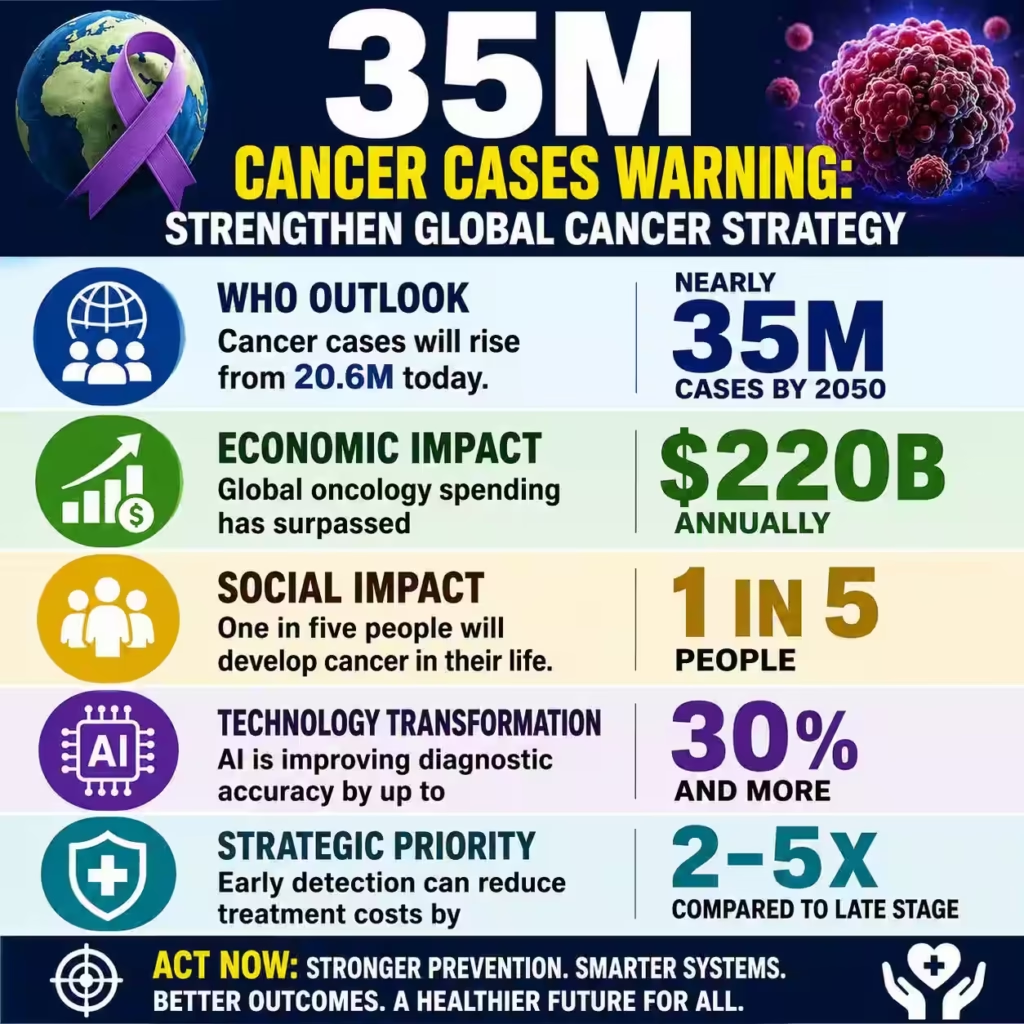
The World Health Organization estimates that annual cancer cases will increase from 20.6 million today to nearly 35 million by 2050, while 10 million people already die from cancer every year, making it one of the largest healthcare system challenges worldwide. The latest WHO review further estimates that one in five people will develop cancer during their lifetime, while 92% of the global population will be directly affected through either personal diagnosis or a close family member, exposing major weaknesses in prevention, diagnosis, treatment, survivorship, and healthcare financing. For healthcare leaders, the issue is no longer scientific capability alone but whether healthcare systems can deliver equitable access at scale.
The numbers extend beyond incidence alone. According to recent global cancer estimates, cancer accounted for nearly one in six deaths worldwide. Population aging, urbanization, obesity, tobacco use, alcohol consumption, environmental pollution, occupational exposures, and infectious diseases continue expanding cancer risk across both developed and developing economies.
Healthcare expenditure on cancer continues to increase globally, with oncology representing one of the fastest-growing segments of healthcare spending due to advanced therapeutics, precision medicine, immunotherapy, genomic diagnostics, and long-term survivorship care.
The WHO findings expose a structural imbalance between medical innovation and healthcare delivery. While survival rates for breast cancer and childhood cancers exceed 85% in many high-income nations, survival falls below 30% in lower-income settings because patients often lack timely screening, pathology services, molecular diagnostics, oncology specialists, radiotherapy infrastructure, essential medicines, and financial protection. Carethix considers this gap not merely a clinical issue but a healthcare governance challenge requiring coordinated policy, operational, financial, and workforce reforms across the entire continuum of care.
PESTEL Analysis: Strategic Implications of the 35 Million Cancer Case Projection
Cancer is no longer solely a public health challenge; it has become a macro-environmental issue affecting healthcare policy, economic sustainability, technology investment, workforce planning, pharmaceutical innovation, and environmental health. With annual global cancer cases projected to increase from 20.6 million today to nearly 35 million by 2050—an increase of almost 70%—healthcare organizations must evaluate the future oncology landscape through a comprehensive PESTEL framework. Carethix considers PESTEL analysis essential for healthcare leaders developing long-term cancer control strategies, capital investment plans, and population health initiatives.
Political Factors: Governments will face increasing pressure to strengthen National Cancer Control Plans, expand universal health coverage, and invest in oncology infrastructure. More than 190 WHO Member States have committed to strengthening non-communicable disease strategies, while achieving the UN Sustainable Development Goal (SDG) target of reducing premature NCD mortality by one-third by 2030 requires accelerated cancer prevention, screening, and treatment investments. Public healthcare budgets will need to expand funding for radiotherapy facilities, cancer registries, workforce development, vaccination programs, and essential oncology medicines as cancer incidence approaches 35 million annual cases.
Economic Factors: Cancer is becoming one of the largest contributors to healthcare expenditure worldwide. Global oncology spending has surpassed US$220 billion annually, while indirect economic losses from reduced productivity, disability, caregiver burden, and premature mortality add hundreds of billions of dollars more each year. Earlier diagnosis can reduce treatment costs by 2 to 5 times compared with managing advanced-stage disease, making prevention and screening economically attractive investments rather than healthcare expenses.
Social Factors: WHO estimates that one in five people will develop cancer during their lifetime, while 92% of the global population will experience cancer either personally or through a close family member. Global population aging, increasing life expectancy, urbanization, obesity, sedentary lifestyles, tobacco use, alcohol consumption, and unhealthy dietary patterns continue expanding cancer risk across nearly every region. Healthcare organizations must also address growing survivorship needs, mental health support, caregiver services, rehabilitation, and long-term quality-of-life management as millions more patients live longer following treatment.
Technological Factors: Precision oncology is rapidly transforming cancer care through genomic sequencing, molecular diagnostics, liquid biopsy, immunotherapy, artificial intelligence-assisted imaging, digital pathology, robotic surgery, and tele-oncology. More than 2,000 oncology drugs and biologics are currently under clinical development globally, while AI applications are improving radiology interpretation, pathology workflows, clinical decision support, and population risk prediction. Healthcare providers that integrate interoperable electronic health records, predictive analytics, and AI-driven operational management will be better positioned to manage rising patient volumes without proportionally increasing healthcare costs.
Environmental Factors: Environmental and occupational exposures remain significant contributors to global cancer incidence. Air pollution, ultraviolet radiation, industrial chemicals, asbestos, diesel emissions, heavy metals, contaminated water, and climate-related environmental changes continue increasing long-term cancer risks in many regions. Healthcare systems should integrate environmental health surveillance, workplace safety programs, pollution reduction initiatives, and climate-resilient healthcare infrastructure into future cancer prevention strategies to reduce avoidable disease burden.
Legal Factors: Expanding cancer incidence will increase regulatory focus on healthcare quality, patient safety, pharmaceutical pricing, clinical trial governance, data privacy, AI regulation, and equitable access to oncology services. Compliance with healthcare regulations governing electronic health records, genomic information, informed consent, cybersecurity, and value-based reimbursement will become increasingly important as oncology care becomes more digital and data-driven. Carethix recommends that healthcare organizations establish robust governance frameworks combining regulatory compliance, clinical quality assurance, ethical AI oversight, and measurable performance indicators to support sustainable cancer care over the coming decades.
Carethix Critique: Scientific Progress Alone Cannot Solve the Global Cancer Burden
Carethix believes the WHO findings expose structural health failure rather than scientific limitation. While global cancer incidence has already reached 20.6 million new cases annually and causes approximately 10 million deaths every year, annual cases are projected to increase by nearly 70% to around 35 million by 2050, placing unprecedented pressure on healthcare systems. Despite more than 2,000 active oncology drugs and biologics under development globally and rapidly expanding precision medicine capabilities, WHO estimates that one in five people will develop cancer while 92% of the world’s population will be directly affected through their own diagnosis or that of a close family member, demonstrating that innovation alone is not translating into equitable patient outcomes.
Cancer survival increasingly depends on healthcare infrastructure instead of clinical science. WHO reports show more than 85% five-year survival for breast and childhood cancers in many high-income countries compared with less than 30% in many low-income countries, creating survival gaps exceeding 55 percentage points for diseases that are increasingly treatable when diagnosed early. Delayed diagnosis remains responsible for a significant proportion of preventable cancer mortality because many healthcare systems continue operating with shortages of pathology laboratories, molecular diagnostics, PET-CT imaging, radiotherapy facilities, oncology specialists, multidisciplinary cancer centers, and organized screening programs, resulting in patients presenting with Stage III or Stage IV disease where treatment costs may be 3 to 5 times higher than early-stage intervention.
Financial toxicity has become one of oncology’s largest healthcare risks. Global oncology spending has exceeded US$220 billion annually, while cancer care remains among the highest-cost medical specialties due to precision diagnostics, immunotherapies, targeted therapies, robotic surgery, radiation technology, supportive care, and survivorship management.
In many countries, patients experience catastrophic healthcare expenditure, productivity losses, caregiver absenteeism, reduced household income, and long-term psychological distress. This demonstrates that affordability, accessibility, and continuity of care are becoming equally important quality indicators alongside clinical effectiveness.
Healthcare workforce shortages represent another widening operational gap. The projected increase from 20.6 million to nearly 35 million annual cancer cases will require substantial expansion in medical oncologists, radiation oncologists, surgical oncologists, oncology nurses, pharmacists, pathologists, radiologists, genetic counselors, psycho-oncology specialists, rehabilitation experts, and palliative care teams over the next 25 years. Without coordinated workforce planning, patient volumes could increase by nearly 70%, extending referral delays, diagnostic turnaround times, treatment waiting lists, and follow-up intervals despite continued pharmaceutical innovation.
Carethix also identifies insufficient investment in prevention despite overwhelming evidence. WHO estimates indicate that 30% to 50% of all cancers are preventable, while tobacco alone accounts for approximately 25% of cancer deaths globally, HPV vaccination can prevent the majority of cervical cancer cases, and organized screening significantly improves survival for breast, colorectal, and cervical cancers. Healthcare systems that continue allocating disproportionate funding toward advanced-stage treatment instead of prevention, vaccination, early detection, and population risk reduction are creating financially unsustainable oncology models that will struggle to accommodate 35 million annual cancer cases over the coming decades.
Solutions: Building a Sustainable and Equitable Cancer Care System
Carethix recommends replacing fragmented oncology delivery with integrated cancer system management supported by measurable performance indicators. Every patient pathway should incorporate prevention, population risk assessment, screening, diagnosis, molecular testing, multidisciplinary treatment, rehabilitation, survivorship, and palliative care within standardized clinical frameworks designed to reduce diagnostic variation and improve operational efficiency. Healthcare organizations should target screening participation above 75%, diagnostic accuracy exceeding 98%, electronic health record completeness above 99%, and referral-to-treatment timelines below internationally recommended performance thresholds to improve measurable patient outcomes.
Population screening should transition toward precision population health management supported by artificial intelligence and predictive analytics. Health systems should prioritize evidence-based screening for breast, cervical, colorectal, lung, prostate, and high-risk hereditary cancers while integrating AI-assisted mammography, automated risk stratification, digital patient reminders, electronic referral systems, and predictive population analytics. Increasing organized screening participation by 20–30 percentage points could enable thousands of additional early-stage diagnoses annually in large healthcare systems while substantially reducing expensive late-stage cancer treatment.
Diagnostic capacity must expand with screening infrastructure. Healthcare investment should prioritize digital pathology, genomic sequencing, molecular diagnostics, PET-CT imaging, MRI capacity, liquid biopsy technologies, laboratory automation, and standardized pathology reporting capable of supporting precision oncology. Organizations should continuously monitor operational KPIs including referral-to-biopsy times under 14 days, pathology reporting within 5–7 days, molecular testing completion rates above 95%, and treatment initiation within 30 days, ensuring that diagnostic delays do not become barriers to survival.
Cancer treatment delivery should be redesigned around multidisciplinary care supported by standardized governance. Every confirmed cancer diagnosis should undergo structured tumor board review involving medical oncology, surgical oncology, radiation oncology, radiology, pathology, pharmacy, nutrition, rehabilitation, genetics, psychology, nursing, and palliative medicine to improve treatment consistency. Healthcare systems implementing multidisciplinary oncology governance have demonstrated improvements in treatment guideline adherence, reduced clinical variation, higher patient satisfaction, and improved survival across several common cancers.
Healthcare financing requires equal modernization. Governments, insurers, and healthcare organizations should expand reimbursement for screening, genomic diagnostics, essential medicines, immunotherapies, supportive care, rehabilitation, survivorship, and palliative services while implementing value-based reimbursement tied to measurable clinical outcomes. Investment portfolios should balance approximately 25–30% toward prevention and screening, 35–40% toward diagnosis and treatment infrastructure, 15–20% toward workforce development, and 10–15% toward digital transformation and data systems, creating more resilient oncology ecosystems capable of managing long-term demand growth.
Artificial intelligence should become an operational accelerator rather than a replacement for clinicians. AI-supported radiology interpretation, digital pathology, clinical documentation, workflow automation, predictive risk modeling, remote monitoring, and tele-oncology consultations can improve productivity while expanding specialist access for underserved populations. Combined with interoperable electronic health records and population health analytics, these technologies enable healthcare systems to manage growing cancer incidence more efficiently without compromising clinical quality.
Prevention: Preparing Healthcare Systems for Future Cancer Growth
Carethix recommends positioning cancer prevention as the highest-return investment across the oncology continuum. With WHO estimating that 30% to 50% of cancers are preventable, national cancer strategies should establish measurable targets including reducing adult smoking prevalence below 10%, increasing HPV vaccination coverage above 90%, expanding hepatitis B immunization, improving obesity prevention programs, reducing alcohol-related cancer risks, strengthening occupational safety, and increasing participation in evidence-based screening programs. Every percentage-point improvement in prevention reduces long-term treatment demand while improving healthcare sustainability.
Primary care should become the central coordinator of population cancer prevention. Family physicians, nurse practitioners, physician assistants, pharmacists, and community health workers should perform standardized cancer risk assessments, hereditary cancer evaluations, smoking cessation counseling, obesity management, vaccination recommendations, and screening referrals during routine healthcare encounters. Healthcare organizations should aim for screening eligibility identification above 95%, vaccination compliance above 90%, and documented lifestyle risk assessments for 100% of high-risk adult populations, strengthening early detection before disease progression.
Healthcare organizations should strengthen national cancer intelligence through integrated digital infrastructure. Comprehensive cancer registries, AI-powered predictive analytics, interoperable electronic health records, genomic databases, and real-world evidence platforms enable earlier identification of high-risk populations while supporting workforce planning, research prioritization, resource allocation, and quality improvement. Organizations should maintain data completeness above 98%, registry reporting accuracy above 99%, and real-time performance dashboards tracking incidence, mortality, screening participation, treatment outcomes, equity indicators, and regional healthcare capacity.
Healthcare workforce resilience must expand ahead of projected patient demand. With annual global cancer cases expected to increase by nearly 14.4 million additional patients by 2050, governments and healthcare organizations should increase oncology residency positions, nursing education, pathology training, radiology fellowships, radiation therapy programs, genetic counseling capacity, and continuing professional development. Strategic workforce planning should target annual capacity growth of 3–5%, ensuring specialist supply grows alongside projected oncology demand instead of reacting after shortages emerge.
Research collaboration should become more globally coordinated to accelerate equitable innovation. Expanding multinational clinical trials, genomic research networks, biomarker discovery programs, digital health research, and real-world evidence collaborations improves external validity while ensuring therapies benefit diverse patient populations across income settings. Healthcare leaders should continuously monitor more than 20 system-level KPIs, including prevention coverage, screening uptake, diagnostic turnaround, treatment initiation, five-year survival, workforce capacity, patient-reported outcomes, financial protection, and health equity metrics, transforming cancer control into a measurable, data-driven healthcare governance strategy.
Carethix Key Takeaway
The WHO projection of nearly 35 million annual cancer cases by 2050 is not simply an epidemiological forecast—it is a warning that healthcare systems must redesign how cancer prevention, diagnosis, treatment, financing, workforce planning, and survivorship are managed. Scientific breakthroughs will continue expanding therapeutic possibilities, but their population impact will remain limited if access, affordability, and operational capacity do not improve at the same pace.
Carethix concludes that the strongest cancer strategy combines evidence-based prevention, equitable access, integrated care pathways, workforce expansion, digital health, performance measurement, and sustainable financing into a unified healthcare governance model. Organizations that invest today in coordinated cancer system transformation will be better positioned to improve survival, reduce disparities, optimize healthcare resources, and deliver measurable value for patients and populations over the coming decades.