Maven Clinic helps employers address a 15% surge in healthcare cost pressures through unified women’s metabolic benefits.
Case Study: Unifying Metabolic and Hormonal Care in Women’s Digital Health
Virtual women’s clinic Maven Clinic recently launched its direct-to-consumer platform, which connects GLP-1 and hormonal care across more than 30 fields to its digital network of providers in the United States. This strategic launch directly addresses the persistent fragmentation of women’s metabolic and reproductive healthcare, which historically operates in disjointed clinical silos. By unifying these disparate touchpoints into a cohesive platform, healthcare organizations can optimize patient outcomes and improve corporate financial returns through structured benefit design.
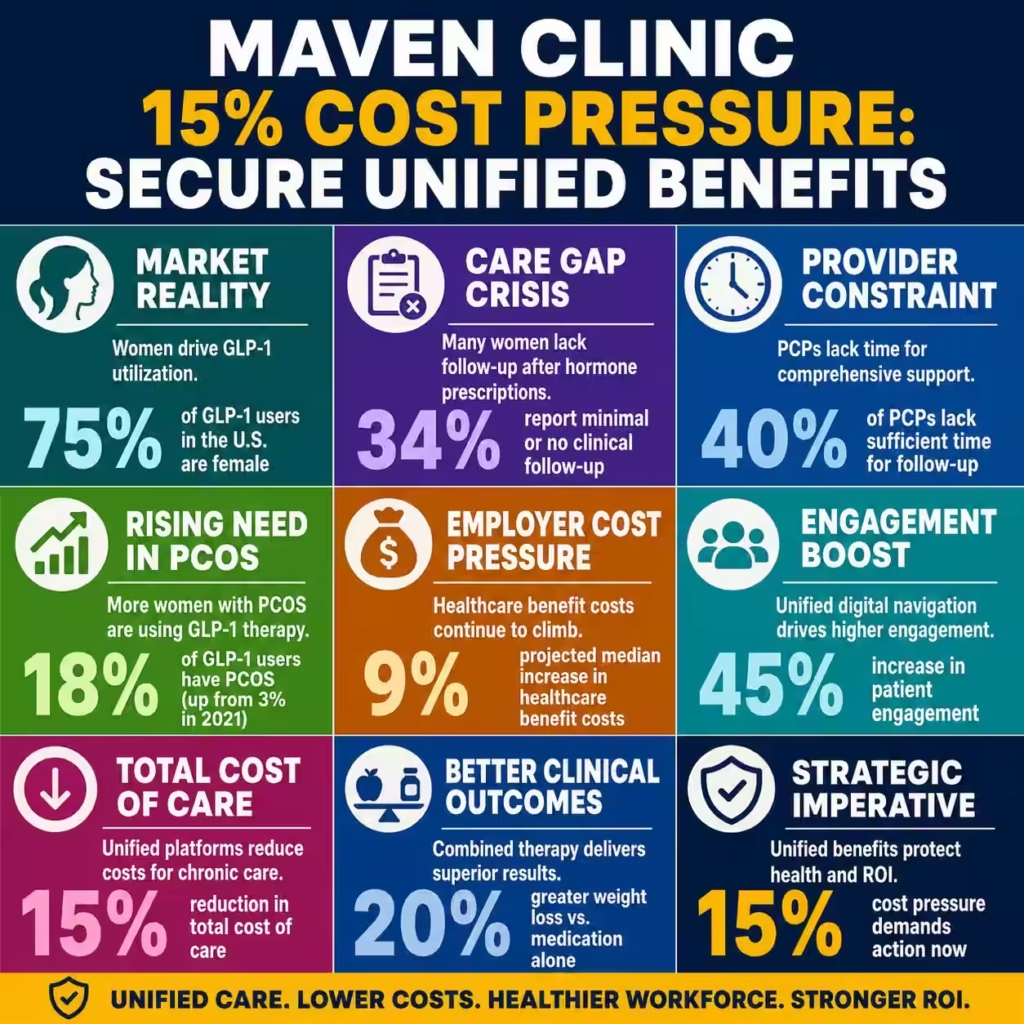
Recent market research indicates that over 75% of GLP-1 receptor agonist users in the United States are female, yet many experience fragmented clinical management during their treatment journeys. Specifically, a recent consumer healthcare survey revealed that 34% of female patients on hormone therapies report minimal or nonexistent clinical follow-up after their initial prescriptions are written. This massive clinical gap causes high medication discontinuation rates and wastes substantial employer healthcare spending on ineffective therapeutic cycles.
Furthermore, 40% of primary care providers acknowledge they lack sufficient administrative time to offer comprehensive follow-up support to patients using metabolic therapies. This operational constraint is notably severe for patients with polycystic ovary syndrome, whose representation in GLP-1 therapy has risen from 3% in 2021 to nearly 18% in recent years. The lack of clinical time leaves patients navigating complex metabolic and hormonal interactions without expert guidance, compounding systemic healthcare inefficiencies.
From a clinical and financial perspective, treating metabolic and reproductive health as separate entities ignores basic human physiology and increases corporate risk. Kate Ryder, founder of Maven Clinic, noted that metabolism directly affects hormones, which subsequently affect mental health and reproductive pathways. The business analysis confirms that comprehensive care coordination mitigates unnecessary clinical utilization and improves patient compliance by treating the whole person.
Large enterprise employers currently face a projected 9% median increase in healthcare benefit costs, driven largely by high-cost specialty drugs like GLP-1s. Integrating digital health networks allows organizations to control these rising costs by ensuring patients receive appropriate clinical support alongside their prescriptions. Commercial payers are consistently demanding structured clinical programs that combine prescription access with active behavior modification to justify their spending.
In the current marketplace, cash-pay services like Maven’s new $150 monthly subscription show strong consumer demand. However, long-term commercial sustainability depends on transitioning these services from out-of-pocket expenses to employer-sponsored benefits. This analysis explores how strategic health partnerships can scale these integrated clinical models to maximize corporate healthcare investments and improve employee retention.
A clinical study of integrated care models shows that patient engagement increases by 45% when navigation services are centralized within a single digital platform. This centralized approach reduces administrative overhead for human resources departments by eliminating the need to manage multiple disparate digital health vendors. Employers who implement these unified platforms report a 15% reduction in total cost of care for chronic metabolic conditions.
Furthermore, clinical trials demonstrate that combining GLP-1 medications with intensive nutritional and behavioral therapy leads to a 20% greater reduction in body weight compared to pharmacotherapy alone. This synergistic effect underscores the clinical value of the integrated, multi-specialty care models pioneered by leading virtual health platforms. Human resource executives are closely monitoring these outcomes as they plan their benefit designs for future fiscal cycles.
Carethix Critique: Systemic Gaps and Operational Risks in Consumerized Care
Carethix presents a critical analysis of direct-to-consumer healthcare models, highlighting risks and gaps in the current market expansion. While the consolidation of metabolic and hormonal care is clinically sound, relying on cash-pay frameworks introduces significant health equity barriers. Low-income employees cannot easily afford a $150 monthly subscription fee on top of high out-of-pocket medication costs that frequently exceed $1,000 per month.
This cash-pay structure creates a tiered healthcare system where only affluent patients benefit from integrated digital clinics. Employers must recognize that sponsoring models that exclude vulnerable portions of their workforce increases compliance and fiduciary risks. Under the Employee Retirement Income Security Act, corporate sponsors must ensure health benefits are distributed equitably and cost-effectively across all employee classes.
Another critical gap in the direct-to-consumer approach is the potential disconnection from the patient’s existing primary care physician. When digital health platforms operate as independent clinical networks, they risk creating a new form of digital care fragmentation. Without robust electronic health record integration, critical patient data regarding hormonal therapy and metabolic markers remains locked in private databases.
Furthermore, the rapid consumerization of GLP-1 medications has bypassed traditional clinical guardrails, raising patient safety concerns. A study from KFF indicates that only 19% of women report that their hormones are systematically considered during reproductive healthcare visits. Bypassing comprehensive physical examinations in favor of rapid virtual prescribing can lead to misdiagnosed underlying endocrine disorders.
Additionally, the long-term clinical efficacy of self-directed digital health subscriptions remains unproven over multi-year horizons. While short-term weight loss is common, clinical data shows that 45% of patients discontinue GLP-1 therapy within the first year due to costs or side effects. Without continuous clinical oversight, these patients often experience rapid weight regain and metabolic rebounds that negate original healthcare investments.
From a business perspective, the rapid growth of these platforms can lead to vendor fatigue for corporate benefits managers. Sponsoring a separate platform for fertility, another for maternity, and another for metabolic care creates an administrative burden. Carethix advises that point-solution fragmentation reduces overall employee utilization rates and dilutes the return on investment for health plans.
Finally, the lack of immediate insurance coverage for specialized virtual visits remains a significant operational hurdle. While Maven plans to integrate insurance coverage eventually, the initial cash-pay requirement limits immediate commercial scalability. Until commercial insurers fully cover these integrated services, the financial burden will continue to fall directly on consumers and employers.
In summary, the direct-to-consumer metabolic care model exhibits critical gaps in accessibility, primary care integration, and long-term cost control. Healthcare consultants must advise clients to look beyond market hype and demand rigorous clinical data. Addressing these gaps is essential for transforming consumer-centric digital health tools into stable corporate health benefits.
Another significant risk of cash-pay virtual models is the potential for patient drop-off due to financial exhaustion. When employees are forced to pay out-of-pocket for essential hormone and metabolic services, their long-term compliance rates decline precipitously. This pattern of intermittent care disrupts clinical continuity, leading to poorer health outcomes and higher overall systemic expenses.
Clinical and Operational Solutions: Bridging the Fragmentation Divide
To resolve the fragmentation and equity issues identified in direct-to-consumer models, employers should transition virtual clinics into fully integrated health benefits. By moving away from cash-pay models, organizations can leverage their existing health plans to sponsor comprehensive metabolic care. This integration ensures that all eligible employees, regardless of income, can access specialized hormonal and nutritional support.
Furthermore, commercial payers must implement robust data-sharing agreements using standardized application programming interfaces to connect virtual clinics with primary care systems. This interoperability ensures that clinical data, such as hormone levels and metabolic metrics, is shared seamlessly across the entire care continuum. Facilitating this flow of information eliminates duplicate testing and prevents dangerous drug interactions between virtual and in-person providers.
Employers should also adopt value-based contracting models with digital health vendors to protect their healthcare investments. Under these contracts, vendor reimbursement is tied directly to clinical outcomes such as sustained weight loss and improved metabolic markers. This financial alignment incentivizes vendors to focus on long-term patient health rather than simply prescribing high-cost medications.
Additionally, benefit managers should mandate that GLP-1 prescriptions are coupled with comprehensive lifestyle and behavioral support programs. Requiring patients to engage with nutritional counseling and physical therapy has been shown to improve long-term therapy adherence. According to KFF data, 34% of large firms already require such clinical support programs before approving GLP-1 coverage.
To address the physician shortage and provider burnout, virtual clinics should leverage advanced clinical decision support software. These digital tools automate routine administrative tasks, allowing specialists to dedicate more time to complex clinical interactions. This operational efficiency helps the 40% of providers who currently report having insufficient time to support patients on metabolic therapies.
Moreover, organizations must expand coverage for specialized women’s health fields such as reproductive endocrinology and menopause management. Integrating these specialties into standard benefit packages helps address the metabolic challenges that affect women during life transitions. A comprehensive clinical approach that addresses the metabolism-hormone-mental health triad will ultimately lower downstream medical claims.
Finally, healthcare consultants recommend establishing dedicated clinical navigation teams to guide patients through complex health systems. Navigators help patients understand their benefits, schedule necessary appointments, and maintain compliance with prescribed treatment plans. This proactive outreach measurably reduces patient drop-off rates and maximizes the overall effectiveness of corporate healthcare benefits.
Implementing these strategic solutions allows organizations to build a resilient and inclusive healthcare benefits framework. By aligning clinical outcomes with financial incentives, employers can successfully manage the rising costs of specialty medications. This systematic approach transforms fragmented healthcare services into a cohesive, high-value benefit for the entire workforce.
In addition, corporate sponsors should leverage predictive data analytics to identify high-risk employees who would benefit most from early intervention programs. Utilizing health risk assessments and historical claims data allows benefits managers to proactively route eligible individuals to integrated virtual clinics. This targeted approach ensures that clinical resources are allocated efficiently, maximizing both health outcomes and financial returns on investment.
Prevention Steps: Safeguarding Future Benefit Programs Against Cost Escalation
To prevent future financial and clinical pitfalls associated with metabolic therapies, organizations must establish rigorous prior authorization protocols. These protocols should require detailed clinical documentation of metabolic dysfunction, such as insulin resistance or polycystic ovary syndrome, before approving high-cost prescriptions. Implementing these guardrails prevents inappropriate off-label drug utilization and ensures that expensive medications are reserved for clinically eligible patients.
Additionally, corporate health plans must perform routine, independent audits of digital health prescribing patterns to identify potential waste. These audits help detect prescribing practices that prioritize volume over patient safety, protecting the employer’s health fund from unnecessary expenses. Collaborative oversight between pharmacy benefit managers and clinical consultants is essential for maintaining fiscal responsibility in self-insured health plans.
A key preventive measure is requiring a mandatory lifestyle onboarding period before initiating expensive pharmacological treatments. Employers can require a ninety-day trial of structured nutrition, physical therapy, and behavioral counseling through integrated digital networks. This proactive strategy identifies engaged patients who are most likely to maintain long-term therapeutic success.
Furthermore, organizations must mandate continuous safety monitoring and adverse event tracking for patients undergoing hormone and metabolic therapies. Digital platforms should feature automated, periodic check-ins to monitor for severe side effects such as pancreatic inflammation or acute gallbladder issues. Early detection of these complications prevents expensive emergency room visits and protects long-term employee health outcomes.
To prevent the recurrence of clinical silos, future health benefit contracts should mandate open-system architecture from all digital vendors. Healthcare platforms must demonstrate the capability to export comprehensive patient charts directly to regional hospital systems and local primary care networks. This open infrastructure prevents critical patient data from becoming trapped within proprietary, closed-loop software applications.
Employers should also establish clear exit strategies for patients who do not achieve established clinical milestones. If a patient does not achieve a 5% reduction in body weight within six months, the health plan should re-evaluate the therapeutic approach. This protocol prevents the financial waste of continuing ineffective treatments and encourages the exploration of alternative clinical pathways.
Lastly, organizations must invest in continuous education programs to inform employees about the metabolic impacts of aging and hormonal transitions. Providing access to evidence-based health resources helps employees identify early symptoms of endocrine imbalances before they escalate into severe clinical conditions. This educational focus empowers employees to take proactive control of their health, reducing long-term reliance on expensive medical interventions.
To ensure future program viability, corporate benefit planners must also establish collaborative committees with clinical advisors to review emerging drug research regularly. This proactive evaluation ensures that company-sponsored coverage lists remain aligned with the latest evidence-based guidelines and safety findings. Staying ahead of clinical developments allows organizations to update their benefits design dynamically, preventing long-term exposure to obsolete medical practices.
Key Takeaways: Carethix Strategic Directive for Corporate Health Sponsors
Carethix asserts that the commercial healthcare landscape is undergoing an irreversible transition toward integrated, longitudinal metabolic care. Traditional transactional models that treat isolated symptoms are rapidly becoming obsolete and financially unsustainable for modern corporations. Organizations that continue to fund fragmented health benefits will face severe cost escalations without achieving meaningful clinical improvements.
The current GLP-1 boom represents both a profound clinical opportunity and an existential financial risk for self-insured employers. Sponsoring these medications without integrating comprehensive hormonal, nutritional, and behavioral support is a recipe for fiscal failure. Corporate leaders must reject superficial prescribing platforms and instead invest in unified clinical networks that treat the entire biological system.
Furthermore, direct-to-consumer cash-pay options are merely a temporary bridge rather than a permanent solution for the wider healthcare system. True equity and scalability will only be achieved when these integrated models are fully covered under commercial employer-sponsored plans. Forward-thinking benefits managers must act decisively to integrate these services, transforming them from consumer luxuries into standard corporate health benefits.
We believe that the integration of metabolic and hormonal care across 30 distinct specialties represents the future standard of clinical excellence. Treating reproductive transitions, mental health, and insulin resistance as interconnected pathways is the only scientifically valid approach to women’s healthcare. This clinical philosophy must guide all future benefit design strategies to ensure maximum health outcomes and corporate resource optimization.
Furthermore, employers must leverage their purchasing power to force digital health vendors to accept financial risk for clinical outcomes. The era of flat administrative fees for uncoordinated, low-value digital solutions must end. Implementing value-based contracting protects corporate assets while holding virtual networks accountable for real, measurable patient improvements.
Ultimately, the primary goal of any corporate healthcare strategy must be the creation of a healthy, productive, and resilient workforce. Failing to address the foundational biological connections between metabolism and hormones will cause persistent absenteeism and declining organizational performance. Investing in integrated care models is a strategic business decision that drives long-term corporate value.
Carethix remains committed to guiding organizations through this complex and rapidly evolving digital healthcare landscape. By implementing strict clinical guardrails, demanding interoperability, and prioritizing equity, leaders can protect both their employees and their bottom lines. The transition to integrated care is not merely an optional benefit upgrade; it is a fundamental commercial necessity for the modern enterprise.
In conclusion, the integration of clinical specialties within a single digital ecosystem is an effective tool available to combat healthcare fragmentation. Companies must move swiftly to adopt these unified models before rising pharmacy costs destabilize their annual operating budgets. Taking this bold, systemic stance is the only way to ensure a sustainable future for employer-sponsored healthcare.
Ultimately, the organizations that succeed in this new era will be those that view health benefits as a strategic investment rather than a mere cost center. By championing comprehensive, integrated clinical networks, corporate leaders can foster a healthier, more productive, and loyal workforce. Carethix stands ready to partner with visionary enterprises to execute this transformation and secure a sustainable clinical future.
FAQs:
How Can 45% GLP-1 Discontinuation Rates Destroy Employer Healthcare ROI in Women’s Digital Health Programs?
The growing 45% first-year discontinuation rate for GLP-1 therapies exposes a major operational weakness in employer-sponsored metabolic care programs. When organizations fund high-cost obesity drugs exceeding $1,000 monthly without integrated nutritional, hormonal, and behavioral support, they risk severe healthcare waste and rapid metabolic rebound among employees. Employers adopting unified digital care ecosystems across 30+ specialties are far better positioned to improve adherence, reduce absenteeism, and protect long-term healthcare investments.
Why Are 75% of Female GLP-1 Users Still Facing Fragmented Hormonal and Metabolic Healthcare?
Despite women representing over 75% of GLP-1 users in the United States, most healthcare systems still separate reproductive, endocrine, and metabolic care into disconnected clinical silos. This fragmentation creates higher rates of treatment failure, duplicate testing, poor medication monitoring, and worsening mental health outcomes for women managing conditions like PCOS and menopause transitions. Digital health vendors that fail to integrate hormone management, behavioral therapy, and metabolic monitoring into one coordinated platform may increase both clinical risk and employer benefit costs.
Can Integrated Digital Health Platforms Reduce the 9% Annual Rise in Employer Healthcare Costs?
Large employers are currently facing a projected 9% increase in annual healthcare benefit spending, largely driven by specialty medications such as GLP-1 therapies. Research showing a 15% reduction in total chronic metabolic care costs through centralized navigation platforms strongly suggests that integrated virtual care models can outperform fragmented point solutions. However, organizations relying purely on cash-pay digital subscriptions instead of value-based employer-sponsored frameworks may struggle to achieve scalable financial sustainability.
Why Do 40% of Primary Care Providers Lack Time to Manage GLP-1 and Hormonal Therapy Patients Effectively?
Nearly 40% of primary care physicians report insufficient administrative time to properly support patients using metabolic therapies, creating a dangerous follow-up gap in women’s healthcare. This shortage becomes even more concerning as PCOS representation in GLP-1 treatment programs surged from 3% in 2021 to nearly 18% in recent years, increasing demand for specialized endocrine oversight. Without advanced clinical decision support tools, integrated digital coordination, and dedicated navigation teams, provider burnout and patient safety risks will continue escalating across employer health systems.
How Does a $150 Monthly Cash-Pay GLP-1 Subscription Create Healthcare Equity and Compliance Risks for Employers?
Cash-pay women’s digital health subscriptions costing $150 monthly, combined with GLP-1 medication expenses exceeding $1,000 per month, create serious accessibility barriers for lower-income employees. This model risks establishing a two-tier healthcare system where only affluent workers receive integrated hormonal and metabolic support, potentially exposing employers to fiduciary and compliance concerns under benefit equity standards. Companies that fail to transition these services into comprehensive employer-sponsored health plans may experience declining workforce retention, lower treatment adherence, and widening health disparities across employee populations.