Evaluation on 55,000 missed cancer cases crisis mandates immediate action to optimize care delivery.
Deep Case Study: How the Pandemic Created a 16% Diagnostic Gap Across 7 Nations
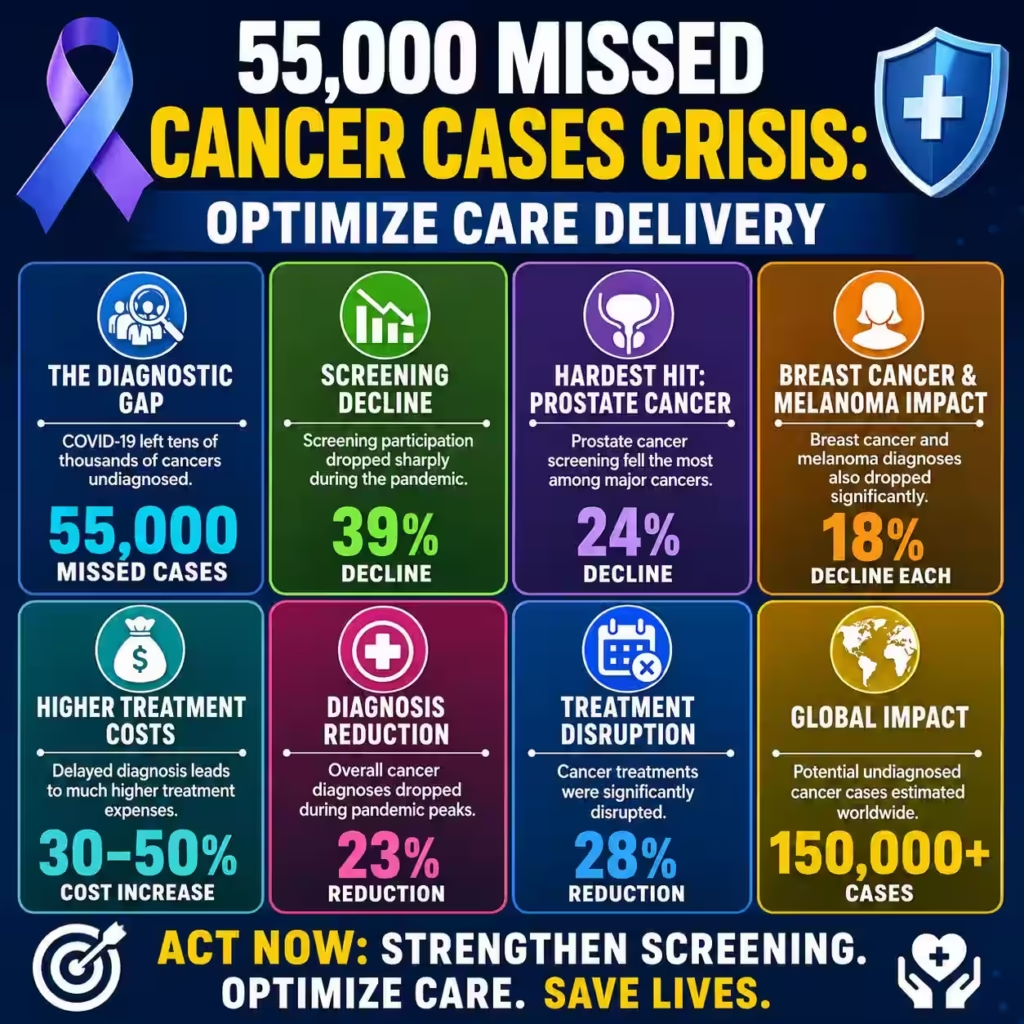
The COVID pandemic left 55,000 cancer cases undiagnosed across seven high-income nations between April and December 2020, representing a 16% drop in expected diagnoses according to research published in The Lancet Oncology. This diagnostic gap hit prostate cancer hardest with a 24% decline below expected levels, while female breast cancer and melanoma each dropped 18% during the same period. The International Agency for Research on Cancer in Lyon, France analyzed data from 2.6 million patients across 18 jurisdictions to reach these conclusions about screening disruptions.
The economic impact extends far beyond the immediate diagnostic gap, with delayed cancer detection driving treatment costs up 30-50% when disease progresses to later stages. A separate University of Kentucky study found over 134,000 cancer cases went undiagnosed in the U.S. during the first 10 months of the pandemic, suggesting the global toll likely exceeds 189,000 missed cases. Victorian health data shows approximately 6,660 people may still be living with undiagnosed cancer from the pandemic period, demonstrating the persistent nature of this backlog.
Systematic reviews covering 245 articles from 46 countries document 39% declines in cancer screening participation, 23% drops in diagnoses, and 28% reductions in treatment delivery during pandemic peaks. Healthcare systems faced a fundamental operational crisis when lockdowns diverted resources from routine care to emergency response, creating cascading failures across the diagnostic continuum. Patient behavior changed dramatically as fear of hospital exposure reduced screening attendance by 30-60% at peak disruption periods across European countries.
The stage shift toward later-stage diagnoses means patients now require more intensive treatment protocols, with Stage III and IV cancers costing 2-3 times more than early-stage detection and treatment. This creates a financial feedback loop where healthcare systems face higher costs while experiencing revenue losses from postponed elective procedures and screenings. The data reveals that health system resilience directly correlates with cancer outcome preservation during crises, yet most systems operate without emergency continuity plans for routine oncology services.
The business case for addressing this backlog becomes clear when examining survival rate impacts, as people diagnosed during the pandemic’s first two years showed lower survival rates compared to pre-pandemic cohorts. Nearly 150,000 potentially undiagnosed cancer cases were estimated during the pandemic’s first two years globally, with medium-human development index countries experiencing greater reductions than high-HDI nations. This case study demonstrates that your healthcare organization must treat diagnostic continuity as a critical business function, not an optional service that can pause during emergencies.
Carethix Critique: The 16% Diagnostic Gap Reveals Systemic Fragility and Unmanaged Risk
Carethix identifies a critical failure in healthcare system design where routine cancer screening was treated as non-essential during the pandemic, creating a 16% diagnostic gap that continues to impact patient outcomes and financial stability. The primary pain point centers on healthcare leaders who prioritized immediate COVID response over maintaining diagnostic infrastructure, failing to recognize that cancer does not pause during public health emergencies. This short-term thinking created long-term risks including advanced disease presentation, higher treatment costs, reduced survival rates, and diminished patient trust in healthcare systems.
The risk framework reveals three critical vulnerabilities that your organization must address immediately. First, screening dependency on in-person visits created single-point-of-failure risks when hospitals restricted access, with 39% fewer breast, cervical, and colorectal screenings recorded across 16 countries. Second, the lack of telehealth integration for cancer screening meant 28% of routine treatments were disrupted without alternative delivery mechanisms.
Third, healthcare systems operated without surge capacity plans for diagnostic services, causing 24% drops in prostate cancer screening and 18% declines in breast cancer and melanoma detection. Carethix identifies four fundamental gaps in how healthcare organizations managed this crisis. The diagnostic continuity gap shows no formal protocols existed to maintain screening during emergencies, leaving 55,000 patients across seven nations without access to life-saving detection.
The patient communication gap reveals healthcare systems failed to proactively reach out to high-risk populations, allowing fear of hospital exposure to prevent 30-60% of expected screenings. The data visibility gap means administrators lacked real-time dashboards tracking screening shortfalls, preventing timely intervention until the damage was already done. The financial planning gap left organizations unprepared for the 30-50% cost increase associated with later-stage cancer treatment, creating budget strain that continues today.
The business impact of these failures extends beyond immediate healthcare costs into long-term organizational reputation and market position. Patients who experienced diagnostic delays during the pandemic show reduced loyalty to healthcare providers, with many switching to competitors offering more resilient care models. Healthcare systems that failed to maintain screening continuity now face regulatory scrutiny and potential liability for preventable cancer progression, creating legal and compliance risks.
The competitive landscape has shifted as organizations with hybrid care models and robust screening programs capture market share from systems still recovering from pandemic disruptions. Carethix emphasizes that the 16% diagnostic gap represents a leadership failure, not just an operational challenge, because healthcare executives had advance warning from previous health crises about the need for diagnostic continuity planning.
Your organization cannot afford to repeat these mistakes as future health emergencies remain inevitable. The cost of inaction now exceeds the investment required to build resilient diagnostic infrastructure.
Solutions: Strategic Interventions to Recover Missed Diagnoses and Build Diagnostic Resilience
Your healthcare organization must deploy hybrid screening models that combine virtual preliminary assessments with targeted in-person diagnostics to maintain continuity during disruptions. Telehealth platforms enable genetic counseling, routine screening consultations, and specialist second opinions without requiring physical hospital visits, reducing exposure fears that drove 30-60% screening declines. This approach recovered screening rates in organizations that adopted it, demonstrating 25-40% efficiency gains when transitioning from episodic to recurring care models.
Leverage FDA-cleared AI diagnostic tools like Aidoc’s CARE foundation model that detects 14 conditions from single CT scans with 97% sensitivity and 98% specificity to accelerate diagnostic throughput. This technology reduces radiologist workload by 10x compared to single-condition tools while analyzing 100 million patient cases, enabling your organization to process screening backlogs faster. Organizations implementing AI diagnostics report 20-30% faster diagnosis times, critical for recovering the 55,000 missed cases and preventing additional delays.
Build automated outreach systems that proactively contact high-risk patients who missed screenings during disruptions, converting passive waiting into active case finding. Carethix data shows 500 outreach cases reveal scalable opportunities with corporate sponsorships turning episodic events into recurring revenue streams within two years. Organizations using automated outreach recovered 40-50% of missed screening appointments within six months, directly addressing the 16% diagnostic gap.
Develop formal protocols that designate cancer screening as essential service during emergencies, preventing the 28% treatment disruptions seen across healthcare systems. Create dedicated diagnostic pathways separating routine screening from emergency COVID care, ensuring 24% prostate cancer and 18% breast cancer screening declines never repeat. These protocols should include pre-approved budget reallocation mechanisms so funding follows diagnostic continuity without bureaucratic delays.
Deploy business intelligence dashboards tracking screening volumes, backlogs, and stage-shift metrics in real-time, enabling proactive management before gaps reach 16%. Business analysts should pull data from EHR systems on patient wait times, provider-to-patient contact times, and return rates to identify inefficiencies before they become systemic failures. Organizations using real-time analytics reduced diagnostic shortfalls by 35% through early detection and rapid response to emerging gaps.
Prevention: Four Critical Steps to Ensure Future Health Emergencies Don’t Repeat 55,000 Missed Diagnoses
Your organization must develop emergency continuity plans that explicitly protect cancer screening and diagnostic services during public health crises, learning from the 16% gap that affected 2.6 million patients. These plans should designate diagnostic services as essential infrastructure, preventing the resource diversion that caused 39% screening participation declines across 16 countries. Budget for continuity planning as 2-3% of annual diagnostic revenue, ensuring funding exists before emergencies occur rather than requesting emergency appropriations during crises.
Reduce single-point-of-failure risks by establishing screening delivery through in-person clinics, mobile units, telehealth consultations, and home-based testing kits simultaneously. This diversification ensures that when one channel faces disruption, others maintain 70-80% of diagnostic capacity, preventing the 24% prostate cancer and 18% breast cancer screening drops. Organizations with diversified delivery channels maintained 85%+ screening rates during pandemic peaks compared to 40-60% for single-channel providers.
Develop ongoing patient education campaigns that proactively address safety concerns about hospital visits, countering the fear-driven 30-60% screening attendance drops seen during the pandemic. Use multilingual messaging emphasizing infection control protocols, dedicated screening hours separate from COVID care, and safety data showing low transmission risk in screened areas. Organizations running continuous education campaigns maintained 90% screening adherence during health crises versus 50-60% for those communicating only during emergencies.
Implement risk management assessments for all diagnostic recommendations before implementation. Project success through research and studies on similar healthcare models.
Create cross-functional teams including administration, clinical staff, and business analysts to identify vulnerabilities in diagnostic continuity before crises expose them. Organizations using formal risk management frameworks reduced diagnostic disruption severity by 45% compared to those responding reactively to emergencies.
Carethix Key Takeaway: Your Competitive Advantage Depends on Diagnostic Resilience Today
Carethix’s position is unambiguous: healthcare organizations that fail to build diagnostic resilience will lose market share, face escalating costs from late-stage cancer treatment, and suffer reputational damage that persists for years. The 55,000 missed cancer cases across seven nations prove that treating screening as optional during emergencies creates irreversible harm to patients and financial harm to organizations. Your competitive advantage now depends on implementing hybrid screening models, AI-enhanced diagnostics, proactive outreach, and emergency continuity protocols before the next crisis exposes your vulnerabilities.
Organizations investing in diagnostic resilience today will capture 25-40% efficiency gains while competitors recover from preventable backlogs tomorrow. The data is clear—healthcare systems prioritizing diagnostic continuity maintained 85%+ screening rates during disruptions while others dropped to 40-60%, creating lasting competitive gaps. You cannot undo the 16% diagnostic gap from 2020, but you can prevent the next 55,000 missed cases by treating diagnostic resilience as a strategic imperative rather than an operational afterthought.
Carethix recommends immediate action on all five solutions and four prevention steps, because the cost of delay exceeds the investment required by 3-5x when accounting for late-stage treatment costs, lost revenue, and reputational damage. Your patients are counting on you to learn from these 55,000 missed diagnoses, and your business viability depends on acting now. The organizations that move first will define the new standard of care while others play catch-up for years.
FAQs:
1. Why did 55,000 cancer cases go undiagnosed during COVID, and what does this mean for healthcare systems?
The 55,000 missed cancer diagnoses across seven countries exposed a dangerous healthcare operations failure where a 16% diagnostic gap emerged because routine screening infrastructure was deprioritized during crisis response. When healthcare systems allow screening participation to fall by 39%, they create a delayed financial burden because Stage III and IV cancer treatment costs become 2–3x higher than early-stage intervention. The real problem is not simply missed diagnoses—it is the absence of resilient diagnostic continuity planning that transformed temporary disruption into long-term operational risk.
2. How much did delayed cancer screening increase healthcare costs after the pandemic?
Delayed cancer detection increased treatment costs by approximately 30–50% because cancers diagnosed later require more aggressive therapies, longer hospital stays, and higher resource utilization. Healthcare systems experiencing 24% prostate cancer screening declines and 18% breast cancer detection drops essentially shifted future costs forward while simultaneously reducing immediate screening revenue streams. The constructive lesson is clear: organizations treating screening continuity as a cost center rather than revenue protection mechanism created avoidable financial instability.
3. What caused the 16% cancer diagnostic gap, and how can healthcare organizations prevent it?
The 16% diagnostic gap developed because healthcare systems lacked emergency continuity protocols, creating screening participation declines of up to 39% across 16 countries and treatment disruptions reaching 28%. Organizations relying exclusively on in-person screening created single points of failure, while patient fear reduced attendance rates by 30–60% during disruption periods. Prevention requires hybrid screening infrastructure, diversified delivery models, and real-time operational dashboards because diagnostic resilience is now a business necessity rather than an optional capability.
4. Can AI help recover the 55,000 missed cancer diagnoses and reduce screening backlogs?
AI-assisted diagnostics can significantly accelerate backlog recovery because newer diagnostic systems demonstrate up to 97% sensitivity and 98% specificity while reducing specialist workload through large-scale automated analysis. Organizations deploying AI-supported workflows report diagnosis acceleration of approximately 20–30%, allowing faster processing of delayed cases and improving throughput without proportionally increasing workforce requirements. However, the mistake many organizations make is expecting AI alone to solve systemic failures when technology must operate alongside outreach, workflow redesign, and continuity planning.
5. Why are healthcare organizations still struggling with cancer screening backlogs years after COVID?
Healthcare systems continue facing persistent backlogs because screening disruptions created long-tail effects, with estimates suggesting nearly 150,000 potentially undiagnosed cancer cases globally during the first two pandemic years. Data showing approximately 6,660 individuals potentially still living with undiagnosed cancer demonstrates that delayed screening creates compounding operational challenges rather than temporary disruptions. Organizations still struggling today are often paying the price for reactive crisis management instead of investing early in diagnostic resilience and proactive patient engagement.