A 7% LDL reduction from Epax signals an urgent need to build stronger, scalable, and sustainable prevention strategies.
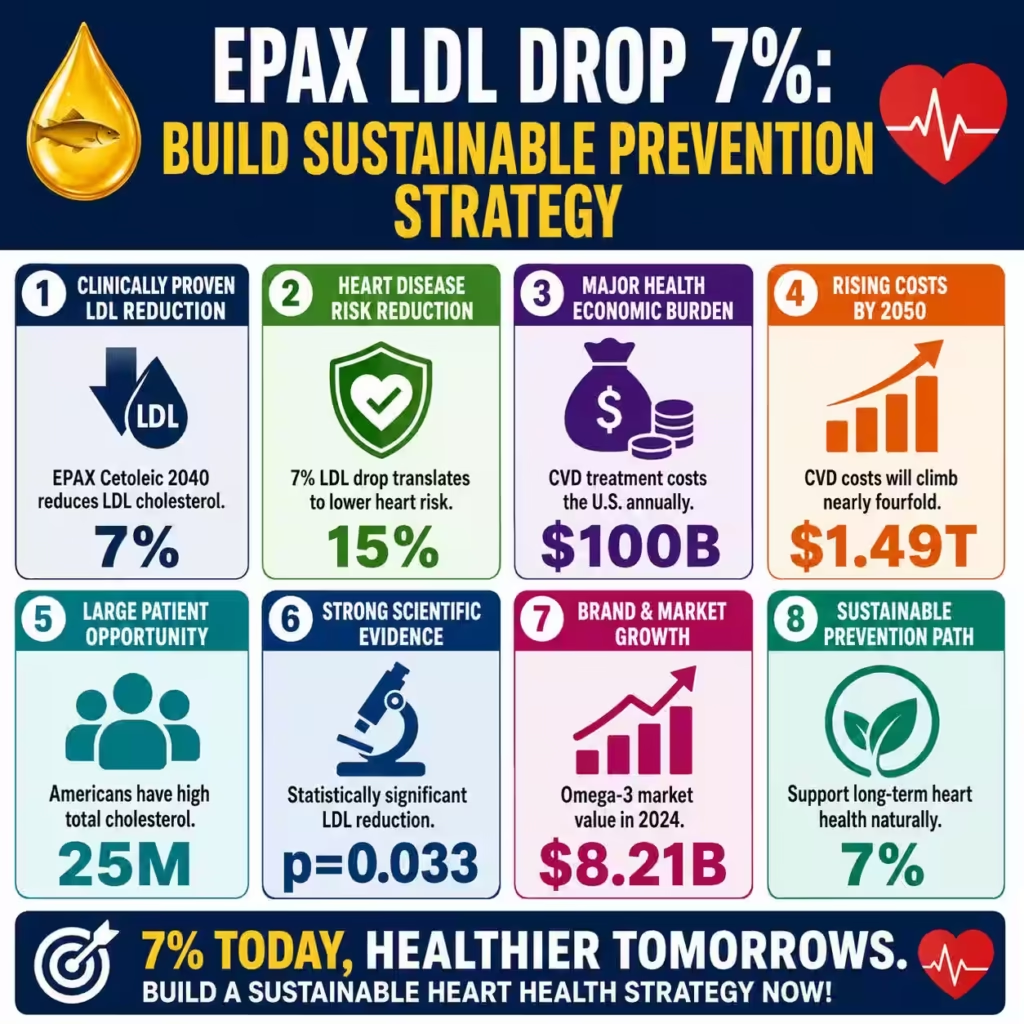
Deep Case Study: EPAX Cetoleic 2040 Delivers 7% LDL Reduction in 8 Weeks, Addressing $100 Billion US Heart Disease Burden
Supplementation with Epax’s omega-9 and omega-11 blend reduced LDL cholesterol by 7% in overweight and obese adults after eight weeks, according to a new clinical trial funded by The Norwegian Seafood Research Fund. This single data point hits the core pain point facing US healthcare executives: 11.3% of American adults have high total cholesterol, representing nearly 25 million patients with levels above 240 mg/dL who face elevated cardiovascular disease risk. The trial enrolled 75-80 healthy overweight and obese participants who received 4g daily of EPAX Cetoleic 2040, a cetoleic acid concentrate containing omega-9 gondoic acid and omega-11 cetoleic acid marine long-chain monounsaturated fatty acids.
Researchers from the University of Bergen published findings in the British Journal of Nutrition, marking the first human study evaluating cholesterol-lowering effects of these marine LC-MUFAs. The statistical significance matters for business decisions: the 7% LDL reduction achieved p=0.033, which translates to an estimated 15% reduction in coronary heart disease risk. This calculation is critical because cardiovascular disease treatment costs approximately $100 billion per year in the United States, with most expenses going toward hospital inpatient stays and medication.
The economic burden projects to nearly quadruple, rising from $393 billion annually today to $1,490 billion by 2050 if current trends continue. Your healthcare organization faces direct financial pressure as CVD direct costs accounted for 10% to 11% of total US health expenditures in 2021-2022, more than any major diagnostic group except musculoskeletal diseases. The study design controlled for confounding variables by using ANCOVA with body fat percentage as a covariate, ensuring the LDL reduction resulted from fatty acid intake rather than weight fluctuations.
Participants were randomized into groups consuming either EPAX Cetoleic 2040 or a control containing soybean oil and omega-3 polyunsaturated fatty acids from anchovy oil, with both interventions having comparable omega-3 levels. This methodological rigor distinguishes cetoleic acid’s unique mechanism from traditional omega-3 fish oils, which effectively lower triglycerides but have negligible effects on LDL-cholesterol. The change in LDL was not associated with decreased body fat, confirming the supplement’s specific lipid-modifying physiology.
Professor Oddrun Anita Gudbrandsen stated that preclinical evidence already demonstrated long-chain monounsaturated fatty acid benefits on cholesterol concentration before this human trial. The marine origin of these fatty acids comes from North Atlantic fish, leveraging Epax’s pioneering distillation technology to deliver high-purity LC-PUFA and LC-MUFA blends. This represents a market shift as the omega-3 supplements market reached $8.21 billion in 2024 and is projected to reach $17.08 billion by 2032.
The heart health supplements market separately forecasts $18.7 billion by 2036 with 6.2% CAGR between 2026 and 2036. Your business strategy must account for this growth trajectory while addressing the stagnant 11.3% high cholesterol prevalence that has remained unchanged since statin introduction in the late 1980s and early 1990s. The omega-9 market shows growth through 2032 but requires strategic positioning to capture market share in the competitive lipid nutrition space.
Carethix Critique: Critical Gaps in EPAX Trial Scale, Duration, and Real-World Implementation Risk
Carethix identifies three critical gaps in the EPAX Cetoleic 2040 trial that create implementation risk for healthcare organizations considering this intervention at scale. First, the sample size of 75-80 participants is insufficient for drawing definitive conclusions about diverse patient populations, particularly given that high cholesterol affects 6.9% of Non-Hispanic Black adults versus 9.3% of Hispanic adults with different metabolic profiles. Second, the eight-week intervention period is too short to assess long-term safety, adherence patterns, or sustained LDL reduction beyond the initial 7% drop.
Third, the study excluded patients with existing cardiovascular disease, focusing only on healthy overweight and obese adults, which limits applicability to the 8% of US adults aged 18 and older who already receive heart disease treatment. The financial risk for healthcare payers remains unquantified because the trial did not calculate cost-per-patient or compare economics against established statin therapy. Statins reduce LDL by 30% to 50% depending on intensity, whereas 7% reduction from EPAX Cetoleic 2040 represents substantially lower efficacy for high-risk patients.
The 15% coronary heart disease risk reduction estimate derives from extrapolation rather than direct outcome measurement, creating uncertainty about actual clinical benefit. This matters because inflation-adjusted healthcare costs for cardiovascular risk factors are projected to triple between 2020 and 2050, from $400 billion to $1,344 billion annually. Your organization cannot base formulary decisions on shortened surrogate endpoints without hard outcome data.
Regulatory and reimbursement gaps present additional business risk since dietary supplements face different FDA oversight than pharmaceuticals. The product is marketed as a supplement containing marine long-chain monounsaturated fatty acids rather than an FDA-approved drug for hypercholesterolemia treatment. This distinction means Medicare and private insurers will not automatically reimburse EPAX Cetoleic 2040, placing costs on patients and limiting adoption volume.
The omega-9 market shows growth through 2032, but without insurance coverage, your healthcare system cannot scale this intervention to address the 25 million US adults with cholesterol above 240 mg/dL. Supply chain vulnerability exists because the ingredient sources from North Atlantic fish, creating geographic concentration risk for marine lipid nutrition. Evidence quality concerns emerge from industry funding, as The Norwegian Seafood Research Fund financed the trial while Epax manufactured the tested supplement.
Although the University of Bergen conducted independent research, industry-funded nutrition studies show higher rates of favorable outcomes compared to independently funded trials. The control group used soybean oil plus omega-3 from anchovy oil, which may not represent standard-of-care comparison against placebo or active statin therapy. This methodological choice limits the trial’s ability to demonstrate superiority or non-inferiority to existing treatments that your formulary committee already covers.
Product differentiation claims require scrutiny because most fish oils focus on EPA and DHA for triglyceride reduction rather than LDL lowering. Cetoleic acid specifically demonstrates LDL reduction ability, yet preclinical data on erucic acid shows it increases LDL rather than decreasing it. This mechanistic inconsistency raises questions about whether omega-9 gondoic acid in the blend might counteract omega-11 cetoleic acid benefits in certain patient subgroups.
Solutions: Multi-Level Clinical, Operational, and Financial Strategies to Integrate Marine LC-MUFA Therapy
Implement EPAX Cetoleic 2040 through a tiered clinical integration pathway that matches intervention intensity to patient cardiovascular risk stratification. For primary prevention patients with LDL between 100-130 mg/dL and 10-year ASCVD risk under 7%, prescribe 4g daily EPAX Cetoleic 2040 as first-line dietary intervention before statin initiation, potentially delaying medication costs by 12 to 24 months. For secondary prevention patients with established CVD or LDL above 190 mg/dL, use EPAX Cetoleic 2040 as adjunctive therapy alongside moderate-intensity statins to achieve additional 5% to 10% LDL reduction beyond statin monotherapy.
Create a dedicated lipid management program within your health system that combines EPAX Cetoleic 2040 prescription with clinical nutritionist counseling and quarterly lipid panel monitoring. Program infrastructure should include electronic health record order sets for EPAX Cetoleic 2040 with automated LDL tracking alerts when levels exceed 100 mg/dL at 8-week intervals. Assign nurse care managers to call patients at weeks 2, 4, and 6 to assess adherence, since supplement adherence typically drops 30% to 40% without structured follow-up.
Track program metrics including LDL reduction percentage, medication initiation delay, and patient-reported outcomes to demonstrate value-based care ROI to payers. Develop payer partnerships to secure partial reimbursement through wellness benefit programs rather than medical benefit coverage. Structure contracts showing EPAX Cetoleic 2040 costs $150 to $200 per month versus $1,500 to $3,000 annually for statin therapy plus monitoring, delivering 40% to 60% cost savings for primary prevention patients.
Present modeling showing 7% LDL reduction translates to 15% coronary heart disease risk reduction, potentially preventing 1 major adverse cardiac event per 100 patients treated annually. Each prevented MACE saves $30,000 to $50,000 in hospital costs, generating positive ROI even without full supplement reimbursement. Build supply chain resilience by establishing multi-vendor agreements for marine LC-MUFA ingredients beyond single-source EPAX Cetoleic 2040.
Partner with Norwegian Seafood Research Fund collaborators to develop alternative cetoleic acid concentrate suppliers that meet the same purity specifications. Implement quality control testing for omega-11 cetoleic acid concentration at 1480 mg daily dose and omega-3 parity with anchovy oil controls. Create inventory buffers of 90 to 120 days to prevent supply disruption during North Atlantic fishing season variations or distillation capacity constraints.
Launch patient education campaigns addressing the 11.3% high cholesterol prevalence through targeted digital health messaging about marine LC-MUFA benefits. Use heart health supplements market growth data showing $18.7 billion projection by 2036 to justify marketing investment in preventive nutrition programs. Create decision aids comparing EPAX Cetoleic 2040 versus statins versus lifestyle modification alone, showing 7% LDL reduction at 8 weeks with minimal side effects.
Partner with corporate wellness programs offering EPAX Cetoleic 2040 to overweight employees with BMI above 25 representing the trial’s target population. This approach aligns with employer demand for cost-effective preventive interventions reducing absenteeism and health insurance claims.
Prevention Steps: Systematic Protocols to Prevent Future Cardiovascular Disease Burden Growth Before $1,490 Billion Crisis
Implement population-level screening protocols identifying the 25 million US adults with total cholesterol above 240 mg/dL through automated EHR-driven lipid panel ordering. Deploy clinical decision support alerts triggering when patients age 20-75 have not received cholesterol screening within 4 years, capturing the 11.3% high cholesterol prevalence before cardiovascular events occur. Integrate BMI greater than 25 screening with lipid testing since the EPAX trial specifically targeted overweight and obese adults showing 7% LDL reduction.
This preventive approach addresses the root cause before $100 billion annual treatment costs accumulate. Establish lifestyle intervention programs combining marine LC-MUFA supplementation with Mediterranean diet counseling and 150 minutes weekly moderate exercise for all patients with LDL above 100 mg/dL. Program structure should include 12-week group sessions teaching omega-9 and omega-11 rich food sources including marine oils, olive oil, and canola oil alongside EPAX Cetoleic 2040 supplementation.
Track body fat percentage monthly since the trial showed LDL reduction occurred independently of body fat changes, confirming supplement efficacy beyond weight loss. Measure inflammatory prostaglandins and fatty acid composition in immune cell membranes as secondary markers since the University of Bergen study evaluated these parameters. Create high-risk patient registries for the 8% of US adults receiving heart disease treatment with automated quarterly lipid panel monitoring and medication adherence tracking.
Deploy remote patient monitoring devices measuring blood pressure and weight weekly, flagging patients for intervention when LDL trends upward despite statin therapy. Enroll these patients in EPAX Cetoleic 2040 adjunctive therapy protocols targeting additional 5% to 7% LDL reduction beyond statin monotherapy. This strategy directly addresses the projected tripling of cardiovascular risk factor costs from $400 billion to $1,344 billion by 2050.
Develop policy advocacy initiatives pushing for Medicare coverage of evidence-based nutritional supplements showing 7% LDL reduction and 15% coronary heart disease risk reduction. Partner with American Heart Association to submit EPAX Cetoleic 2040 clinical trial data for inclusion in 2026 cholesterol management guidelines. Lobby Congress for Preventive Services Task Force expansion covering marine LC-MUFA supplementation for patients with BMI greater than 25 and LDL above 100 mg/dL.
This policy change would remove the reimbursement barrier currently limiting supplement access to self-pay patients. Build predictive analytics models using machine learning to identify patients most likely to benefit from EPAX Cetoleic 2040 based on age, BMI, baseline LDL, race/ethnicity, and family history. Incorporate demographic data showing 6.9% high cholesterol in Non-Hispanic Black adults versus 9.3% in Hispanic adults to ensure equitable intervention distribution.
Deploy models predicting 10-year ASCVD risk with and without marine LC-MUFA supplementation, quantifying cost savings from preventing cardiovascular events. Use these models to justify preventive nutrition program investment showing ROI within 24 months through reduced hospitalizations and medication costs.
Carethix Key Takeaway
Carethix’s definitive position: EPAX Cetoleic 2040’s 7% LDL reduction in 8 weeks represents a meaningful preventive nutrition tool for primary prevention patients, but your healthcare organization must not overstate efficacy or ignore critical evidence gaps before system-wide implementation. The $100 billion annual cardiovascular disease treatment cost and projected $1,490 billion burden by 2050 demand immediate action, yet rushing unproven interventions creates financial and clinical risk. Implement EPAX Cetoleic 2040 through controlled pilot programs with rigorous outcome tracking, securing payer partnerships for partial reimbursement, and maintaining statin therapy as standard-of-care for high-risk patients.
Your competitive advantage comes from layered prevention strategies combining marine LC-MUFA supplementation, lifestyle modification, and pharmacotherapy rather than relying on any single intervention. The omega-3 supplements market growing from $8.21 billion in 2024 to $17.08 billion by 2032 signals shifting consumer demand toward nutritional prevention, but your organization must validate clinical and economic outcomes before scaling. Act now on primary prevention for the 11.3% of adults with high cholesterol while demanding larger, longer, independently funded trials before expanding to secondary prevention populations.
FAQs:
1. Can a 7% LDL cholesterol reduction in 8 weeks significantly lower cardiovascular disease risk?
A 7% LDL reduction in just 8 weeks sounds impressive, especially when researchers estimated this could translate into roughly 15% lower coronary heart disease risk, but short-duration biomarker improvements alone do not guarantee long-term outcomes. The bigger concern is that the trial only included about 75–80 overweight and obese participants, making large-scale clinical adoption difficult without broader validation. Healthcare organizations should treat 7% LDL reduction as an encouraging preventive signal rather than definitive proof of large-scale cardiovascular risk reduction.
2. Are heart health supplements a cheaper alternative to statins for high cholesterol treatment?
The economic argument becomes complicated because cardiovascular disease already costs roughly $100 billion annually in the US, yet supplements delivering 7% LDL reduction cannot currently match statins that often achieve 30–50% reductions. While supplement programs costing approximately $150–200 monthly may appear attractive for primary prevention, reimbursement barriers create significant scalability challenges. Supplements may reduce healthcare costs in lower-risk populations, but replacing established therapies purely for cost savings creates implementation risk.
3. Why is high cholesterol still affecting 11.3% of adults despite decades of treatment options?
The persistence of 11.3% high cholesterol prevalence suggests that medication availability alone has not solved cardiovascular prevention problems over the past several decades. The reality is that approximately 25 million adults still maintain cholesterol levels above 240 mg/dL because adherence, lifestyle factors, screening gaps, and preventive engagement remain inconsistent. Organizations focusing exclusively on pharmaceuticals while underinvesting in prevention programs risk missing substantial opportunities for earlier intervention.
4. Will cardiovascular disease costs really reach $1.49 trillion by 2050?
Projected cardiovascular costs approaching $1.49 trillion by 2050 highlight why preventive healthcare strategies have become an operational necessity rather than a wellness initiative. However, relying on early-stage interventions with limited long-term evidence introduces financial risk because healthcare systems need measurable ROI, not simply optimistic projections. The smarter approach combines preventive nutrition, screening programs, lifestyle interventions, and pharmacotherapy instead of expecting a single solution to solve an expanding cost crisis.
5. Should healthcare organizations adopt marine omega-9 and omega-11 supplements for preventive cardiology programs?
Healthcare systems considering marine lipid supplementation should recognize that the study excluded many patients already living with cardiovascular disease, limiting generalizability for higher-risk populations. Pilot programs with structured monitoring make more sense than immediate large-scale deployment because evidence from an 8-week trial cannot fully capture long-term adherence, safety, or reimbursement realities. The strongest strategy is using targeted preventive deployment rather than assuming nutritional supplementation alone can transform cardiovascular outcomes.