Analysis on GLP-1 30% risk crisis urgently insists to strengthen long-term care economics strategy.
Deep Case Study on GLP-1 Therapeutics and Oncology Risk
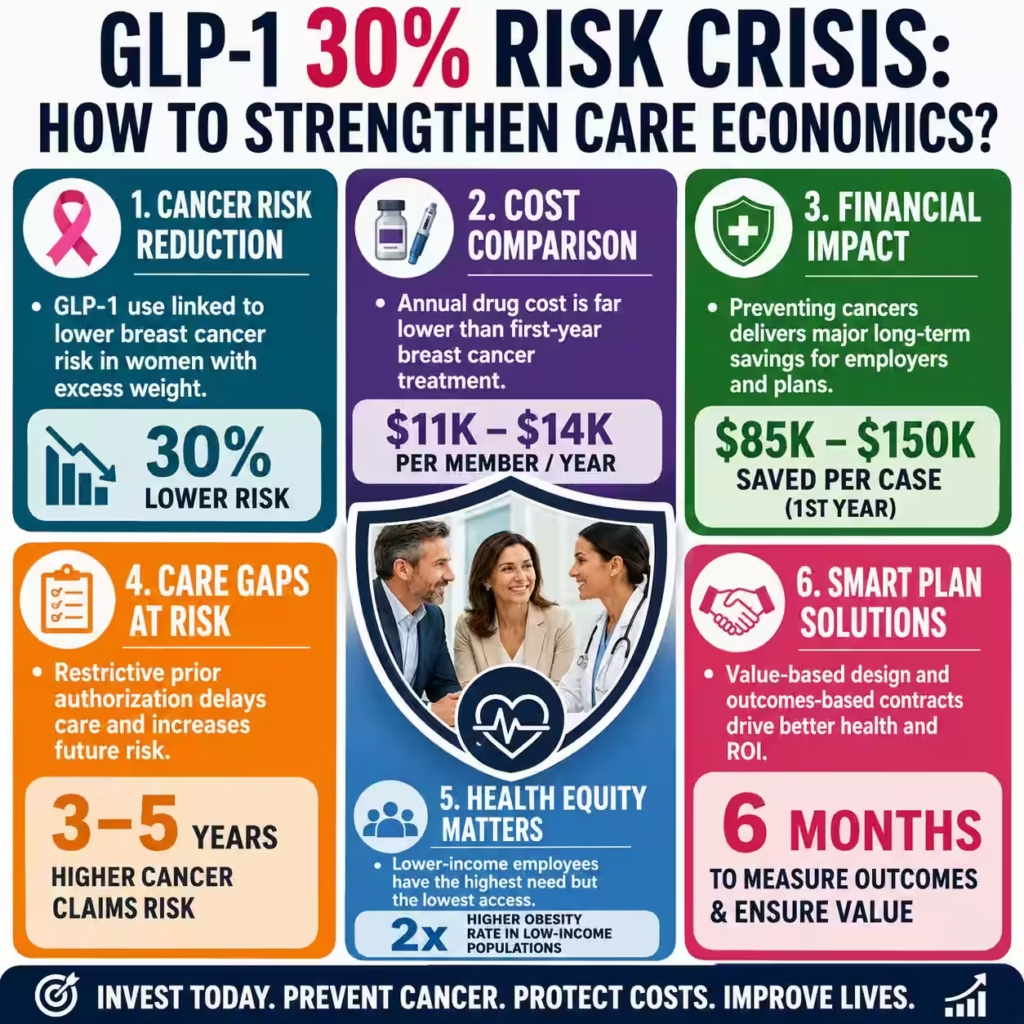
A June 2, 2026 study published in JCO Oncology Practice confirms that women with excess weight taking GLP-1 drugs were approximately 30% less likely to develop breast cancer than those not taking them. This landmark clinical discovery places a spotlight on the massive financial and administrative strains that obesity-related malignancies impose upon modern commercial health plans and self-insured enterprise employers. Corporate benefit purchasers must immediately recalibrate their therapeutic formularies to balance high upfront specialty pharmacy costs against substantial long-term oncology cost reductions.
Real-world epidemiological data indicates that primary breast cancer treatments cost United States employers an average of $85,000 to $150,000 per patient during the first year alone. When advanced or metastatic stage management is required, medical expenditures for a single individual frequently spike beyond $300,000 per year. Conversely, standard commercial costs for weight-management therapies such as Ozempic and Zepbound range more predictably between $11,000 and $14,000 per utilizing member annually.
Lead researcher Dr. Elizabeth McDonald from the University of Pennsylvania Perelman School of Medicine emphasizes that while this observational data does not definitively confirm direct causation, it provides compelling motivation to explore these metabolic medications as cancer-preventative interventions. From a healthcare consultant perspective, the downstream institutional savings generated by a 30% reduction in oncological events can comfortably offset initial specialty tier pharmaceutical spending. Chief financial officers and managed care executives must transition rapidly away from an isolated pharmacy benefit view toward a total cost of care financial model.
The underlying metabolic mechanism involves the continuous optimization of insulin levels, reduced systemic inflammation, and the regulation of critical downstream cell-growth biomarkers. Looking at the detailed scientific visual below, we can observe the context-dependent modulation of GLP-1 receptor (GLP-1R) activation across multiple pathways, including the down-regulation of NF-κB which decreases the pro-tumor inflammatory microenvironment. Managing these precise cellular pathways prevents the rapid cellular replication typically fueled by chronic metabolic dysfunction and excess adipose tissue.
Corporate actuarial models must incorporate these preventative oncology benefits immediately to assess the true financial return on investment of metabolic health benefit packages. Failing to cover these advanced therapies creates a severe financial exposure to late-stage cancer claims within the next three to five fiscal years. Forward-thinking organizations are already adjusting their premium risk-adjustment calculations to account for this massive paradigm shift in preventative medicine.
The Carethix Critique: Market Gaps and Risk Exposures
Carethix issues a stern critique regarding how commercial payers and health systems handle access to metabolic therapies. Current utilization management strategies rely heavily on restrictive prior authorization protocols that delay essential patient care. These short-sighted barriers ignore the documented preventative benefits of GLP-1 interventions on chronic conditions and secondary oncology risks.
The primary operational gap lies in the fragmentation between pharmacy benefit design and major medical risk management. Financial teams often celebrate a decrease in monthly pharmacy spend without calculating the subsequent rise in oncology hospitalizations. This siloed budgeting creates an artificial barrier that harms patient health and increases long-term corporate liability.
Furthermore, current health equity metrics reveal deep disparities in therapeutic distribution across diverse workforce demographics. Low-income employees face a disproportionate burden of obesity but have the lowest access to tier-three specialty drugs. Carethix identifies this uneven distribution as both a systemic failure and an avoidable legal risk for self-insured enterprises.
The supply chain volatility of semaglutide and tirzepatide compounding creates additional operational uncertainty for healthcare delivery networks. Off-label compounding pharmacies fill supply gaps but introduce severe clinical quality control and regulatory compliance issues. Healthcare organizations must address these safety gaps to protect their populations from adulterated alternative products.
Finally, clinical trials lack sufficient long-term data regarding product adherence rates and post-discontinuation weight rebounds. When patients lose access due to formulary changes, rapid metabolic regression often eliminates any achieved cancer-prevention benefits. Carethix warns that intermittent coverage is a waste of capital that fails to mitigate population health risks.
Quality Improvement Analysis: Quantifying Preventive Oncology Value Through Metabolic Health
The June 2026 JCO Oncology Practice study reported that women with excess weight using GLP-1 receptor agonists experienced an approximately 30% lower incidence of breast cancer than comparable non-users, strengthening the business case for preventive metabolic care within employer-sponsored health plans. Breast cancer remains the most commonly diagnosed cancer among women worldwide, with the United States expected to record more than 320,000 new invasive breast cancer cases in 2026, while obesity is estimated to contribute to 13–20% of postmenopausal breast cancers through chronic inflammation, hyperinsulinemia, and hormonal dysregulation. From a quality improvement perspective, reducing avoidable cancer incidence shifts organizational performance from reactive high-cost treatment toward measurable prevention, improving long-term population health outcomes and reducing clinical variability.
Commercial healthcare expenditure data demonstrates that first-year treatment costs for early-stage breast cancer generally range from US$90,000 to US$160,000 per patient, while metastatic disease frequently exceeds US$300,000–US$500,000 annually, excluding indirect productivity losses, disability claims, and caregiver burden. By comparison, annual commercial spending for GLP-1 therapies such as Ozempic, Wegovy, or Zepbound commonly ranges between US$10,000 and US$16,000 per treated member, creating a substantially lower and more predictable financial exposure than advanced oncology care. Even if only a fraction of high-risk members achieve meaningful cancer risk reduction, actuarial models indicate that avoided oncology claims, reduced hospitalizations, and lower specialty treatment utilization can generate favorable long-term total cost-of-care performance.
Healthcare quality leaders should therefore expand performance dashboards beyond pharmacy spend by incorporating preventive oncology metrics, including obesity prevalence, GLP-1 adherence, cancer incidence, hospitalization rates, and five-year total healthcare expenditure. Continuous monitoring of inflammatory biomarkers, metabolic control, and population-level outcomes enables earlier intervention while supporting evidence-based benefit design and value-based reimbursement strategies. Organizations that integrate preventive metabolic therapy into enterprise health management today are better positioned to improve clinical quality, strengthen financial sustainability, and reduce future catastrophic cancer liabilities over the next three to five years.
Strategic Solutions for Plan Design and Capital Allocation
To leverage these medical breakthroughs, enterprise health leaders must implement value-based insurance design frameworks for metabolic care. This strategy aligns financial incentives with clinical outcomes by lowering co-pays for high-risk patients who meet specific metabolic criteria. Actuarial data indicates that targeting individuals with a body mass index above 35 yields the fastest financial return.
Organizations should negotiate direct performance-based risk-sharing agreements with leading pharmaceutical manufacturers. These innovative contracts require manufacturers to provide rebates if patients fail to achieve predetermined metabolic or weight-loss milestones within six months. This mechanism protects corporate capital while ensuring accountability throughout the pharmacy supply chain.
Integrating comprehensive digital health coaching with medical therapy increases clinical adherence rates past 85% annually. Virtual care platforms track patient biometric data in real time to ensure optimal dosage and side-effect management. This holistic approach prevents therapeutic abandonment and secures the long-term 30% reduction in oncological risks.
Employers must also implement longitudinal data integration systems that merge pharmacy claims with major medical diagnostic files. This data transparency allows corporate analysts to measure real-time drops in cancer screenings and oncology referrals. Accurate tracking proves the financial viability of expanded metabolic benefits to chief financial officers and board members.
By restructuring care pathways, health systems can establish dedicated cardio-metabolic centers of excellence. These specialized clinics co-locate endocrinologists, bariatric specialists, and oncologists to deliver highly coordinated preventative care. This structural realignment optimizes clinical throughput and reduces overall cost-per-member metrics across the entire enterprise.
Proactive Prevention Steps for Long-Term Risk Mitigation
Preventing future corporate healthcare budget shocks requires a proactive, multi-year population health strategy centered on early metabolic screening. Corporate wellness initiatives must transition away from superficial tracking toward rigorous biomarker assessments, including insulin resistance testing and inflammatory panels. Identifying metabolic dysfunction early allows for targeted clinical intervention before expensive chronic pathologies develop.
Enterprise risk managers should establish stable, preferred provider networks with verified, high-volume healthcare delivery systems. These partnerships guarantee consistent therapeutic supply chains and protect against the clinical uncertainties of compounding pharmacies. Ensuring consistent therapeutic access eliminates the financial risks associated with sudden patient medication disruptions.
Investment in employee nutritional literacy and metabolic health education serves as a fundamental primary prevention layer. Offering medically supervised lifestyle modification programs alongside pharmaceutical access enhances overall therapeutic efficacy. This dual-strategy model prevents lifelong dependency on high-cost specialty drugs while maintaining optimal cancer risk reduction.
Healthcare organizations must also advocate for modernized federal and state legislative frameworks regarding obesity care coverage. Supporting policies that standardize coverage for obesity interventions reduces regulatory compliance friction across multi-state operations. Legal consistency allows human resource departments to deploy uniform benefit packages to national workforces.
Finally, internal clinical review boards must continuously update corporate formulary guidelines based on the latest peer-reviewed literature. Continuous monitoring ensures that corporate capital is always directed toward the most safe and effective clinical formulations. Proactive formulary management prevents overspending on legacy treatments that lack documented preventive oncology benefits.
Carethix Key Takeaways
The intersection of oncology prevention and metabolic medicine marks a permanent shift in corporate healthcare risk management. Enterprise leaders can no longer view weight-management therapies as simple cosmetic benefits or optional wellness perks. Mitigating a 30% risk factor for costly oncology claims demands immediate, decisive modifications to corporate benefit designs. Payers who refuse to adapt will face unsustainable financial pressure from avoidable late-stage chronic disease treatments. True market leadership requires viewing initial specialty pharmacy investments as a powerful tool for long-term corporate asset protection.
To truly quantify this paradigm shift, corporate actuaries must immediately cease relying on isolated Pharmacy Benefit Manager (PBM) metrics and instead adopt a Total Cost of Care (TCC) financial model. The documented $85,000 to $300,000 annual cost of late-stage oncology claims renders the $11,000 to $14,000 per member annual cost of GLP-1 therapies an irrefutable investment in preventative asset protection. This transition from reactive claim management to proactive metabolic risk mitigation is not optional; it is a fiduciary requirement to stabilize future enterprise healthcare expenditures.
FAQs:
1. Can GLP-1 drugs reduce breast cancer risk by 30% in overweight women?
A June 2026 clinical analysis suggests women with excess weight using GLP-1 therapies demonstrated approximately 30% lower breast cancer incidence, but observational findings still require long-term validation before causal conclusions are made. Healthcare organizations should avoid oversimplifying these findings because incomplete evidence creates reimbursement risk and unrealistic expectations. The stronger business case is not guaranteed prevention, but potentially reducing exposure to $85,000–$300,000 annual oncology costs through earlier metabolic intervention.
2. Are expensive GLP-1 drugs like Ozempic and Zepbound actually cheaper than cancer treatment?
Organizations frequently reject annual GLP-1 therapy costs of roughly $11,000–$14,000 per member while ignoring that first-year breast cancer treatment costs alone commonly reach $85,000–$150,000. This short-term pharmacy cost mindset creates a dangerous budgeting failure because oncology expenses rapidly overwhelm perceived drug savings. Employers should evaluate total cost of care rather than isolated pharmacy spend metrics when assessing metabolic therapy investments.
3. Why are insurers still restricting GLP-1 access despite growing cancer prevention evidence?
Many payers continue restrictive prior authorization policies because immediate pharmacy spending is easier to measure than future avoided cancer claims. This creates operational friction where organizations celebrate lower specialty drug utilization while simultaneously increasing long-term exposure to high-cost chronic disease and oncology events. Restrictive access strategies may protect quarterly budgets but can create significantly larger financial liabilities within three to five years.
4. What is the financial ROI of obesity treatment programs for self-insured employers?
Self-insured employers increasingly face difficult decisions because obesity-related disease management extends beyond weight reduction into cardiovascular, endocrine, and oncology risk mitigation. Targeting high-risk populations such as employees with BMI above 35 often produces faster economic returns because these populations generate disproportionate healthcare utilization. Companies that fail to integrate pharmacy claims with medical claims frequently underestimate the true financial impact of metabolic disease by millions annually.
5. Do GLP-1 medications stop working if patients discontinue treatment?
One of the largest concerns surrounding long-term metabolic therapy is that treatment interruption frequently produces rapid weight rebound and metabolic regression, potentially eliminating previously achieved risk reductions. Organizations that provide inconsistent coverage may unintentionally waste significant specialty pharmacy investments because intermittent access reduces adherence and long-term effectiveness. Sustainable benefit design matters more than simply expanding initial access because durable outcomes depend heavily on continuous treatment engagement.