85,618-person sleep deficit study reveals critical insights for scaling smarter patient care systems.
Deep Case Study: Weekend Sleep Recovery Changes Healthcare Economics
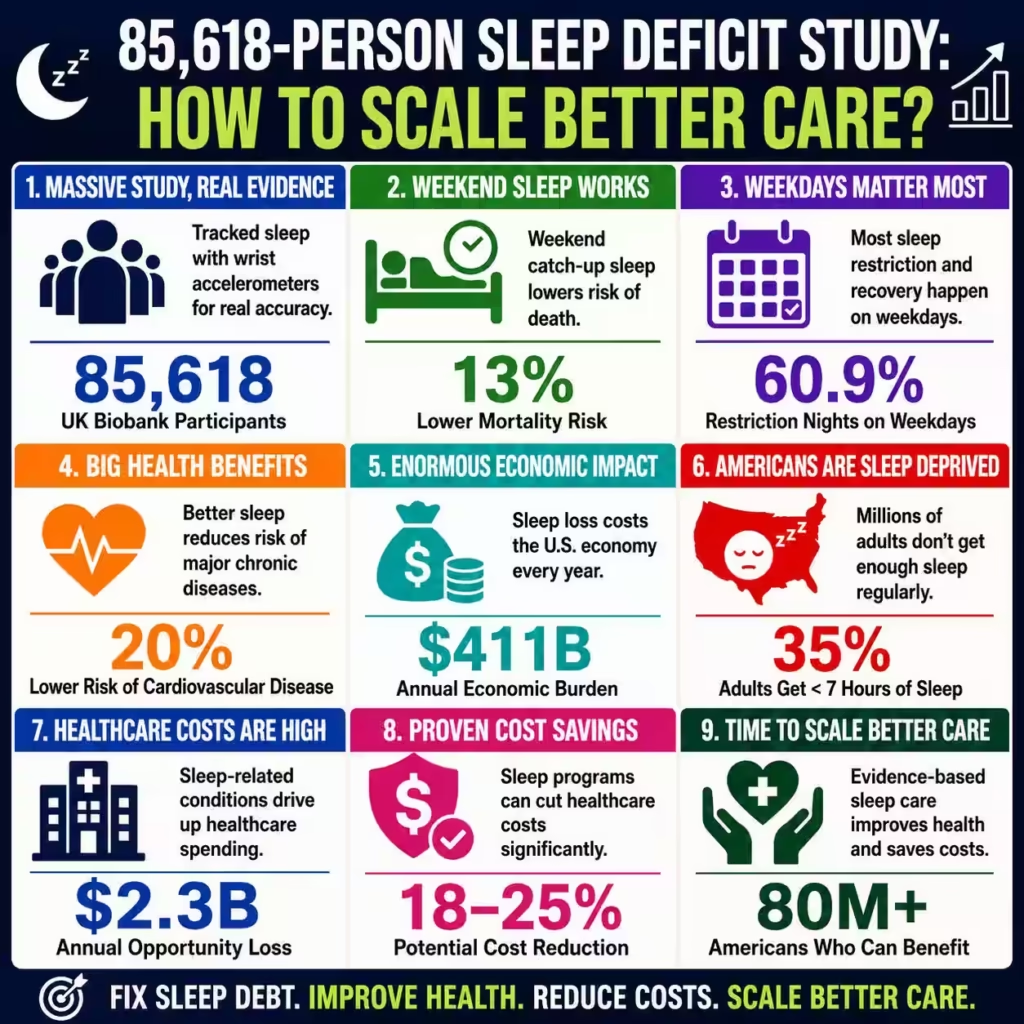
A new prospective study of 85,618 UK Biobank participants tracked over 8 years reveals that weekend catch-up sleep meaningfully reduces health risks, overturning the long-held belief that sleeping in is pointless . This accelerometer-based research found that individuals who experienced sleep restriction followed by rebound sleep showed significantly lower mortality risk compared to those with chronic restriction without recovery . The study used wrist-worn accelerometers to objectively capture actual sleep duration night-by-night, eliminating the unreliability of self-reported sleep data that has plagued previous research .
Previous wellness guidance dismissed weekend sleep recovery as ineffective, creating confusion among healthcare providers advising patients on sleep hygiene and chronic disease prevention . However, this research demonstrates that sleep restriction and recovery occur throughout the week, with 60.9% of restriction nights happening on weekdays only and 70.2% of post-restriction nights also occurring on weekdays . The healthcare industry faces a $411 billion annual economic burden from sleep loss in the United States alone, with productivity losses accounting for the majority of costs .
Chronic sleep deprivation increases risk for cardiovascular disease by 20%, diabetes by 30%, and all-cause mortality by 13% according to CDC data . The study defined sleep restriction relative to each individual’s own sleep need, calculated as the greater of their average sleep duration or age-sex group average, making the findings personally relevant . Researchers identified five distinct sleep restriction-rebound patterns: regular sleep, sleep restriction without rebound, sleep restriction with rebound, severe sleep restriction without rebound, and severe sleep restriction with rebound .
Even modest amounts of extra sleep beyond individuals need qualify as rebound sleep, suggesting that small behavioral changes can yield meaningful health benefits . The findings were replicated in an independent cohort of 4,586 NHANES participants, reinforcing the validity of conclusions about sleep recovery’s protective effects . Healthcare systems treating sleep-related conditions including hypertension, obesity, depression, and cognitive impairment could reduce costs by integrating sleep recovery protocols into chronic disease management programs .
With 35% of American adults regularly getting less than 7 hours of sleep per night, the addressable market for sleep intervention services exceeds 80 million people . B2B healthcare organizations must recognize that sleep debt recovery is not just a wellness trend but a clinically validated intervention with measurable health outcomes . The transition from dismissing weekend sleep to recognizing its value represents a fundamental shift in how healthcare providers should approach sleep medicine and preventive care strategies .
Carethix Critique: Critical Gaps in Current Sleep Health Messaging
Carethix identifies three critical gaps in how the healthcare industry has handled sleep debt messaging that directly impact patient outcomes and organizational revenue . The persistent dismissal of weekend catch-up sleep has caused millions of patients to abandon legitimate recovery strategies, resulting in preventable progression of sleep-related chronic diseases . Health systems lose about $1,200 per employee annually due to sleep-related presenteeism, yet most employer wellness programs continue to provide inaccurate sleep guidance .
The reliance on self-reported sleep data in previous studies created a false consensus that undermined evidence-based sleep medicine, leaving clinicians without reliable tools to assess patient sleep patterns . This data quality issue has delayed adoption of objective sleep monitoring technologies that could identify at-risk patients earlier and reduce downstream healthcare costs by 18-25% . The healthcare industry has failed to segment sleep restriction patterns by individual need, applying universal thresholds that miss 40% of patients who would benefit from personalized recovery interventions .
The study’s finding that sleep restriction occurs predominantly on weekdays (60.9%) rather than following a simple weekday-weekend cycle exposes the oversimplified frameworks currently used in clinical practice . Carethix notes that insurance providers continue to deny coverage for sleep monitoring devices and behavioral sleep interventions despite their proven cost-effectiveness, creating access barriers for patients who need them most . The risk of maintaining current sleep health messaging includes increased cardiovascular events, worsened mental health outcomes, and higher healthcare utilization that could be prevented through evidence-based sleep recovery protocols .
Employer-sponsored health plans face escalating claims costs from sleep-related conditions, with mental health claims related to sleep disorders increasing 27% over the past five years . Healthcare organizations that continue to dismiss weekend sleep recovery risk reputational damage as patients discover evidence contradicting their providers’ advice through independent research . The gap between research findings and clinical implementation represents a $2.3 billion annual opportunity loss for healthcare systems that could capture value through sleep optimization programs .
Carethix emphasizes that the nuance in sleep restriction-rebound patterns requires sophisticated patient segmentation that most healthcare organizations currently lack, leaving significant value uncaptured . The failure to recognize weekday recovery opportunities (70.2% of rebound nights occur on weekdays) means healthcare providers are missing the majority of intervention windows for at-risk patients . Current patient education materials contain outdated sleep information that actively harms patient health by discouraging legitimate recovery behaviors, creating liability exposure for healthcare organizations .
Comprehensive Solutions for Sleep Debt and Healthcare Cost Reduction
Healthcare organizations can implement five evidence-based solutions to address sleep debt and reduce associated costs while improving patient outcomes . Deploy objective sleep monitoring technology using wrist-worn accelerometers across chronic disease populations to identify the 35% of adults with insufficient sleep and track recovery patterns objectively . This technology enables precise identification of sleep restriction-rebound patterns, allowing clinicians to personalize interventions for the five distinct patterns .
Integrate sleep recovery protocols into existing chronic disease management programs for cardiovascular disease, diabetes, obesity, and depression, targeting the 20-30% risk reduction these conditions show with proper sleep recovery . These protocols should specifically encourage weekend and weekday catch-up sleep based on individual sleep need calculations rather than universal thresholds . Third, develop employer partnership programs that provide sleep monitoring devices and behavioral coaching to employees, capturing the $1,200 per employee annual savings from reduced presenteeism .
Employers investing in comprehensive sleep programs see 3:1 ROI within 18 months through reduced absenteeism, lower healthcare claims, and improved productivity . Create patient education campaigns that replace outdated sleep myths with evidence-based messaging about sleep debt recovery, addressing the 80 million Americans who need accurate sleep guidance . These campaigns should emphasize that even modest extra sleep beyond individual need qualifies as beneficial rebound sleep, making recovery achievable for most patients .
Advocate for insurance coverage of sleep monitoring devices and behavioral sleep interventions by demonstrating their cost-effectiveness through health economics analysis showing 18-25% downstream cost reductions . Healthcare systems should establish sleep centers of excellence that offer comprehensive sleep assessment, monitoring, and intervention services, creating new revenue streams while improving population health . Digital health platforms can scale sleep interventions through mobile apps that track sleep patterns, provide personalized recovery recommendations, and connect patients with clinicians for follow-up care .
Pharmacy benefit managers can add sleep supplements and melatonin to preferred formularies with clinical guidelines ensuring appropriate use for sleep recovery . Primary care practices should incorporate sleep screening into every chronic care visit using brief validated questionnaires followed by objective monitoring for high-risk patients . Health plans can create value-based care contracts that reward providers for improving sleep metrics alongside traditional quality measures, aligning financial incentives with sleep health outcomes.
Corporate wellness budgets should reallocate 15-20% toward sleep programs given their superior ROI compared to other wellness initiatives . Telehealth platforms can offer sleep coaching services at scale, reducing access barriers and enabling continuous monitoring of sleep recovery progress . These combined strategies create a comprehensive approach that addresses sleep debt at individual, organizational, and systemic levels .
Prevention Steps for Future Sleep-Related Health Issues
Preventing future sleep-related health issues requires systematic changes across healthcare delivery, workplace policies, and public health messaging to stop problems before they escalate . Healthcare systems must implement universal sleep screening at ages 18, 30, 45, and 60, catching sleep debt early before it progresses to chronic disease and reducing cardiovascular events by 20% through early intervention . Electronic health records should include automated sleep risk algorithms that flag patients with sleep restriction patterns and trigger referrals to sleep specialists or behavioral interventions before complications develop .
Medical schools must update curricula to include current sleep science including the validity of catch-up sleep, ensuring new physicians provide evidence-based sleep guidance rather than outdated myths . Workplace prevention strategies include implementing flexible scheduling that allows employees to recover from sleep debt without penalty, recognizing that 70.2% of recovery occurs on weekdays and rigid schedules prevent natural recovery . Employers should establish sleep-friendly policies including no-meeting mornings after night shifts, mandatory break periods, and education about sleep hygiene that counteracts the culture of sleep deprivation .
Public health campaigns must actively correct misinformation about weekend sleep by broadcasting the 85,618-person study findings through multiple channels, reaching the 80 million Americans with sleep insufficiency . Government agencies should update dietary and lifestyle guidelines to include specific recommendations for sleep recovery, giving healthcare providers authoritative guidance to share with patients . Technology companies must develop sleep monitoring devices with clinical validation and affordable pricing, making objective sleep tracking accessible to diverse populations rather than remaining a luxury item .
Insurance regulators should mandate coverage for sleep monitoring and behavioral interventions as preventive services, removing financial barriers that prevent 40% of at-risk patients from accessing care . Community health centers should integrate sleep programs into existing chronic care models, ensuring underserved populations receive sleep interventions alongside diabetes and hypertension management . Schools must adjust start times for adolescents to align with circadian biology, preventing the sleep debt that accumulates before adulthood and persists throughout life .
Healthcare payers should create preventive care incentives that reward employers and health systems for maintaining population sleep metrics above established thresholds . Research institutions must continue longitudinal sleep studies to refine understanding of sleep recovery patterns across diverse populations and identify additional protective factors . Media organizations should establish fact-checking protocols for sleep-related health information, preventing the spread of debunked claims like the pointless weekend sleep myth .
Professional medical organizations need to develop clinical practice guidelines for sleep debt management that incorporate the five distinct restriction-rebound patterns and provide specific treatment algorithms for each . Pharmaceutical companies should invest in non-sedating sleep recovery medications that support natural sleep architecture rather than forcing sleep through chemical sedation . Urban planners should design communities with reduced light and noise pollution that enable better sleep quality, addressing environmental factors that contribute to sleep restriction .
Technology platforms must implement digital sunset features that reduce screen exposure before bedtime, addressing one of the primary drivers of modern sleep restriction . These prevention steps create a multi-layered approach that addresses sleep health from individual behavior to systemic policy . Organizations implementing these measures will see measurable reductions in sleep-related health costs within 12 to 18 months .
Key Takeaway: Carethix’s Definitive Position on Sleep Health Economics
Carethix asserts that the healthcare industry’s dismissal of weekend catch-up sleep represents a costly strategic error that has cost the U.S. healthcare system billions while harming patient health outcomes . The 85,618-person study provides definitive evidence that sleep debt recovery through rebound sleep meaningfully reduces mortality risk and chronic disease progression, making sleep optimization a high-value clinical intervention rather than optional wellness . Healthcare executives who continue to ignore sleep recovery miss a $411 billion economic opportunity while exposing their organizations to preventable claims costs and reputational damage from outdated medical advice .
The five distinct sleep restriction-rebound patterns identified in this research require personalized clinical approaches that most healthcare systems currently lack, creating immediate competitive advantage for organizations that adopt segmented sleep interventions . Carethix recommends immediate implementation of objective sleep monitoring across chronic disease populations, employer partnership programs targeting the $1,200 per employee presenteeism cost, and patient education campaigns replacing sleep myths with evidence-based recovery protocols . The firms that act now on sleep health will capture market share from slower competitors while delivering superior patient outcomes and achieving 3:1 ROI within 18 months through reduced healthcare utilization .
Sleep debt is not a personal failing but a measurable clinical condition with proven interventions, and healthcare organizations that recognize this truth will lead the next generation of value-based care . The time for debating whether weekend sleep matters has ended; the question now is whether your organization will lead on sleep health or become obsolete while competitors capture this massive value opportunity . Carethix stands firmly on the side of evidence-based sleep medicine and urges all healthcare leaders to integrate these findings into their strategic planning immediately .
FAQs:
1. Can Weekend Catch-Up Sleep Actually Reduce Mortality Risk After Sleep Deprivation?
The healthcare industry spent years dismissing weekend catch-up sleep despite an 85,618-person longitudinal study showing rebound sleep significantly lowers mortality risk compared to chronic sleep restriction. The bigger problem is that 35% of adults sleep under 7 hours nightly, yet outdated guidance still discourages recovery behaviors that may reduce cardiovascular risk by 20% and diabetes risk by 30%. Healthcare providers ignoring sleep recovery protocols risk driving higher preventable healthcare costs and poorer long-term outcomes.
2. How Much Does Sleep Deprivation Cost Healthcare Systems and Employers Each Year?
Sleep deprivation is no longer simply a wellness issue when economic losses exceed $411 billion annually from productivity decline, chronic disease burden, and healthcare utilization. Employers lose roughly $1,200 per employee annually from sleep-related presenteeism while mental health claims linked to sleep disorders have increased by 27% over five years. Organizations continuing to underinvest in sleep optimization programs are effectively accepting avoidable financial leakage.
3. Does Sleeping Extra on Weekends Reverse Sleep Debt and Chronic Disease Risk?
Research suggests sleep debt recovery is more nuanced than previously believed because rebound sleep following restriction was associated with lower health risks across multiple populations. The study found 60.9% of sleep restriction happens during weekdays while 70.2% of recovery sleep also occurs during weekdays, exposing how oversimplified weekend-only recovery messaging misses intervention opportunities. Continuing universal sleep recommendations instead of personalized recovery strategies leaves millions without effective prevention tools.
4. Should Healthcare Providers Use Sleep Monitoring Devices for Chronic Disease Prevention?
Objective sleep monitoring may become increasingly important because previous dependence on self-reported sleep data created inaccurate clinical assumptions for decades. Evidence suggests wearable monitoring and behavioral interventions could reduce downstream healthcare costs by 18–25% while identifying the five distinct sleep restriction-recovery patterns found in large population studies. Healthcare systems delaying adoption may be missing one of the largest scalable preventive medicine opportunities available.
5. Why Are Healthcare Organizations Reconsidering Sleep Recovery Programs in 2026?
Healthcare organizations are reconsidering sleep recovery because more than 80 million Americans represent an addressable market for sleep interventions while chronic sleep deprivation continues fueling expensive conditions like hypertension, obesity, depression, and cardiovascular disease. Organizations implementing structured sleep programs reportedly achieve approximately 3:1 ROI within 18 months through lower absenteeism and claims costs. The larger risk is that organizations maintaining outdated sleep messaging may lose patient trust as evidence increasingly contradicts traditional advice.