16.8% erectile dysfunction crisis drives corporate liability; Carethix guides executives to build safe care pathways.
Deep Case Study: The 16.8% Prevalence of ED Self-Medication
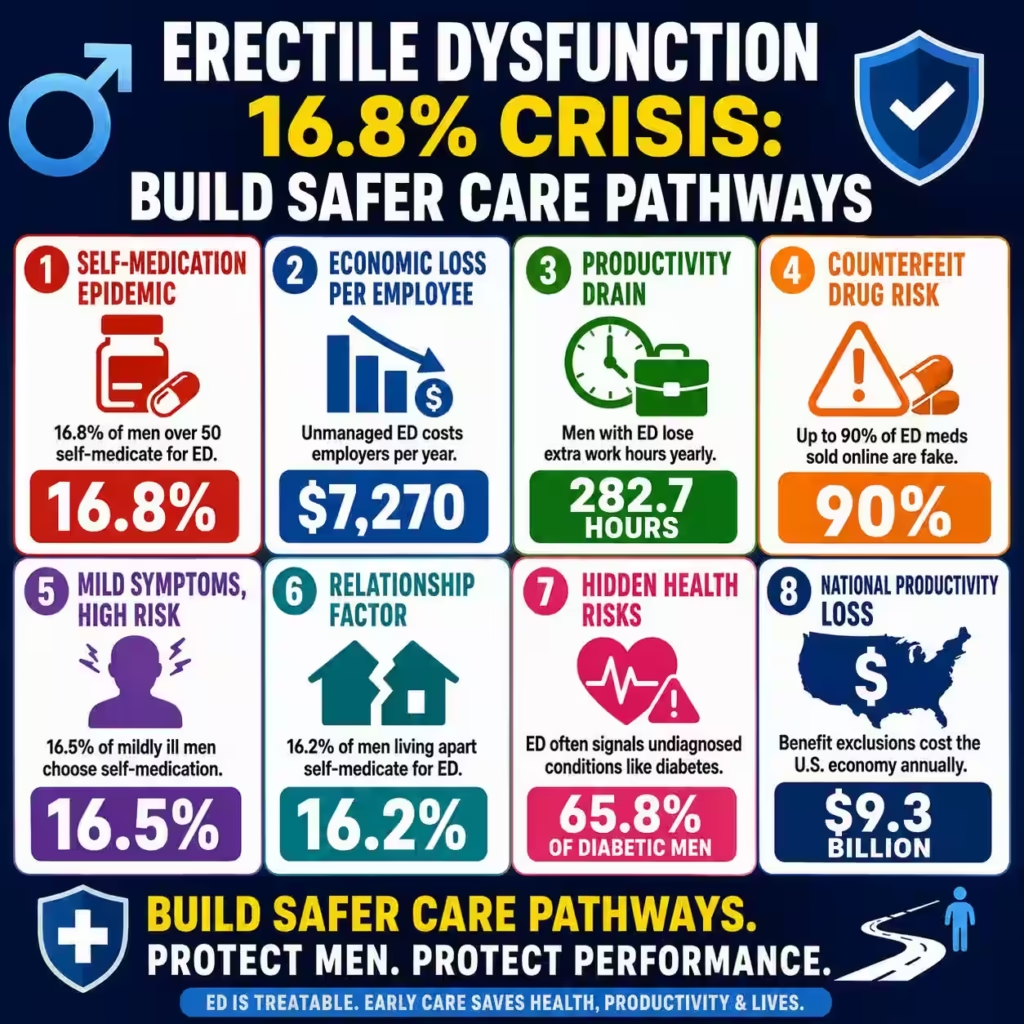
A recent retrospective cross-sectional study involving 14,594 men diagnosed with erectile dysfunction (ED) between April 2023 and November 2024 reveals that 16.8% of men aged over 50 bypass professional medical consultation in favor of self-medication. This dangerous trend is further amplified among specific demographics, with 16.2% of men living apart from spouses and 16.5% of those rated as ‘mildly ill’ on the Clinical Global Impressions-Severity (CGI-S) scale opting to self-diagnose. These figures, published in the International Journal of Sexual Health, expose a critical gap in men’s healthcare management where perceived “mildness” of the condition paradoxically drives higher risk-taking behaviors.
The global erectile dysfunction drugs market, valued at $2.92 billion in 2024, is projected to surge to $4.90 billion by 2030 with a CAGR of 9.13%, driven largely by this unregulated consumption. The study underscores that self-medication is not merely a patient preference but a systemic failure, as 52% of men aged 40 to 70 experience some degree of ED, creating a massive, underserved patient population vulnerable to illicit markets. While only 13.3% of the total 14,594 cohort reported self-medication, the concentration of this behavior in older men (over 50) correlates directly with higher risks of undiagnosed comorbidities like diabetes and hypertension.
Financial data indicates that the economic burden of this silent crisis is staggering, with employers losing approximately $7,270 annually per patient due to absenteeism and presenteeism directly linked to unmanaged ED. Men with ED report 282.7 additional hours of work impairment per year compared to their healthy counterparts, translating to a 2.11 times greater productivity loss. The normalization of self-medication masks these productivity drains, as employees utilize unverified treatments that fail to address the root physical or psychological causes of their dysfunction.
This behavioral pattern is particularly alarming given that 44% to 90% of ED medications sold online are counterfeit, exposing the 16.8% of self-medicating older men to toxic substances like commercial paint and printer ink. In one analysis, only 10.1% of online samples fell within 10% of the labeled tablet strength, meaning users are gambling with ineffective or potentially fatal dosages. The intersection of a $75 billion counterfeit drug market and a 16.8% self-medication rate creates a perfect storm for corporate liability and workforce health deterioration.
Corporations must recognize that the 16.5% of men rated ‘mildly ill’ who self-medicate are likely mid-to-senior level executives, whose stress and performance anxiety fuel their condition. Their reliance on self-medication bypasses the healthcare system entirely, missing the opportunity to catch the 65.8% global prevalence of ED in diabetic patients early. By ignoring this data, businesses are effectively sanctioning a $9.3 billion annual loss in potential productivity across the US economy due to benefit exclusions for proper ED treatments.
Carethix Critique: The Systemic Failure of Unsupervised Care
Carethix strongly condemns the current passive approach to men’s sexual health which has allowed the self-medication rate to climb to 16.8% among men over 50, a demographic that constitutes the backbone of institutional leadership. The fact that 16.5% of mildly ill patients choose self-medication indicates a catastrophic failure in patient education and trust, suggesting that the medical community has alienated those with early-stage symptoms. This alienation forces patients into the shadow economy, where the risk of adverse events from counterfeit PDE5 inhibitors skyrockets due to inconsistent active ingredients ranging from 0% to >200% of the labeled dose.
We critique the corporate wellness sector for continuing to treat ED as a “lifestyle” or “vanity” issue rather than a vascular warning sign, despite evidence that ED increases absenteeism by 200%. By failing to cover comprehensive men’s health consultations, insurance plans indirectly incentivize the 16.2% of men living apart from spouses to seek discreet, unregulated quick fixes. This exclusion policy is fiscally irresponsible, ignoring the $7,270 annual loss per employee in favor of short-term premium savings.
The widespread availability of “gas station” enhancements and unchecked online pharmacies exploits the 50.5% of men who perceive no need for formal treatment, effectively weaponizing their denial against their own biology. Carethix identifies this as a regulatory blind spot where the $2.9 billion legitimate market is being cannibalized by a dangerous grey market that offers no patient safety nets. The data shows that 67% of men purchasing ED meds without a prescription do so online, completely circumventing cardiovascular screening protocols.
Critically, the reliance on the CGI-S scale to categorize patients as “mildly ill” minimizes the severity of their psychological distress, which we know drives 42.65% of the association with performance anxiety. These men are not “mildly” suffering; they are actively disengaging from the healthcare system, creating a hidden cohort of untreated hypertension and diabetes cases. Carethix asserts that classifying ED severity without accounting for the 16.8% self-medication risk is professional malpractice on an industry-wide scale.
Furthermore, the lack of employer-sponsored support networks means that the 40.4% of men who attempt weight loss or lifestyle changes often do so without medical guidance, leading to suboptimal results and eventual relapse into pill dependency. We are witnessing a “silent resignation” of health ownership, where 53.9% of sufferers do not use any lifestyle modification strategies, preferring the immediate—and dangerous—gratification of unverified pharmaceuticals. Carethix warns that continuing to ignore these gaps will inevitably lead to a rise in workplace medical emergencies, driving up liability costs far beyond the price of proper preventative care.
Gap Analysis: A 16.8% Self-Medication Rate Signals a Much Larger Healthcare Failure
The 16.8% self-medication rate among men over 50 with erectile dysfunction represents far more than an individual behavioral issue; it exposes a structural failure in preventive men’s healthcare. A retrospective study covering 14,594 men diagnosed between April 2023 and November 2024 found that 16.2% of men living apart from their spouses and 16.5% of patients classified as mildly ill on the Clinical Global Impressions-Severity (CGI-S) scale also bypassed medical consultation despite elevated clinical risk. Considering that approximately 52% of men aged 40–70 experience some degree of erectile dysfunction worldwide and prevalence exceeds 70% among men older than 70 years, the untreated population entering informal treatment channels continues to expand while underlying cardiovascular, endocrine, and psychological disorders remain undiagnosed.
The commercial environment further widens this healthcare gap because the global erectile dysfunction therapeutics market is now projected to approach approximately US$5.0 billion by 2030, growing at roughly a 9% compound annual growth rate, while counterfeit medicines continue to account for an estimated US$75–200 billion global illicit pharmaceutical economy. Regulatory investigations indicate that between 44% and 90% of erectile dysfunction medicines sold through unauthorized online channels are counterfeit, and laboratory testing has shown that only about 10% of sampled products consistently meet acceptable dosage accuracy. This disconnect allows increasing pharmaceutical demand to be captured by unregulated suppliers instead of evidence-based healthcare systems, substantially increasing medication failure, toxic exposure, adverse drug interactions, and delayed diagnosis of diabetes, hypertension, coronary artery disease, and other systemic illnesses commonly associated with erectile dysfunction.
The corporate consequences remain equally significant because untreated erectile dysfunction extends well beyond employee wellbeing into measurable business performance. Research continues to associate erectile dysfunction with approximately 280 additional hours of annual work impairment per affected employee, productivity losses exceeding twofold compared with unaffected workers, and employer costs approaching US$7,000–US$8,000 per employee annually through absenteeism, presenteeism, and reduced engagement. Without confidential screening programs, integrated men’s health benefits, digital clinical pathways, and early cardiovascular risk assessments, organizations leave a growing proportion of experienced professionals dependent on ineffective self-treatment while preventable healthcare costs, workforce risks, and long-term productivity losses continue to compound.
Strategic Solutions: Reclaiming Workforce Health
To combat the 16.8% self-medication rate, organizations must immediately integrate comprehensive men’s health benefits that specifically cover PDE5 inhibitor prescriptions and mandatory vascular screenings. By absorbing the cost of legitimate treatment, companies can dismantle the economic incentive for employees to turn to the $75 billion counterfeit market, ensuring they receive regulated, safe dosages. Data confirms that men with insurance coverage for penile prosthesis implantation (PPI) and ED treatments have significantly lower absenteeism, potentially recovering the $9.3 billion lost annually by US employers.
Telehealth platforms must be rigorously vetted and partnered with as a corporate benefit to capture the 16.2% of isolated men who are uncomfortable with in-person visits. These platforms can provide the anonymity patients desire while ensuring a licensed physician reviews the CGI-S severity and checks for contraindications like nitrate use, which can be fatal if mixed with ED meds. A structured telehealth program can reduce the 282.7 hours of lost productivity by streamlining access to care and reducing the time spent seeking illicit alternatives.
Financial solution modeling suggests that investing in “Lifestyle Medicine” programs can yield high returns, as 37.8% of users rated cardiovascular training as the best strategy for managing ED. Corporations should subsidize gym memberships or personal training specifically targeted at reducing the obesity and hypertension factors that cause ED in 52% of men aged 40-70. This proactive spending directly attacks the root causes, unlike reactive measures that only address symptoms after productivity has already dipped.
Implementing “blind” health audits can help identify the prevalence of risk factors within a workforce without violating privacy, allowing for targeted intervention campaigns that address the 16.5% of “mildly ill” employees. These campaigns should utilize high-authority internal communication to debunk the safety of “herbal” supplements, which 35.1% of men currently view positively despite the high risk of contamination. Educating employees that 80% of “natural” ED pills contain undeclared prescription-grade chemicals can shift behavior back toward legitimate medical channels.
Carethix recommends establishing a “Men’s Health Navigator” role within benefits administration to guide employees through the complexities of urological referrals, ensuring the 7.0% of men who currently receive mental health assessments increases significantly. By treating the psychological components—stress, depression, and performance anxiety—companies can resolve the underlying issues that drive 42.65% of self-medication cases. This holistic approach not only restores sexual health but revitalizes overall employee engagement and cognitive function.
Prevention Protocols: Safeguarding Future Operations
Prevention begins with redefining the corporate health baseline to include metabolic screening for all male employees over 40, directly addressing the 16.8% at-risk demographic. Early detection of diabetes and dyslipidemia can prevent the onset of ED entirely, as these conditions are present in 65.8% of ED patients globally. Mandatory annual “Know Your Numbers” campaigns (blood pressure, A1C, testosterone) can catch the 14% drop in HbA1c required to reverse vascular damage before medication becomes necessary.
Organizations must enforce strict IT policies that block access to known illegitimate pharmacy domains on company networks, reducing the temptation for the 67% of men who purchase meds online to do so during work hours. Simultaneously, HR departments should curate a “White List” of verified digital health providers, steering the 2.11x less productive employees toward safe, swift, and legal medical solutions. This digital hygiene prevents the accidental ingestion of commercial paint or printer ink found in counterfeit pills, protecting the workforce from catastrophic acute health failures.
Psychological prevention steps are equally critical. Destigmatizing therapy in the workplace can reduce the performance anxiety that correlates strongly with self-medication. Since 11.3% of young men also report mild ED, preventative mental health support should not be limited to older cohorts but available to all, catching early warning signs before they become chronic. By addressing the 15% to 25% of men with decreased sexual desire due to stress, companies can prevent the downstream slide into dysfunction and self-treatment.
Supply chain security for employee prescription plans must be audited to ensure that the pharmacy benefits manager (PBM) sources only from direct manufacturers, eliminating the risk of counterfeit infiltration which affects 44% of the online market. Prevention also involves clear communication: clear, data-driven seminars explaining that unsupervised PDE5i use is associated with permanent vision loss (NAION) and hearing loss. When employees understand that “mild” self-medication carries “severe” permanent risks, the 16.5% mild-severity group is less likely to bypass professional care.
Finally, creating a culture of “Total Health” where sexual health is viewed as a barometer for cardiovascular fitness encourages the 50.5% of deniers to seek help under the guise of heart health. This framing removes the embarrassment factor that drives 16.2% of isolated men to self-diagnose, bringing them back into the fold of managed, safe, and productive healthcare.
Carethix Key Takeaway
The data is irrefutable: unmanaged erectile dysfunction is a corporate liability, not a personal private matter. When 16.8% of your senior workforce is gambling with counterfeit medication, they are risking cardiovascular collapse and guaranteeing a $7,270 annual loss per head in your P&L. Carethix asserts that the “don’t ask, don’t tell” policy regarding men’s sexual health is an expensive relic that costs the US economy $9.3 billion annually. You must intervene now by legitimizing access to care, or you will continue to bleed productivity to the $75 billion black market.