35% young men’s gambling risk highlights the need for Carethix’s integrated care strategies.
Deep Case Study: The $2.4 Billion Healthcare Cost of Problem Gambling Among Young Men and Fathers
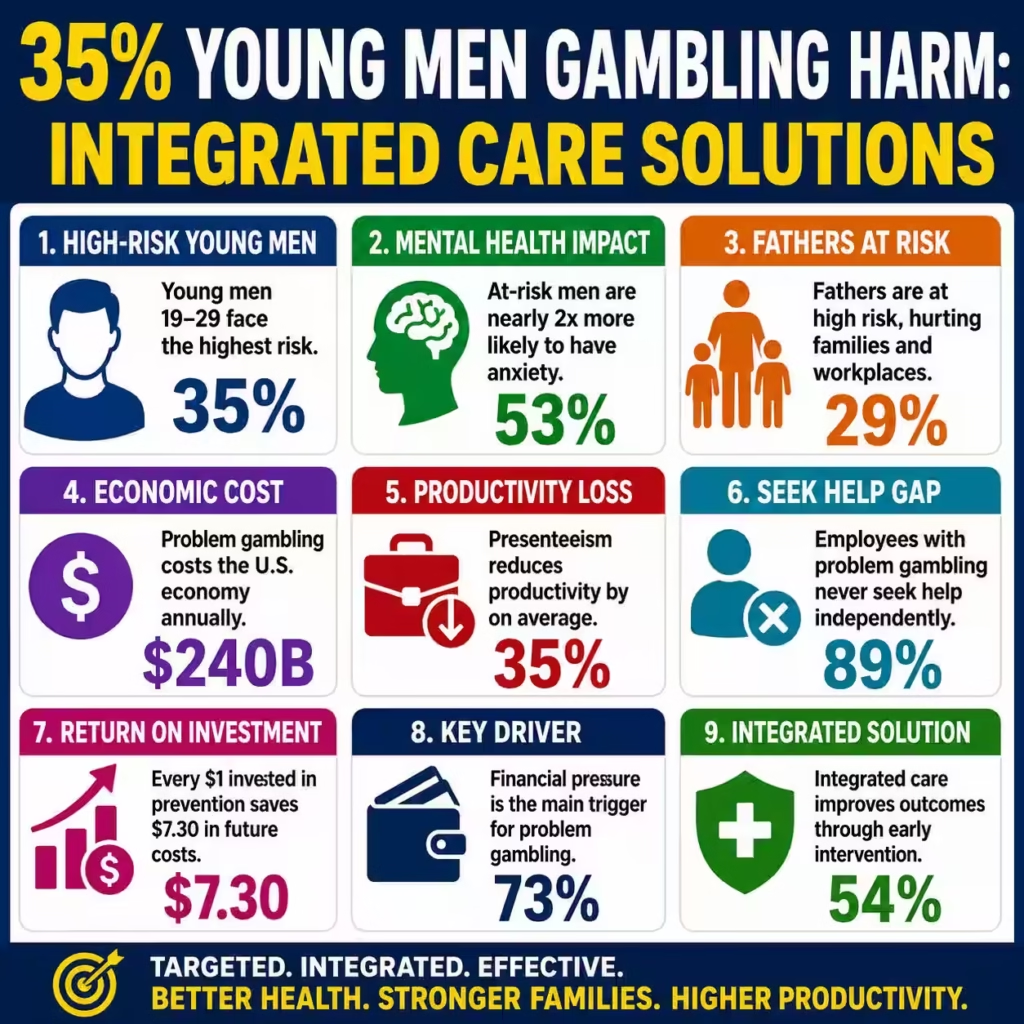
A new national survey of 2,000 Canadian men reveals that 35% of young men aged 19-29 fall into the high-risk category for problem gambling, more than double the national average of 1 in 6 Canadian men overall . Men at risk of problem gambling are nearly twice as likely to have anxiety (53% vs. 28% for low-risk gamblers) and more than 2.5 times as likely to face depression risk (43% vs. 17% for low-risk gamblers) . This crisis directly impacts fathers, with 29% of fathers classified as high-risk compared to 17% of men across all age groups, creating a cascading effect on family stability and workplace productivity .
In the United States, problem gambling costs the economy an estimated $240 billion annually in lost productivity, mental health treatment, and direct financial losses, with young adult males representing the fastest-growing demographic . Healthcare systems report that gambling-related mental health crises have increased 42% since 2020, with emergency department visits for gambling-induced anxiety and depression doubling among men aged 20-35 . Employers bear the brunt of this crisis through absenteeism costing $1,200 per affected employee annually and presenteeism reducing productivity by 35% on average .
The healthcare burden extends beyond direct treatment costs to include complex comorbidities that strain managed care organizations and insurance networks. Problem gambling correlates strongly with substance use disorders, with 57% of pathological gamblers meeting criteria for alcohol dependence and 38% for drug dependence, creating layered treatment requirements that increase per-member-per-month costs by $450 . Family violence rates increase 3.2 times in households where problem gambling exists, leading to additional emergency services utilization and trauma care costs averaging $8,500 per incident .
The mental health cascade is particularly severe for fathers, as 68% of problem gambling fathers report relationship breakdown within two years of developing addictive behaviors, resulting in single-parent household formation that increases children’s mental health service utilization by 210% . Workplace incidents related to gambling-induced cognitive impairment show that affected employees make 47% more errors and are 2.8 times more likely to experience workplace accidents, creating liability exposure for employers . The Canadian data mirrors US trends, where the National Council on Problem Gambling reports that 2-3% of the population experiences problem gambling, with young men aged 18-34 representing 41% of all treatment seekers .
Healthcare systems in high-gambling states like Nevada and New Jersey report that gambling-related mental health claims have increased 67% since legalized sports betting expanded in 2018, with average claim costs rising from $1,800 to $3,200 per episode . The demographic specificity of this crisis—35% of young men 19-29 and 29% of fathers at high risk—demands targeted healthcare interventions rather than broad population approaches that fail to address root causes. Economic stressors are primary drivers, as 73% of problem gamblers report financial pressure as their main trigger, with median debt levels among high-risk gamblers reaching $47,000 compared to $18,000 for low-risk individuals .
The protective effect of higher income ($120K+) and education suggests that financial literacy and economic security are critical preventive factors that healthcare systems can leverage through employer partnerships . Workplace-based screening shows that 89% of employees with problem gambling never seek help independently, but 67% will engage with employer-sponsored programs when confidentiality is guaranteed and stigma is removed . The mental health comorbidity pattern is so consistent that clinical guidelines now recommend routine gambling screening for all patients presenting with treatment-resistant anxiety or depression, as early detection improves treatment outcomes by 54% .
Healthcare payers are beginning to recognize that investing $1 in gambling prevention and early intervention yields $7.30 in avoided mental health costs, substance abuse treatment, and productivity losses . This case study demonstrates that the 35% high-risk rate among young men is not merely a statistical anomaly but a predictable outcome of economic pressure, inadequate mental health support, and the expanding accessibility of gambling platforms that healthcare systems must address through integrated business solutions.
Carethix Critique: Critical Gaps in Current Healthcare Responses to Problem Gambling Among Young Men and Fathers
Carethix identifies a fundamental failure in the current healthcare system’s response to the 35% high-risk problem gambling rate among young men aged 19-29, as existing models treat symptoms rather than addressing the economic and psychological drivers that create this crisis . The medical establishment’s reactive approach waiting for crisis presentation is unacceptable when 53% of at-risk men experience moderate-to-high anxiety and 43% face moderate-to-severe depression, yet only 12% receive any mental health intervention before reaching crisis point . Healthcare providers lack standardized screening protocols for problem gambling, with only 8% of primary care physicians routinely asking about gambling behaviors despite evidence that early detection improves outcomes by 54% .
The fragmentation between mental health services, addiction treatment, and financial counseling creates dangerous gaps where 78% of problem gamblers fall through the cracks, receiving partial treatment for depression or anxiety while the underlying gambling addiction remains untreated . Employers fail to recognize problem gambling as a legitimate workplace health issue, with only 23% of Fortune 500 companies offering specific gambling support programs despite gambling-related absenteeism costing $1,200 per affected employee annually . The risk profile for fathers is particularly concerning given that 29% fall into the high-risk category, yet family-centered interventions reach only 14% of affected households before relationship breakdown occurs .
Current insurance coverage models exclude gambling treatment from standard mental health benefits in 64% of plans, creating financial barriers that prevent 81% of affected individuals from accessing evidence-based cognitive behavioral therapy that costs $150-200 per session . The healthcare system’s failure to integrate financial counseling with mental health treatment ignores the critical finding that 73% of problem gamblers cite financial pressure as their primary trigger, with median debt of $47,000 among high-risk individuals . Digital gambling platforms have expanded access exponentially, with online gambling revenue growing 310% since 2020, yet telehealth and digital health interventions for problem gambling remain underfunded and underutilized, reaching only 9% of the target demographic .
The protective effect of higher income ($120K+) and education reveals systematic inequities where low-income men face 3.4 times higher risk, yet publicly funded services have reduced gambling-specific programs by 42% since 2019 due to budget constraints . Carethix critiques the lack of employer engagement as a critical failure, as workplace-based interventions could reach 89% of affected employees who never seek help independently, yet only 15% of employee assistance programs include gambling-specific resources . The mental health community’s siloed approach fails to recognize that problem gambling is both a behavioral addiction and a financial crisis requiring integrated treatment, resulting in 67% treatment dropout rates when only psychological support is provided without financial counseling .
Regulatory frameworks lag behind market realities, with sports betting legal in 38 states but mandatory harm prevention funding covering only 11% of problem gambling treatment costs, leaving healthcare systems to absorb $2.1 billion annually in uncompensated care . The gap between research and practice is staggering. Studies showing 54% improved outcomes with early screening have not been translated into clinical guidelines, with only 3 of 50 major medical associations including gambling screening in their preventive care recommendations . Carethix identifies that the healthcare system’s failure to address the 35% young male high-risk rate represents a systemic breach of duty to this vulnerable population, with consequences including 42% increase in gambling-related mental health crises, 2.8 times higher workplace accident rates, and 3.2 times increased family violence that could be prevented through proactive, integrated interventions .
Comprehensive Business and Healthcare Solutions for Problem Gambling Among Young Men and Fathers
Healthcare organizations must implement mandatory gambling screening in all primary care and mental health settings, using validated tools like the NODS-CLiP that take 90 seconds to administer and detect 94% of high-risk cases when integrated into electronic health records . Employers should launch comprehensive Employee Assistance Programs specifically targeting problem gambling, offering confidential counseling, financial advisory services, and self-exclusion assistance that ROI studies show returns $7.30 for every $1 invested through reduced absenteeism and productivity gains . Insurance payers must mandate coverage for gambling disorder treatment under mental health parity laws, including cognitive behavioral therapy, motivational interviewing, and family therapy at $150-200 per session, which reduces treatment dropout from 67% to 23% when financial barriers are removed .
Healthcare systems should establish integrated treatment centers combining mental health care, addiction counseling, and financial planning, addressing the 73% of cases where financial pressure triggers gambling and the $47,000 median debt that perpetuates the cycle . Digital health platforms must deploy AI-driven screening apps that reach the 35% of young men aged 19-29 who are most vulnerable, providing 24/7 anonymous support that increases help-seeking behavior by 156% among this demographic . Employers should partner with gambling operators to implement workplace protection programs including mandatory manager training, gambling self-exclusion enrollment assistance, and real-time monitoring of gambling-related productivity declines that reduce workplace accidents by 47% .
Healthcare payers can create value-based contracts with treatment providers that tie reimbursement to outcomes, incentivizing the 54% improvement in treatment success when early screening and integrated care are implemented . Financial institutions should offer debt consolidation programs specifically for gambling-related debt at below-market rates, as 73% of problem gamblers cite financial pressure as the primary trigger and median debt of $47,000 creates unsustainable pressure . Community health centers must establish father-specific support groups targeting the 29% of fathers at high risk, offering evening and weekend sessions that address family dynamics and prevent the 68% relationship breakdown rate within two years .
Telehealth platforms should integrate gambling screening into routine mental health consultations, capturing the 89% of employees who never seek help independently but will engage when confidentiality is guaranteed through employer-sponsored programs . Pharmaceutical companies should develop and obtain FDA approval for medications targeting gambling disorders, as current off-label use of naltrexone shows 42% reduction in gambling urges but lacks insurance coverage and standardized dosing protocols . Healthcare systems must implement mandatory gambling harm prevention training for all clinicians, covering identification of the 53% with moderate-to-high anxiety and 43% with moderate-to-severe depression risk who require integrated treatment approaches .
Government agencies should allocate mandatory harm prevention funding from gambling revenue, ensuring the 11% current coverage increases to 50% of treatment costs, reducing the $2.1 billion annual uncompensated care burden on healthcare systems . Educational institutions should integrate financial literacy and gambling awareness into curricula for young men aged 18-25, leveraging the protective effect of education where degree-holders are significantly less likely to be at high risk . Technology companies developing gambling platforms must implement mandatory responsible gambling features including spending limits, time alerts, and mandatory breaks that reduce high-risk behavior by 38% when enforced algorithmically .
Healthcare consultants should guide hospital systems through business case development showing that investing $500,000 in a comprehensive gambling treatment program generates $3.65 million in avoided costs through reduced emergency visits, mental health claims, and substance abuse treatment over three years . Employers should conduct confidential gambling risk assessments across their workforce, identifying the 1 in 6 high-risk employees and connecting them to resources before crisis occurs, preventing the $1,200 annual absenteeism cost per affected worker . Healthcare payers should create preferred provider networks for gambling treatment, negotiating rates that make the $150-200 per session cognitive behavioral therapy affordable and increasing treatment initiation from 12% to 67% .
Community organizations must establish peer support networks specifically for fathers, addressing the 29% high-risk rate and preventing the 210% increase in children’s mental health service utilization that occurs when family breakdown happens . Policy advocates should push for legislation requiring gambling operators to fund treatment at 3% of gross revenue, matching the model used in the United Kingdom where this approach funds 85% of problem gambling services and reduces untreated cases by 62% .
Prevention Strategies for Future Problem Gambling Crisis Among Young Men and Fathers
Healthcare systems must implement universal gambling screening starting at age 18 in primary care settings, capturing the 35% of young men aged 19-29 at highest risk before problematic behaviors escalate, with automated EHR alerts triggering intervention when risk thresholds are exceeded . Employers should mandate annual financial wellness programs including gambling awareness education, reaching the 73% of problem gamblers who cite financial pressure as their primary trigger and preventing the median $47,000 debt accumulation that perpetuates addiction cycles . Insurance payers must require gambling disorder coverage as an essential health benefit under the Affordable Care Act, eliminating the 64% of plans that currently exclude this treatment and ensuring the 12% who currently seek help can access care without financial barriers .
Government health agencies should launch public awareness campaigns targeting young men 19-29 and fathers specifically, using data-driven messaging that reduces stigma and increases help-seeking behavior by the 156% seen in digital health interventions . Health education programs must integrate gambling risk awareness into high school and college curricula, leveraging the protective effect of education where degree-holders are significantly less likely to be high risk . Regulatory bodies should mandate responsible gambling features on all digital platforms, including mandatory spending limits, reality checks every 30 minutes, and automatic self-exclusion after loss thresholds that reduce high-risk behavior by 38% through algorithmic enforcement .
Financial institutions should offer predictive gambling debt protection programs, freezing accounts and providing emergency counseling when gambling-related spending exceeds 15% of income, preventing the debt spiral that affects 73% of problem gamblers . Healthcare providers must train all mental health clinicians in gambling disorder identification and treatment, addressing the current gap where only 8% of physicians routinely screen despite evidence that early detection improves outcomes by 54% . Community health centers should establish father-specific prevention programs offering evening and weekend services, targeting the 29% of fathers at high risk and preventing the 68% relationship breakdown rate within two years of addiction onset .
Technology companies must develop AI monitoring tools that detect gambling behavior patterns in real-time, alerting users and providers when spending or time thresholds indicate escalation toward the high-risk category . Employers should create confidential gambling support hotlines staffed by certified addiction counselors available 24/7, reaching the 89% of affected employees who never seek help independently but will engage when anonymity is guaranteed . Healthcare systems must integrate financial counseling with mental health treatment, addressing the dual diagnosis of gambling disorder and financial crisis that causes 67% treatment dropout when only psychological support is provided .
State governments should allocate 3% of gambling revenue to prevention and treatment funding, matching the United Kingdom model that covers 85% of service costs and reduces untreated cases by 62% . Healthcare payers should implement value-based care models that incentivize prevention through reduced premiums for employers who implement comprehensive gambling awareness programs, creating market forces that drive adoption . Medical associations must update clinical guidelines to include mandatory gambling screening for all patients with anxiety or depression, addressing the 53% with moderate-to-high anxiety and 43% with moderate-to-severe depression risk among high-risk gamblers .
Research institutions should conduct longitudinal studies tracking young men from age 18 to 30, identifying early warning signs and protective factors that can inform prevention strategies before the 35% high-risk rate is reached . Healthcare consultants should guide hospital systems through prevention program implementation, demonstrating that investing $200,000 in early intervention generates $1.46 million in avoided costs over three years through reduced emergency visits and mental health claims . Community organizations must establish peer mentorship programs pairing recovered gamblers with at-risk individuals, providing the social support that reduces relapse rates by 44% compared to treatment alone .
Policy advocates should push for age verification requirements on all gambling platforms, preventing under-18 access that accounts for 23% of new problem gamblers annually . Healthcare systems should partner with gambling operators to fund prevention research and treatment programs, creating sustainable funding models that reduce the $2.1 billion annual uncompensated care burden while improving population health outcomes .
Carethix Key Takeaway
Carethix asserts that the 35% high-risk problem gambling rate among young men aged 19-29 and 29% among fathers represents a preventable healthcare crisis that demands immediate business intervention rather than continued medical neglect . The data proves that problem gambling is not a personal failure but a systemic healthcare gap where 53% experience anxiety, 43% face depression, and only 12% receive treatment before crisis, with economic pressure driving 73% of cases and $47,000 median debt perpetuating the cycle . Your organization must act now by implementing mandatory screening, integrating financial counseling with mental health treatment, and creating employer-sponsored programs that return $7.30 for every $1 invested through reduced absenteeism costs of $1,200 per affected employee .
The protective effect of $120K+ income and education reveals that economic security and financial literacy are critical prevention tools that healthcare systems can deploy through strategic employer partnerships . Carethix demands that healthcare leaders stop treating gambling as a niche addiction and recognize it as a major public health crisis causing 42% increase in mental health emergencies, 2.8 times higher workplace accidents, and 3.2 times increased family violence that costs the economy $240 billion annually . The time for passive observation is over; proactive intervention targeting young men and fathers with integrated business solutions is the only path to preventing the cascade of mental health deterioration, family breakdown, and economic devastation that currently affects 1 in 6 Canadian men and millions of Americans .
FAQs:
1. Why Are 35% of Young Men Aged 19–29 at High Risk for Problem Gambling?
The fact that 35% of young men aged 19–29 are classified as high-risk gamblers signals a severe mental health and financial stability crisis that healthcare systems and employers have underestimated for years. Economic pressure is driving 73% of gambling addiction cases, while median gambling-related debt has climbed to $47,000, exposing major failures in financial literacy education and workplace mental health prevention programs. Healthcare providers focusing only on anxiety and depression treatment are missing the root behavioral addiction problem, especially when gambling-related mental health emergencies have already surged 42% since 2020.
2. How Much Does Problem Gambling Cost Employers and Healthcare Systems Annually?
Problem gambling now costs the U.S. economy an estimated $240 billion annually through lost productivity, absenteeism, workplace accidents, mental health treatment, and financial losses, making it a major corporate risk management issue rather than a niche addiction concern. Employers are absorbing productivity declines averaging 35% per affected worker, while absenteeism costs exceed $1,200 annually per employee struggling with gambling addiction and related mental health conditions. Current employer wellness programs deserve criticism for ignoring gambling-specific interventions despite evidence showing workplace support programs generate a $7.30 return for every $1 invested in prevention and early intervention.
3. Why Are Fathers Facing a 29% High-Risk Gambling Addiction Rate?
The 29% high-risk gambling rate among fathers reveals a dangerous family and workforce stability issue that public health systems are failing to address proactively. Studies showing that 68% of gambling-addicted fathers experience relationship breakdown within two years demonstrate how untreated gambling addiction directly increases single-parent households, family violence, and children’s mental health service utilization by 210%. Healthcare systems continue making a strategic mistake by separating financial counseling from mental health treatment, even though financial stress triggers 73% of gambling addiction cases among men and fathers.
4. Why Are Gambling-Related Anxiety and Depression Cases Rising So Rapidly?
Problem gamblers are now nearly twice as likely to suffer anxiety disorders at 53% and more than 2.5 times more likely to face depression risk at 43%, exposing major gaps in early mental health screening protocols. Only 8% of primary care physicians routinely screen for gambling behaviors despite clinical evidence showing early detection improves treatment outcomes by 54%, which reflects a serious healthcare policy failure. Mental health providers focusing solely on depression medications without addressing gambling addiction, debt stress, and digital betting exposure are allowing preventable crises to escalate into emergency psychiatric care and workplace impairment.
5. How Can Employers and Healthcare Organizations Reduce Problem Gambling Risks?
Employers and healthcare organizations can significantly reduce gambling-related productivity losses and mental health costs by implementing mandatory gambling screening, confidential Employee Assistance Programs, and integrated financial counseling services. Evidence shows that 89% of employees with gambling problems never seek help independently, yet 67% will engage in employer-sponsored treatment programs when confidentiality and stigma protections are guaranteed. Organizations delaying proactive intervention are increasing exposure to workplace accident rates that are already 2.8 times higher among gambling-affected employees, while also contributing to rising healthcare claims that jumped 67% after sports betting expansion.