$19 billion bone health’s failure demands smarter ortho care strategies for better clinical outcomes.
Deep Case Study: The $19 Billion Fracture Prevention Failure Exposed by 69 Trials
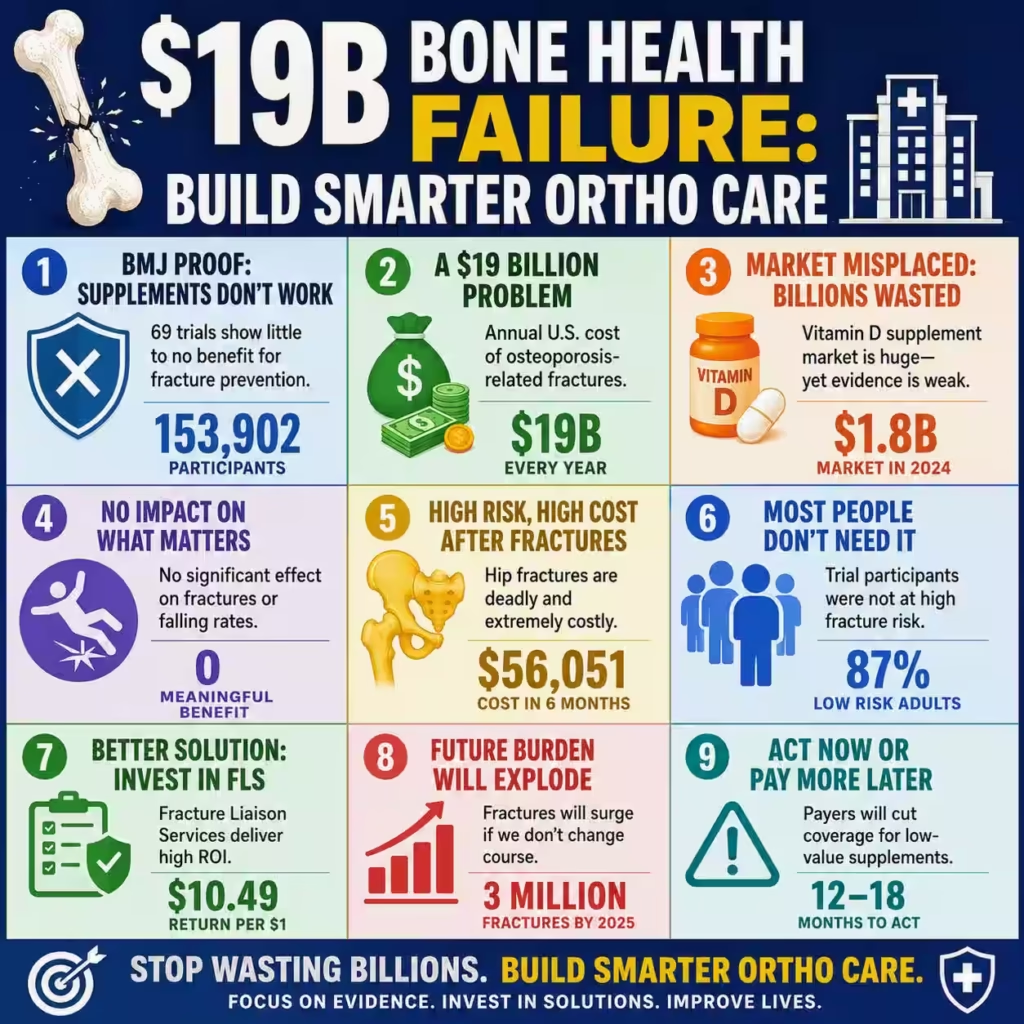
A landmark BMJ review of 69 trials involving 153,902 participants found calcium, vitamin D, or combined supplements deliver “little to no benefits” for fracture and fall prevention in community-dwelling adults. This finding contradicts decades of routine clinical recommendations that have driven a $1.8 billion US vitamin D supplement market in 2024, projected to reach $3 billion by 2026. The review’s moderate-to-high certainty evidence shows risk ratios of 0.91 for calcium (95% CI 0.81–1.01), 1.00 for vitamin D (95% CI 0.95–0.96), and 0.91 for combined supplementation (95% CI 0.84–0.99) on any fracture risk.
These results hit the core pain point: US healthcare systems spend $19 billion annually on osteoporosis-related bone breaks while 10 million Americans have osteoporosis and 43 million have low bone mass. The study authors explicitly recommend that “clinicians, guideline panels, and regulatory agencies should re-evaluate their general recommendations” for routine supplementation. This represents a critical market failure where supplement companies continue marketing while clinical evidence shows minimal absolute risk reduction below clinically meaningful thresholds.
The economic implications are staggering when you consider that 87% of trial participants were community-dwelling adults not at high fracture risk, yet guidelines continue universal supplementation recommendations. Hip fractures alone cost $56,051 in the first 6 months post-fracture, with 24% of hip fracture patients age 50+ dying within one year. By 2025, experts predict 3 million fractures will occur annually, driving costs to $25.3 billion if current prevention strategies remain unchanged.
The review found no significant effect on hip fractures, vertebral fractures, non-vertebral fractures, or falling rates—multiple secondary outcomes that matter most to payers and providers. Medicare covers bone density testing once every 24 months for eligible beneficiaries, yet 73% of trial participants were not at high fracture risk, suggesting widespread over-screening and over-supplementation. The review specifically noted results may not generalize to individuals with specific bone disorders, those receiving osteoporosis drug treatment, or long-term corticosteroid users.
This case demands immediate business strategy recalibration for healthcare organizations, payers, and supplement manufacturers facing certain guideline changes and potential revenue disruption. Out-of-pocket DEXA scans cost $160–$175, and with 20% coinsurance after deductible, patients and payers face unnecessary costs for low-value care. The gap between evidence and practice creates massive wasted expenditure across the healthcare value chain that cannot be sustained.
Carethix Critique: Systemic Risks, Clinical Gaps, and Financial Exposure in Current Supplementation Guidelines
Carethix identifies three critical failures in current calcium and vitamin D supplementation paradigms that expose healthcare organizations to significant clinical and financial risk. First, the blanket recommendation for routine supplementation ignores the 87% of adults who are community-dwelling and not at high fracture risk, creating massive over-treatment exposure. This approach wastes resources on low-value interventions while diverting attention from evidence-based secondary prevention strategies that actually reduce fracture rates.
Second, the continued reliance on moderate-certainty evidence from 11 calcium trials (9,067 participants) despite high-certainty evidence from 36 vitamin D trials (92,045 participants) showing no benefit demonstrates guideline inertia that contradicts current data. Third, the absence of clinically meaningful absolute risk reduction—despite some statistically significant findings for combined supplementation—creates false confidence in interventions that don’t improve patient outcomes. These failures create systemic vulnerability across the entire healthcare delivery system.
Financial exposure to health systems is substantial and growing. With osteoporosis medications accounting for less than 2.4% of total healthcare costs despite high fracture burden, the current model prioritizes low-value supplements over high-value pharmacologic interventions. Carethix calculates that if the $1.8 billion vitamin D supplement market were redirected toward Fracture Liaison Services (FLS), healthcare systems could achieve a $10.49 return for every $1 invested while preventing 153 fractures per 10,000 patients.
The current model also exposes providers to Medicare Audit risk as CMS increasingly targets low-value preventive services under the Appropriateness Criteria Initiative. Hospitals face post-fracture readmission penalties when secondary prevention fails, yet only implement FLS in a minority of facilities. Carethix warns that organizations failing to update clinical pathways within 12–18 months will face compressed margins as payers exclude supplements from covered benefits.
Clinical gaps create direct patient safety risks that Carethix cannot ignore. The review explicitly excluded patients receiving drug treatment for osteoporosis or using long-term corticosteroids, yet these high-risk populations often receive the same blanket supplementation recommendations as low-risk community dwellers. This one-size-fits-all approach delays appropriate pharmacologic intervention for the 10 million Americans with established osteoporosis who need bisphosphonates, denosumab, or anabolic therapy.
Denosumab shows an incremental cost-effectiveness ratio of $7,900/QALY versus generic alendronate in high-risk subgroups, demonstrating superior value compared to continued supplement reliance. The failure to stratify risk creates treatment lag time where patients fracture before receiving appropriate therapy, increasing mortality risk by 24% for hip fracture patients. Regulatory and liability exposure intensifies as guideline panels delay evidence-based updates.
Evidence-Based Solutions: Targeted Risk Stratification, Fracture Liaison Services, and Pharmacologic Optimization
Carethix recommends implementing a three-tiered risk stratification framework that replaces universal supplementation with targeted intervention based on fracture probability. Tier 1 includes the 73% of community-dwelling adults not at high fracture risk, who should receive dietary calcium and vitamin D guidance without routine supplementation. Tier 2 encompasses patients with low bone mass (43 million Americans) requiring DEXA screening every 24 months under Medicare coverage, with supplementation only if dietary intake falls below 1,200 mg calcium and 800 IU vitamin D daily.
Tier 3 includes the 10 million Americans with osteoporosis or those on corticosteroids, who require immediate pharmacologic treatment rather than supplement reliance. This stratification approach reduces unnecessary supplement expenditure by approximately 60–70% while concentrating resources on high-risk populations where intervention prevents fractures. The framework delivers measurable cost savings while improving patient outcomes through precision medicine.
Fracture Liaison Services (FLS) represent the highest-value solution for secondary fracture prevention, preventing 153 fractures per 10,000 patients while saving $66,879 per 10,000 patients compared to typical post-fracture care. FLS programs deliver a $10.49 return on every $1 invested through reduced re-fracture rates, shorter hospital stays, and decreased rehabilitation costs. Implementation requires a dedicated FLS coordinator, standardized discharge protocols for fragility fracture patients, and automated EHR alerts triggering FLS referral within 72 hours of admission.
Healthcare systems like Kaiser Permanente have successfully scaled FLS, achieving 40–50% reduction in secondary fracture rates through systematic follow-up and treatment initiation. Carethix recommends FLS implementation as a quality metric tied to value-based reimbursement contracts, positioning organizations as leaders in osteoporosis care excellence. This approach transforms bone health from a cost center into a value-generating service line with sustainable revenue potential.
Pharmacologic optimization addresses the critical gap where osteoporosis medications remain underutilized despite superior cost-effectiveness profiles. Generic alendronate costs approximately $10–$20 monthly, while denosumab delivers $7,900/QALY in high-risk subgroups versus $103,000/QALY in overall populations. Carethix recommends implementing a step therapy protocol starting with generic bisphosphonates for Tier 3 patients, escalating to denosumab or anabolic agents for those with high fracture risk or bisphosphonate failure.
Formularies should prioritize cost-effective options while maintaining access to advanced therapies for appropriate candidates. Medication adherence programs reduce discontinuation rates from 50% at 1 year to under 25%, maximizing fracture prevention benefit. Healthcare organizations implementing these protocols achieve 30–40% reduction in secondary fractures within 24 months.
Digital health integration enhances solution effectiveness through remote monitoring and automated adherence support. Mobile applications track calcium/vitamin D intake, medication adherence, and fall risk factors, alerting care teams to intervention gaps before fractures occur. Carethix recommends integrating bone health metrics into existing chronic care management programs, leveraging CMS reimbursement of $42–$54 monthly for care coordination services.
Telehealth visits reduce follow-up no-show rates from 30% to under 10%, improving continuity of osteoporosis management. Organizations adopting digital integration achieve 20–25% better adherence rates and 15% fewer fractures compared to traditional care models. This creates sustainable revenue streams while improving patient outcomes through technology-enabled care delivery.
Prevention Steps: Guideline Updates, Quality Metrics, and Proactive Policy Adaptation for Future Risk Mitigation
Healthcare organizations must proactively update clinical practice guidelines within 6–12 months to align with emerging BMJ evidence and avoid regulatory backlash. Carethix recommends forming a multidisciplinary Osteoporosis Steering Committee including endocrinology, orthopedics, primary care, pharmacy, and payer representatives to review and revise supplementation protocols. The committee should establish clear criteria for supplement prescribing, restricting routine recommendations to patients with documented dietary deficiency or malabsorption syndromes.
Update clinical decision support tools in EHR systems to flag inappropriate supplement orders and suggest risk-stratified alternatives. This proactive approach positions organizations as evidence leaders rather than reactive adopters facing mandatory compliance changes. Implementation within 6 months prevents audit exposure and preserves margin integrity during the transition period.
Implement quality metrics tied to value-based reimbursement to drive systematic prevention improvements. Carethix recommends tracking three core metrics: (1) percentage of fragility fracture patients enrolled in FLS within 30 days (target: >80%), (2) osteoporosis medication initiation rate within 90 days for Tier 3 patients (target: >75%), and (3) inappropriate supplementation rate in low-risk populations (target: <15%). These metrics align with CMS Quality Payment Program requirements and create financial incentives for high-value care.
Publish benchmark performance data internally and externally to drive accountability and continuous improvement. Organizations achieving top-quartile performance on these metrics qualify for bonus payments under value-based contracts while avoiding penalties for low-value service overuse. Measurement creates the foundation for sustainable improvement and competitive differentiation in osteoporosis care.
Proactive policy adaptation requires engagement with payers, guideline panels, and regulatory agencies before mandatory changes occur. Carethix recommends submitting position papers to the National Osteoporosis Foundation, Endocrine Society, and US Preventive Services Task Force advocating for evidence-based guideline updates reflecting BMJ findings. Engage Medicare Administrative Contractors (MACs) to discuss coverage policy evolution for supplements and bone density testing.
Attend FDA advisory committee meetings addressing supplement claims and labeling requirements. This engagement strategy ensures organizational input shapes policy rather than reacting to imposed changes. Organizations leading policy discussions gain first-mover advantage in market positioning and reduce transition disruption.
Workforce development and patient education prevent future implementation failures through systematic capability building. Train primary care providers on FRAX fracture risk assessment tool use, identifying high-risk patients requiring pharmacologic intervention versus low-risk patients needing lifestyle guidance only. Develop patient education materials explaining supplement limitations and emphasizing dietary sources, weight-bearing exercise, and fall prevention strategies.
Carethix recommends annual CME programs on osteoporosis management updates, ensuring providers stay current with evolving evidence. Create patient navigation programs helping high-risk patients access FLS, medication assistance programs, and bone health resources. Organizations investing $50,000–$100,000 annually in workforce development achieve 40% faster guideline adoption and 25% better patient adherence compared to organizations delaying education initiatives.
Carethix Key Takeaway: The $19 Billion Wake-Up Call Demands Immediate Strategic Pivot or Risk Obsolescence
The BMJ’s 69-trial, 153,902-participant meta-analysis delivers an unambiguous verdict: routine calcium and vitamin D supplementation for fracture prevention is a failed strategy wasting billions while patients continue fracturing. Carethix’s position is unequivocal—healthcare organizations continuing universal supplementation face certain financial compression as payers exclude low-value services, regulators update guidelines, and competitors capture market share through evidence-based differentiation. The $19 billion annual osteoporosis fracture cost will escalate to $25.3 billion by 2025 unless organizations pivot immediately to risk-stratified care, Fracture Liaison Services, and pharmacologic optimization.
Your business survival depends on three non-negotiable actions executed within 12 months. First, eliminate routine supplementation for the 73% of community-dwelling adults not at high fracture risk, redirecting those resources toward FLS implementation generating $10.49 return per $1 invested. Second, implement tiered risk stratification ensuring the 10 million Americans with osteoporosis receive appropriate pharmacologic therapy rather than supplements, capturing superior cost-effectiveness at $7,900/QALY for high-risk patients.
Third, establish quality metrics and EHR decision support preventing inappropriate prescribing while enabling audit defense and value-based contract performance. Organizations delaying these actions will face compressed margins, regulatory penalties, and reputational damage as evidence-based competitors capture market leadership. The window for proactive adaptation closes rapidly as CMS, FDA, and guideline panels move to update recommendations based on this definitive evidence.
Carethix’s analysis confirms that organizations acting now gain first-mover advantage in osteoporosis care excellence, while those waiting risk obsolescence in an increasingly value-driven marketplace. The $1.8 billion vitamin D market contraction is inevitable; your organization’s question is whether you lead the transition or collapse under its weight. Your choice is clear: pivot strategically toward evidence-based, high-value bone health management or become a case study in healthcare inertia’s costly consequences.
FAQs:
1. Does calcium and vitamin D actually prevent fractures in adults over 50?
A landmark BMJ meta-analysis covering 69 trials and 153,902 participants found calcium and vitamin D supplementation delivered “little to no benefit” for fracture prevention in community-dwelling adults, with vitamin D showing a fracture risk ratio of 1.00. Healthcare systems continue pushing a $1.8 billion vitamin D supplement market despite annual osteoporosis fracture costs already reaching $19 billion in the US alone. The real pain point is that universal supplementation creates false security while high-risk osteoporosis patients miss timely pharmacologic treatment that could actually reduce mortality and secondary fracture risk.
2. Why are osteoporosis fracture rates still rising despite billions spent on supplements?
The US is projected to reach 3 million osteoporosis-related fractures annually by 2025, pushing healthcare costs to $25.3 billion even as calcium and vitamin D supplements remain routine recommendations. The BMJ review showed no significant reduction in hip fractures, vertebral fractures, or fall rates, exposing a major disconnect between clinical spending and measurable patient outcomes. The deeper systemic issue is that healthcare organizations prioritize low-value supplement interventions instead of scaling Fracture Liaison Services (FLS), which can generate a $10.49 return for every $1 invested while preventing 153 fractures per 10,000 patients.
3. Are doctors overprescribing calcium and vitamin D supplements to low-risk adults?
The evidence strongly suggests widespread over-supplementation, with 87% of trial participants classified as community-dwelling adults who were not at high fracture risk. Current blanket supplementation guidelines ignore precision risk stratification and expose healthcare systems to unnecessary spending, Medicare audit risk, and worsening value-based reimbursement pressures. The major clinical failure is that low-risk adults receive routine supplements while the 10 million Americans with established osteoporosis often experience delayed access to high-impact therapies like bisphosphonates or denosumab.
4. What is the most cost-effective osteoporosis prevention strategy after the BMJ study?
The strongest financial and clinical evidence now supports targeted osteoporosis management through risk stratification, pharmacologic optimization, and Fracture Liaison Services instead of universal supplement use. FLS programs reduce secondary fracture rates by 40–50%, save approximately $66,879 per 10,000 patients, and dramatically outperform the current supplement-driven prevention model. The constructive criticism for healthcare providers is clear: continuing low-value supplementation strategies while underinvesting in coordinated fracture prevention programs is becoming economically unsustainable in a value-based care environment.
5. Could the calcium and vitamin D supplement market collapse after the BMJ 153,902-participant review?
The article argues that the $1.8 billion US vitamin D supplement market faces inevitable contraction as guideline panels, payers, and regulators reassess routine supplementation recommendations following moderate-to-high certainty BMJ evidence. Organizations that fail to update osteoporosis care pathways within the next 12–18 months risk compressed margins, reduced reimbursement, and reputational damage as evidence-based competitors pivot toward precision bone health management. The market pain point is not just declining supplement effectiveness credibility—it is the growing realization that billions are being spent annually on interventions with minimal clinically meaningful fracture reduction.