8M Psilocybin users signal urgent demand, making guided mental health services a powerful compliant growth opportunity.
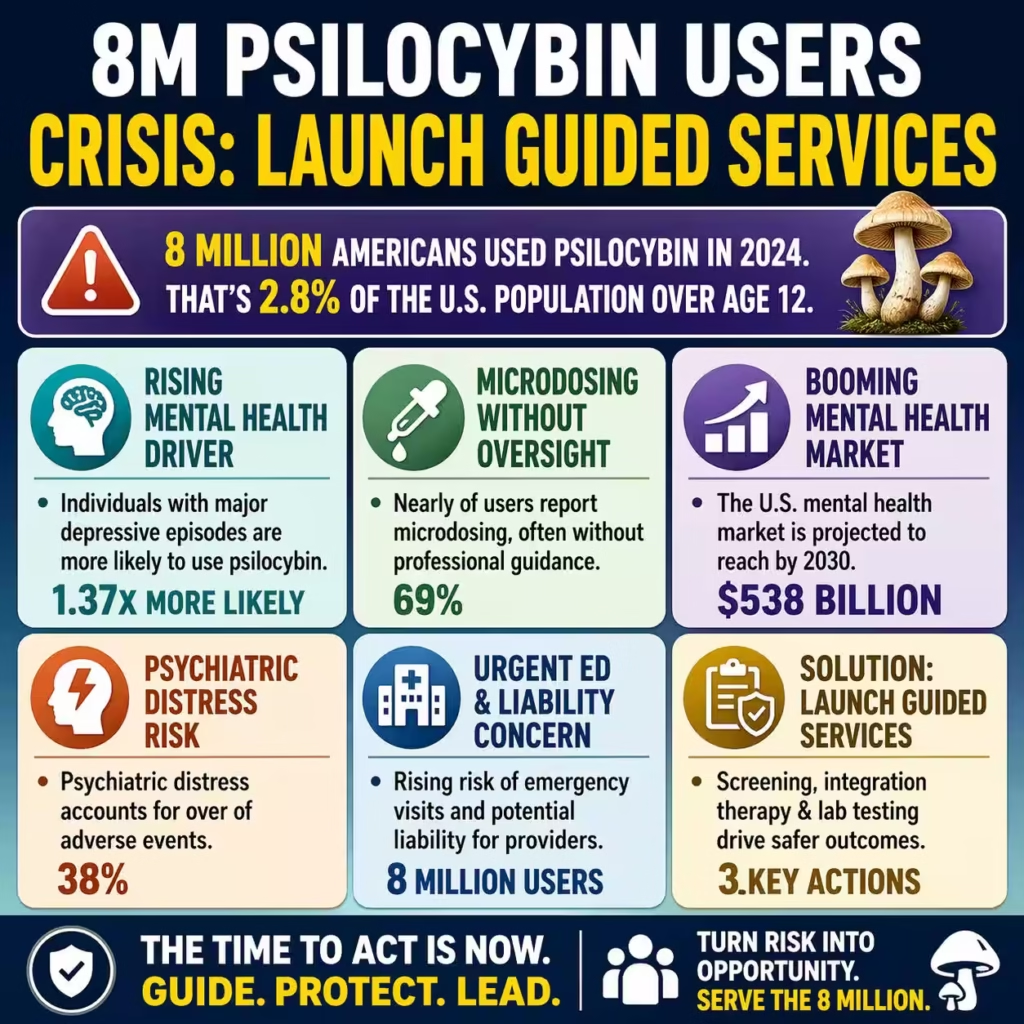
New survey data estimates that 8 million Americans used psilocybin in 2024, representing approximately 2.8% of the total U.S. population over the age of 12. This staggering metric signals a shift where a formerly fringe hallucinogen has transitioned into a mainstream self-medication tool for millions of citizens. The massive influx of users highlights a critical pain point for healthcare providers: a widening gap between public demand for mental health alternatives and the available clinical infrastructure. While states move toward decriminalization, the absence of standardized safety protocols creates a volatile environment for both patients and the broader medical economy.
Recent real-world data from the University of California San Diego indicates that individuals with major depressive episodes are 1.37 times more likely to seek out psilocybin than the general population. This trend is further complicated by the fact that nearly 69% of these 8 million users report microdosing, often without any professional oversight or dosage standardization. From a financial perspective, the U.S. mental health market is projected to reach $538 billion by 2030, yet unsupervised psychedelic use threatens to disrupt this growth through unpredictable adverse events. High-authority analysis suggests that the rapid “mainstreaming” of psilocybin is outpacing the FDA’s ability to regulate the supply chain, leaving your practice vulnerable to liability and patient-care gaps.
The economic implications of this 8-million-person cohort are profound when considering the potential for emergency department (ED) visits and long-term psychiatric complications. For instance, although physical toxicity is low, global pharmacovigilance databases show that psychiatric distress accounts for over 38% of reported adverse events related to classic psychedelics. Healthcare consultants must recognize that this is no longer a niche recreational issue but a systemic shift in how Americans manage treatment-resistant depression and anxiety. Your business model must evolve to address this underground reality by integrating screening protocols and harm-reduction strategies immediately. This article provides the strategic framework for navigating the legal, clinical, and financial complexities of the psychedelic Renaissance.
Carethix Critique: Addressing Gaps, Risks, and the “Self-Medication” Paradox
Carethix views the 2024 psilocybin use surge as a double-edged sword that exposes the fragilities of our current behavioral health delivery system. The primary risk lies in the “wild west” nature of unsupervised consumption, where 8 million people are essentially acting as their own primary care physicians. Without clinical trials’ rigorous screening, users with pre-existing conditions like bipolar disorder or schizophrenia face significant risks of induced psychosis or prolonged mania. We identify a massive gap in the lack of standardized “integration” services, which are essential for processing the intense psychological experiences psilocybin induces.
Financial risks are equally concerning, as insurers currently lack a unified billing code for “psychedelic-related complications” that aren’t classified as simple drug overdoses. This leads to a loss of data granularity, making it impossible for your practice to accurately calculate the true cost of care for this patient demographic. Furthermore, the decriminalization movement in states like Colorado and Oregon has created a false sense of medical safety among the public. Carethix argues that “decriminalized” does not mean “clinically validated,” and the public’s failure to distinguish between the two represents a catastrophic communication failure.
The corporate wellness sector, valued at $68.67 billion in 2024, is also at risk as employees increasingly use psilocybin to manage workplace burnout. While some studies suggest improved productivity, the lack of quality control in illicit “magic mushrooms” means employees may be consuming varying concentrations of psilocin or even dangerous contaminants. This unpredictability threatens to increase workplace liability and decrease overall operational stability for B2B healthcare clients. We believe that ignoring these 8 million users is a dereliction of duty that will eventually lead to increased malpractice litigation. Carethix maintains that the industry must move beyond reactive stance toward a proactive, evidence-based integration of psychedelic history-taking.
| Related Analysis: Medicaid 68.5M Demand Surge: Save Cost Now Aspirin 80% Lifetime Risk Pain: Unlock Targeted Value UnitedHealth Group $1.5B AI Cost Drag: Unlock Scalable Gains |
Strategic Solutions for the Psychedelic Integration Era
The first solution involves implementing universal psychedelic screening within every intake process at your healthcare facility or mental health practice. By identifying the 2.8% of the population using psilocybin, you can provide proactive harm-reduction counseling rather than allowing patients to self-treat in the shadows. Providers should utilize standardized questionnaires to assess the frequency, dosage, and source of the psilocybin being consumed. This data collection allows for smarter risk stratification and protects the provider from liability by documenting the patient’s choices.
Second, healthcare organizations should develop “integration-only” therapy modules that focus on the psychological processing of psychedelic experiences without providing the drug itself. This B2B solution addresses the urgent market gap for the millions of Americans already using psilocybin but lacking professional guidance to interpret their experiences. Integration therapy can be billed under existing psychotherapy codes (e.g., CPT 90834), providing a legitimate revenue stream while increasing patient safety. This approach bridges the gap between illicit use and clinical oversight, positioning your practice as a credible, empathetic leader in behavioral health.
Third, the industry must advocate for and adopt third-party laboratory testing standards for any “naturalistic” products consumed by patients. Since 8 million Americans are already using these substances, healthcare consultants should recommend that patients at least verify the purity of their supply through reputable testing kits. While this may seem controversial, it follows the proven “harm reduction” model used in needle exchange programs and supervised injection sites. By reducing the incidence of accidental poisoning or contaminated ingestion, you lower the overall burden on emergency services and intensive care units.
Prevention Steps for Mitigating Future Healthcare Volatility
Prevention begins with aggressive public education campaigns that emphasize the physiological and psychological dangers of unsupervised psilocybin use. Your organization should lead this effort by publishing white papers and patient-facing materials that detail the risks of “heroic doses” and the importance of a “set and setting” protocol. Education acts as a preventative buffer, steering the 8 million potential users toward safer, clinically-monitored alternatives as they become available. Clear messaging can prevent the “normalization” of high-risk behavior that often follows rapid decriminalization.
Developing robust internal “Psychedelic Response Protocols” (PRP) for emergency departments and urgent care centers is the next vital prevention step. These protocols ensure that when a psilocybin-related crisis occurs, staff can provide rapid, non-pharmacological stabilization techniques like “grounding” rather than default to heavy sedatives. This specialized training reduces the duration of stays and improves patient outcomes, directly lowering the operational costs associated with drug-related admissions. Investing in staff training today prevents the systemic “shock” that will occur if psilocybin use continues its 7.35% annual growth trend.
Finally, B2B healthcare entities must lobby for a federal regulatory framework that mirrors the “REMS” (Risk Evaluation and Mitigation Strategy) programs used for high-risk pharmaceuticals. By pushing for a structured legal pathway, we can ensure that psilocybin eventually moves from the black market into a regulated, prescription-based model. This prevents the long-term societal costs of a massive, unregulated “psychedelic underground” that drains public health resources. Proactive participation in the legislative process ensures that the future of psychedelic medicine is built on a foundation of clinical excellence rather than social hype.
Carethix Key Takeaway
The 2024 surge of 8 million psilocybin users is a loud alarm that the current mental health system is failing to meet patient needs. Your business must adapt or face obsolescence. We firmly believe that the distinction between “recreational use” and “unsupervised self-medication” has vanished, leaving a massive liability gap that only professional integration can fill. You cannot afford to ignore this data; you must instead monetize the integration of this reality into your existing clinical frameworks to protect both your patients and your bottom line. Carethix stands by the conviction that the only way to prevent a public health crisis is to transition from a policy of prohibition to one of professionalized, supervised psychedelic stewardship. Start screening, start training, and start leading the conversation before the market dictates your response for you.
FAQs:
Why are 8 million Americans using Psilocybin in 2024 instead of traditional mental health treatments?
Because when 2.8% of the population seeks underground alternatives, it signals mainstream healthcare is still too slow, costly, and ineffective for millions needing faster relief.
How risky is it that 69% of Psilocybin users are micro-dosing without medical supervision?
When nearly 7 in 10 users self-dose without standards, it exposes a dangerous failure in clinical guidance, dosage education, and patient safety systems.
Why are people with major depressive episodes 1.37x more likely to use Psilocybin?
This shows conventional depression care is leaving many patients desperate enough to experiment outside regulated medicine, which should concern every provider.
Can the $538 billion U.S. mental health market ignore 8 million unsupervised Psilocybin users?
No, because ignoring such a massive demand pool risks losing trust, revenue, and relevance while black-market solutions fill the treatment gap.
Why do 38% of psychedelic adverse reports involving psychiatric distress expose a healthcare blind spot?
Because rising distress cases prove policymakers and providers are reacting too late to a trend that already requires structured screening and harm-reduction systems.
Reference – New Survey Estimates 8 Million Americans Used Psilocybin in 2024