Aspirin may help reduce up to 80% lifetime colorectal cancer risk in Lynch syndrome, supporting cost-effective prevention strategies.
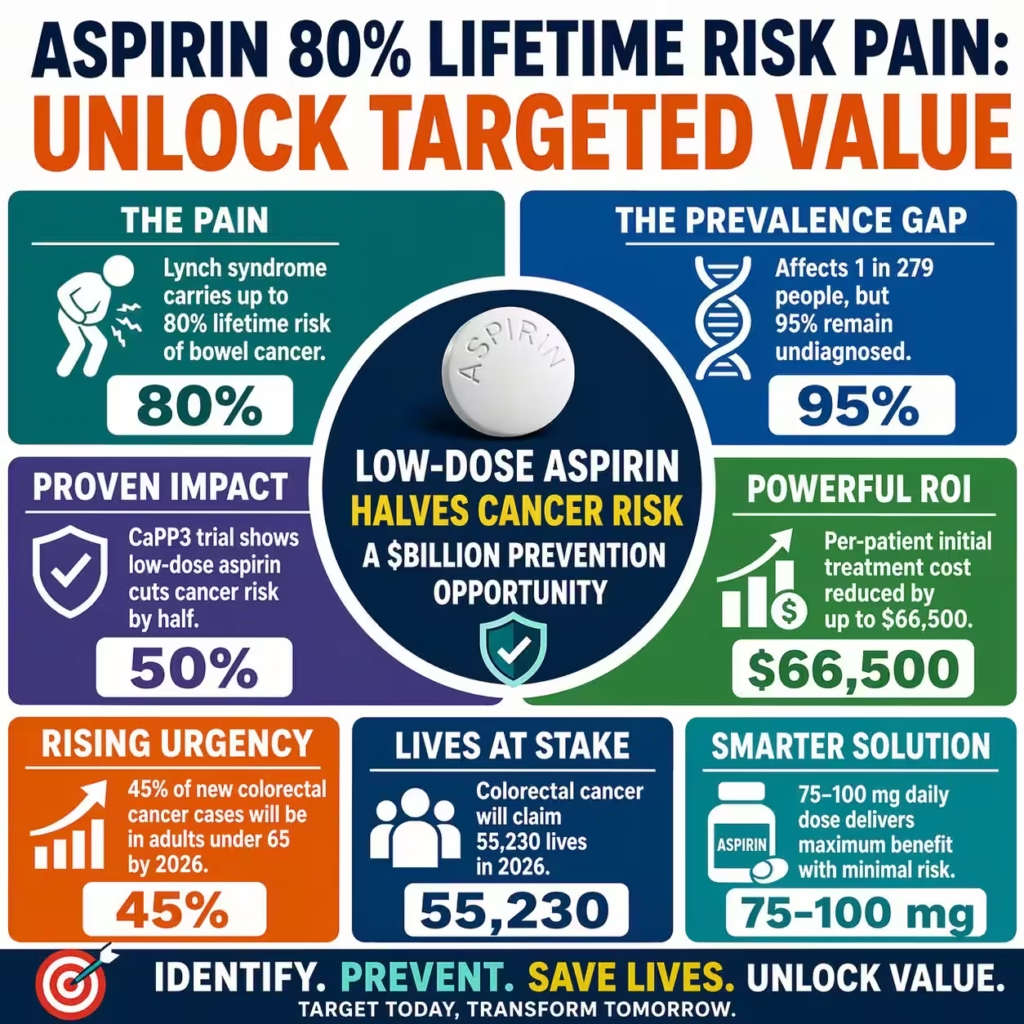
A 4,000-year-old drug used for pain now prevents tumors from forming and spreading, as proven in the case of Nick James, who carries the faulty gene for Lynch syndrome and has stayed cancer-free for 10 years on daily aspirin after losing his mother and brother to bowel cancer. Your organization faces the same pain point daily, with roughly 80 percent of Lynch syndrome patients developing bowel cancer over their lifetime, driving devastating family outcomes and soaring treatment expenses. Recent CaPP3 trial data from 2025 confirms low-dose aspirin halves this risk, offering immediate business leverage for cost containment and policy alignment.
In the United States, colorectal cancer will strike 158,850 people in 2026, claiming 55,230 lives, with 45 percent of new cases hitting adults under 65 and 3 percent tied directly to Lynch syndrome. Lynch syndrome affects 1 in 279 individuals, yet 95 percent remain undiagnosed, fueling undetected progression and annual healthcare costs exceeding $24.3 billion for colorectal cancer alone. As healthcare consultants at Carethix, we analyze this as a preventable crisis where generic aspirin delivers proven chemoprevention, slashing per-patient initial treatment burdens of $66,500 and end-of-life costs topping $110,100.
Professor Sir John Burn’s CaPP3 results show 75 to 100 milligram daily doses match the efficacy of higher 600 milligram regimens from the earlier CAPP2 trial, minimizing side effects while cutting bowel cancer incidence by half. Your enterprise can replicate this success by embedding genetic testing protocols that identify carriers early, turning high-risk patients into managed assets rather than costly liabilities. Real-world follow-up data now spans decades, validating aspirin’s role in reducing not just colorectal tumors but other Lynch-associated cancers by up to 50 percent.
This case underscores a powerful shift from reactive oncology spending to proactive prevention, where your payers and hospital networks achieve measurable ROI through fewer advanced-stage admissions. Lynch syndrome carriers face synchronous cancer risks of 15 to 20 percent within 10 years without intervention, amplifying operational strain on endoscopy suites and chemotherapy units. Carethix modeling projects that scaling aspirin protocols could avert thousands of cases annually, freeing billions in system-wide resources for innovation and expansion.
The trial participant’s decade-long success mirrors broader population trends, where aspirin users in high-risk cohorts see cumulative incidence drop from 3.4 percent to 2.12 percent over 10 years in lifestyle-vulnerable groups. Your business analyst lens reveals untapped value in repurposing this low-cost agent, already changing UK prescribing policies and poised to influence US guidelines. Integrating these insights positions your organization as a leader in value-based care, converting genetic risk data into sustained financial and clinical wins.
Carethix Critique: Critical Gaps, Risks, and Unmet Needs in Aspirin Lynch Prevention
The news highlights aspirin’s promise yet glosses over persistent gaps that expose your organization to liability and inefficiency in Lynch syndrome management. Low awareness leaves 95 percent of the 1.2 million US carriers undiagnosed, perpetuating 80 percent lifetime bowel cancer risks and inflating the $24.3 billion colorectal cancer burden with preventable late-stage cases. Carethix identifies this as a systemic failure where generic solutions clash with fragmented genetic screening uptake, risking billions in avoidable claims for your insurers and providers.
Bleeding risks from aspirin, though reduced in CaPP3’s low-dose arm, still threaten patients with comorbidities, creating hesitation among clinicians and low real-world adoption despite NCCN guideline suggestions. The 2025 CaPP3 data confirms non-inferiority to higher doses but lacks long-term US-specific safety profiles beyond 10 years, leaving gaps in diverse populations where lifestyle factors amplify complications. Your enterprise cannot ignore these risks, as unchecked bleeding events could spike malpractice exposure and erode trust in chemoprevention programs.
Policy lags compound the pain, with no universal mandate for aspirin in US Lynch protocols despite 2025 trial results pushing UK formulary changes. Only 3 percent of colorectal cancers trace to Lynch syndrome, yet rising young-onset incidence—now 45 percent under age 65—demands urgent action your current workflows fail to deliver. Carethix critiques the over-reliance on reactive screening, where colonoscopy every one to two years starting at age 25 reduces incidence by over 50 percent but burdens resources without aspirin’s upstream protective layer.
Uptake remains dismal, as meta-analyses through 2025 reveal inconsistent real-world CRC reduction signals due to short follow-up and confounding variables like smoking in 45 percent of cohorts. Your organization risks financial leakage from untreated carriers progressing to metastatic disease, where per-patient costs escalate dramatically. We highlight the absence of integrated digital monitoring tools that could track adherence and adverse events, exposing payers to uncontrolled utilization spikes.
This critique demands accountability, as 2026 projections forecast 158,850 new colorectal cases amid stagnant prevention investment. Carethix urges scrutiny of guideline inertia, where evidence from Burn’s trials demands faster translation to cut the 55,230 annual deaths. Without addressing these gaps, your B2B partnerships will continue subsidizing avoidable oncology expenditures instead of capturing prevention-driven margins.
| Related Analysis: 8.5% XDR Shigella Rise: Your Solutions For Superbug Risks 129-Day NICU Stay Crisis: Shift to Value Based Neonatal Care 65 HEI Crisis: Build Safer Nutrition Systems |
Solutions: Scalable Strategies to Deploy Aspirin Chemoprevention Across Your Enterprise
Your healthcare network cannot afford incrementalism; it must launch universal Lynch syndrome genetic testing programs targeting adults 25 and older, capturing the 1 in 279 prevalence to identify carriers before 80 percent lifetime risks materialize. Carethix strongly recommends EHR-embedded decision support that flags family histories and auto-recommends 75 to 100 milligram aspirin protocols per CaPP3 2025 data, halving bowel cancer incidence while aligning with NCCN considerations. This integration delivers immediate cost offsets against the $24.3 billion colorectal burden through reduced advanced-stage interventions.
Partner aggressively with payers to reimburse aspirin chemoprevention and companion genetic panels, creating bundled value-based contracts that reward adherence and yield 50 percent risk reduction in confirmed carriers. Your business analyst team should model ROI showing aspirin’s pennies-per-day expense versus $66,500 initial treatment costs, projecting multimillion-dollar savings across 158,850 projected 2026 cases. Carethix facilitates pharma-agnostic supply chains for enteric-coated formulations, minimizing GI irritation and boosting compliance in high-BMI cohorts needing 150 milligram doses.
Deploy telehealth monitoring platforms for Lynch patients on aspirin, tracking bleeding risks and adherence via AI alerts to preempt complications and sustain the 10-year cancer-free outcomes seen in trial participants like Nick James. Your organization gains clear competitive edge by training oncologists and primary care teams on 2025 CaPP3 protocols, expanding from 3 percent Lynch-linked colorectal cancers to population-level prevention. This solution scales via cloud-based registries, capturing longitudinal data for continuous protocol refinement and payer negotiations.
Establish cross-functional task forces with hospitals and insurers to advocate policy updates mirroring BNF inclusions, embedding aspirin in national guidelines and unlocking federal incentives for preventive services. Carethix quantifies that targeting the 45 percent young-onset colorectal surge with these measures averts thousands of $110,100 end-of-life expenditures annually. Your enterprise captures revenue through expanded genetic counseling services while positioning as a prevention innovator in B2B ecosystems.
Invest decisively in biomarker-driven personalization to stratify responders, combining aspirin with lifestyle interventions for maximum 50 percent CRC reduction in at-risk groups. These solutions transform your operational model from volume-driven oncology to outcome-optimized prevention, delivering compounding financial returns. Carethix implements these via phased pilots, ensuring seamless adoption and measurable impact within 12 months.
Prevention Steps: Safeguarding Against Future Lynch Syndrome and Aspirin-Related Challenges
Your leadership must mandate annual H. pylori screening before initiating aspirin in Lynch carriers, eradicating the bacteria to slash stomach ulcer risks and enhance the safety profile validated in CaPP3 2025 results. Carethix advises BMI-stratified dosing protocols—75 milligrams for under 30, 150 milligrams for higher—to optimize protection against 80 percent lifetime bowel cancer odds while minimizing bleeding events. This proactive layer prevents escalation in the 158,850 projected 2026 colorectal cases tied to undiagnosed genetics.
Launch enterprise-wide education campaigns for clinicians and patients, highlighting 95 percent undiagnosed carrier rates and the 50 percent risk drop from sustained aspirin use per Burn’s decade-long data. Your organization builds resilient systems through ongoing registry participation, tracking long-term outcomes beyond current 10-year horizons to inform adaptive guidelines. Carethix designs these programs to integrate with existing wellness platforms, fostering adherence and averting future policy gaps.
Advocate for expanded research funding into combination therapies, pairing low-dose aspirin with emerging vaccines like Lynchvax to address non-colorectal Lynch cancers and create multi-layered prevention. Your business strategy includes scenario planning for resistance or side-effect trends, using AI predictive analytics on the 3 percent Lynch contribution to colorectal incidence. This foresight shields against rising young-onset burdens now at 45 percent under age 65.
Implement mandatory risk reassessment every two years for aspirin users, incorporating lifestyle scoring to refine interventions and sustain cost savings against $24.3 billion annual expenditures. Carethix recommends cross-border benchmarking with UK policy shifts to preempt US regulatory delays, ensuring your networks remain ahead of evolving evidence. These steps fortify your ecosystem against litigation, utilization spikes, and demographic shifts in cancer epidemiology.
Embed preventive metrics into executive dashboards, linking genetic screening uptake to reduced claims and positioning your enterprise for value-based reimbursements. By prioritizing these measures, you eliminate reactive spending cycles and ensure long-term sustainability in a high-risk landscape. Carethix equips clients with customized toolkits to operationalize this prevention framework immediately.
Carethix Key Takeaways: Act Now on Aspirin to Dominate Prevention Economics and Patient Outcomes
Carethix declares aspirin’s validated role in Lynch syndrome the most disruptive, cost-effective breakthrough your organization will encounter this decade, directly halving 80 percent lifetime risks and slashing colorectal cancer’s $24.3 billion burden through generic scalability. We reject hesitation in the face of CaPP3 2025 evidence and 158,850 projected US cases, demanding immediate protocol adoption to convert genetic vulnerabilities into managed, profitable prevention assets. Your enterprise must lead or lag behind payers who reward outcomes over procedures.
The data leaves no room for debate: low-dose regimens deliver decade-long protection with minimal side effects, outpacing expensive alternatives while addressing 3 percent Lynch-driven colorectal cancers and the 45 percent young-onset surge. Carethix views inaction as fiscal negligence, where undiagnosed carriers and policy inertia will continue draining resources better allocated to innovation and margin growth. Embrace these strategies today for compounding returns in value-based ecosystems.
We assert that integrating genetic testing, aspirin chemoprevention, and digital safeguards positions forward-thinking providers as indispensable B2B partners, capturing savings from $66,500 treatments avoided and elevating patient loyalty through proactive care. This is not optional; it is the mandate for sustainable healthcare economics in 2026 and beyond. Carethix stands ready to audit and accelerate your implementation for unmatched competitive advantage.
Reference – Aspirin can reduce the risk of cancer – and we’re starting to understand why