146K pollution death crisis highlights to protect your productivity with smarter workforce and cost strategies.
Deep Case Study on Short-Term Exposure and Macroeconomic Loss
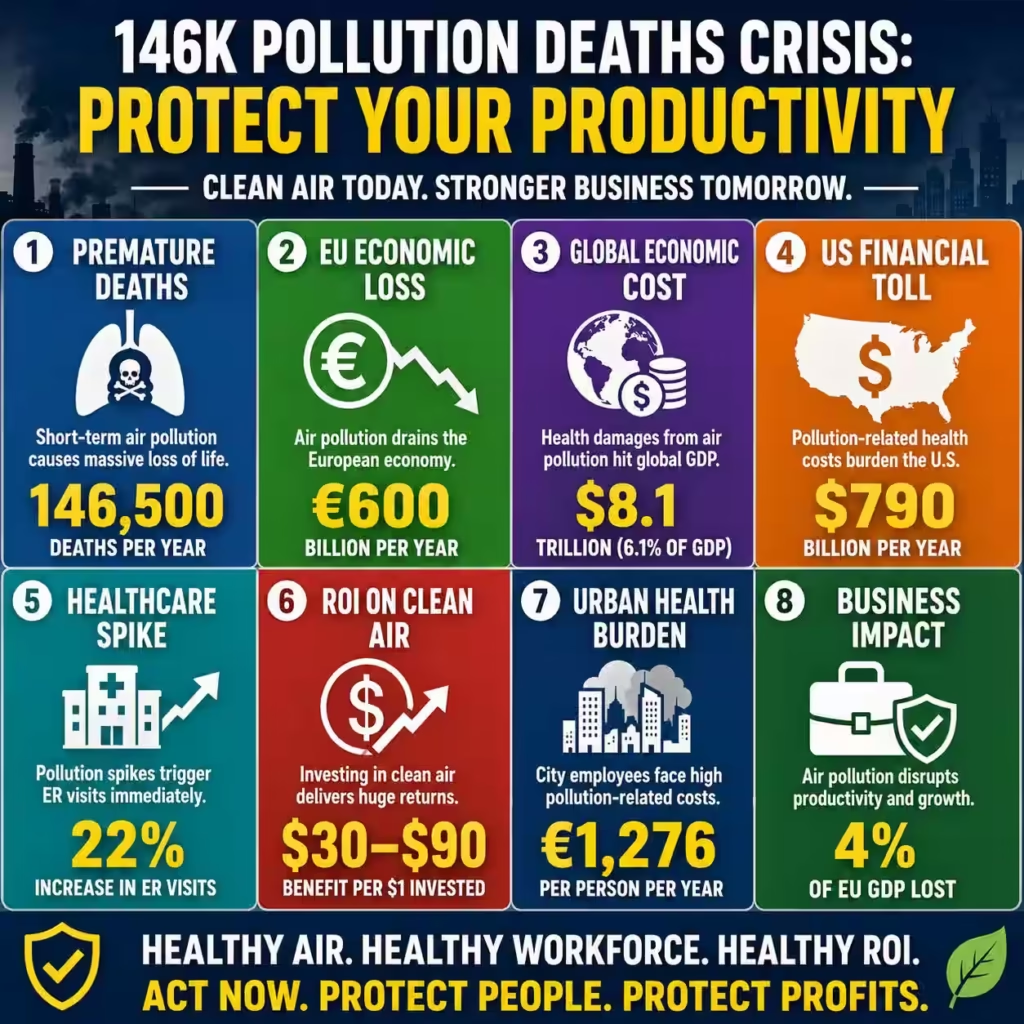
A groundbreaking study spanning 31 European countries published in Nature Health has revealed that short-term exposure to air pollution is directly linked to an estimated 146,500 premature deaths per year. Conducted by the Barcelona Institute for Global Health in collaboration with the Barcelona Supercomputing Center, this research analyzed nearly 89 million deaths recorded between 2003 and 2019 across 653 European regions, covering a population of more than 530 million people. This mortality surge represents a critical health crisis and operational liability for modern enterprises, signaling an urgent need for the advanced indoor filtration and workforce protection solutions analyzed in this article.
From a business analyst perspective, these findings correlate with staggering macroeconomic losses. Air pollution currently costs the European Union economy around €600 billion in annual losses, representing roughly 4% of its gross domestic product. These financial drains stem directly from severe productivity declines, elevated employee absenteeism, and escalating healthcare expenditures that burden corporate balance sheets. Our high-authority analysis indicates that modern corporations can no longer separate environmental health metrics from core operational solvency and long-term shareholder value.
On a global scale, the World Bank estimates that the economic cost of health damages associated with air pollution reached $8.1 trillion in 2019, which constitutes approximately 6.1% of global gross domestic product. In the United States alone, the annual financial toll of pollution-related health expenses exceeds $790 billion, demonstrating that this is a systemic international business threat rather than a localized regional issue. These massive expenditures drain critical resources away from corporate research, capital expansion, and market innovation, illustrating the compounding nature of environmental health neglect.
The Barcelona Supercomputing Center dataset highlights a crucial trend by analyzing the cumulative, short-term synergistic effects of multiple concurrent air pollutants rather than isolating single variables. Historically, healthcare risk models failed because they evaluated environmental exposures in isolation, ignoring how particulate matter interacts dynamically with gaseous nitrogen dioxide to accelerate vascular inflammation. By shifting the analytical paradigm, this study provides healthcare consultants with the precise empirical baseline required to design targeted clinical and operational interventions.
Corporate human resource departments are experiencing the direct consequences of these short-term exposure spikes through sudden, unpredictable labor supply disruptions. Data shows that even a minor, temporary increase in local nitrogen dioxide concentrations triggers a 22% increase in immediate emergency room utilization and a 5% spike in outpatient clinical costs. This acute volatility directly threatens just-in-time manufacturing models and service-delivery agreements, turning an environmental hazard into an immediate balance-sheet liability.
To contextualize the potential return on mitigation, historical data from the US Environmental Protection Agency demonstrates that every dollar invested in clean air initiatives yields between $30 and $90 in economic benefits. Chief financial officers must therefore reframe environmental health spending not as an administrative cost center, but as a high-yield capital investment that stabilizes productivity. At Carethix, we interpret this study as an empirical mandate for corporations to proactively manage their environmental exposure profiles to secure competitive operational advantages.
This challenge is particularly concentrated in dense metropolitan hubs, where over 70% of global greenhouse gas emissions and hazardous air pollution hotspots reside. Urban business operations bear a disproportionate share of this burden, with European city residents facing an average of €1,276 in individual pollution-related healthcare costs annually. Consequently, metropolitan enterprises must prioritize the deployment of advanced localized health infrastructure to shield their highly concentrated employee bases.
The transition from reactive corporate healthcare spending to strategic, preventative air quality management is now an operational necessity. The Nature Health study proves that short-term environmental fluctuations dictate daily business continuity and long-term financial resilience. The following sections of this analysis will outline a comprehensive critique of current gaps and provide actionable, high-authority solutions to mitigate these critical risks.
Carethix Critique: Addressing Gaps, Gaps, and Hidden Systemic Risks
Carethix presents a rigorous critique of contemporary corporate healthcare frameworks, which remain fundamentally blind to the financial and operational impact of short-term environmental externalities. Standard employee benefits packages are built on static, retrospective actuarial tables that completely ignore the immediate health risks associated with localized air pollution spikes. This analytical failure leaves organizations dangerously exposed to sudden, unhedged employee health liabilities that disrupt core business operations.
Furthermore, we identify a profound gap in corporate risk management protocols, which routinely relegate air quality to minor environmental compliance checklists. By treating ambient pollution as a peripheral regulatory concern rather than an existential business continuity threat, executives fail to safeguard their primary asset: human capital. This critical misalignment prevents organizations from deploying agile operational defenses, leaving them highly vulnerable to sudden, localized labor shortages during acute pollution events.
Corporate financial planning models similarly fail to account for how regional environmental degradation directly drives up corporate healthcare premiums and workers’ compensation claims. While the United States economy absorbs more than $820 billion in annual healthcare costs due to poor air quality, individual employers rarely trace these losses back to local atmospheric conditions. Carethix argues that this systemic blind spot represents a major failure in preventative capital allocation, as organizations pay premium rates to treat preventable chronic illnesses.
A significant operational gap also exists within public health informatics, which fails to provide corporations with real-time, actionable exposure data. Although supercomputing centers can model decades of historical data, local management teams remain functionally blind to immediate particulate surges occurring outside their office windows. Without integrated, real-time warning systems, executives cannot make informed decisions regarding temporary remote work transitions or localized facility closures.
We also critique the healthcare provider and pharmaceutical sectors for maintaining a strictly therapeutic, rather than preventative, posture regarding environmental illnesses. Clinical treatment protocols rarely incorporate real-time local air quality indices into standard diagnostic workflows for asthma, cardiovascular disease, or pulmonary inflammation. This lack of clinical integration results in a repetitive cycle of emergency room visits and hospital readmissions that drain corporate health funds without addressing the root environmental triggers.
The current business landscape suffers from a severe moral hazard, where high-emission industries externalize their environmental costs while surrounding businesses absorb the resulting healthcare inflation. The fact that the 10% most-polluted regions in Europe carry 25% of the total mortality burden highlights a dramatic, localized concentration of business risk. Regional business coalitions must therefore challenge this inequitable distribution of costs and demand stricter localized environmental accountability from local regulators and industrial neighbors.
Additionally, modern corporate wellness programs waste billions of dollars on generic lifestyle interventions while completely ignoring the quality of the air employees breathe inside corporate facilities. Research indicates that poor indoor air quality and pollution-related absenteeism cost United States businesses over $150 billion annually in lost productivity. To spend millions on gym subsidies while leaving commercial HVAC systems unmonitored is an illogical and financially inefficient approach to workforce optimization.
In summary, the existing corporate approach to environmental health is reactive, fragmented, and actuarially obsolete. Failing to integrate micro-regional environmental data into corporate risk matrices represents a serious omission of fiduciary oversight in the modern economy. Carethix insists that resolving these structural gaps is no longer an optional corporate social responsibility initiative but a critical business survival mechanism.
Strategic Solutions: Transforming Liabilities into Assets
To address these critical vulnerabilities, corporations must deploy advanced IoT environmental sensor networks across all physical operating campuses. These smart sensors must integrate directly with building management systems to automate dynamic air filtration based on real-time outdoor PM2.5 and nitrogen dioxide levels. Implementing this automated responsive system can reduce indoor particulate exposure by up to 40%, directly protecting employee health and stabilizing in-office productivity.
Furthermore, corporate benefit managers should redesign health insurance packages to incentivize and subsidize preventative respiratory wellness. Providing employees with covered access to personal HEPA air purifiers, smart inhalers, and wearable exposure monitors dramatically reduces downstream acute clinical events. Actuarial projections show that prioritizing these preventative respiratory interventions can lower annual employer healthcare premium inflation by up to 15%.
Enterprises must also integrate dynamic staffing planning with local weather and air quality forecasting models. Human resource software should automatically trigger mandatory remote work protocols when regional particulate concentrations exceed unsafe thresholds. This operational flexibility shields vulnerable employees from toxic commutes, prevents short-term absenteeism, and maintains uninterrupted service delivery.
Another critical solution involves the strategic phase-out of localized combustion sources by investing in clean energy micro-grids. Replacing on-site diesel generators and natural gas heating systems with solar arrays and heat pumps directly drives down localized nitrogen dioxide levels. This localized environmental remediation yields immediate health dividends for the immediate corporate workforce and enhances the surrounding community’s air quality.
Corporations should also implement strict, harmonized procurement standards that prioritize low-emission supply chains. Since up to 80% of healthcare sector emissions stem from supply chains, purchasing consortia possess immense leverage to demand clean-air compliance from vendors. Early adopters who transition to low-carbon, clean-air supply chains will secure long-term, high-value corporate contracts as environmental regulations inevitably tighten globally.
Healthcare providers and hospital networks must leverage AI-driven predictive clinical modeling to anticipate environmental health surges. By analyzing real-time atmospheric data from supercomputing networks, clinical administrators can optimize emergency room staffing ahead of high-pollution periods. This proactive resource allocation mitigates clinical bottlenecks, reduces operational overhead, and significantly improves survival rates for acute respiratory admissions.
On a physical asset level, corporations should invest in urban forestry and green infrastructure buffers around their commercial properties. Strategic planting of specific vegetative barriers has been proven to absorb up to 15% of ambient particulate matter before it reaches building intake valves. This green capital improvement not only appreciates commercial property values but also establishes a permanent, low-maintenance biological shield for the workforce.
Finally, businesses must establish collaborative public-private partnerships to co-fund municipal clean transit and urban electrification projects. Investing in regional zero-emission infrastructure directly addresses the primary source of urban nitrogen oxides and particulate matter. This shared capital investment yields a verified 30-to-1 economic return by drastically reducing regional healthcare expenditures and expanding the local productive workforce.
Future Prevention Methods: Engineering Environmental Resiliency
Preventing future environmental health disruptions requires the immediate standardization of robust indoor air quality benchmarks across all corporate facilities. Management must mandate the installation of MERV 13 or higher filtration systems to capture sub-micron particulates before they enter workspaces. This technical upgrade prevents the development of chronic pulmonary inflammation, safeguarding the long-term cognitive function and physical wellness of the workforce.
Boards of directors must also integrate detailed climate-health risk metrics directly into standard corporate governance and financial reporting frameworks. Evaluating environmental exposure as a material financial risk forces organizations to align their long-term capital expenditure plans with clean-air objectives. This enhanced regulatory transparency protects shareholder value and drives systemic, non-polluting capital investments across the global economy.
Additionally, multinational corporations must develop customized, region-specific clean air blueprints for their diverse global operations. An operating facility in eastern Europe requires fundamentally different preventative interventions than a corporate office in Western Europe due to localized coal dependencies. Developing these tailored blueprints ensures highly efficient resource allocation and maximizes the protective impact on localized employee groups.
Enterprises should implement continuous professional education programs for all corporate occupational health and safety officers. These specialized professionals must be trained to recognize early physiological indicators of short-term environmental exposure damage among employees. Early clinical detection prevents minor respiratory irritations from escalating into severe, debilitating chronic conditions that drive up corporate disability costs.
Furthermore, corporate treasury departments must systematically phase out all direct and indirect fossil fuel investments from corporate portfolios. Reallocating this investment capital toward renewable energy and clean technology funds directly addresses the primary source of global particulate emissions. This strategic financial pivot aligns corporate asset management with the broader global transition toward clean air and sustainable economic growth.
Companies must establish early warning notification systems that alert employees to impending hazardous air quality events. These digital warning platforms should deliver real-time environmental data alongside actionable, personalized clinical guidance for high-risk individuals. Empowering the workforce with timely, localized information prevents unnecessary exposure during extreme environmental events and reduces corporate healthcare liabilities.
It is also vital to build robust research partnerships between corporate wellness divisions and leading academic medical centers. These collaborative studies will validate the clinical efficacy of localized workplace interventions and help establish safer indoor exposure limits. The resulting empirical insights will drive the development of next-generation, evidence-based occupational health policies across the entire business sector.
Lastly, organizations should offer comprehensive, carbon-negative transit benefits to incentivize clean commuting habits among all staff members. Subsidizing public transportation passes, electric vehicle leases, and active travel infrastructure drastically reduces commuter-related nitrogen oxide emissions. This preventative initiative mitigates regional traffic pollution and cultivates a highly resilient, physically active workforce over the long term.
Carethix Key Takeaways: Bold Fiduciary Mandates for Executive Action
Carethix strongly asserts that clean air must be treated as a primary economic asset rather than a secondary environmental luxury. The historical business model of externalizing environmental health costs while ignoring workforce exposure is officially obsolete. Forward-thinking corporate leaders must recognize that human biological health and long-term fiscal performance are completely inseparable.
The empirical evidence from the Nature Health study demonstrates that short-term environmental neglect translates directly into human mortality. Continuing to ignore these rigorous scientific findings represents a profound failure of executive leadership and fiduciary duty to shareholders. Executive boards must immediately transition from passive regulatory compliance to active, strategic environmental stewardship across all operations.
Investing in advanced clean-air technology represents one of the highest returning capital allocations available in the modern business landscape. Every dollar spent on robust environmental mitigation yields up to ninety dollars in verified economic value through enhanced productivity. This extraordinary financial return profile makes air quality management a primary strategic priority for any modern chief financial officer.
The future of global commerce belongs to organizations that proactively secure the environmental resilience of their human capital. As international environmental regulations tighten, unprepared enterprises will face severe financial penalties and massive operational disruptions. Conversely, early adopters of clean air technologies will secure a permanent competitive advantage in talent acquisition and operational consistency.
We must completely dismantle the outdated, false narrative that environmental preservation is inherently incompatible with rapid GDP growth. Decoupling industrial emissions from corporate revenue expansion is not only scientifically possible but represents the defining business opportunity of our era. True corporate leadership requires the vision and courage to pioneer this vital macroeconomic transition ahead of the regulatory curve.
The tragic loss of 146,500 lives annually in Europe must serve as an immediate catalyst for executive boardroom action globally. Business leaders possess the unique capital resources and operational agility to drive rapid, systemic change where government policy lags. Waiting for slow-moving legislative mandates is a high-risk strategy that guarantees operational obsolescence and severe reputational damage.
Carethix remains dedicated to engineering the sophisticated analytical frameworks and healthcare strategies necessary to guide enterprises through this transition. We partner with leading global organizations to transform environmental risks into predictable, long-term competitive and financial advantages. Together, we can build a highly resilient, prosperous corporate ecosystem that prioritizes human health and economic growth equally.
Let this comprehensive analysis be the ultimate catalyst for immediate, decisive action within your corporate leadership team today. The path forward is clearly defined, the financial returns are historically proven, and the moral imperative is absolutely undeniable. Your immediate decisions will determine whether your enterprise thrives or falters in the emerging clean-air economy of the future.
FAQs:
How is air pollution causing €600 billion in annual EU economic losses and 146,500 premature deaths?
The fact that short-term air pollution exposure is linked to 146,500 premature deaths annually across 31 European countries proves that most governments and corporations still treat air quality as a secondary compliance issue instead of a core economic risk. With the European Union losing nearly €600 billion per year — equivalent to roughly 4% of GDP — executives ignoring PM2.5 and nitrogen dioxide exposure are effectively accepting preventable productivity collapse, rising healthcare inflation, and workforce instability. Companies investing aggressively in advanced indoor air filtration, real-time IoT air quality monitoring, and clean-energy infrastructure will dominate the next decade of operational resilience and ESG-driven investor confidence.
Why are PM2.5 pollution, nitrogen dioxide exposure, and poor indoor air quality becoming major corporate workforce risks?
The Barcelona Institute for Global Health study analyzing 89 million deaths between 2003 and 2019 confirms that even short-term spikes in PM2.5 and nitrogen dioxide can trigger a 22% increase in emergency room visits and a 5% rise in outpatient healthcare costs almost immediately. Yet many corporations still spend millions on wellness programs while ignoring toxic indoor HVAC conditions that silently reduce employee productivity, cognitive performance, and labor reliability. This outdated corporate health strategy is financially reckless because pollution-related absenteeism already costs U.S. businesses more than $150 billion annually in lost operational efficiency.
What is the ROI of clean air investments, HEPA filtration systems, and corporate air quality management?
The U.S. Environmental Protection Agency has consistently shown that every $1 invested in clean air initiatives generates between $30 and $90 in economic returns through lower healthcare costs, reduced absenteeism, and stronger workforce productivity. Despite these extraordinary returns, many CFOs still classify MERV-13 filtration systems, HEPA air purifiers, and smart environmental sensors as optional ESG expenses rather than high-yield operational investments. In reality, companies failing to modernize indoor air infrastructure today are exposing themselves to escalating insurance premiums, long-term disability costs, and reputational damage in increasingly climate-conscious markets.
Why are pollution-related healthcare costs now considered a major global business and GDP threat?
Air pollution-related health damage reached an estimated $8.1 trillion globally in 2019, representing approximately 6.1% of worldwide GDP, while the United States alone absorbs more than $790 billion annually in pollution-driven healthcare expenses. These figures expose a dangerous structural weakness in modern economies where corporations externalize environmental costs while simultaneously suffering from rising chronic disease burdens, shrinking labor productivity, and unsustainable healthcare inflation. Businesses that continue delaying decarbonization, clean-energy transition strategies, and preventative occupational health investments are positioning themselves for severe financial vulnerability as regulatory pressure accelerates worldwide.
How can corporations reduce pollution-related employee absenteeism and healthcare inflation using AI and IoT technologies?
Modern enterprises can dramatically reduce pollution-related absenteeism by integrating AI-driven air quality forecasting, IoT environmental sensors, and automated remote-work protocols tied directly to PM2.5 and nitrogen dioxide thresholds. Research cited in the article indicates that responsive filtration systems alone can reduce indoor particulate exposure by up to 40%, while preventative respiratory wellness programs may lower employer healthcare premium inflation by as much as 15% annually. The harsh reality is that companies still relying on reactive healthcare spending instead of predictive environmental risk management are operating with obsolete workforce protection models that threaten both profitability and long-term talent retention.