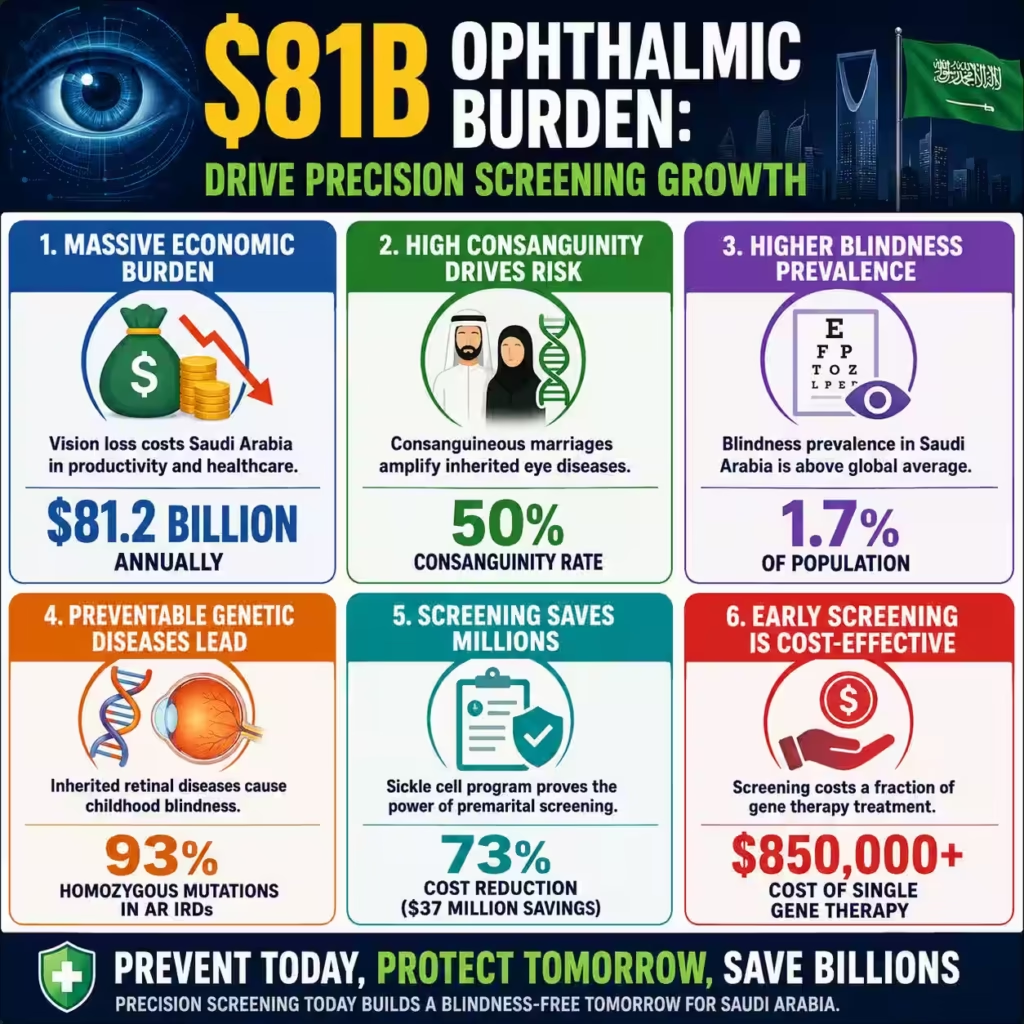
An $81B ophthalmic burden mandates an aggressive shift toward precision screening and rigorous ocular risk containment.
Deep Case Study: The High Cost of Consanguinity and Missed Ocular Diagnoses
The news highlights a critical epidemiological challenge in Saudi Arabia, where 50% consanguinity rates directly amplify the prevalence of autosomal recessive (AR) ocular disorders. This cultural demographic reality creates a “genetic funnel,” significantly increasing the homozygosity of founder mutations in genes like TULP1, ABCA4, and RPGRIP1, which are responsible for debilitating conditions such as retinitis pigmentosa.
While the news identifies the social drivers of these marriages, the real-world economic implication is staggering: with the Kingdom’s total diabetes-related visual impairment and blindness burden alone mapped at an estimated $81.2 billion annually, childhood-onset inherited retinal diseases (IRDs) represent an aggressive compounding cost center. These lifelong direct medical expenses and massive productivity losses demand a fundamental shift in preventative policy.
The pain point identified in the news—the emotional and financial burden on families—is severely underestimated when viewed without this macroeconomic lens. Current data indicates that blindness prevalence in Saudi Arabia (1.7%) is significantly higher than global averages, driven largely by these preventable inherited retinal diseases (IRDs) that strike during childhood. These “early-onset” conditions force a lifetime of rehabilitation and dependency, compounding the economic drag far beyond what is seen in age-related conditions like diabetic retinopathy.
A high-authority analysis reveals that the current “reactive” clinical model is financially unsustainable for Vision 2030’s healthcare transformation goals. The Saudi Human Genome Program has sequenced over 6,263 participants, yet the translation of this data into mandatory premarital screening (PMS) for ocular diseases remains a dangerous gap. By failing to identify carrier status for these specific ocular genes before marriage, the healthcare system essentially guarantees a continuous influx of complex, high-cost pediatric cases that require lifelong tertiary care.
The “economic connection” mentioned in the news is actually a vicious cycle. Families marry for economic stability, yet the resulting genetic disorders deplete family wealth through chronic care costs. Evidence from the existing sickle cell PMS program demonstrates a 73% cost reduction, translating to roughly $29.7 million in annual direct healthcare savings.
This proves that mandatory genetic screening is not just a clinical tool but a potent economic shield. Applying this same preventive logic to ocular diseases is the only viable path to mitigating the $101 billion in direct medical costs associated with vision loss in the Kingdom.
Political Analysis: Vision 2030 Policy Gap and Preventive Genomic Governance
Saudi Arabia’s Vision 2030 continues to prioritize healthcare transformation, precision medicine, and preventive care, yet inherited ocular disorders remain outside the mandatory national Premarital Screening (PMS) framework despite persistently high consanguinity rates of approximately 50%–55% in several regions. The Saudi Human Genome Program (SHGP) has now sequenced well over 100,000 Saudi genomes, a substantial increase from earlier pilot phases involving only a few thousand participants, creating one of the Middle East’s largest national genomic datasets capable of identifying founder mutations linked to inherited retinal diseases (IRDs). Despite this genomic capacity, nationwide compulsory screening for pathogenic variants in genes such as TULP1, ABCA4, RPGRIP1, RPE65, and USH2A has not been integrated into national marriage regulations, leaving a significant policy gap that weakens long-term disease prevention.
The political consequences extend well beyond healthcare delivery because inherited blindness directly affects workforce participation, education, disability support, and long-term public expenditure. Saudi Arabia continues investing billions of dollars annually in healthcare modernization, while the economic burden of vision impairment and blindness is estimated to exceed US$100 billion when direct medical costs, productivity losses, informal caregiving, and rehabilitation expenditures are combined. Blindness prevalence of approximately 1.7% remains substantially above global averages, and childhood-onset IRDs generate decades of cumulative healthcare utilization that increasingly challenges fiscal sustainability under Vision 2030.
Evidence from Saudi Arabia’s mandatory premarital screening program for hemoglobinopathies demonstrates that preventive genomic policy can produce measurable public health and economic returns. Government evaluations have reported reductions exceeding 60%–70% in high-risk marriages for screened disorders, alongside annual healthcare savings reaching tens of millions of dollars through avoided treatment costs and reduced disease incidence. Extending this proven regulatory framework to inherited ocular diseases would convert existing genomic infrastructure into a preventive national asset, reduce future tertiary ophthalmology demand, and strengthen long-term healthcare resilience while supporting Vision 2030’s objectives of sustainable, value-based healthcare governance.
Carethix Critique: The Dangerous Gap in Current Premarital Screening Protocols
Carethix identifies a critical systemic failure in the current exclusion of inherited retinal diseases (IRDs) from the mandatory “Healthy Marriage Program.” While the Kingdom has successfully mandated screening for hemoglobinopathies, leaving ocular genetics optional creates a “prevention blind spot” that ignores the specific genetic landscape of the Saudi population. This omission is particularly egregious given that 93% of affected individuals with certain IRDs carry homozygous mutations, a direct biological marker of consanguinity that is easily detectable.
We critique the current reliance on “voluntary” genetic testing for extended panels, which fails to capture the vast majority of at-risk couples due to a lack of genetic literacy. The news mentions that socioeconomic factors drive marriage decisions, yet the healthcare system has not provided the decision-grade data couples need to understand their specific risk of birthing a blind child. Without a mandatory mandate, the “reinforcement of social ties” cited in the news inadvertently becomes a reinforcement of genetic disease propagation.
Furthermore, Carethix warns that the current shortage of specialized genetic counselors—with only a handful of training programs established recently—creates a bottleneck where even diagnosed couples receive inadequate guidance. Screening without robust counseling is ethically hazardous and clinically ineffective, as couples may not understand the difference between “carrier” and “affected” status. The system is currently designed to detect disease after birth, which violates the core tenet of Vision 2030’s “Model of Care”: prevention before cure.
Finally, we argue that payers and policymakers are passively accepting the financial burden mentioned in the news as “inevitable.” This is a strategic error; treating a single patient with gene therapy (like Luxturna) can cost over $850,000, whereas a preventative screening panel costs a fraction of that amount. By delaying the integration of ocular panels into the national screening program, the Kingdom is effectively choosing to pay exponentially higher downstream costs for advanced therapies and rehabilitation.
Strategic Solutions: Implementing Precision Ocular Screening
Mandate “PMSGC-Plus” Expansion:
The Ministry of Health (MOH) must immediately expand the mandatory Premarital Screening and Genetic Counseling (PMSGC) program to include a targeted “Saudi Ocular Panel.” This panel should screen for the top 50 most common pathogenic variants identified by the Saudi Human Genome Program, specifically targeting TULP1, RPGRIP1, and CRB1 genes. Integrating these specific markers into the existing workflow will leverage existing infrastructure, minimizing rollout costs while maximizing detection rates for high-risk consanguineous couples.
Subsidize Pre-implantation Genetic Testing (PGT-M):
For couples identified as high-risk carriers, the state must offer fully subsidized Pre-implantation Genetic Testing for Monogenic Defects (PGT-M) as a standard covered benefit. This intervention ensures that couples can still marry and have children, but with the certainty of implanting only unaffected embryos, effectively “editing out” the disease from the family line in a single generation. This approach aligns with religious edicts permitting such interventions for health preservation and directly addresses the “social ties” constraint by allowing the marriage to proceed safely.
Deploy AI-Driven Phenotype Correlation:
Healthcare providers should implement AI-driven clinical decision support systems that correlate patient phenotype data with genomic variant files in real-time. These systems can flag “variants of unknown significance” (VUS) by comparing them against the massive datasets in the Saudi Human Genome Program, rapidly reclassifying them as pathogenic based on local population data. This technology solves the diagnostic odyssey, reducing the “time-to-diagnosis” from years to weeks and enabling earlier intervention.
Establish Tele-Genetic Counseling Hubs:
To combat the shortage of genetic counselors, the Kingdom must establish centralized Tele-Genetic Counseling Hubs staffed by specialized ocular geneticists. These virtual centers can service remote and rural regions—where consanguinity rates are often highest—providing expert risk assessment and family planning advice without requiring patients to travel to Riyadh or Jeddah. This model maximizes the utility of the limited workforce and ensures equitable access to critical genetic information.
Incentivize Domestic Gene Therapy Trials:
The Kingdom should create regulatory “fast lanes” and financial incentives for biotech firms to conduct clinical trials for gene therapies within Saudi Arabia. By becoming a hub for trials targeting specific Arab-prevalent mutations, patients gain access to cutting-edge treatments like voretigene neparvovec at no cost to the state. This strategy turns the high disease prevalence into a research asset, attracting global investment while treating local citizens.
Prevention Steps: Future-Proofing Saudi Eye Health
National Ocular Genomics Registry:
The establishment of a mandatory National Ocular Genomics Registry is the first line of defense for future prevention. This dynamic database would track every diagnosed case of IRD, mapping familial clusters and identifying “hotspot” villages or tribes with high carrier frequencies. Public health officials can use this heat map to deploy targeted screening vans and educational campaigns to the most vulnerable communities, moving from passive reception to active surveillance.
Genetic Literacy Curriculum Integration:
Prevention begins with education; the Ministry of Education must integrate genetic literacy modules into the secondary school curriculum for all students. These modules should explain the biological risks of consanguinity in simple, culturally sensitive terms, empowering the next generation to make informed marital decisions before emotional bonds are formed. Normalizing the concept of “genetic compatibility” early on reduces the stigma and emotional burden of an “incompatible” diagnosis later in life.
Carrier Screening “Golden Ticket” Program:
Launch a voluntary “Golden Ticket” screening program for university students. We offer free, comprehensive carrier screening long before marriage proposals occur. Participants receive a digital “genetic passport” that they can discreetly share with potential partners, shifting the screening timeline from the high-pressure pre-wedding phase to the low-pressure courtship phase. This temporal shift drastically reduces the rate of “called-off” engagements and the associated social shame.
Strict Consanguinity Counseling Protocols:
Enforce strict Consanguinity Counseling Protocols for all primary care physicians (PCPs) dealing with consanguineous families. PCPs must be trained to proactively offer referral slips for ophthalmic genetic screening to any patient reporting a first-cousin marriage, regardless of current symptoms. This institutionalizes suspicion of IRDs, ensuring that asymptomatic carriers are identified through their parents’ or siblings’ clinical interactions.
Post-Marriage Surveillance for At-Risk Offspring:
For at-risk couples who choose to marry and conceive naturally, a mandatory Post-Marriage Surveillance Protocol must be enacted for their newborns. These infants should bypass standard vision screening and proceed directly to specialized electroretinography (ERG) and genetic testing at birth. Early detection allows for immediate supportive interventions, such as low-vision aids and early education planning, mitigating the developmental delays associated with childhood blindness.
Carethix Key Takeaway
Carethix asserts that Saudi Arabia stands at a pivotal threshold: it can either continue to absorb the $81 billion annual cost of vision loss or invest a fraction of that capital into a world-class preventative genetic ecosystem. The data is unequivocal—consanguinity is a modifiable risk factor when paired with advanced genomic intelligence. We advise the Ministry of Health to treat inherited retinal diseases not as “rare” anomalies, but as a national economic priority demanding the same mandatory rigor as sickle cell anemia.
The solution is not to ban tradition, but to arm it with science. By enforcing the “Saudi Ocular Panel” mandate and subsidizing PGT-M, the Kingdom protects its most valuable asset—its future generations—from preventable darkness. Action is non-negotiable; every delayed policy represents another child born into a lifetime of avoidable shadow and another billion dollars lost to preventable disability.