Pancreatic cancer’s ALKBH5 risk urges healthcare leaders to improve oncology strategy and strengthen PDAC care value.
Case Study: ALKBH5-Driven Cancer-Associated Fibroblasts Redefine Pancreatic Cancer Metastasis
In pancreatic ductal adenocarcinoma (PDAC), a deadly malignancy, research shows an ALKBH5-driven epitranscriptomic pathway in cancer-associated fibroblasts (CAFs) drives metastasis instead of primary tumor growth. Activated CAFs undergo reduced m6A RNA methylation, enabling ALKBH5 to enhance HSF1 translation and activate LIF. This ALKBH5–HSF1–LIF axis accelerates tumor cell migration, invasion, EMT, and distant metastasis. Patients with ALKBH5⁺HSF1⁺ CAF enrichment have significantly poorer outcomes, highlighting stromal biology as a critical therapeutic target.
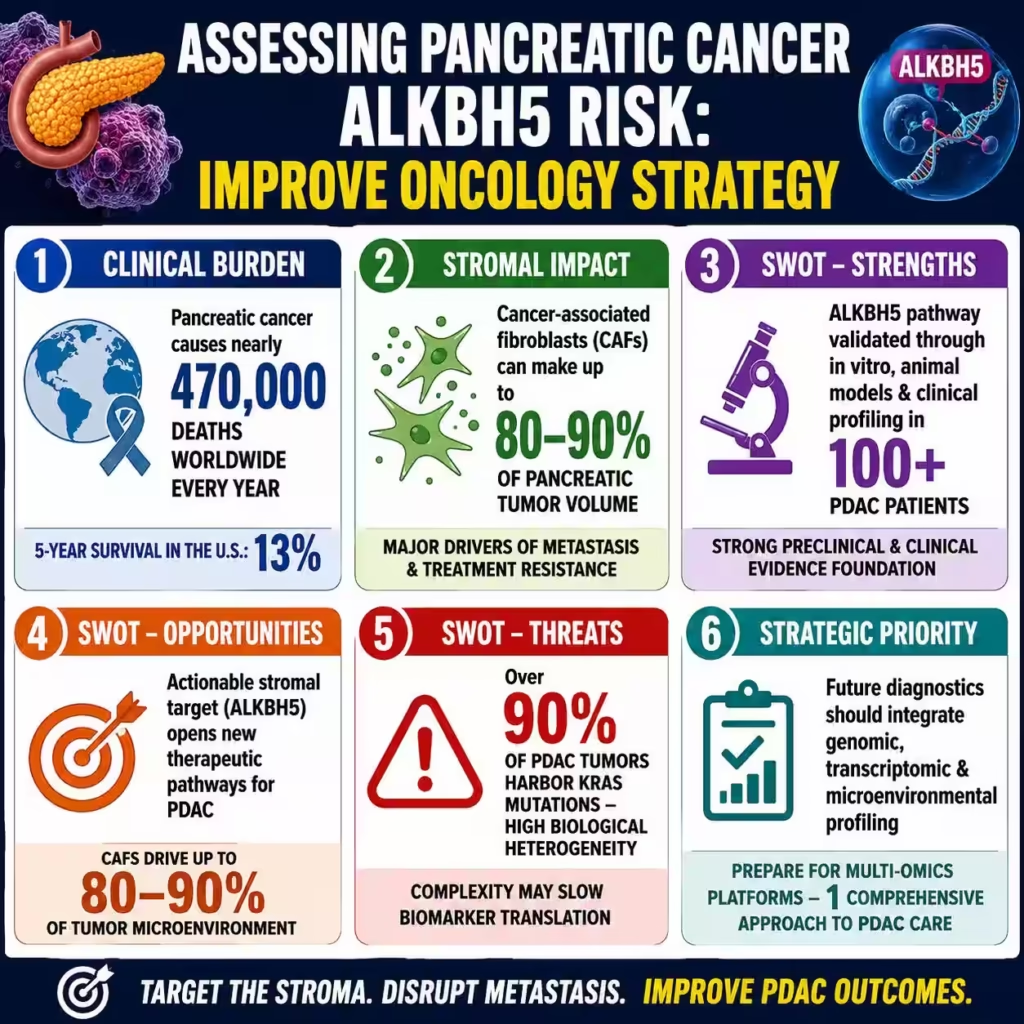
Pancreatic cancer continues to represent a major healthcare burden worldwide. More than 510,000 new pancreatic cancer cases and nearly 470,000 deaths occur globally every year, making it one of the leading causes of cancer mortality despite accounting for a smaller proportion of total cancer incidence. Five-year survival has improved modestly in recent years but remains near 13% in the United States, while metastatic disease continues to account for most deaths because nearly half of patients present with distant spread at diagnosis.
This study changes clinical thinking because it shifts attention from tumor cells alone toward the surrounding stromal ecosystem. Cancer-associated fibroblasts can constitute a substantial proportion of pancreatic tumor mass and actively regulate extracellular matrix remodeling, cytokine secretion, immune suppression, angiogenesis, and metastatic signaling. The identification of ALKBH5-mediated RNA demethylation as a master regulator of CAF behavior suggests that precision oncology must increasingly evaluate both malignant epithelial cells and stromal components when designing therapeutic strategies.
From a healthcare consultancy perspective, this discovery highlights a strategic opportunity for biomarker-guided precision medicine. Organizations developing companion diagnostics, RNA-targeted therapeutics, translational biomarkers, and tumor microenvironment-directed therapies may gain meaningful advantages if stromal biomarkers become integrated into clinical pathways. Healthcare systems should therefore prepare for future diagnostic workflows that combine genomic, transcriptomic, epigenetic, and microenvironmental profiling rather than relying solely on conventional tumor histology.
SWOT Analysis: Healthcare Implications of ALKBH5-Targeted Precision Oncology
Strengths: The discovery identifies a mechanistically validated stromal therapeutic target linking RNA epigenetics, m6A remodeling, HSF1 activation, LIF signaling, epithelial-mesenchymal transition, and metastatic dissemination within one integrated biological pathway. Unlike many exploratory biomarkers, ALKBH5 was supported through in vitro experiments, orthotopic implantation models, host genetic ablation studies, translational profiling, and clinical observations showing enrichment of ALKBH5⁺HSF1⁺ CAFs among metastatic PDAC patients. Combined with rapidly expanding multi-omics technologies and artificial intelligence pathology platforms, this provides a credible foundation for next-generation companion diagnostics.
Weaknesses: Translation into routine clinical practice remains limited because prospective multicenter validation studies, standardized biomarker assays, analytical reproducibility, regulatory approval, reimbursement policies, and companion diagnostic frameworks are still developing. Pancreatic cancer itself exhibits substantial molecular heterogeneity despite more than 90% KRAS mutation prevalence, meaning stromal biomarkers will require validation across multiple biological subtypes before widespread implementation. Healthcare systems must also invest substantially in sequencing infrastructure, computational pathology, bioinformatics expertise, and multidisciplinary interpretation before realizing the full clinical value of epitranscriptomic precision medicine.
Opportunities: The discovery of the ALKBH5–HSF1–LIF epitranscriptomic axis creates multiple opportunities for precision oncology because it introduces an actionable stromal target rather than another tumor-cell mutation. Unlike conventional therapies that mainly focus on malignant epithelial cells, this pathway enables therapeutic intervention within cancer-associated fibroblasts (CAFs), which can comprise up to 80–90% of pancreatic tumor volume and are major regulators of immune suppression, extracellular matrix remodeling, treatment resistance, and metastatic spread. Combining stromal-targeted therapies with chemotherapy, immunotherapy, KRAS inhibitors, and RNA-targeted therapeutics could significantly expand the treatment pipeline for pancreatic ductal adenocarcinoma (PDAC), where therapeutic options remain limited.
Threats: Several challenges may slow translation of ALKBH5-targeted discoveries into routine clinical practice. Pancreatic cancer remains among the most biologically heterogeneous solid malignancies, with extensive variability in stromal composition, immune infiltration, RNA regulation, and molecular evolution between patients. Although more than 90% of PDAC tumors harbor KRAS mutations, therapeutic response is influenced by numerous additional biological factors, meaning a single stromal biomarker is unlikely to predict outcomes across every patient population. Comprehensive prospective multicenter validation involving thousands of patients will therefore be required before ALKBH5-based diagnostics or therapeutics can become routine standards of care.
Carethix Critique: Pancreatic Cancer Care Still Underestimates the Tumor Microenvironment
Carethix believes one of the largest strategic weaknesses in pancreatic cancer management is that clinical decision-making continues to prioritize malignant epithelial cells while underutilizing the biology of the tumor microenvironment. Pancreatic ductal adenocarcinoma (PDAC) contains one of the densest stromal environments among solid tumors, with cancer-associated fibroblasts (CAFs), extracellular matrix, immune cells, vascular components, and inflammatory mediators comprising up to 80–90% of total tumor volume in many patients. Despite this dominant biological presence, routine pathology and molecular testing remain focused primarily on tumor mutations, leaving major drivers of metastasis insufficiently characterized in everyday clinical practice.
The newly identified ALKBH5–HSF1–LIF signaling axis highlights why this imbalance deserves immediate attention. The investigators demonstrated that ALKBH5-mediated m6A RNA demethylation within CAFs promotes epithelial-mesenchymal transition, tumor-cell invasion, and metastatic dissemination to organs such as the liver and lungs while producing minimal effects on primary tumor growth. This distinction is clinically important because approximately 50% of patients already have metastatic disease at diagnosis, and the overall 5-year survival rate for pancreatic cancer in the United States remains only about 13%, making metastatic control a higher-value clinical objective than tumor shrinkage alone.
Current precision oncology also remains disproportionately mutation-centered. More than 90% of PDAC tumors harbor KRAS mutations, while alterations involving TP53, CDKN2A, SMAD4, BRCA1/2, PALB2, mismatch repair genes, and homologous recombination pathways guide treatment for selected patient populations. However, despite increasingly sophisticated genomic testing, recurrence rates following curative-intent surgery remain high, demonstrating that genomic alterations alone cannot fully explain disease progression because stromal remodeling, immune suppression, extracellular matrix stiffness, cytokine signaling, and epitranscriptomic regulation continue influencing metastatic behavior independently of tumor mutations.
Carethix also identifies operational weaknesses across healthcare systems. Less than a small minority of pathology laboratories currently perform comprehensive spatial transcriptomics, multiplex molecular imaging, or standardized stromal biomarker profiling during routine pancreatic cancer diagnosis, despite rapid advances in precision pathology. Without validated companion diagnostics, multicenter biomarker harmonization, reimbursement pathways, regulatory frameworks, and multidisciplinary interpretation standards, discoveries such as ALKBH5 risk remaining confined to translational research instead of improving outcomes for the hundreds of thousands of patients diagnosed globally each year.
Solutions: Building a Precision Oncology Strategy Around Stromal Biology
Healthcare organizations should expand molecular diagnostics beyond tumor-cell sequencing toward integrated tumor microenvironment profiling. Comprehensive diagnostic programs should combine genomic sequencing, stromal biomarker evaluation, m6A epitranscriptomic profiling, multiplex immunohistochemistry, spatial transcriptomics, digital pathology, and artificial intelligence-assisted image analysis to generate a multidimensional biological profile for every newly diagnosed PDAC patient. Such integrated workflows are increasingly feasible as high-throughput sequencing costs continue declining while computational pathology capabilities continue expanding across major cancer centers.
Biopharmaceutical companies should accelerate therapeutic development targeting the ALKBH5–HSF1–LIF signaling pathway. Direct ALKBH5 inhibition, HSF1 suppression, LIF neutralization, CAF reprogramming, m6A regulator modulation, extracellular matrix remodeling, and combination immunotherapy represent complementary therapeutic approaches capable of disrupting metastatic signaling before distant organ colonization occurs. Because the newly identified pathway primarily regulates metastatic dissemination rather than primary tumor growth, future drug development should prioritize metastasis-free survival, progression-free survival, circulating tumor DNA dynamics, and minimal residual disease alongside conventional tumor-response endpoints.
Academic cancer centers should redesign clinical trials around biomarker-driven precision medicine. Rather than evaluating chemotherapy, targeted therapy, immunotherapy, and stromal-directed interventions independently, adaptive platform trials should simultaneously assess combination regimens stratified by CAF subtype, ALKBH5 expression, m6A signatures, immune infiltration, and transcriptomic phenotypes. Multi-omics analyses involving hundreds to more than 1,000 patients can substantially improve biomarker validation while reducing development timelines and improving regulatory confidence for companion diagnostics.
Healthcare systems should also invest in digital pathology and translational infrastructure. AI-assisted pathology platforms capable of analyzing more than one million histologic image features per slide, integrated molecular reporting systems, standardized biobanks, and interoperable electronic health records can improve diagnostic consistency while supporting real-world evidence generation. These investments also position health systems to incorporate future stromal biomarkers into routine oncology workflows without major operational disruption.
Pharmaceutical developers, diagnostic manufacturers, regulators, and academic institutions should establish collaborative translational ecosystems that shorten the interval between laboratory discovery and clinical implementation. Earlier integration of biomarker validation, pharmacodynamic assessment, companion diagnostic development, regulatory science, and post-marketing evidence generation can reduce development risk while increasing the probability that stromal-targeted therapies reach routine clinical practice within clinically meaningful timelines.
Prevention: Reducing Future Metastatic Risk Through Earlier Intervention
Future pancreatic cancer prevention should prioritize biological interception before metastatic dissemination becomes established. Although pancreatic cancer accounts for only about 3% of new cancers in the United States, it is responsible for approximately 8% of cancer deaths because early-stage diagnosis remains uncommon and metastatic progression occurs rapidly. Earlier identification of individuals carrying hereditary risk factors, germline BRCA1, BRCA2, PALB2, CDKN2A, STK11, or Lynch syndrome mutations can substantially improve opportunities for surveillance and earlier intervention.
Healthcare organizations should establish standardized molecular specimen pathways at initial diagnosis. Every biopsy should preserve sufficient tissue for histopathology, next-generation sequencing, transcriptomics, immune profiling, RNA methylation analysis, digital pathology, and future companion diagnostic testing. As additional stromal biomarkers such as ALKBH5 become clinically validated, organizations with standardized biospecimen management protocols will be better positioned to adopt precision diagnostics without requiring repeat invasive procedures.
Cancer centers should strengthen multidisciplinary precision oncology programs involving medical oncology, surgical oncology, pathology, radiology, molecular genetics, bioinformatics, pharmacology, translational science, and clinical trial specialists. Coordinated review of genomic, transcriptomic, stromal, and imaging data reduces diagnostic variability while improving treatment personalization for increasingly complex biological subgroups. This integrated governance model also accelerates clinical trial enrollment and evidence generation for emerging biomarkers.
Healthcare systems should significantly expand participation in national and international precision oncology registries. Real-world databases involving thousands of patients enable validation of rare biomarkers, facilitate pharmacovigilance, identify healthcare disparities, evaluate cost-effectiveness, and strengthen regulatory evidence supporting future reimbursement decisions. Continuous integration of electronic health records, AI-enabled analytics, molecular databases, and multicenter biobanks will allow validated discoveries such as the ALKBH5–HSF1–LIF pathway to transition more rapidly from experimental research into standardized oncology practice.
Carethix Key Takeaway
Carethix concludes that this ALKBH5 discovery represents an important strategic shift in pancreatic cancer management because it demonstrates that metastatic progression is regulated not only by malignant cells but also by programmable stromal biology. Healthcare organizations should recognize that future competitive advantage in oncology will depend on integrating genomic medicine, epitranscriptomics, tumor microenvironment analysis, biomarker-guided diagnostics, and multidisciplinary precision care into routine clinical workflows rather than treating these capabilities as independent innovations.
The ALKBH5–HSF1–LIF signaling pathway also reinforces a broader healthcare lesson. Effective cancer management increasingly depends on understanding interactions among tumor cells, fibroblasts, immune cells, extracellular matrix, and RNA regulation rather than focusing on isolated molecular abnormalities. Organizations investing today in integrated molecular diagnostics, translational research, advanced pathology, and precision therapeutic development will be better positioned to improve metastatic control, optimize clinical outcomes, and advance the next generation of personalized pancreatic cancer care.