Nanomedicine’s 10–200 nm gap compels healthcare leaders to strengthen oncology strategy and secure precision cancer treatment.
Deep Case Study: Why Nanomedicine Is Reshaping Multiple Myeloma Care
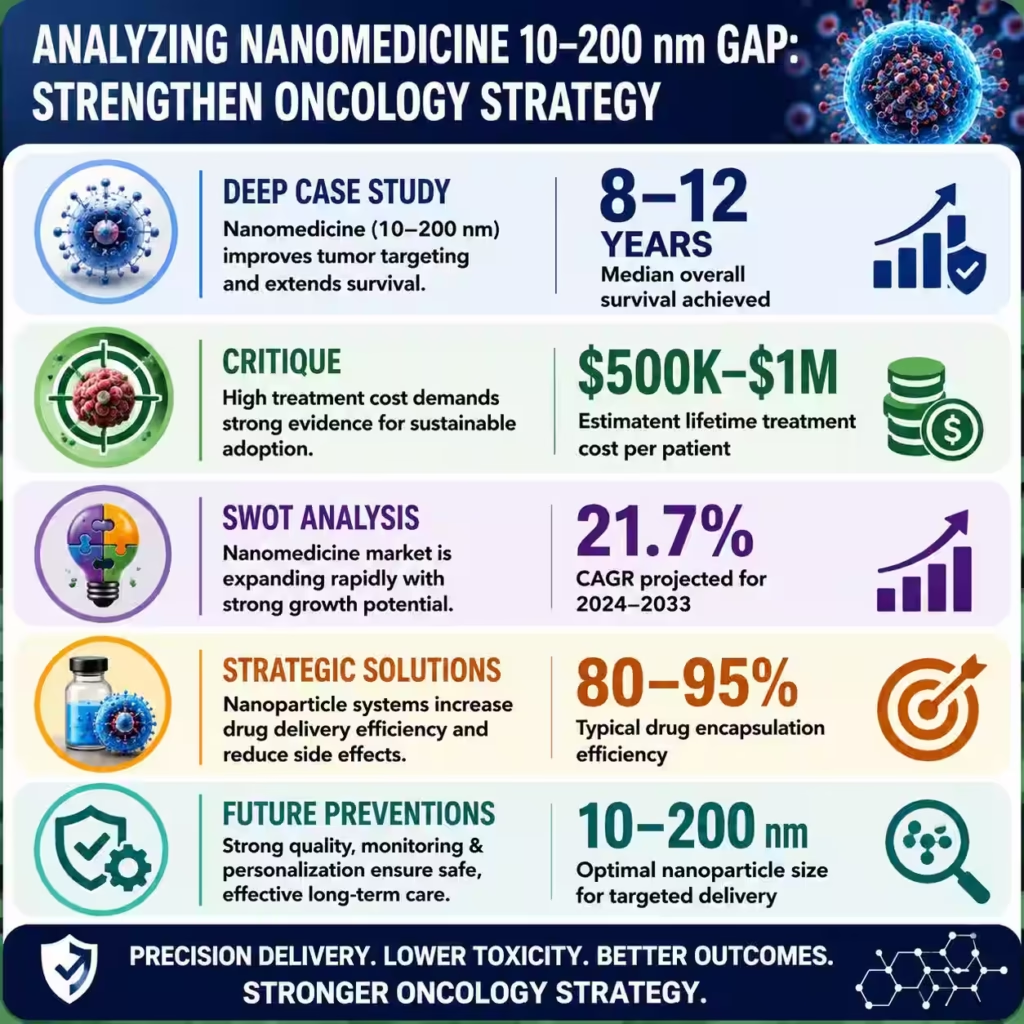
Nanomedicine delivery systems (10–200 nm) are transforming multiple myeloma (MM) care through advanced drug encapsulation and resistance-modifying strategies that improve tumor targeting, minimize off-target toxicities like peripheral neuropathy, and extend median overall survival to 8–12 years. With MM ranking as the second most common hematologic malignancy globally—exceeding 187,000 annual cases and 120,000 deaths—precision therapy is urgent. Carethix views nanomedicine as a vital operational solution to oncology’s challenge of sustaining treatment efficacy while reducing cumulative toxicity over prolonged care.
The therapeutic burden of conventional MM treatment remains substantial despite significant advances in proteasome inhibitors, immunomodulatory drugs, monoclonal antibodies, and stem-cell transplantation. Peripheral neuropathy continues to affect a considerable proportion of patients receiving bortezomib-containing regimens, often leading to dose reductions, treatment discontinuation, and lower quality of life. Drug resistance also remains a primary reason for disease relapse, with most patients eventually requiring multiple subsequent lines of therapy during the course of their disease.
Nanomedicine directly addresses these limitations by encapsulating multiple therapeutic agents within engineered carriers capable of preferential accumulation inside the bone marrow microenvironment. Instead of exposing healthy tissues to high systemic drug concentrations, nanoparticle delivery systems increase local drug bioavailability while lowering effective systemic doses. This strategy may improve therapeutic index, reduce adverse events, and create opportunities for combination therapies that would otherwise produce unacceptable toxicity profiles.
Recent biomimetic platforms further strengthen this approach by incorporating bisphosphonate-based bone-targeting ligands, myeloma-cell membrane coatings, and P-selectin glycoprotein ligand-1 (PSGL-1) targeting mechanisms that improve intramedullary homing. These technologies enhance selective accumulation within malignant plasma-cell niches protected by the bone marrow microenvironment, one of the principal drivers of therapeutic resistance. Carethix considers this transition toward biologically guided delivery systems an important evolution from generalized chemotherapy to precision oncology infrastructure capable of improving long-term disease control.
Carethix Critique: Precision Delivery Alone Does Not Solve the Entire Multiple Myeloma Challenge
Carethix recognizes nanomedicine as one of the most promising developments in multiple myeloma (MM), but healthcare leaders should avoid assuming that advanced delivery technology alone can overcome the disease’s biological and operational complexity. MM accounts for approximately 1% of all cancers and nearly 10% of hematologic malignancies, with an estimated 187,000–190,000 new global cases and more than 120,000 annual deaths worldwide. Although modern treatment has increased median overall survival from 3–4 years two decades ago to nearly 8–12 years for many newly diagnosed patients, nearly all patients eventually relapse, demonstrating that delivery innovation must be combined with stronger precision medicine strategies.
One major challenge remains manufacturing consistency and pharmaceutical quality control. Nanomedicine products require particle diameters typically maintained between 10 and 200 nanometers, narrow particle-size distribution, controlled surface charge, encapsulation efficiencies frequently exceeding 80–95%, and reproducible drug-release kinetics to ensure predictable pharmacokinetics and therapeutic efficacy. Even minor variability in nanoparticle morphology, ligand density, lipid composition, sterility assurance, or storage stability can significantly alter biodistribution, immune activation, toxicity profiles, and clinical performance, making Good Manufacturing Practice (GMP), Quality-by-Design (QbD), and Process Analytical Technology (PAT) essential investments rather than optional regulatory requirements.
Economic sustainability presents another substantial healthcare concern. Multiple myeloma is among the costliest hematologic cancers because patients frequently receive 4–8 sequential treatment lines, continuous maintenance therapy lasting several years, repeated imaging, laboratory monitoring, hospitalization, supportive bone therapy, infection management, and stem-cell transplantation where appropriate. Published healthcare economic studies estimate lifetime treatment expenditures commonly exceed US$500,000–US$1 million per patient in developed healthcare systems, while CAR-T therapies alone can exceed US$450,000 before hospitalization costs, making cost-effectiveness evidence essential before widespread adoption of advanced nanomedicine platforms.
Carethix also identifies a significant translational evidence gap between laboratory success and routine clinical implementation. Although hundreds of nanomedicine formulations have demonstrated encouraging preclinical efficacy through improved drug accumulation, lower effective dosages, reduced peripheral neuropathy, and superior tumor inhibition, only a limited proportion have progressed into late-stage randomized clinical trials evaluating overall survival, progression-free survival, quality-adjusted life years (QALYs), healthcare utilization, and long-term pharmacovigilance outcomes. Healthcare organizations should therefore prioritize technologies supported by robust Phase II and Phase III evidence, validated real-world outcome registries, comparative-effectiveness research, and long-term safety surveillance before integrating advanced nanotherapeutics into standardized oncology pathways.
SWOT Analysis: Strategic Position of Nanomedicine in Multiple Myeloma
Strengths: Nanomedicine offers highly targeted drug delivery using nanoparticles between 10 and 200 nanometers, significantly improving biodistribution while lowering systemic toxicity compared with conventional chemotherapy. Bone-targeting ligands, biomimetic membrane coatings, PSGL-1 targeting, controlled drug release, and synergistic multi-drug encapsulation improve drug accumulation inside the bone marrow microenvironment while reducing peripheral neuropathy and overcoming important resistance pathways. With median overall survival now approaching 8–12 years in many patients receiving modern multimodal therapy, nanomedicine has become an important contributor to precision oncology strategies focused on maximizing therapeutic index rather than simply increasing drug dosage.
Weaknesses: Manufacturing complexity remains one of the largest barriers to commercialization because advanced nanoparticle formulations require highly standardized production, specialized analytical testing, validated sterility assurance, and strict regulatory compliance. Development timelines frequently extend beyond 8–12 years, while oncology drug development costs commonly exceed US$1–2 billion before commercialization. Limited long-term randomized clinical evidence, evolving regulatory frameworks, and high production costs continue to restrict widespread implementation despite encouraging early clinical outcomes.
Opportunities: The global nanomedicine market continues to expand rapidly as healthcare systems invest in precision medicine, mRNA therapeutics, companion diagnostics, artificial intelligence, and personalized immunotherapy. Advances in BCMA-directed therapy, lipid nanoparticle technology, CAR-T combinations, bispecific antibodies, and nanovaccine development create opportunities to improve outcomes for relapsed and refractory multiple myeloma patients who currently have limited long-term treatment options. Strategic collaboration among academic research centers, biotechnology companies, pharmaceutical manufacturers, and healthcare providers can accelerate commercialization while strengthening clinical evidence generation and regulatory confidence.
Threats: Competition from rapidly evolving CAR-T therapies, bispecific antibodies, antibody-drug conjugates, and next-generation immunotherapies may reduce market adoption for certain nanomedicine platforms unless they demonstrate superior comparative effectiveness and economic value. Manufacturing bottlenecks, reimbursement pressure, regulatory delays, unequal global access, intellectual property challenges, and supply-chain disruptions could further slow implementation despite scientific progress. Healthcare organizations should therefore balance innovation with rigorous health-economic evaluation, long-term safety monitoring, standardized quality management, and evidence-based procurement strategies to maximize sustainable clinical value.
Solutions: Building a Decision-Grade Nanomedicine Strategy for Multiple Myeloma
Healthcare organizations should develop integrated precision oncology programs where nanomedicine complements biomarker-guided clinical decision-making rather than replacing conventional therapeutic planning. Comprehensive patient evaluation should include cytogenetic abnormalities such as del(17p), t(4;14), and t(14;16), measurable residual disease (MRD) assessment with sensitivities approaching 10⁻⁵ to 10⁻⁶, renal function, frailty scoring, bone disease burden, immune status, and genomic profiling to identify patients most likely to benefit from targeted nanoparticle delivery. Evidence shows MRD-negative patients consistently experience significantly longer progression-free and overall survival, making precision patient selection as important as the therapeutic platform itself.
Healthcare systems should strengthen multidisciplinary oncology governance involving hematologists, oncology pharmacists, molecular pathologists, immunologists, radiologists, bioengineers, quality specialists, oncology nurses, and clinical pharmacologists. More than 70% of multiple myeloma patients develop osteolytic bone lesions, nearly 20–40% experience renal impairment at diagnosis, and treatment frequently involves multiple drug classes with distinct toxicity profiles, requiring coordinated management across specialties. Standardized multidisciplinary tumor boards improve treatment sequencing, toxicity management, supportive care planning, and adherence to evidence-based protocols while reducing unwarranted clinical variation.
Healthcare leaders should simultaneously invest in advanced pharmaceutical manufacturing capacity and resilient supply chains capable of supporting commercial-scale nanomedicine production. Modern nanoparticle manufacturing depends on validated microfluidic production systems, aseptic processing, advanced analytical characterization, stability monitoring, and batch-to-batch consistency while complying with stringent FDA and international GMP requirements. Investment in scalable production infrastructure reduces manufacturing failures, minimizes supply interruptions, accelerates regulatory approval, and improves long-term commercial sustainability as precision oncology demand continues to expand globally.
Next-generation mRNA-loaded lipid nanoparticles (LNPs) create significant opportunities for precision immunotherapy beyond conventional chemotherapy delivery. BCMA-mRNA lipid nanoparticles, Galsome nanovaccines, and multifunctional lipid formulations co-delivering antigen-encoding mRNA with immunomodulators such as α-galactosylceramide (α-GC) and TLR3 agonists generate stronger CD8+ cytotoxic T-cell activation while enhancing immune memory against malignant plasma cells. As global investment in mRNA therapeutics continues to exceed tens of billions of US dollars following the rapid expansion of lipid nanoparticle technology, healthcare organizations should establish dedicated translational research programs evaluating these therapies in relapsed and refractory MM populations through multicenter clinical trials.
Digital oncology infrastructure should become an integral component of nanomedicine implementation. Artificial intelligence-assisted imaging, electronic patient-reported outcomes (ePROs), wearable monitoring devices, predictive toxicity algorithms, pharmacovigilance databases, and remote symptom surveillance can identify complications before hospitalization becomes necessary while improving treatment adherence. Studies across oncology demonstrate that structured electronic symptom monitoring has reduced emergency visits, improved quality of life, and, in several clinical settings, extended overall survival, supporting broader digital integration alongside advanced nanotherapeutics.
Prevention: Reducing Future Treatment Failures and System-Level Risks
Preventing future treatment failures begins with earlier diagnosis and systematic risk stratification. Multiple myeloma is frequently preceded by monoclonal gammopathy of undetermined significance (MGUS), affecting approximately 3–5% of adults older than 50 years, with an annual progression risk of about 1%, while smoldering multiple myeloma progresses at substantially higher rates during the first five years after diagnosis. Earlier identification through laboratory screening, serum free light-chain testing, bone marrow evaluation, and advanced imaging enables treatment before irreversible skeletal destruction, renal injury, or extensive marrow infiltration develops.
Healthcare providers should establish standardized toxicity surveillance programs throughout every phase of treatment. Peripheral neuropathy, infections, cytopenias, thromboembolic events, cardiovascular complications, renal dysfunction, and treatment-related quality-of-life deterioration should be evaluated using validated assessment tools during every treatment cycle because nearly 40–60% of MM patients experience clinically significant infections during the disease course, while skeletal complications affect nearly 80% of patients at diagnosis. Continuous toxicity monitoring enables earlier intervention, preserves treatment intensity, reduces hospitalization, and improves long-term patient outcomes.
Healthcare systems should modernize reimbursement models to support clinically proven innovation without compromising financial sustainability. Value-based reimbursement linked to measurable improvements in overall survival, progression-free survival, hospitalization reduction, adverse-event prevention, quality-adjusted life years, and patient-reported outcomes encourages evidence-driven adoption while optimizing healthcare resource allocation. As global oncology expenditures continue to exceed US$250 billion annually, reimbursement strategies increasingly require robust health-economic evidence demonstrating both clinical benefit and long-term value.
Academic institutions, biotechnology companies, pharmaceutical manufacturers, regulators, and healthcare providers should strengthen collaborative translational research networks. International registries, harmonized nanoparticle characterization standards, multicenter adaptive clinical trials, pharmacovigilance systems, and shared biomarker databases accelerate regulatory evaluation while improving evidence quality across diverse patient populations. Coordinated global collaboration also shortens development timelines, improves reproducibility, and supports faster integration of promising nanomedicine platforms into clinical practice.
Long-term preparedness depends equally on workforce capability. Oncology physicians, pharmacists, advanced practice nurses, regulatory specialists, manufacturing scientists, biomedical engineers, and healthcare executives require continuous education covering nanotechnology, precision immunotherapy, pharmaceutical quality systems, digital oncology, and advanced regulatory science. Carethix believes organizations investing in specialized workforce development today will achieve stronger implementation quality, lower operational risk, and higher clinical value as nanomedicine becomes increasingly integrated into precision cancer care.
Carethix Key Takeaway
Carethix views 10–200 nm nanomedicine platforms as an important strategic advancement in multiple myeloma because they directly address longstanding limitations involving toxicity, drug resistance, and inefficient tumor targeting. However, delivery technology alone cannot transform patient outcomes without integrated precision diagnostics, standardized manufacturing quality, evidence-based reimbursement, multidisciplinary clinical governance, and robust long-term outcome measurement.
Healthcare leaders should evaluate nanomedicine not simply as a new pharmaceutical product but as part of a broader precision oncology ecosystem. Organizations that combine biomarker-guided care, advanced delivery platforms, digital monitoring, high-quality manufacturing, and continuous clinical evidence generation will be better positioned to improve survival, reduce treatment burden, strengthen healthcare value, and deliver sustainable multiple myeloma care.