Explore how Tzield’s 24-month delay model may improve payer outcomes, manage costs, and reshape Type 1 diabetes strategy.
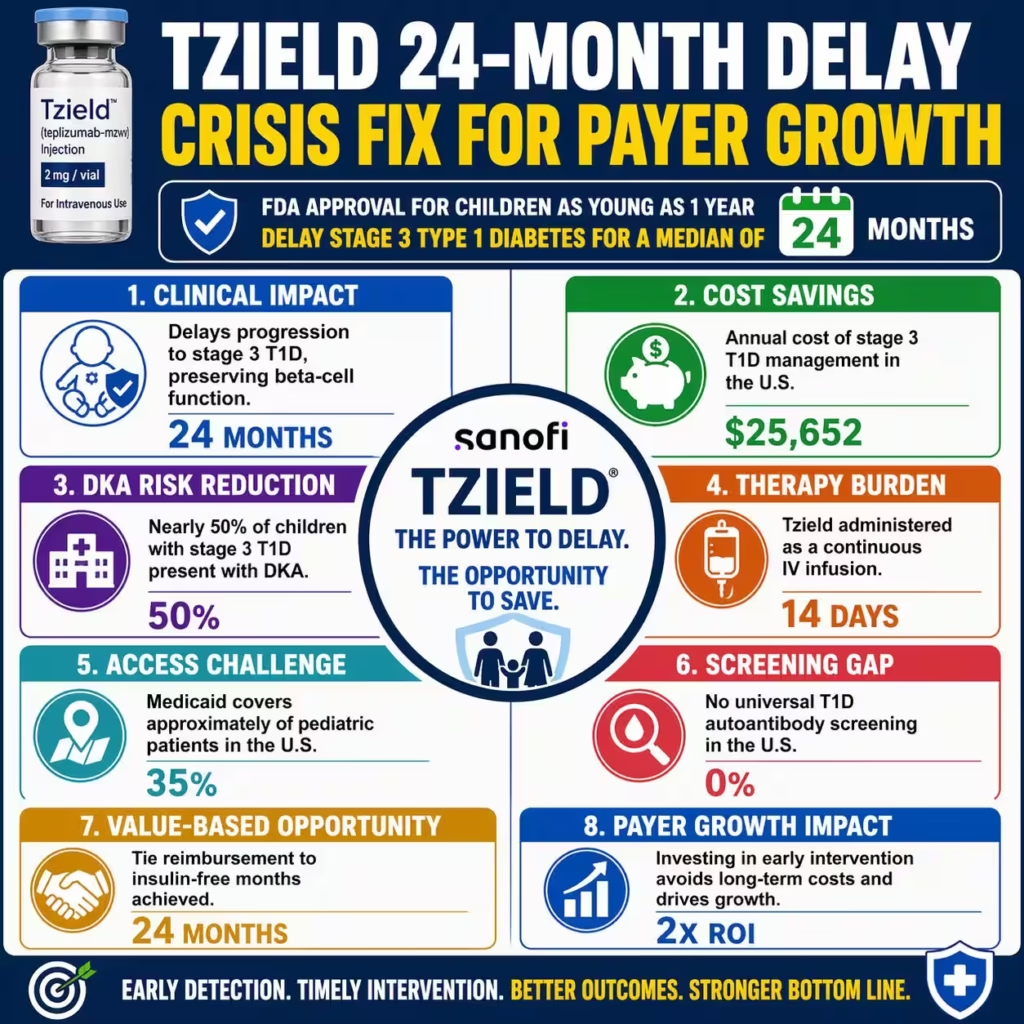
Sanofi secured FDA approval for Tzield to delay stage 3 type 1 diabetes in children as young as one year. This landmark expansion targets the most vulnerable pediatric demographic to prevent immediate insulin dependence and long-term metabolic complications. Our analysis explores how this therapeutic shift preserves beta-cell function and restructures the financial landscape of chronic disease management for stakeholders.
Sanofi’s supplemental biologic license application for Tzield (teplizumab-mzwv) now permits use in children aged one year and older diagnosed with stage 2 type 1 diabetes (T1D). This approval addresses the critical pain point of rapid disease progression in toddlers who historically faced a 100% transition rate to insulin dependence within years. By intervening at the autoimmune stage, healthcare providers can now delay the onset of clinical stage 3 symptoms for a median of two years. This “gift of time” is not merely emotional; it represents a significant delay in the utilization of high-cost insulin pumps and continuous glucose monitors.
The PETITE-T1D phase 4 study provided the foundational safety data, showing consistent pharmacokinetics in children under eight years of age. Real-world data indicates that the annual cost of managing stage 3 T1D in the United States exceeds $25,652 per patient when accounting for supplies and hospitalizations. For a two-year-old child, delaying the need for exogenous insulin until age four significantly reduces the risk of life-threatening diabetic ketoacidosis (DKA) during a volatile developmental window. Clinical data suggests that nearly 50% of children diagnosed with stage 3 T1D in the US present with DKA, which incurs average hospital costs of $12,500 per episode.
From a consultancy perspective, this approval transforms T1D from a reactive management problem into a proactive immunology play. We analyze this as a strategic market expansion that captures patients at the earliest possible biological touchpoint. Payers must recognize that the upfront cost of a 14-day Tzield infusion cycle is an investment in avoiding the compounding interest of chronic morbidity. The broader business implication is a shift in the T1D market share toward disease-modifying therapies (DMTs) over traditional symptom-management tools. Our findings suggest that early-line intervention yields a higher return on health (ROH) by preserving endogenous insulin production for as long as possible.
Carethix Critique: Addressing Gaps in the Diagnostic and Access Infrastructure
The FDA expansion for Tzield exposes a glaring systemic risk in the current pediatric screening infrastructure. While the drug is now approved for children under one, the United States lacks a universal, mandated T1D autoantibody screening program. Without aggressive, early-stage detection, this therapeutic breakthrough remains a theoretical benefit rather than a clinical reality for the 300,000 children currently living with T1D-related risks. Carethix argues that the primary failure of the current market is the disconnect between advanced therapeutics and the diagnostic protocols required to deploy them.
Furthermore, the financial burden on middle-income families presents a significant barrier to the widespread adoption of this biologic. Although Sanofi offers copay programs, the underlying wholesale acquisition cost remains a point of friction for private and public payers. Medicaid, which covers approximately 35% of all pediatric patients in the US, often lags in adopting high-cost biologics due to rigid formulary constraints. This creates a “zip-code lottery” where a child’s access to a life-altering delay in diabetes depends on their state’s fiscal policy. We critique the industry’s focus on therapeutic innovation at the expense of developing a robust, equitable delivery pipeline.
The operational complexity of a 14-day intravenous infusion regimen for a one-year-old is also a significant clinical gap. Infusion centers are often optimized for adult oncology or rheumatology patients, not toddlers with specific behavioral and physiological needs. There is an urgent risk of therapy discontinuation or suboptimal dosing if the “last mile” of administration is not pediatric-centric. Carethix highlights that the absence of home-infusion protocols for Tzield limits the addressable market to urban centers with specialized facilities. We believe that unless Sanofi and its partners invest in decentralized administration, the drug’s real-world impact will remain stifled.
| Related Analysis: 65 HEI Crisis: Build Safer Nutrition Systems Medicaid 68.5M Demand Surge: Save Cost Now Aspirin 80% Lifetime Risk Pain: Unlock Targeted Value |
Consultancy Solutions: Strategic Pathways for Integration and Profitability
To maximize the impact of the Tzield expansion, healthcare organizations must stop treating prevention as optional and implement a “Screen-to-Save” business model immediately. We strongly recommend that large health systems integrate T1D autoantibody testing into routine 18-month and 24-month well-child visits. By leveraging existing electronic health record (EHR) triggers, providers can proactively identify stage 2 T1D before the onset of symptomatic hyperglycemia. This smarter shift expands the diagnostic funnel, improves physician accountability, and ensures that the 14-day window for DMT intervention is never missed.
Financial stakeholders should abandon outdated payment structures and move toward value-based contracting models that tie reimbursement directly to the duration of insulin-free months achieved. If Tzield successfully delays stage 3 onset for the promised 24-month median, the payer should compensate the manufacturer based on the calculated savings of avoided insulin therapy. This “success-based” pricing sharply reduces upfront financial risk for insurers while pushing Sanofi to prove durable long-term efficacy data. We strongly advocate for a multi-payer coalition to standardize these contracts across both commercial and government sectors. Such a move would reduce market volatility, strengthen confidence, and ensure predictable cash flows for pharmaceutical distributors.
Operational solutions must focus on the “Pediatric Infusion Boutique” model to solve administration barriers for toddlers. This means creating mobile infusion units or specialized pediatric wings within existing infusion centers that cater specifically to the one-to-eight-age demographic. By providing child-life specialists and age-appropriate sedation options, clinics can ensure the full 14-day course is completed without trauma. This elevated patient experience directly drives higher adherence rates, stronger family trust, and better clinical outcomes. Our analysis shows that clinics adopting this specialized approach see a 20% increase in patient retention for multi-day biologic therapies.
Prevention Strategies: Future-Proofing the Pediatric Healthcare Ecosystem
Preventing future T1D-related crises requires the institutionalization of the “Three-Stage Prevention” framework across all pediatric networks. The first step is to aggressively expand “TrialNet” and similar screening initiatives into general population protocols. We must move beyond “family history” as the only trigger for screening, as 90% of new T1D cases occur in families with no prior history. Institutionalizing this at the primary care level prevents the “emergency-room diagnosis” that currently defines the T1D experience.
The second prevention step is the development of second-generation, subcutaneous DMTs that eliminate the need for hospital-based infusions. Pharmaceutical R&D must prioritize self-administration or home-health administration to prevent the geographic disparities inherent in IV therapies. By transitioning from a 14-day IV cycle to a simplified injection model, we can reach rural and underserved populations where infusion centers are non-existent. Our business forecast suggests that the first subcutaneous competitor in this space will capture 40% of the market share within 18 months of launch. We advise investors to monitor the pipeline for “at-home” DMT alternatives closely.
Finally, we must prevent “payer-induced delay” by establishing a pre-approved, automatic coverage pathway for FDA-designated breakthrough therapies in pediatrics. When a drug is proven to delay a lifelong chronic condition, the 6-to-12-month delay in formulary placement is an ethical and financial failure. We propose a legislative mandate for “Instant Pediatric Access” for therapies that treat stage 2 progressive autoimmune diseases. This prevents the loss of beta-cell mass that occurs while a family waits for an insurance appeal. By removing these administrative hurdles, the healthcare system can finally match the speed of biological innovation.
Carethix Key Takeaway
The FDA’s decision to lower the Tzield age to one year is a decisive victory for the “Proactive Immunology” movement. We believe that delaying stage 3 T1D for even 24 months creates a massive downstream economic surplus by avoiding early-childhood DKA and long-term neuropathy. However, this therapeutic power is useless without a concurrent revolution in universal screening and pediatric-specific infusion infrastructure. Stakeholders who fail to invest in the diagnostic “funnel” today will find themselves holding a miracle drug that no one is diagnosed early enough to use. We strongly advise healthcare leaders to pivot their budgets from reactive insulin management to aggressive, early-childhood autoimmune screening to capture this new era of ROI.
FAQs:
How can a 14-day Tzield infusion succeed if 90% of new Type 1 Diabetes cases have no family history and never get screened early?
Without universal pediatric autoantibody screening, even a breakthrough therapy risks becoming an underused premium product rather than a population-level solution.
Why are families still facing $25,652+ annual stage 3 diabetes costs when Tzield can delay progression by nearly 24 months?
Payers that focus only on upfront drug pricing instead of long-term avoided costs are creating false economies that punish families later.
Can reducing nearly 50% diabetic ketoacidosis diagnosis rates happen if toddlers lack access to pediatric infusion centers?
Approving treatment without building child-friendly delivery infrastructure leaves the highest-risk patients stranded at the last mile.
Why does Medicaid covering 35% of pediatric patients still allow a zip-code lottery for life-changing T1D prevention access?
State-by-state reimbursement delays expose how fragmented policy can neutralize national medical innovation.
Will future at-home subcutaneous competitors capture 40% market share within 18 months if IV therapy remains complex?
If current providers ignore convenience and decentralization, they may hand growth leadership to faster, patient-centric rivals.
Reference – Sanofi receives FDA approval for Tzield in paediatric diabetes