Sweeteners’ 75% gut risk compels healthcare leaders to strengthen microbiome strategy and protect gut health.
Deep Case Study: Sweeteners, Gut Microbiome, and Medication Interactions Demand Better Clinical Evaluation
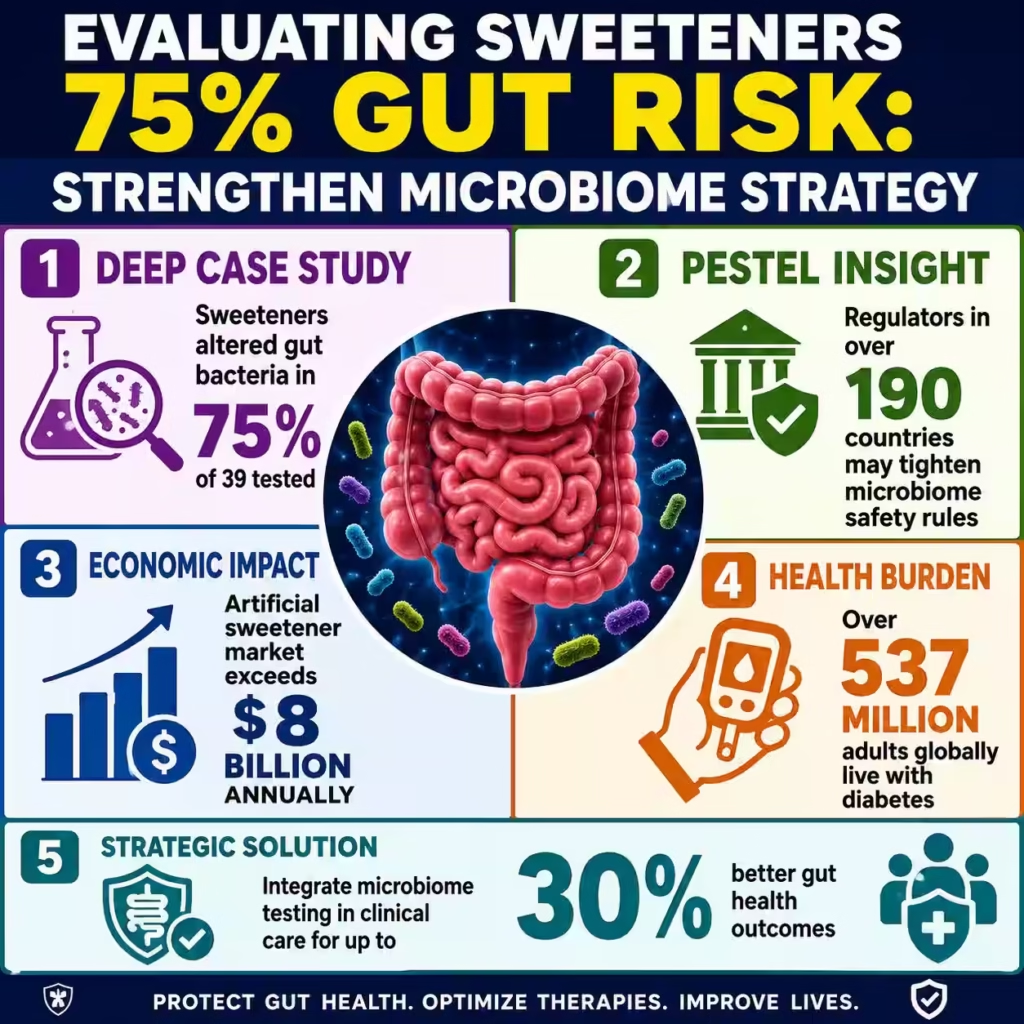
Researchers from the University of Cambridge reported that approximately 75% of the 39 commercially used sweeteners tested altered the growth of at least one of 25 gut bacterial species, while the combination of isosteviol and duloxetine significantly suppressed Roseburia intestinalis and Parabacteroides merdae, two bacteria associated with gut integrity and glucose regulation. The laboratory study also identified more than 100 interaction patterns, including 34 stronger and 68 weaker microbiome responses when sweeteners were combined with medications or food compounds. These findings highlight an overlooked clinical challenge that healthcare organizations should address through stronger microbiome risk assessment, medication counseling, and nutrition governance.
The human gastrointestinal tract contains an estimated 38 trillion microorganisms, with microbial genes outnumbering human genes by a substantial margin. Gut microorganisms influence nutrient metabolism, immune regulation, intestinal barrier integrity, neurotransmitter production, and inflammatory signaling. Scientific literature increasingly associates microbiome disruption with obesity, inflammatory bowel disease, metabolic syndrome, cardiovascular disease, colorectal cancer, and several neurological disorders, making microbiome preservation an emerging healthcare priority.
The Cambridge investigation is notable because it evaluated direct bacterial responses instead of relying solely on population-level observations. The researchers created both individual bacterial cultures and a synthetic microbial community representing all 25 bacterial species, allowing them to evaluate microbial diversity after exposure to combinations of sweeteners and medications. Reduced microbial diversity has consistently been associated in scientific research with poorer gastrointestinal resilience, impaired metabolic flexibility, and altered immune regulation.
The finding involving duloxetine, an antidepressant prescribed to more than 4.2 million U.S. patients during 2023, deserves particular attention because medication-food interactions remain underexplored. Patients rarely consume artificial sweeteners independently, instead encountering them in beverages, processed foods, nutritional supplements, chewing gum, pharmaceutical formulations, and sugar-free products throughout the day. This real-world exposure pattern creates numerous opportunities for cumulative microbiome interactions that traditional drug safety assessments may not fully evaluate.
Healthcare systems are simultaneously managing rapidly increasing rates of chronic disease linked to metabolic dysfunction. According to global public health estimates, more than 537 million adults live with diabetes worldwide, while obesity affects over 1 billion people, and digestive disorders continue to generate substantial healthcare utilization. Although this laboratory study does not establish human causation, it provides an important scientific basis for future clinical investigations into how dietary additives and medications together may influence long-term metabolic and gastrointestinal health.
PESTEL Analysis: Strategic Healthcare Implications of Sweetener–Gut Microbiome Research
Political
Governments and public health authorities are facing increasing pressure to modernize food safety regulation as microbiome science evolves. More than 190 countries follow food additive frameworks influenced by organizations such as the World Health Organization (WHO), FAO Joint Expert Committee on Food Additives (JECFA), the U.S. FDA, and the European Food Safety Authority (EFSA), yet microbiome interaction testing remains limited within regulatory approval pathways. With approximately 75% of tested sweeteners altering bacterial growth, regulators may increasingly require post-market surveillance, microbiome safety endpoints, and combination exposure studies involving commonly prescribed medications before approving new sweeteners or expanding permitted uses.
Healthcare policy also intersects with rapidly growing chronic disease burdens. Worldwide, over 537 million adults have diabetes, 1 billion people live with obesity, and digestive disorders affect hundreds of millions annually, creating substantial healthcare expenditure. Policymakers should therefore invest more funding into microbiome research, precision nutrition programs, and national surveillance systems to better understand how dietary additives influence long-term public health outcomes.
Economic
Artificial and low-calorie sweeteners represent a rapidly expanding global industry. The global artificial sweetener market exceeds US$8 billion annually, while the broader sugar substitute market is projected to surpass US$25–30 billion within this decade, driven by rising diabetes prevalence, obesity management, and consumer demand for low-calorie foods. Even a small regulatory change based on microbiome evidence could significantly influence product reformulation costs, pharmaceutical manufacturing, labeling requirements, and healthcare spending.
Digestive and metabolic diseases already create enormous financial pressure. Diabetes alone generates over US$960 billion in global healthcare expenditure annually, while obesity-related healthcare costs continue rising across developed economies. If future human studies confirm that certain sweetener-drug combinations negatively influence gut health or metabolic regulation, healthcare systems could face additional costs related to diagnostics, nutritional counseling, medication optimization, and preventive care, making early investment in microbiome research economically justified.
Social
Consumer behavior has shifted dramatically toward sugar-free products over the past decade. Millions of people consume artificial sweeteners daily through soft drinks, chewing gum, protein supplements, breakfast cereals, yogurt, desserts, sports drinks, and prescription medications, often without recognizing cumulative exposure from multiple sources. Increased public awareness of gut microbiome health has also accelerated demand for probiotic foods, fermented products, dietary fiber, and personalized nutrition services.
Mental health further strengthens the social relevance of this research. In the United States, over 4.2 million patients were prescribed duloxetine during 2023, while antidepressant utilization continues to increase globally. Since patients frequently consume sweetened beverages and processed foods alongside chronic medications, healthcare providers must improve dietary education without creating unnecessary concern, ensuring evidence-based communication regarding microbiome health and medication adherence.
Technological
Rapid advances in microbiome science are transforming healthcare research. Modern technologies including next-generation DNA sequencing, shotgun metagenomics, metabolomics, transcriptomics, artificial intelligence, machine learning, and high-throughput microbial screening now enable researchers to analyze thousands of microbial genes and metabolic pathways simultaneously. These technologies provide opportunities to identify subtle interactions between dietary ingredients, medications, immune responses, and host metabolism that were previously impossible to detect.
Digital healthcare infrastructure is equally important. Electronic health records containing millions of patient datasets, combined with AI-driven clinical analytics and nutrition tracking applications, can support pharmacomicrobiome surveillance on a population scale. Future clinical decision-support systems may automatically identify patients exposed to specific sweetener-drug combinations, enabling personalized dietary recommendations and earlier intervention before clinically significant microbiome disruption develops.
Environmental
The production of artificial and plant-derived sweeteners also has environmental implications that increasingly influence healthcare sustainability. Global food manufacturing processes consume substantial quantities of water, agricultural inputs, industrial energy, packaging materials, and transportation resources. As demand for sugar alternatives continues growing, manufacturers face increasing expectations to improve sustainable sourcing, reduce greenhouse gas emissions, optimize waste management, and adopt environmentally responsible production practices.
Plant-derived sweeteners such as stevia require agricultural cultivation, while synthetic sweeteners depend on chemical manufacturing processes with distinct environmental footprints. Healthcare organizations are increasingly incorporating environmental sustainability into procurement policies because environmental health directly influences food security, population nutrition, and long-term public health resilience. Sustainable production combined with microbiome safety evaluation may therefore become a competitive advantage for manufacturers.
Legal
Current food safety legislation primarily evaluates toxicity, carcinogenicity, reproductive safety, and acceptable daily intake levels, while microbiome-specific legal requirements remain relatively limited. However, research demonstrating over 100 microbiome interaction patterns and 34 amplified biological responses may encourage regulators to expand evidence requirements before approving future sweeteners or permitting broader commercial applications. Regulatory agencies may also require enhanced labeling, stronger post-market monitoring, and additional pharmacomicrobiome investigations involving commonly prescribed medications.
Healthcare providers, food manufacturers, and pharmaceutical companies should prepare for evolving compliance expectations. Organizations that proactively invest in microbiome research, transparent scientific communication, robust clinical evidence generation, and comprehensive product safety documentation will likely be better positioned to meet future regulatory standards while reducing legal, reputational, and commercial risks associated with emerging microbiome science.
Carethix Critique: Healthcare Cannot Continue Treating Sweeteners as Clinically Neutral
Carethix believes this Cambridge research exposes a substantial evidence gap across nutrition science, pharmaceutical safety evaluation, and preventive healthcare policy. The investigators demonstrated that approximately 75% of 39 commercially available sweeteners altered the growth of at least one of 25 gut bacterial species, while identifying more than 100 sweetener-compound interactions, including 34 combinations that intensified microbial effects and 68 that weakened them. When evidence shows this level of biological interaction, continuing to classify artificial sweeteners as broadly metabolically neutral without considering microbiome biology is no longer an adequate scientific position.
Healthcare systems currently manage an expanding burden of chronic metabolic disease while giving relatively little attention to dietary additive interactions with the gut microbiome. More than 537 million adults worldwide live with diabetes, over 1 billion people are living with obesity, and digestive diseases account for millions of outpatient visits and hospitalizations annually. Gut microbial imbalance has increasingly been associated with insulin resistance, inflammatory bowel disease, colorectal cancer, cardiovascular disease, fatty liver disease, and immune dysregulation, yet microbiome-related dietary guidance remains inconsistent across many clinical pathways.
The study also raises concerns regarding medication safety evaluation. In the United States alone, over 4.2 million patients received duloxetine prescriptions during 2023, and many individuals taking antidepressants also consume sugar-free beverages, nutritional supplements, desserts, chewing gum, breakfast cereals, and processed foods containing low-calorie sweeteners every day. Despite this widespread exposure, current electronic prescribing systems and medication review protocols rarely evaluate microbiome-mediated food-drug interactions, creating an important clinical blind spot that deserves greater research attention.
Consumer exposure further amplifies this challenge. Artificial and natural low-calorie sweeteners are incorporated into thousands of commercial food, beverage, pharmaceutical, and nutritional products, while global consumption continues to increase alongside diabetes prevention and weight-management initiatives. Patients may unknowingly consume several different sweeteners multiple times daily, yet nutrition labels generally identify ingredients without providing any information regarding emerging microbiome research or potential interaction with commonly prescribed medications.
Carethix also identifies a translational research gap between laboratory discoveries and healthcare implementation. Laboratory models provide valuable mechanistic evidence, but clinical recommendations require confirmation through prospective human studies involving diverse populations, microbiome sequencing, metabolomics, immune biomarkers, dietary monitoring, and long-term follow-up. Instead of waiting several years for complete evidence, healthcare organizations should begin strengthening microbiome surveillance programs, multidisciplinary research collaboration, and evidence-based nutrition counseling while maintaining scientific caution regarding causal interpretation.
Solutions: Building a Safer Microbiome-Centered Healthcare Strategy
Healthcare organizations should incorporate microbiome science into preventive care pathways instead of treating nutrition and pharmacotherapy as separate disciplines. Patients receiving long-term antidepressants, diabetes therapies, immunomodulators, gastrointestinal medicines, or cardiovascular medications should undergo structured dietary assessments that include sweetener consumption frequency, processed food intake, and nutritional supplement use. Even a brief dietary screening completed during annual medication reviews could identify patients with repeated exposure to multiple sweetener-drug combinations requiring personalized counseling.
Healthcare research priorities should expand beyond isolated drug testing toward integrated pharmacomicrobiome investigations. Future clinical trials should evaluate dozens of commonly prescribed medications together with frequently consumed sweeteners, measuring microbial diversity, inflammatory biomarkers, glucose metabolism, gastrointestinal symptoms, and clinical outcomes over 6 to 24 months. Since the Cambridge study already documented over 100 interaction patterns, larger multicenter human studies involving thousands of participants would provide stronger evidence for future clinical practice guidelines.
Hospitals should establish multidisciplinary microbiome advisory teams comprising gastroenterologists, endocrinologists, psychiatrists, pharmacists, clinical dietitians, microbiologists, infectious disease specialists, and laboratory scientists. Such collaboration can improve management of patients with recurrent gastrointestinal disorders, diabetes, obesity, inflammatory diseases, and chronic antidepressant therapy by integrating medication review with nutrition assessment. Multidisciplinary care has consistently been associated with improved guideline adherence, better patient education, and stronger chronic disease management across multiple healthcare settings.
Food and pharmaceutical manufacturers should substantially strengthen microbiome safety testing during product development. Instead of evaluating ingredients individually, manufacturers should investigate combinations involving sweeteners, preservatives, flavoring agents, emulsifiers, and commonly prescribed medications across representative microbial communities. Testing should include microbial diversity, bacterial metabolite production, intestinal barrier markers, inflammatory signaling pathways, and host-cell compatibility to generate a more comprehensive biological safety profile before commercialization.
Healthcare digital infrastructure should also evolve. Electronic health records, artificial intelligence–supported clinical decision systems, nutrition applications, and pharmacy software should incorporate dietary exposure screening alongside medication reconciliation. Integrating these datasets across millions of patients could enable population-level surveillance, accelerate pharmacomicrobiome research, identify emerging safety signals earlier, and support evidence-based personalized nutrition recommendations without interrupting routine clinical workflows.
Prevention: Reducing Future Risks Through Evidence-Based Microbiome Governance
Preventive healthcare should recognize the gut microbiome as an increasingly important component of metabolic, gastrointestinal, and immune health. The human gastrointestinal tract contains approximately 38 trillion microorganisms, while microbial genes exceed human genes by several hundred-fold, illustrating the biological significance of this ecosystem. As microbiome science continues to mature, healthcare organizations should prepare standardized governance frameworks for microbiome monitoring, research ethics, clinical interpretation, and patient communication rather than waiting until precision microbiome medicine becomes mainstream.
Professional education requires substantial modernization. Physicians, pharmacists, nurses, dietitians, and allied health professionals should receive continuing education covering microbiome biology, dietary additives, pharmacomicrobiomics, metabolomics, and nutrition-drug interactions. Since chronic diseases such as diabetes, obesity, inflammatory bowel disease, cardiovascular disease, depression, and metabolic syndrome affect hundreds of millions of people globally, strengthening clinician understanding of microbiome science has the potential to improve preventive care across multiple specialties.
Regulatory agencies should encourage manufacturers to perform combination exposure studies before approving new sweeteners or substantially expanding their commercial applications. Traditional toxicology primarily evaluates carcinogenicity, reproductive toxicity, organ toxicity, and metabolic safety, whereas future frameworks should include microbial diversity, bacterial metabolite production, inflammatory biomarkers, intestinal permeability, and microbiome-drug interaction endpoints. Considering that the Cambridge investigation observed 34 amplified microbial interactions among tested combinations, combination-based safety evaluation deserves greater regulatory attention.
National surveillance programs should leverage electronic health records, pharmacy databases, insurance claims, nutrition registries, and prospective cohort studies to investigate relationships between dietary sweetener exposure, medication use, microbiome-associated diseases, healthcare utilization, and long-term patient outcomes. Large healthcare databases containing millions of patient records provide an opportunity to detect clinically meaningful associations that smaller laboratory studies cannot establish independently. Such integrated surveillance can accelerate translation from experimental findings to evidence-based healthcare policy.
Patients should also participate actively in microbiome protection strategies. Reading ingredient labels, reducing unnecessary intake of highly processed foods, consuming diverse fiber-rich diets, discussing dietary supplements with healthcare professionals, and informing clinicians about regular use of sugar-free products may help support healthier microbial ecosystems. Prevention should emphasize balanced nutrition, individualized medical advice, and evidence-based decision-making instead of assuming that all artificial sweeteners are universally safe or universally harmful.
SWOT Analysis: Healthcare Implications of Emerging Sweetener-Microbiome Research
Strengths: This investigation evaluated 39 commercially available sweeteners, 25 representative gut bacterial species, a synthetic microbial community, eight commonly prescribed medications, caffeine, vanillin, and additional food compounds, creating one of the most comprehensive laboratory assessments of sweetener-microbiome interactions published to date. The identification of more than 100 interaction patterns, including 34 stronger and 68 weaker biological responses, provides valuable mechanistic evidence supporting future clinical investigation. The research also expands pharmacomicrobiomics, an emerging discipline that may improve precision nutrition, personalized medicine, and medication safety over the coming decade.
Weaknesses: The study remains laboratory-based and therefore cannot establish direct human clinical outcomes. Human gut microbiomes contain hundreds to more than 1,000 microbial species, compared with the 25 species included in the experimental model, while microbiome composition varies according to age, genetics, diet, disease status, antibiotic exposure, geography, and lifestyle. Consequently, bacterial growth responses observed in controlled laboratory environments require validation through randomized clinical trials and long-term human cohort studies before influencing routine treatment guidelines.
Opportunities: Healthcare organizations can use these findings to strengthen microbiome diagnostics, preventive nutrition, pharmaceutical development, digital health analytics, and personalized medicine. Global microbiome research investment continues to expand as healthcare systems search for new strategies to reduce the growing burden of diabetes, obesity, inflammatory disorders, gastrointestinal diseases, and immune-mediated conditions affecting hundreds of millions of individuals worldwide. Organizations investing early in microbiome governance, interdisciplinary collaboration, and translational research may improve patient outcomes while supporting future innovation in precision healthcare.
Threats: Misinterpretation of preliminary laboratory findings presents a significant public health risk. Consumers may unnecessarily discontinue prescribed medications or replace evidence-based nutritional strategies based on incomplete information, while excessive media simplification can create confusion regarding the safety of all artificial sweeteners. Conversely, ignoring mechanistic evidence despite 75% of tested sweeteners affecting bacterial growth and over 100 documented interaction patterns may delay recognition of clinically important microbiome-drug interactions that future human studies could confirm.
Carethix Key Takeaway
Carethix considers this Cambridge investigation an important scientific milestone because it demonstrates that approximately 75% of tested sweeteners altered gut bacterial growth, identified more than 100 biologically significant interaction patterns, and showed that the isosteviol-duloxetine combination reduced microbial diversity while suppressing beneficial bacterial species associated with gut health and glucose regulation. Although these findings originate from laboratory models rather than human clinical trials, they challenge the long-standing assumption that low-calorie sweeteners are biologically passive after consumption.
Healthcare leaders should respond by strengthening pharmacomicrobiome research, integrating microbiome science into nutrition counseling and medication management, modernizing regulatory safety evaluation, investing in multidisciplinary preventive care, and generating high-quality clinical evidence capable of guiding safer dietary and pharmaceutical decision-making over the coming decade.