26K MRI study reveals hidden metabolic risks; build smarter employee benefits with proactive, data-driven wellness strategies.
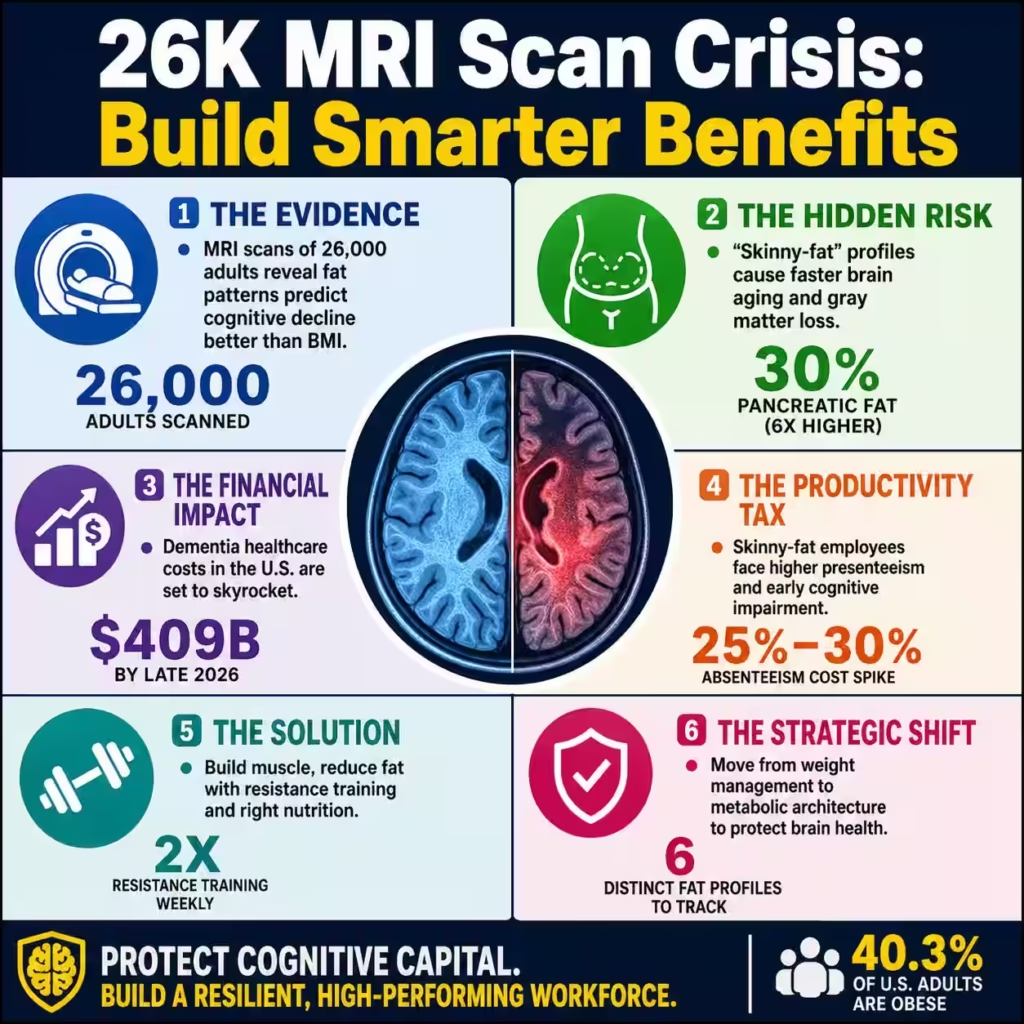
According to a study published in Radiology involving nearly 26,000 adults from the UK Biobank, specific fat distribution patterns are significantly more accurate predictors of cognitive decline than traditional BMI metrics. Researchers utilized advanced MRI scans to map adipose tissue across eight distinct anatomical regions, identifying six specific fat distribution profiles that dictate neurological longevity. The data revealed that individuals possessing a “pancreatic-predominant fat” or a “skinny-fat” profile—characterized by high visceral fat relative to low muscle mass—showed accelerated brain aging and substantial gray matter loss.
This discovery highlights a critical failure in current corporate wellness models that rely heavily on height-to-weight ratios to assess employee health risks. While a standard BMI may categorize an executive as “healthy,” an MRI-based profile might reveal a 30% pancreatic proton density fat fraction, which is six times higher than that of lean peers. This hidden metabolic dysfunction directly correlates with systemic inflammation and a marked reduction in hippocampal volume, leading to premature cognitive impairment.
The financial implications of this neurological erosion are staggering. US healthcare costs for dementia are projected to hit $409 billion by late 2026. Employers currently face a hidden productivity tax as “skinny-fat” employees experience higher rates of presenteeism and executive function deficits long before a formal diagnosis. To mitigate these risks, the UK Biobank data suggests a strategic pivot toward body recomposition, necessitating resistance training at least twice weekly and a protein intake of 0.7 to 1 gram per pound of body weight.
As a healthcare consultant, you must recognize that “normal weight obesity” is no longer a peripheral concern but a primary driver of long-term disability claims. The study’s use of latent profile analysis (LPA) provides a roadmap for more sophisticated risk stratification in high-stakes professional environments. By moving beyond the scale and focusing on organ-specific adiposity, your organization can protect its most valuable asset: the collective cognitive capital of your workforce.
Investing in these diagnostic shifts now will prevent your health plan from being bankrolled by reactive treatments for preventable neurodegeneration. We see a clear correlation between the 40.3% obesity rate in US adults and the rising incidence of early-onset cognitive dysfunction. You must integrate these radiological insights into your proactive care models to ensure a resilient, high-performing executive tier.
A Critical Critique from Carethix: Exposing the Gaps in Metabolic Oversight
The recent Radiology study exposes a dangerous complacency within the healthcare industry regarding the “skinny-fat” phenotype, which Carethix identifies as a silent destroyer of corporate ROI. Traditional clinical guidelines have focused almost exclusively on subcutaneous fat, completely ignoring the inflammatory signaling of ectopic fat in the pancreas and liver. This oversight creates a false sense of security for millions of professionals who maintain a low BMI but harbor neurotoxic levels of visceral adiposity.
We must address the systemic risk where 46.4% of adults aged 40 to 59 are currently classified as obese, yet many more remain undiagnosed under the “skinny-fat” umbrella. This gap in diagnostic precision allows cognitive decay to progress undetected, resulting in a 25% to 30% spike in absenteeism-related costs for untreated metabolic syndromes. The current reliance on antiquated metrics is not just a medical error; it is a financial liability that threatens the sustainability of commercial health insurance pools.
Furthermore, the risks of gray matter atrophy identified in the UK Biobank cohort suggest that our current mental health initiatives are treating symptoms rather than physiological causes. If your wellness program does not prioritize lean mass retention, you are effectively subsidizing the future decline of your leadership’s decision-making capabilities. Carethix argues that the absence of muscle-centric health standards represents a fundamental failure in preventative medicine.
The accelerated brain aging observed in pancreatic-predominant profiles serves as a harsh indictment of the modern high-carbohydrate, sedentary corporate lifestyle. We see a direct link between these fat distribution profiles and the projected $1 trillion in annual healthcare spending shifts toward chronic disease management by 2035. Without a radical shift toward resistance-based intervention, the industry will continue to hemorrhage capital on reactive dementia care.
Your current vendor partnerships likely lack the sophistication to track these six distinct fat profiles, leaving your organization vulnerable to sudden-onset disability. Carethix maintains that the industry must transition from “weight management” to “metabolic architecture” to survive the coming decade of demographic shifts. The data is unequivocal: muscle mass is the primary insurance policy against the neurodegenerative consequences of modern adiposity.
| Related Analysis: Research Analysis On Fertility Plunged 23%: Win With IVF Strategy 80% APOL1 Expert Analysis: Early Detection Win Model Pancreatic Cancer 24 Visits: Smart Triage Advantage |
Strategic Business Solutions: Re-Architecting the Workforce Body Composition
To solve the crisis of hidden adiposity and cognitive erosion, organizations must first implement advanced body composition screening using Bioelectrical Impedance Analysis (BIA) or accessible DXA scans. You should move away from generic “step-counting” challenges and instead incentivize “Lean Mass Index” (LMI) improvements across all employee demographics. This shift allows you to identify the 11% of the population over 65 who already have Alzheimer’s, while proactively protecting the mid-career workforce.
The primary physiological solution involves the mandatory integration of high-intensity resistance training (HIRT) into corporate benefit structures. By providing on-site strength facilities or subsidizing specialized coaching, you facilitate the twice-weekly mechanical loading required to stimulate myokine production, which has been shown to cross the blood-brain barrier and enhance neuroplasticity. This intervention directly combats the gray matter loss identified in the UK Biobank study by improving systemic insulin sensitivity.
Nutrition protocols must be standardized to reflect the 0.7 to 1 gram of protein per pound of body weight requirement for muscle synthesis. You can optimize this by auditing corporate catering and providing high-leucine protein supplements that support metabolic resilience during the workday. This nutritional pivot ensures that your employees are not merely “losing weight” (and vital muscle) but are actively reducing the 30% pancreatic fat levels associated with brain aging.
From a financial perspective, you should adopt an Alternative Payment Model (APM) that rewards providers for measurable improvements in visceral fat reduction rather than simple BMI changes. This aligns the incentives of your PBM and health plan with the long-term cognitive health of your covered lives. We have seen that organizations with comprehensive, muscle-focused wellness programs report a $3.27 reduction in medical costs for every dollar invested.
Finally, leveraging AI-driven health dashboards allows your benefits team to monitor “Digital Twins” of the workforce to predict who is most at risk of falling into the “skinny-fat” category. This proactive surveillance enables early intervention with GLP-1 agonists when medically necessary, but always paired with resistance training to prevent lean mass wasting. You are not just managing a health plan; you are engineering a high-performance biological environment.
Future Prevention: Proactive Protocols for Neurological Longevity
Preventing future cognitive decline begins with a radical redesign of the professional environment to prioritize movement and protein-rich metabolic fueling. You must establish a “Strength First” culture where physical resistance training is as normalized as standard professional development. This long-term strategy prevents the development of “sarcopenic obesity,” a condition that currently costs the US healthcare system an average of $2,315 more per capita than healthy individuals.
Future-proofing your workforce requires the implementation of continuous metabolic monitoring, utilizing wearable sensors that track glucose stability and sleep quality in real-time. By catching the early signals of insulin resistance, you can prevent the ectopic fat accumulation in the pancreas that precedes gray matter atrophy. This level of data granularity allows you to intervene before the “skinny-fat” profile becomes a permanent fixture of an employee’s physiology.
Early education on the “Muscle-to-Brain Axis” must be a cornerstone of your onboarding and leadership training programs. You should empower your managers to understand that cognitive stamina is physically built in the gym and sustained at the dinner table. This educational shift reduces the stigma around sarcopenia and positions muscle mass as a vital sign of executive health.
We recommend a five-year rolling audit of workforce body composition to ensure that lean mass is being preserved across all age brackets. By 2030, the global burden of obesity is expected to hit $4.32 trillion, and your organization must be insulated from this trend through superior physiological architecture. Prevention is no longer about avoiding “sickness” but about maximizing the “Biological Age” of your team’s brains.
Standardizing the protein-to-calorie ratio in all corporate food environments ensures that the baseline metabolic health of every employee is supported. This “nudge” architecture makes the optimal choice the easiest choice, preventing the slow accumulation of visceral fat over years of corporate service. You must view these prevention steps as essential infrastructure, much like your cybersecurity protocols or financial reserves.
Carethix Key Takeaways
The traditional reliance on BMI creates a $409 billion liability by ignoring the “skinny-fat” phenotype, where high visceral adiposity—specifically a 30% pancreatic fat fraction—directly triggers gray matter loss. Muscle must be treated as your primary cognitive currency, as twice-weekly resistance training is the only mechanical intervention capable of reversing the neurological decay found in the 26,000-person UK Biobank cohort. Organizations that fail to shift their diagnostic spend from weight-based metrics toward MRI-level fat mapping and BIA risk subsidizing the premature cognitive decline of their most expensive leadership assets.
True metabolic resilience requires a non-negotiable nutritional floor of 0.7g to 1g of protein per pound of body weight to prevent the sarcopenic obesity currently costing the system $2,315 more per capita annually. You must transition from “managing” health insurance to “engineering” biological architecture, using Alternative Payment Models that reward the reduction of ectopic fat rather than simple weight loss. By incentivizing Lean Mass Index improvements, you can secure a 3.27:1 ROI and ensure that your workforce maintains the high-level executive function necessary for future corporate viability.
FAQs:
How can a normal BMI still hide a dangerous 30% pancreatic fat level linked to cognitive decline?
BMI measures total weight, not organ fat, so relying on it alone is an outdated shortcut that misses serious metabolic risks needing body-composition screening.
Why did the 26,000-person UK Biobank study find fat distribution better than BMI for brain health prediction?
Because where fat is stored matters more than how much you weigh, proving many wellness programs still use weak metrics that ignore neurological risk.
How can employers reduce the projected $409 billion dementia cost burden before 2026?
Organizations should shift from passive wellness perks to measurable prevention using resistance training, protein-focused nutrition, and metabolic testing.
Why are “skinny-fat” employees facing productivity loss despite looking healthy externally?
Low muscle mass with high visceral fat silently harms energy, focus, and executive function, exposing the failure of appearance-based health assumptions.
Can twice-weekly resistance training and 0.7–1g protein per pound really reverse hidden metabolic risk?
Yes, consistent muscle-building habits are far more effective than scale obsession, and most health plans underinvest in this proven preventive strategy.