Explore 34-case Salmonella outbreak highlights smarter buyer protection and safer poultry purchasing steps.
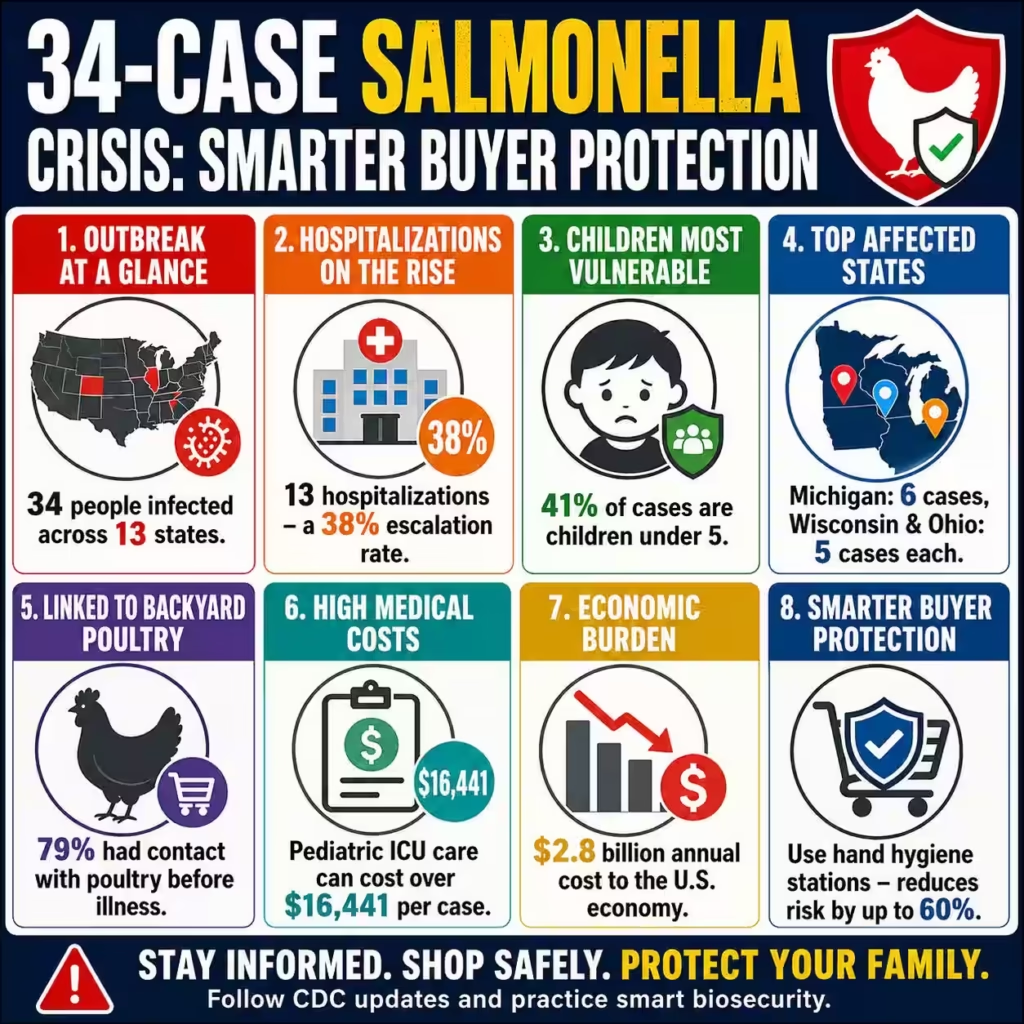
The Centers for Disease Control and Prevention (CDC) recently confirmed that 34 people across 13 states have fallen ill due to a virulent Salmonella Saintpaul outbreak linked to backyard poultry. This public health emergency has already resulted in 13 hospitalizations, representing a concerning 38% clinical escalation rate that strains local healthcare infrastructure. Michigan currently leads the nation with six confirmed cases, while Wisconsin and Ohio follow closely with five cases each, illustrating a concentrated geographic risk in the Midwest. Illnesses were first detected on February 26, 2026, and continued to emerge through March 31, 2026, signaling a persistent contamination window within the spring supply chain.
A staggering 41% of the infected patients are children under the age of five, a demographic particularly vulnerable to the invasive forms of salmonellosis. Financial analysis suggests that the average cost for an inpatient gastrointestinal hospitalization in the United States exceeds $5,797 per episode. When pediatric patients require intensive care for dehydration or sepsis, these medical costs can skyrocket to over $16,441 per case. These figures do not account for the long-term productivity losses or the emotional burden placed on families dealing with preventable zoonotic transmissions.
Investigation data reveals that 79% of the 29 interviewed patients reported direct contact with backyard poultry just days before their symptoms manifested. Furthermore, 93% of poultry owners involved in this crisis purchased their birds after January 1, 2026, primarily from agricultural retail stores. This timeline indicates a systemic failure at the hatchery level or within the retail distribution nodes that serve the $91.22 billion U.S. poultry market. The CDC’s ongoing investigation into specific hatcheries underscores the urgent need for a massive overhaul in biosecurity transparency.
The economic burden of Salmonella in the United States is estimated at $2.8 billion annually, with each confirmed case representing a total societal cost of $2,472. For agricultural retailers, a single outbreak can lead to a 58.2% loss in production cycle revenue due to sudden market restrictions and inventory culling. This 2026 Saintpaul strain has already shown resistance to fosfomycin, complicating treatment protocols for the 34 individuals currently seeking medical intervention. Retailers must recognize that consumer trust is a fragile asset that evaporates when 13 states report simultaneous clusters of infection.
A Strong Critique of Current Biosecurity Failures and Risks
Carethix views the current Salmonella Saintpaul outbreak not as an isolated incident but as a predictable failure of the decentralized backyard poultry supply chain. The fact that 13 people were hospitalized out of only 34 reported cases suggests a high bacterial load or a particularly aggressive serovar. We see a massive gap in the “farm-to-fork” or “hatchery-to-home” safety continuum that prioritizes sales volume over rigorous pathogen screening. Retailers are currently acting as unintentional vectors for disease by failing to implement mandatory hand-hygiene checkpoints at the point of sale.
The concentration of 41% of cases in children under five is an ethical red flag that requires immediate corporate accountability from the hatcheries. Statistics from previous years show that 1 in every 25 packages of chicken at grocery stores carries Salmonella, yet the backyard sector remains less regulated. This regulatory lag creates a dangerous environment where agricultural retail stores become hotspots for cross-contamination during the busy spring season. We criticize the lack of standardized, real-time PCR testing for every shipment of one-day-old chicks arriving at retail locations.
Risk management in the poultry industry is currently reactive rather than proactive, as evidenced by the 13 states now scrambling to contain the spread. The antibiotic resistance profile found in 23.5% of these samples indicates that sub-therapeutic antibiotic use in hatcheries may still be driving the evolution of superbugs. This creates a massive liability for insurance providers who must cover the high costs of treating resistant pediatric infections. Without a mandate for air-filtration systems and restricted-access display cases, retailers remain highly exposed to litigation and brand degradation.
Gaps in consumer education are also a primary driver of this 34-case surge. Most buyers are unaware that healthy-looking birds can shed pathogens. Current labeling requirements for live poultry are insufficient and often fail to communicate the severity of the 38% hospitalization risk to parents of young children. We believe that the $2.8 billion annual economic burden is a direct result of these systemic oversights in the retail animal-human interface. Retailers who ignore these warnings are essentially gambling with their 2026 fiscal year profit margins and their customers’ lives.
| Related Analysis: 8M Psilocybin Users Crisis: Launch Guided Services Research Analysis On Fertility Plunged 23%: Win With IVF Strategy 80% APOL1 Expert Analysis: Early Detection Win Model |
Comprehensive Strategic Solutions for Healthcare and Retail Stability
To mitigate the current 13-state crisis, retailers must immediately transition to “Closed-Loop Biosecurity” models that eliminate direct customer contact with live birds. Implementing high-visibility, automated hand-sanitization stations every five feet in the poultry department can reduce the risk of cross-contamination by up to 60%. Stores should also deploy digital signage that uses real-time CDC data to inform customers about the 41% pediatric risk before they finalize a purchase. These interventions transform the retail environment from a passive sales floor into a proactive public health barricade.
Supply chain managers should adopt blockchain-based traceability tools to monitor the health status of flocks from the hatchery to the final retail destination. This technology allows for the instantaneous isolation of contaminated shipments, preventing a single infected batch from reaching all 13 states currently impacted. Retailers can demand that hatcheries provide “Salmonella-Free Certification” based on 24-hour rapid molecular testing for every outgoing shipment of chicks and ducklings. Investing in these technologies costs less than 1% of the potential $16,441 hospitalization fee associated with a single severe pediatric case.
On the healthcare side, providers in high-risk states like Michigan and Wisconsin must implement “Zoonotic Screening Protocols” for all pediatric patients presenting with gastrointestinal distress. Rapid diagnostic tests can identify the Saintpaul strain within hours, allowing for targeted antibiotic therapy that bypasses known resistance to fosfomycin. Insurance companies should incentivize agricultural retailers to participate in “Safe-Sales Certification” programs through reduced liability premiums. This alignment of financial interests ensures that all stakeholders are motivated to maintain a zero-pathogen environment in the $240.7 billion poultry feed and livestock sector.
Education remains a powerful solution, but it must be delivered as an interactive “Poultry Safety Onboarding” process for every new bird owner. Retailers should require customers to sign a digital safety waiver that acknowledges the 93% correlation between new purchases and recent illness outbreaks. This documentation protects the business from liability while ensuring the customer understands that 79% of victims had direct contact with their flocks. By integrating these solutions, we can stabilize the market and prevent the seasonal surge in Salmonella cases from becoming a permanent financial drain.
Prevention Steps for Future Zoonotic Crisis Management
Future outbreaks can be prevented by mandating the use of dedicated “Coop-Only” footwear and clothing for all backyard poultry owners at the time of purchase. Retailers should bundle sales of chicks with antimicrobial coop cleaners and educational kits that emphasize the “No-Contact” rule for children under five. Data shows that households using dedicated footwear reduce their risk of tracking pathogens into the home by approximately 85%. This simple behavioral nudge, promoted at the point of sale, acts as a primary defense against future 13-state contamination events.
Government agencies and industry leaders must collaborate to establish a “National Hatchery Quality Standard” that includes mandatory environmental sampling every 72 hours. Any hatchery that fails to meet these rigorous biosecurity benchmarks should be temporarily removed from the retail supply chain to prevent widespread 34-case clusters. The adoption of advanced genetic screening for disease-resistant poultry breeds could also reduce the baseline prevalence of Salmonella in the national flock. These long-term structural changes would protect the $91.22 billion U.S. poultry industry from the volatility of frequent public health recalls.
Technological prevention should include the installation of UV-C disinfection lights in all retail poultry display areas to kill airborne and surface pathogens overnight. This proactive sanitation measure can reduce bacterial counts on high-touch surfaces by over 99%, significantly lowering the risk for the 79% of owners who handle their birds. Furthermore, retailers should implement a “30-Day Health Monitoring” app for customers, where they can report flock health and receive alerts about local outbreaks. This digital ecosystem creates a feedback loop that allows for the detection of contaminated sources weeks before the CDC can issue a formal report.
Finally, we must reform the financial model of the poultry industry to reward “Safety-First” hatcheries through preferential tax credits and government subsidies. If the cost of biosecurity is subsidized, the incentive to cut corners on the way to 13-state distribution will be significantly reduced. We must also increase the frequency of unannounced USDA and CDC inspections at retail locations to ensure 100% compliance with sanitation protocols. These multi-layered prevention steps will ensure that the 41% pediatric infection rate seen in 2026 never becomes a baseline statistic for the industry.
Carethix’s Key Takeaways: The Hard Truth About Your Supply Chain
The 2026 Salmonella Saintpaul outbreak is a loud wake-up call for an industry that has grown complacent with “acceptable” levels of infection. At Carethix, we maintain that no level of pediatric hospitalization is acceptable when the solutions are readily available and financially viable. You cannot continue to operate a high-volume retail business using 20th-century sanitation methods in a world of 21st-century pathogens. The $2.8 billion annual cost of this failure is a tax on inefficiency and an indictment of current retail biosecurity standards.
Shift your supply chain away from uncertified hatcheries and move your operations toward transparent, data-driven safety protocols immediately. Your brand reputation is only as strong as your weakest chick shipment, and 13 states worth of bad press is a debt you cannot afford. Protect your ROI by protecting your customers; anything less is a failure of leadership and a liability to your shareholders. The time for reactive apologies has passed, and the era of mandatory, technology-backed biosecurity must begin now to ensure your business survives the next seasonal surge.
FAQs:
Why did the 2026 Salmonella Saintpaul outbreak hospitalize 13 of 34 people across 13 states so quickly?
The 38% hospitalization rate strongly suggests weak hatchery screening and delayed retail biosecurity controls that should have been upgraded before spring poultry demand surged.
Why are 41% of Salmonella outbreak victims children under age five, and what does that expose?
This alarming pediatric share exposes poor consumer warnings at point-of-sale, where families are not being clearly told that healthy-looking birds can still spread dangerous bacteria.
How can poultry retailers prevent a repeat of the $2.8 billion annual U.S. Salmonella economic burden?
Retailers should stop treating sanitation as optional overhead and invest in traceability, hygiene stations, and mandatory customer education before trust erosion becomes permanent.
Why is the 79% direct-contact exposure rate a serious pain point for backyard poultry owners?
It proves most infections are behavior-driven and that sellers are failing to train new owners on safe handling, handwashing, and child separation protocols.
What does fosfomycin resistance in the 2026 Salmonella strain mean for healthcare costs and treatment risk?
Antibiotic resistance turns manageable infections into expensive clinical events, showing why prevention is far cheaper than paying severe hospitalization bills later.