Analysis of neurological risks across 2.8M multiple sclerosis patients reveals urgent need for stronger neurology strategies.
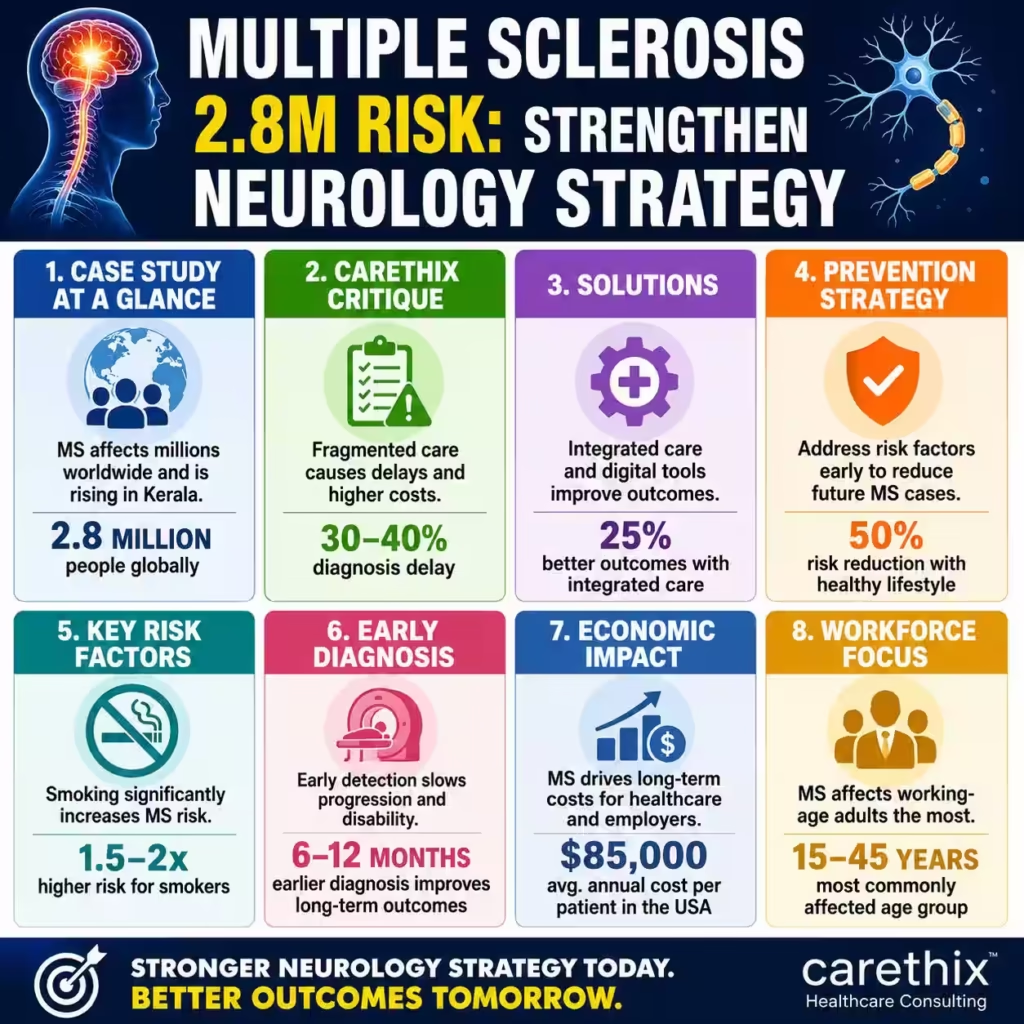
Case Study: Multiple Sclerosis Growth Exposes Healthcare Delivery Gaps
Multiple Sclerosis (MS) now affects approximately 2.8 million people globally, while estimates suggest 1,500–2,000 individuals in Kerala alone currently live with the disease, creating growing pressure on neurological care systems, workforce capacity, and long-term care economics. The larger business problem is not only disease prevalence but delayed diagnosis, fragmented treatment pathways, and insufficient chronic disease infrastructure that increase both clinical and financial burden.
MS is a chronic autoimmune neurological condition where immune-mediated destruction of myelin disrupts communication across the brain, spinal cord, and optic nerves. The disease primarily affects individuals between 15 and 45 years, which means health systems are increasingly managing working-age populations experiencing productivity losses, disability risk, and long-term healthcare utilization.
The economic consequences are substantial because MS management extends across decades rather than months. Global healthcare analyses have shown neurological disorders collectively represent one of the fastest-growing categories of disease burden, while chronic neurological care increasingly requires multidisciplinary delivery models including neurology, rehabilitation, imaging, mental health support, and remote monitoring.
Historical Indian prevalence estimates from the 1980s suggested roughly one case per 100,000 population, but newer estimates indicate approximately 5–10 cases per 100,000 people today, demonstrating measurable growth in disease recognition and incidence. Improved diagnostics explain part of the increase, but changing environmental exposures, lifestyle patterns, obesity prevalence, and autoimmune disease growth also contribute.
The business implications extend beyond hospitals. Pharmaceutical companies, specialty clinics, imaging providers, rehabilitation networks, insurance companies, employers, and digital health platforms increasingly participate in MS care delivery because disease management requires sustained intervention rather than episodic treatment.
Environmental drivers create additional strategic challenges. Evidence increasingly links childhood exposure to viral infections such as Epstein-Barr Virus (EBV), smoking, obesity, and lower sunlight exposure with elevated risk profiles, creating opportunities for prevention-oriented healthcare models rather than purely reactive care.
Healthcare organizations face a difficult reality: MS remains incurable, but disease-modifying therapies, earlier diagnosis, and structured management significantly reduce progression and complications. The organizations that build scalable neurological care pathways today are likely to experience stronger patient retention, improved clinical outcomes, and more predictable healthcare economics tomorrow.
Carethix Critique: Why Current MS Management Models Remain Insufficient
Carethix’s assessment is straightforward: current MS care delivery remains too reactive, too fragmented, and too dependent on specialist availability.
Many healthcare systems continue treating neurological disorders through isolated specialty departments rather than integrated care pathways. Patients frequently move between primary care physicians, neurologists, imaging centers, physiotherapists, mental health professionals, and rehabilitation providers without coordinated care architecture, increasing delays and reducing adherence.
Diagnostic delays remain a major structural weakness. Because symptoms such as visual disturbances, fatigue, numbness, weakness, balance problems, and cognitive changes appear inconsistently, many patients experience prolonged referral cycles before receiving definitive neurological evaluation.
Workforce limitations worsen these challenges. Many regions face shortages of neurologists, neuroimmunology specialists, rehabilitation providers, and MS-focused nursing teams, creating treatment bottlenecks as disease prevalence grows.
Financial accessibility remains another gap. Disease-modifying therapies can create sustained financial pressure for both patients and payers because management often continues indefinitely. When healthcare systems lack structured reimbursement pathways, discontinuation risk increases substantially.
Healthcare organizations also underinvest in longitudinal monitoring. MS progression is rarely linear, meaning episodic consultations often fail to identify deterioration early enough to modify interventions effectively.
Digital infrastructure limitations further weaken care quality. Many providers still operate without integrated neurological registries, predictive analytics, structured outcome measurement, or remote monitoring capabilities, reducing operational visibility.
Population health approaches remain underdeveloped despite increasing autoimmune disease prevalence. Systems continue investing heavily in treatment while underinvesting in risk reduction programs related to obesity, smoking cessation, environmental exposures, and preventive health education.
The business risk is substantial because delayed intervention increases hospitalization rates, disability costs, productivity losses, caregiver burden, and long-term expenditure. Healthcare organizations that ignore these gaps may experience rising operational costs without proportional improvement in patient outcomes.
Solutions: Building Scalable and Sustainable MS Care Models
Healthcare organizations require the implementation of redesigned neurological care models as opposed to incremental modifications.
The primary strategy involves the development of integrated neurological care pathways. Management of Multiple Sclerosis (MS) demonstrates superior outcomes when healthcare institutions consolidate neurology, diagnostic imaging, rehabilitation, psychiatric services, nursing support, and pharmaceutical management into cohesive programs rather than maintaining autonomous services.
Organizations should prioritize the expansion of specialized MS clinics to centralize clinical delivery. These dedicated facilities mitigate referral fragmentation while enhancing diagnostic velocity, the initiation of therapeutic interventions, and the consistency of longitudinal monitoring.
Investment in expedited diagnosis must be established as a strategic imperative. Enhanced access to magnetic resonance imaging (MRI), standardized neurological screening protocols, optimized referral methodologies, and comprehensive physician education initiatives are essential to significantly reduce diagnostic duration.
Digital infrastructure represents a significant opportunity for systemic enhancement. The integration of remote monitoring platforms, symptom tracking technologies, patient portals, wearable devices, and virtual neurological consultation models facilitates improved longitudinal management while addressing institutional capacity limitations.
Healthcare systems should adopt structured risk stratification frameworks. Patients identified with a higher risk of disease progression necessitate more intensive surveillance, whereas lower-risk cohorts may be appropriately managed through hybrid virtual care pathways that optimize resource allocation.
Employers constitute increasingly vital stakeholders, as MS disproportionately impacts the working-age demographic. The establishment of corporate health partnerships, occupational health initiatives, workplace modifications, and vocational reintegration programs can mitigate productivity attrition and enhance workforce retention.
Partnerships with the pharmaceutical sector should transition beyond the mere procurement of medications. Organizations can derive substantial benefit from integrated support frameworks, encompassing adherence management, nurse navigation, patient education, and the systematic tracking of clinical outcomes.
The establishment of robust data infrastructure is fundamental. Healthcare systems ought to develop neurological registries to monitor therapeutic efficacy, disease progression rates, patterns of hospitalization, medication adherence, and qualitative outcomes.
Prevention-oriented business models generate additional institutional value. Initiatives focused on weight management, smoking cessation, preventive screenings, and public awareness may alleviate future disease burden while advancing broader population health objectives.
Institutions that successfully engineer scalable neurological ecosystems, rather than isolated treatment interventions, are positioned to achieve superior operational performance and enhanced long-term economic sustainability.
Prevention: Reducing Future MS Burden Through System-Level Interventions
It is imperative that prevention strategies transition from individualized interventions toward comprehensive, population-scale frameworks.
Public health education initiatives should prioritize modifiable risk factors associated with the escalation of autoimmune conditions. Implementation of smoking cessation campaigns, obesity mitigation programs, physical activity mandates, and nutritional education can significantly reduce long-term risk exposure.
Greater investment in early-life health interventions is warranted, as childhood environmental exposures are increasingly recognized as critical determinants in the pathogenesis of autoimmune diseases. Prevention programs targeting pediatric obesity and holistic wellness yield broad population benefits that extend beyond the management of Multiple Sclerosis.
Healthcare systems must enhance screening awareness among primary care practitioners. Expedited recognition of neurological indicators is essential to reducing referral latency and optimizing treatment timelines.
Discussions regarding Vitamin D and ultraviolet exposure necessitate balanced public health communication. Although reduced sunlight exposure is correlated with increased prevalence of Multiple Sclerosis, preventive messaging should emphasize evidence-based health promotion over reductive recommendations.
Governmental bodies and health systems must expand neurological workforce planning. The rise in disease prevalence without a commensurate increase in specialist capacity creates structural limitations that jeopardize future care delivery.
Data-driven surveillance systems are of equal importance. Enhanced prevalence tracking, the development of clinical registries, and robust disease monitoring facilitate informed resource allocation and infrastructure planning.
Insurance providers should increasingly incentivize participation in preventive care rather than maintaining an exclusive focus on treatment reimbursement. Prevention-oriented reimbursement models frequently foster superior long-term financial sustainability.
Continued expansion of research investment is vital as autoimmune disease patterns evolve. An improved understanding of environmental triggers, biomarkers, personalized medicine, and predictive modeling will fundamentally define the future of neurological care.
The resilience of future healthcare systems depends less on the expansion of treatment volume and more on the construction of systems designed to identify risks early, intervene promptly, and ensure continuity of care.
Carethix Key Takeaway
Carethix believes the real business challenge surrounding Multiple Sclerosis is not simply disease prevalence but healthcare system preparedness.
A disease affecting approximately 2.8 million people globally and increasingly affecting younger populations exposes weaknesses in neurological infrastructure, workforce planning, digital maturity, and chronic disease management.
Organizations that continue relying on fragmented specialty models may experience rising costs, worsening patient outcomes, and operational inefficiencies. Organizations that build integrated neurological ecosystems, prevention frameworks, data-driven monitoring systems, and scalable care pathways position themselves for stronger financial sustainability and better patient outcomes.
MS may remain incurable today, but healthcare delivery failures remain highly preventable.
FAQs:
1: Why Is Multiple Sclerosis Increasing From 1 Per 100,000 To 5–10 Per 100,000 In India?
Multiple Sclerosis prevalence estimates in India have shifted from roughly 1 case per 100,000 people during the 1980s to approximately 5–10 cases per 100,000 over recent decades, creating growing pressure on neurological services. The healthcare industry should avoid viewing this entirely as better diagnostics because rising obesity rates, smoking exposure, autoimmune disease growth, and environmental risk factors create measurable long-term demand expansion. Organizations that fail to prepare for rising neurological care volumes risk workforce shortages, delayed diagnosis pathways, and higher chronic disease costs.
2: How Serious Is The Economic Burden Of Multiple Sclerosis For Healthcare Systems?
Multiple Sclerosis affects approximately 2.8 million people globally and primarily impacts individuals between ages 15 and 45, creating decades of continuous treatment costs rather than short-term spending. The larger financial problem is that delayed diagnosis, repeated MRI usage, rehabilitation services, lost productivity, and long-term medication dependence create expanding expenditure across multiple healthcare sectors. Healthcare organizations that continue relying on fragmented care models may experience higher operational costs without proportional improvements in patient outcomes.
3: Why Are Multiple Sclerosis Diagnosis Delays Still A Major Healthcare Problem?
MS symptoms often appear inconsistently through fatigue, vision problems, numbness, mobility issues, or cognitive changes, causing many patients to move across multiple specialties before diagnosis. Since approximately 1,500–2,000 individuals are estimated to currently live with MS in Kerala alone, growing case volumes increase the risk of specialist bottlenecks and delayed intervention. Healthcare systems that fail to accelerate neurological screening and referral pathways create larger disability risks and higher long-term treatment expenses.
4: Can Multiple Sclerosis Treatment Reduce Disease Progression And Healthcare Costs?
While Multiple Sclerosis (MS) remains a chronic condition without a definitive cure, contemporary therapeutic methodologies offer significant potential to mitigate relapse frequency, the severity of clinical complications, and overall disease progression, provided that clinical intervention is initiated at an early stage. A persistent challenge resides in the fact that numerous healthcare systems continue to emphasize episodic treatment modalities rather than comprehensive longitudinal disease management, notwithstanding substantial evidence favoring continuous monitoring frameworks. Organizations that proactively invest in formalized neurological programs, integrated rehabilitation pathways, and rigorous long-term surveillance are better positioned to realize enhanced clinical outcomes and achieve more sustainable financial performance.
5: What Are The Biggest Preventable Risk Factors Associated With Multiple Sclerosis Growth?
Corroborating evidence indicates that Multiple Sclerosis risk is increasingly linked to determinants such as pediatric Epstein-Barr Virus exposure, obesity, tobacco use, and insufficient ultraviolet radiation, thereby presenting strategic opportunities for investment in preventive healthcare frameworks. Despite the burgeoning prevalence of autoimmune pathologies and the attendant long-term fiscal exigencies within care delivery systems, healthcare institutions often allocate inadequate resources toward preventive measures. Organizations that prioritize the expansion of obesity mitigation, smoking cessation, population health initiatives, and early-stage neurological surveillance are strategically positioned to manage future disease burdens with greater efficacy.