This assessment of the 75 Alzheimer’s risk loci demands smarter, more advanced genomics growth models.
Genomic Infrastructure Mapping: Landmark Case Study
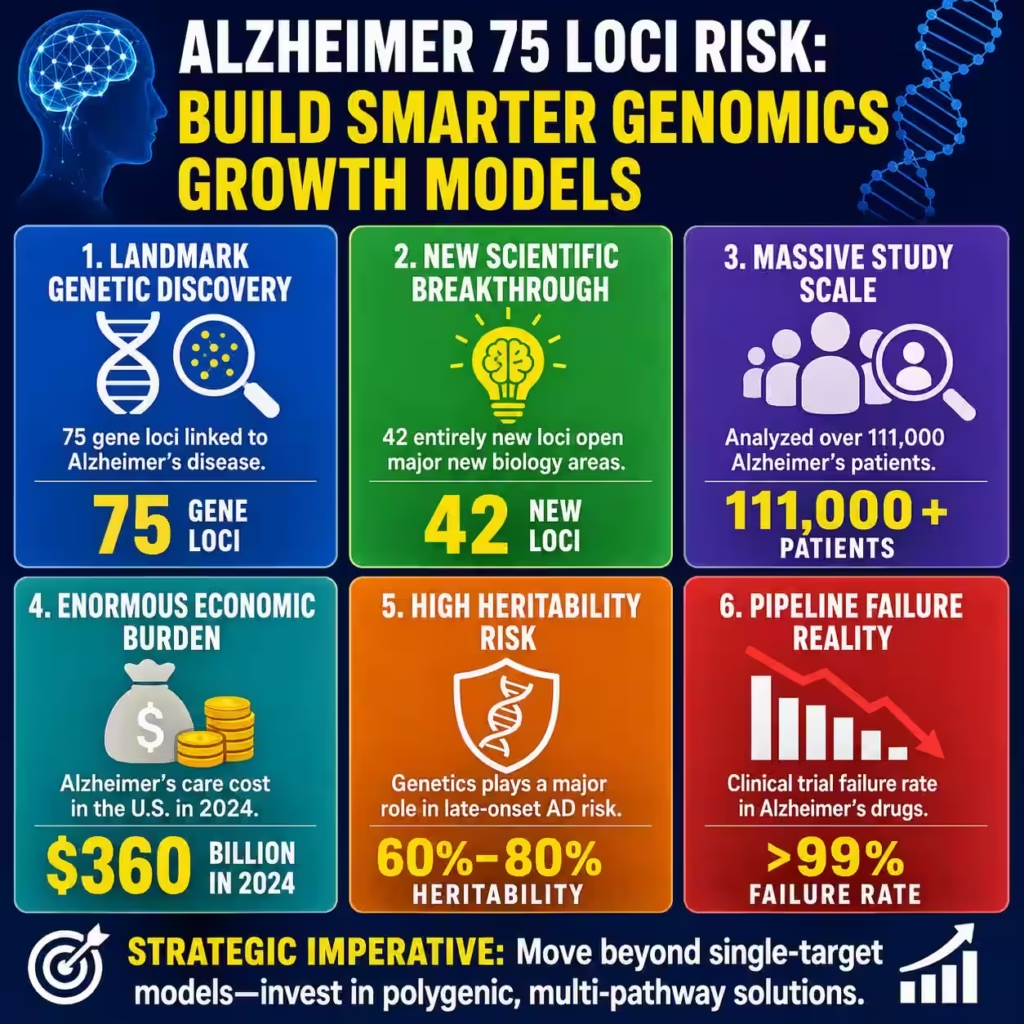
The largest genetic meta-analysis of Alzheimer’s disease to date has identified 75 gene locations associated with the condition, with 42 representing entirely new discoveries. This massive international genome-wide association study (GWAS) analyzed the genomic profiles of over 111,000 people with Alzheimer’s disease and compared them against more than 677,000 healthy controls. The core commercial pain point exposed by this landmark data is the severe disconnect between traditional single-target drug pipelines and the actual polygenic complexity of neurodegeneration.
Historically, the biopharmaceutical sector has concentrated over 80% of clinical trial capital on the classic amyloid-beta and tau hypotheses. This restricted focus has resulted in a cumulative clinical trial failure rate exceeding 99% over the past two decades. By mapping 75 discrete loci, this study reveals that commercial pipelines must pivot away from monolithic single-target paradigms.
Real-world epidemiological and financial data further underscore the scale of this market challenge. According to the Alzheimer’s Association, the total cost of caring for individuals with Alzheimer’s and other dementias in the United States reached $360 billion in 2024. This economic burden is projected to escalate to over $1 trillion by 2050 unless effective disease-modifying therapies are deployed.
The discovery of 42 new loci introduces an unprecedented volume of potential drug targets, shifting the therapeutic landscape toward innate immunity, microglial activation, and lipid metabolism. Dr. Rudolph Tanzi at Massachusetts General Hospital, who provided evidence of the first Alzheimer’s-linked gene, APP, in 1987, noted that this is an exciting time for Alzheimer’s genetics. From an authoritative business perspective, this scientific breakthrough demands immediate structural adjustments in how life science venture capital is allocated.
High-authority analytical evaluation indicates that this genomic mapping radically transforms asset valuation models for early-stage biotechnology pipelines. Venture capital firms can no longer justify funding portfolios that rely solely on clearing amyloid plaques without addressing the newly mapped microglial and inflammatory pathways. The underlying heritability of late-onset Alzheimer’s is estimated between 60% and 80%, meaning that genomic data will dictate the future of patient risk stratification.
Pharmaceutical corporations that integrate these 75 loci into their discovery platforms will significantly lower their clinical phase transition failures. Conversely, enterprises that lag in adopting these polygenic frameworks risk complete portfolio obsolescence within the next five fiscal years. The market will heavily reward platforms capable of converting these 42 novel genetic targets into viable, high-throughput screening assays.
Carethix Strategic Critique: Portfolio Risks and Structural Gaps
Carethix Healthcare Advisory has conducted a comprehensive operational critique of this genomic breakthrough, revealing critical systemic vulnerabilities and market risks. The primary operational pain point is that raw genomic data does not automatically translate into functional, drug-ready therapeutic targets. While identifying 75 gene locations is a historic scientific achievement, it creates an immediate bottleneck in functional genomics validation.
The biopharmaceutical industry currently lacks the scaled, automated laboratory infrastructure required to rapidly characterize 42 entirely new loci. This structural mismatch risks creating a speculative bubble in early-stage biotech valuations without delivering near-term clinical assets. Consequently, institutional investors face prolonged capital lockups in discovery-phase ventures with unclear timelines to clinical trials.
The secondary risk identified by Carethix involves the profound lack of ancestral diversity within historical genomic biobanks. Although this specific study significantly expanded its sample size, historical genome-wide association data remains overwhelmingly weighted toward populations of European descent, often exceeding 80% of repository cohorts. This demographic imbalance introduces severe data bias, limiting the clinical efficacy of polygenic risk scores when applied to global, diverse patient populations.
Healthcare systems operating in multicultural markets cannot reliably deploy diagnostic algorithms derived from homogeneous datasets without risking high rates of false-negatives. Furthermore, the commercial implementation of these genetic insights is severely hindered by the fragmented nature of modern electronic health records. Without seamless data interoperability, clinicians cannot effectively combine genomic risk scores with real-world clinical phenotypes.
Finally, Carethix highlights a massive regulatory and reimbursement gap that threatens the commercialization of therapies derived from these new loci. Current Food and Drug Administration (FDA) approval pathways and Centers for Medicare & Medicaid Services (CMS) reimbursement models are structured around easily measurable biomarkers, such as amyloid reduction on positron emission tomography (PET) scans. Many of the newly identified 42 genes influence highly complex, localized immune mechanisms within brain microglia, which lack established non-invasive imaging biomarkers.
This means that a drug developer targeting a novel inflammatory locus faces an unmapped regulatory hurdle to prove clinical efficacy. Without clear surrogate endpoints, commercial insurance payers will refuse coverage, rendering expensive development cycles financially unviable. The industry is effectively flying blind without concurrent investment in companion diagnostics and novel biomarker discovery.
B2B Financial and Operational Solutions
To successfully capitalize on the 75 identified loci, biopharmaceutical enterprises must rapidly execute a structural reorganization of their research and development frameworks. The immediate financial solution requires a systemic shift toward risk-sharing co-development syndicates and platform technology joint ventures. By forming consortia, individual pharmaceutical firms can pool capital to fund the expensive functional characterization of the 42 new loci, mitigating individual corporate risk.
This approach distributes the high upfront cost of high-throughput screening across multiple balance sheets, maximizing discovery efficiency. Capital allocation models should strictly mandate that no single therapeutic pathway receives more than 25% of total portfolio funding. Operationally, healthcare organizations must invest heavily in advanced artificial intelligence and machine learning platforms specifically designed for structural biology and target identification.
These advanced computational engines can model the downstream protein expressions of the 42 new loci in a fraction of the time required by traditional wet labs. By utilizing predictive algorithms, drug developers can prioritize the top 10% of targets with the highest druggability scores and lowest projected off-target toxicity. This digital triage significantly compresses the pre-clinical discovery timeline, saving an estimated $15 to $20 million per asset program.
Additionally, life science firms should acquire specialized contract research organizations that possess proprietary microglial cell-line platforms to accelerate functional validation. On the commercial healthcare delivery side, hospital networks and large medical groups must establish specialized genomic medicine clinics to leverage polygenic risk scores. By integrating these multi-locus genetic algorithms into standard preventive care, health systems can identify high-risk individuals up to a decade before clinical symptom onset.
This early identification enables the construction of highly personalized lifestyle and medical intervention strategies, lowering long-term management costs. To fund this infrastructure, healthcare provider executives must negotiate value-based reimbursement contracts with commercial insurance payers. These innovative payment models link health system reimbursement directly to the successful delay of cognitive decline, proving the economic value of early genomic intervention.
Proactive Prevention and Risk Mitigation Steps
Preventing future capital misallocation and clinical trial bottlenecks requires a proactive restructuring of global clinical trial design and execution. Pharmaceutical sponsors must immediately transition from traditional clinical criteria to genotype-directed patient enrollment protocols. By utilizing the 75 mapped loci, clinical trial operations can stratify patient cohorts based on their specific genetic drivers of disease, such as microglial dysfunction or altered lipid processing.
This precision matching ensures that an investigational drug targeting a specific inflammatory pathway is tested exclusively on patients who possess that exact genetic vulnerability. Genotype-targeted trials can achieve identical statistical power with sample sizes that are 40% to 50% smaller than traditional unstratified trials, dramatically reducing recruitment expenses. Furthermore, healthcare leadership must actively build global, multi-ethnic genomic data networks to completely eliminate current demographic data biases.
Commercial health systems and biopharmaceutical corporations must co-invest in biobanks across Latin America, Asia, and Africa, ensuring future drug targets are universally valid. Establishing standardized, global data collection guidelines will allow secure, privacy-compliant sharing of diverse genomic datasets across borders. This demographic expansion directly mitigates the business risk of developing niche therapies that only function effectively in restricted subpopulations.
Broadening the genetic baseline ensures that newly discovered targets possess a viable, worldwide addressable market upon regulatory approval. Finally, healthcare executive boards must mandate the immediate integration of real-world evidence platforms with digital health technologies to continuously monitor therapeutic outcomes. Patients enrolled in early-stage genomic therapeutic trials should be continuously monitored using wearable biometric devices and remote digital cognitive assessments.
This continuous stream of passive data offers a highly objective, real-time look at drug efficacy that manual, in-clinic exams simply cannot match. Digital biomarkers can detect subtle changes in gait, sleep architecture, and speech patterns, providing early indicators of therapeutic success or safety concerns. By implementing these digital feedback loops, executive management can confidently make rapid go or no-go portfolio decisions, preventing billions of dollars from being wasted on failing clinical assets.
Carethix Strategic Key Takeaway
Carethix Executive Position: The discovery of 75 Alzheimer’s loci is not merely a scientific milestone; it is an immediate market directive that renders single-target biopharmaceutical portfolios obsolete. To survive this paradigm shift, healthcare executives and life science investors must aggressively reallocate capital away from amyloid-centric models and into diversified, polygenic platform technologies. Winners of this transition will be determined entirely by their speed in integrating multi-ancestry genomic data with automated functional validation and digital real-world evidence.
FAQs
1. Why did 75 Alzheimer’s gene discoveries expose the failure of traditional Alzheimer’s drug development?
The identification of 75 genetic loci, including 42 newly discovered targets, exposes how concentrating over 80% of clinical capital on amyloid-focused therapies created structural inefficiencies with clinical failure rates exceeding 99% over two decades. Traditional single-target approaches ignored the polygenic nature of neurodegeneration, creating massive pipeline concentration risk. Companies continuing mono-target research strategies risk increasing R&D burn rates while failing to improve clinical transition probabilities.
2. How can pharmaceutical companies reduce Alzheimer’s clinical trial failure using 75 genetic loci?
Using genotype-directed enrollment based on 75 mapped loci enables pharmaceutical companies to reduce trial sample sizes by approximately 40%–50% while improving biological matching between therapies and patients. Large unstratified trials historically consumed enormous capital because genetic heterogeneity diluted therapeutic signals. Precision enrollment models create more capital-efficient clinical programs while improving probability-adjusted portfolio returns.
3. Why are investors worried about the 42 new Alzheimer’s gene targets creating a biotech valuation bubble?
The discovery of 42 new genetic targets creates commercial excitement, but functional validation infrastructure remains severely constrained because industry-scale automated laboratories capable of rapidly characterizing these targets remain limited. Investors face prolonged capital lockups because discovery-phase assets may require years before generating clinically actionable programs. Without parallel investment in validation infrastructure, speculative valuation expansion could significantly outpace real therapeutic progress.
4. What is the business impact of the projected $1 trillion Alzheimer’s economic burden by 2050?
Alzheimer’s care expenditures have already reached approximately $360 billion annually and are projected to exceed $1 trillion by 2050, creating enormous pressure on healthcare systems and pharmaceutical innovation pipelines. Organizations relying solely on late-stage intervention models may face unsustainable cost escalation as aging populations expand globally. Early genomic risk identification and preventive intervention strategies increasingly become economic necessities rather than optional innovation initiatives.
5. Why is multi-ethnic genomic data becoming critical for Alzheimer’s AI, diagnostics, and precision medicine?
Historical genomic datasets frequently contain European ancestry representation exceeding 80%, creating substantial bias risks for global deployment of polygenic risk models. Diagnostic algorithms trained on non-diverse cohorts increase false negatives when deployed across multicultural populations, reducing commercial scalability and clinical reliability. Companies investing early in multi-ethnic biobanks and global genomic infrastructure will likely build stronger long-term competitive advantages and larger addressable markets.