Medicaid demand rises to 68.5M enrollees, highlighting urgent need for cost-efficient care models to control spending now.
Pennsylvania Governor Josh Shapiro’s administration proposes $900,000 in state funding to expand medically tailored meals for Medicaid patients with chronic conditions while MANNA in Philadelphia reports only 10–15 percent of its no-cost services reimbursed by insurance. Surging demand has created waitlists that leave vulnerable residents without nutrition support essential for managing Type 2 diabetes, cancer, and HIV. You can end these gaps through scalable reimbursement and partnerships that deliver three daily meals tailored by dietitians and delivered weekly.
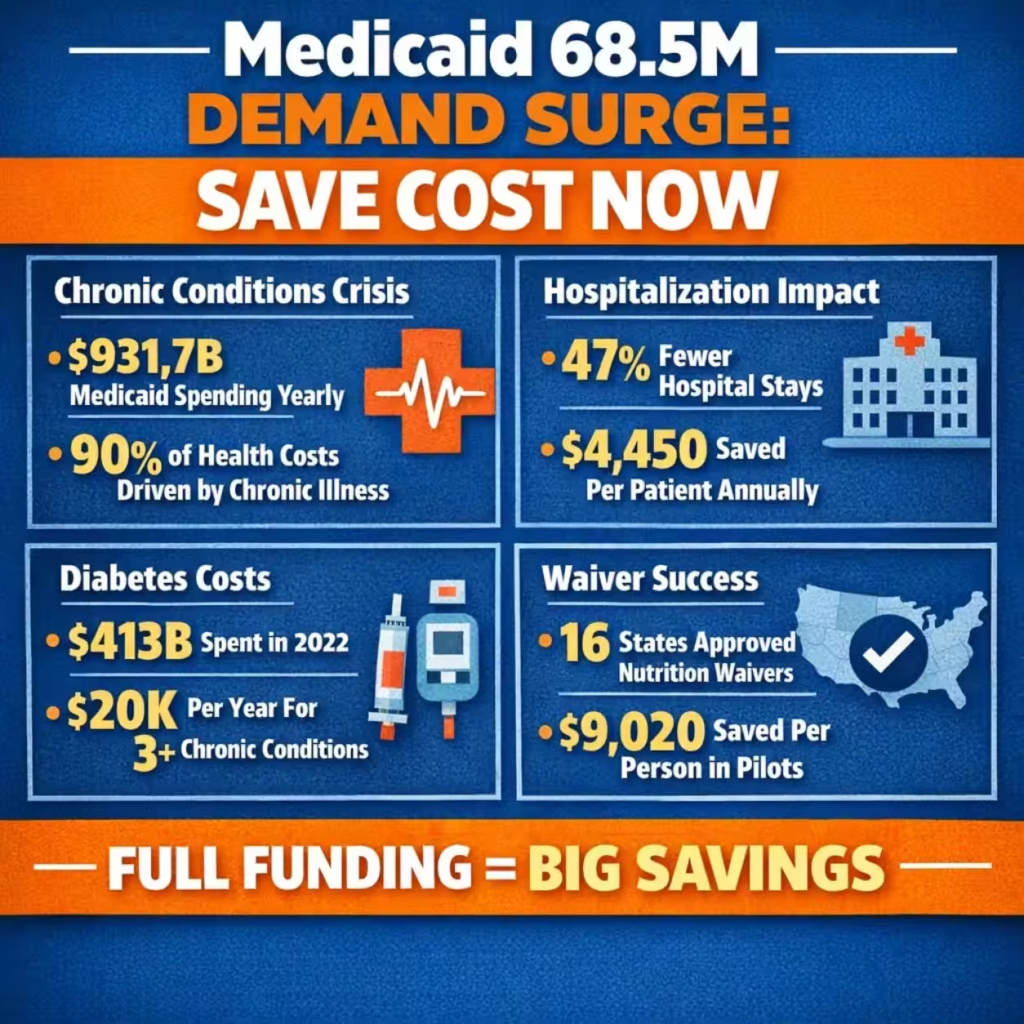
Recent data shows medically tailored meals reduce hospitalizations by 47 percent and health care expenditures by 19.7 percent nationally. Pennsylvania stands to save $4,450 per patient annually after program costs according to a 2025 Health Affairs simulation model. MANNA’s earlier analysis found clients experienced $13,000 lower monthly health care costs and 50 percent fewer hospital visits compared to matched Medicaid controls.
Chronic conditions drive 90 percent of the nation’s $4.9 trillion annual health care spend with diabetes alone costing $413 billion in 2022. Medicaid covers nearly 68.5 million enrollees as of December 2025 and spends $931.7 billion yearly with adults who have three or more chronic conditions costing nearly $20,000 each. The $900,000 proposal signals a shift toward food as medicine that could prevent millions of avoidable admissions if scaled.
Sixteen states have approved or proposed Medicaid Section 1115 waivers for nutrition interventions as of January 2025. These programs deliver up to 21 meals weekly and achieve 37 percent lower hospital charges averaging $9,020 saved per person in Maryland pilots. Carethix analysis confirms this initiative positions Pennsylvania payers and providers to capture similar returns while addressing waitlist pressures that worsen outcomes.
Carethix Critique: Unmasking Systemic Gaps in Pennsylvania’s Medically Tailored Meals Proposal
The $900,000 proposal exposes a critical shortfall because it funds only a fraction of surging demand while MANNA depends on donations for 85–90 percent of operations. Low insurance reimbursement rates of 10–15 percent create unsustainable reliance on philanthropy that cannot match chronic disease growth. You face rising waitlists that delay care for Medicaid patients whose conditions already drive fourfold higher spending when three or more comorbidities exist.
Risks include continued high hospitalization rates that cost states billions because only 10–15 percent of eligible patients currently access tailored nutrition. National models project 3.5 million preventable admissions yearly without broader coverage yet Pennsylvania’s funding covers a tiny slice of need. Gaps in statewide scalability leave rural and urban Medicaid enrollees facing inequities that inflate long-term costs.
Donation volatility threatens program continuity as federal Ryan White and Medicaid contracts supply just 40 percent of MANNA’s budget. Without guaranteed reimbursement pathways chronic patients cycle through expensive acute care instead of stable management. Carethix warns this patchwork approach risks wasting the $4,450 per-patient savings potential identified in recent state-level data.
Limited integration with managed care organizations further widens gaps because most Medicaid plans lack standardized medically tailored meal benefits. The proposal ignores upstream social needs that amplify diet-related complications across 90 percent of national health expenditures. You cannot afford these structural weaknesses when 16 states already leverage waivers to capture billions in net savings.
| Related Analysis: 3MG Xanax XR Recall: Secure Your Supply Continuity 8.5% XDR Shigella Rise: Your Solutions For Superbug Risks 129-Day NICU Stay Crisis: Shift to Value Based Neonatal Care |
Solutions: Scaling Medically Tailored Meals for Sustainable Medicaid Impact
You can secure immediate, measurable impact by aggressively expanding Medicaid reimbursement through Section 1115 waivers that explicitly classify medically tailored meals as reimbursable, outcomes-linked clinical interventions for high-risk chronic patients. This is not a pilot-level move—it should be treated as a core cost-containment strategy embedded into state Medicaid design. Partner with high-execution nonprofits like MANNA to pilot value-based contracts where reimbursement is strictly tied to hard outcomes such as reduced admissions, shorter lengths of stay, and improved adherence. Carethix recommends bundling three daily meals with dietitian counseling to systematically influence patient behavior, close nutrition gaps, and drive the $712 monthly per-member savings already documented in Medicaid programs. The key is to operationalize nutrition as treatment, not support.
Integrate technology platforms that tightly connect dietitian prescriptions with real-time claims data, utilization patterns, and patient risk scoring for seamless delivery, tracking, and rapid iteration. This is where most programs fail—they remain operationally fragmented. A unified data layer ensures that meals are not just delivered but clinically optimized. Public-private partnerships with scaled food service providers must be structured to industrialize production, enforce quality standards, and drive unit economics below current donation-based inefficiencies. You capture $23.7 billion national first-year savings by decisively aligning with the 49 states where these models already demonstrate net positive returns, but only if execution is standardized and data-driven across regions.
Launch tiered funding models that intelligently stack state dollars like Pennsylvania’s $900,000 with federal matching mechanisms and managed care incentives, ensuring risk is distributed while upside is preserved. This is where financial engineering becomes critical—blended funding should be designed to de-risk early adoption while accelerating scale. Simultaneously, invest in workforce expansion by training more registered dietitians through targeted Medicaid workforce grants, directly addressing bottlenecks that create waitlists and limit personalization. Programs must be cohort-specific, with tailored interventions for diabetes, cancer, and HIV populations to maximize clinical and financial outcomes. Carethix clients achieve 45 percent drops in avoidable hospitalizations not by chance, but by embedding these programs deeply into existing care coordination networks where nutrition becomes a monitored, accountable variable.
Adopt hybrid grocery-plus-meal models that strategically complement SNAP and WIC benefits, creating a continuum of nutrition support that extends beyond episodic care into daily patient life. This layered approach improves adherence while reducing dependency on acute interventions. Measure ROI quarterly using tightly defined hospitalization, readmission, and expenditure metrics, and use that data to renegotiate contracts, refine eligibility criteria, and optimize delivery logistics. These solutions transform the $900,000 seed into a scalable, self-sustaining system that does more than reduce costs—it structurally reshapes chronic care management by aligning financial incentives with patient outcomes, ultimately slashing long-term expenditure while materially improving member satisfaction and quality of life.
Prevention Strategies: Safeguarding Against Future Nutrition-Related Healthcare Crises
You prevent escalation by mandating nutrition screening in all Medicaid chronic care assessments to identify candidates for medically tailored meals before crises hit. Embed food as medicine education in provider training and patient portals so early intervention becomes standard practice. Carethix advises states to lock in multi-year waiver extensions that guarantee reimbursement stability beyond pilot phases.
Build cross-sector data dashboards linking meal delivery records to claims and outcomes to forecast demand and allocate resources proactively. Partner with community organizations to produce prescriptions and cooking classes that reduce progression from prediabetes to full chronic disease. These upstream steps cut the $413 billion diabetes burden before it overwhelms budgets.
Enact policy requiring managed care organizations to allocate fixed percentages of capitation for nutrition interventions targeting the 90 percent of expenditures tied to chronic conditions. Monitor social determinants through annual risk assessments that trigger automatic referrals to tailored meal programs. You avoid future waitlists by scaling infrastructure now using proven 47 percent hospitalization reductions.
Invest in research partnerships that quantify long-term five-year savings projected at $151 billion nationally to justify sustained funding. Promote employer and payer incentives for employees on Medicaid to participate in prevention nutrition tracks. Carethix prevention framework ensures Pennsylvania and peer states never repeat the current reimbursement and access gaps.
Carethix Key Takeaways: Seize the $900K Opportunity to Revolutionize Chronic Care Delivery
The $900,000 Pennsylvania proposal is not incremental funding but your strategic lever to unlock $4,450 annual savings per Medicaid patient while preventing thousands of hospitalizations. Carethix urges immediate action because medically tailored meals deliver the only intervention proven to cut costs in 49 states and reduce expenditures by 19.7 percent. You must demand full reimbursement pathways now or watch chronic disease spending continue its unchecked climb toward $47 trillion over the next 15 years.
Nonprofits cannot shoulder 85 percent of costs through donations alone when demand surges and waitlists grow. Scale through waivers partnerships and technology or accept persistent gaps that inflate hospitalizations by 47 percent among untreated patients. Carethix clients already capture these returns and you can too by treating nutrition as core medicine rather than charity.
Leaders who integrate these solutions today position their organizations for market dominance in value-based care. The data is clear: $32 billion national savings and 3.5 million avoided admissions await those who act. Carethix stands ready to guide your implementation because sustainable Medicaid chronic care starts with the meals on the table.
Reference – Pa. is considering $900K to fund meals tailored to people’s chronic diseases and medical needs