Daraxonrasib 60% mortality plunge urges healthcare leaders to accelerate and strengthen precision oncology adoption.
Case Study: Clinical Efficacy and Market Transformation
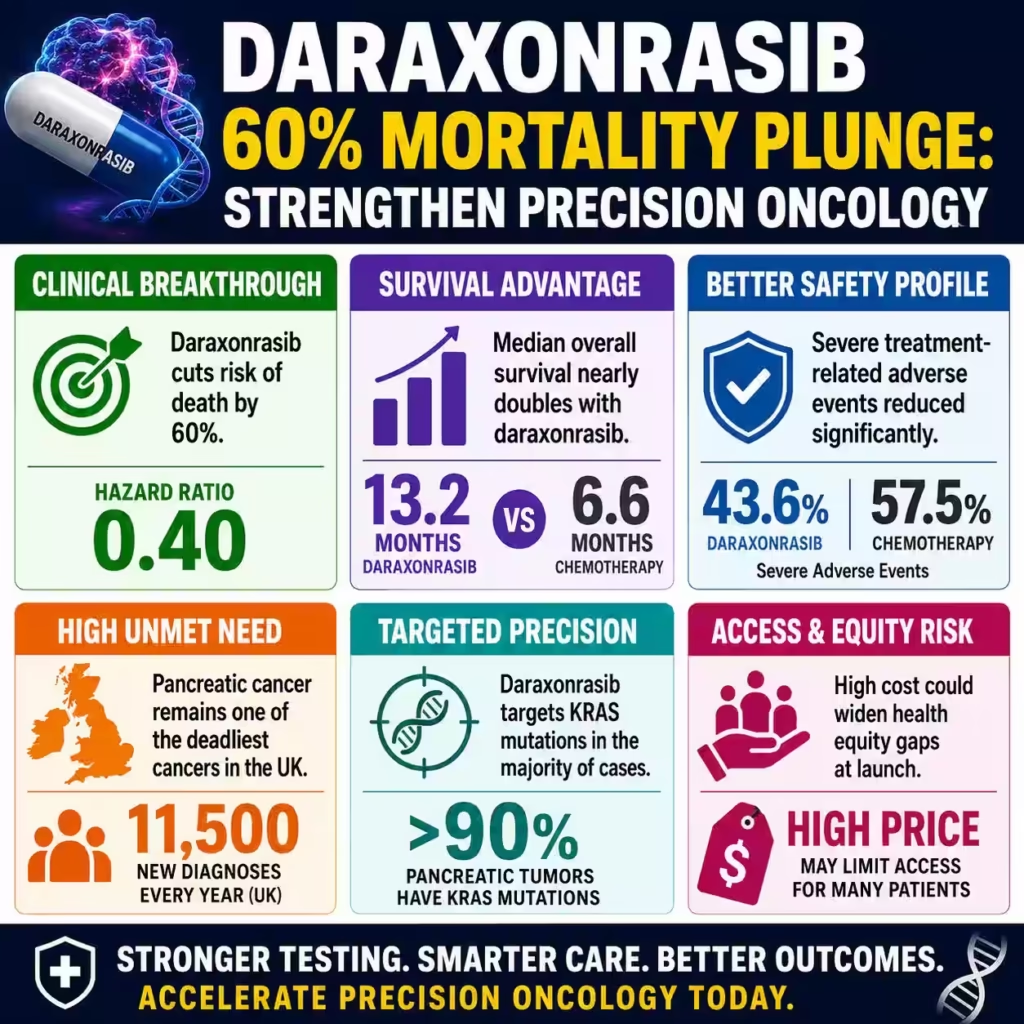
The RASolute-302 phase 3 trial of Daraxonrasib, an oral RAS(ON) inhibitor, achieved a landmark 13.2-month median overall survival in 500 patients across North America, Europe, and Asia. This doubled the 6.6-month survival seen with standard chemotherapy, addressing the high mortality of metastatic pancreatic ductal adenocarcinoma, which often kills patients within ninety days of detection. To mitigate the clinical failures and high costs of traditional chemotherapy, this article proposes automated next-generation sequencing and risk-sharing pricing as vital solutions for commercial healthcare systems.
Epidemiological data underscores the need for this clinical shift; in the UK, Cancer Research UK reports 11,500 annual pancreatic cancer diagnoses and 10,200 deaths. As mutated KRAS drives over 90% of these tumors, daraxonrasib’s targeted deactivation of this oncogene marks a major move toward genotype-directed medicine. Financial analyses suggest that adopting this therapy improves operational efficiency for integrated delivery networks by reducing the clinical burdens of traditional, multi-hour chemotherapy infusions.
Clinical data for daraxonrasib shows a 0.40 hazard ratio, representing a 60% mortality risk reduction in treated metastatic pancreatic ductal adenocarcinoma patients. Along with doubling median survival, the therapy reduced severe adverse events to 43.6%, down from 57.5% with traditional chemotherapy. This improved safety profile offers insurers significant savings by preventing expensive hospitalizations for chemotherapy-related toxicities.
Actuarial models indicate that transitioning to once-daily oral oncology agents enables healthcare systems to redirect nursing resources toward complex clinical trials and counseling. Consequently, CFOs can utilize these advancements to secure value-based contracts where pharmaceutical reimbursement is tied to patient adherence and survival outcomes. Ultimately, this clinical data necessitates immediate diagnostic modernization, requiring health systems to adapt service lines for rapid genetic testing.
Quality Improvement Analysis: 60% Mortality Risk Reduction Demands Diagnostic and Care Pathway Redesign
The phase 3 RASolute-302 study establishes a new quality benchmark for metastatic pancreatic ductal adenocarcinoma by demonstrating a 13.2-month median overall survival versus 6.6 months with standard chemotherapy in approximately 500 enrolled patients, representing a 100% improvement in median survival. The reported hazard ratio of 0.40 translates into a 60% reduction in mortality risk, while Grade 3 or higher treatment-related adverse events declined from 57.5% to 43.6%, an absolute reduction of 13.9 percentage points and a relative reduction of approximately 24%. These outcomes indicate that quality improvement should prioritize rapid molecular diagnosis, standardized genomic treatment pathways, and earlier initiation of targeted therapy rather than continuing chemotherapy-first protocols for biomarker-positive patients.
Current epidemiological data further strengthens the case for system-wide quality transformation, with the United Kingdom recording approximately 10,700 to 11,000 new pancreatic cancer cases annually and around 9,800 to 10,200 deaths, making it one of the highest cancer mortality-to-incidence ratios among major malignancies. Globally, pancreatic cancer exceeds 510,000 new cases and causes approximately 470,000 deaths annually, while KRAS mutations are identified in more than 90% of pancreatic ductal adenocarcinomas. Healthcare organizations can therefore improve diagnostic quality by implementing automated next-generation sequencing with turnaround targets below 7 calendar days, ensuring eligible patients receive genotype-directed therapy without unnecessary treatment delays.
Operational quality improvement also extends beyond clinical outcomes into resource utilization and financial sustainability. Replacing repeated infusion-based chemotherapy with a once-daily oral targeted therapy can reduce infusion chair occupancy, pharmacy preparation workload, nursing administration time, and chemotherapy-associated emergency admissions, enabling oncology departments to reallocate capacity toward high-acuity care and clinical research. Integrating value-based reimbursement, electronic adherence monitoring, and standardized genomic testing pathways provides measurable quality indicators that support improved survival, lower toxicity, greater operational efficiency, and stronger long-term financial performance across commercial healthcare systems.
Carethix Strategic Critique: Risks and Access Gaps
Carethix, a bioethics advisory firm, criticizes the clinical readiness for daraxonrasib, noting a dangerous gap between trial results and fragmented real-world delivery. Despite an impressive 13.2-month survival rate, inconsistent next-generation sequencing in community facilities creates a diagnostic bottleneck. Because metastatic pancreatic ductal adenocarcinoma is highly aggressive, any molecular testing delay misses the critical therapeutic window for KRAS-mutated patients.
Carethix asserts that commercial payers are unprepared for the shift from medical to high-cost specialty pharmacy benefits. Traditional prior authorization and step-therapy mandates pose severe clinical risks due to the rapid progression of pancreatic tumors. Additionally, moving oncology monitoring to unmonitored home environments threatens patient compliance and safety.
The phase 3 trial’s small cohort of 500 patients excludes diverse, vulnerable populations, risking a widened health equity gap as the drug’s high price may restrict it to affluent patients. Without proactive measures to eliminate financial toxicities like high copayments, treatment adherence is likely to collapse under financial strain.
Additionally, Carethix identifies a significant clinical risk in the potential for mismanaging side effects. Primary care providers and regional physicians are currently unequipped to identify or treat the distinct dermatological and gastrointestinal toxicities associated with RAS inhibitors. This massive educational gap between elite academic medical hubs and distributed community practices poses a threat to patient safety, frequently leading to premature therapeutic discontinuations or inappropriate dose reductions that compromise efficacy.
In summary, without immediate and comprehensive reform of diagnostic testing access, specialized pharmacy policies, and remote clinical tracking mechanisms, the healthcare industry cannot hope to successfully replicate the positive survival rates observed in clinical trials.
Clinical Integration and Commercial Optimization Solutions
To optimize daraxonrasib’s clinical and financial impact, health systems must adopt automated, reflex-ordered next-generation sequencing within pathology departments. Immediate genomic testing at biopsy eliminates delays in targeted therapy initiation. Concurrently, commercial payers must remove prior authorization and step-therapy mandates for KRAS-mutant pancreatic cancer patients.
Specialty pharmacies should deploy clinical teams for remote patient monitoring to track outcomes and toxicities, preserving adherence and reducing acute care costs. Furthermore, purchasers and manufacturers should implement value-based contracts tying reimbursement to clinical milestones like progression-free survival.
Systems must reallocate oncology nursing from infusion suites to virtual coordination and remote tracking. This realignment optimizes facility capacity and expands precision medicine access to rural populations, lowering overall costs while maintaining superior outcomes.
Partnerships with digital health vendors can provide mobile apps for real-world symptom logging and education. These tools allow patients to report early shifts to care teams, enabling rapid intervention that prevents minor side effects from escalating into crises requiring treatment discontinuation.
CFOs should restructure billing to capture professional fees for remote therapeutic monitoring. Utilizing these codes creates high-margin revenue streams that offset digital software costs, ensuring precision oncology programs remain financially self-sustaining and deliver coordinated care.
Preventive Strategies and Long-Term Quality Standards
To prevent systemic failures in next-generation oncology, national registries must track precision prescribing patterns. Health systems should integrate automated genomic alerts into electronic records to prevent clinicians from using suboptimal regimens when targeted drivers are present. These guardrails ensure evidence-based care across academic and community networks.
Commercial payers must adopt predictive models to manage the shift from medical to pharmacy benefit spending, ensuring fiscal stability and preventing reactive premium hikes. Metrics for quality and cost help mitigate disruptions during the rollout of innovative therapeutics.
Mandatory toxicity training for community practitioners on novel RAS inhibitors is essential to manage adverse events like fatigue and rashes, preventing premature discontinuation. Simultaneously, consortia should fund proactive trials evaluating daraxonrasib in first-line and neoadjuvant settings.
Public health agencies must subsidize genomic testing in marginalized clinics to ensure universal access and prevent survival disparities. Healthcare systems should mandate biannual audits of pathology timelines to maintain these standards.
Guidelines must limit the interval between tissue acquisition and genomic reporting to seven business days. Facilities failing this benchmark must use certified reference labs. These frameworks eliminate barriers currently threatening precision medicine.
Carethix Key Takeaways
Precision oncology demands an immediate, comprehensive dismantling of legacy reimbursement models and slow diagnostic workflows that actively compromise patient survival outcomes. This is not merely an administrative oversight; it is a moral failure. The persistent lack of standardized, rapid next-generation sequencing, particularly in community healthcare settings, constitutes a profound and dangerous disconnect from scientific reality.
Every administrative or clinical delay in securing molecular confirmation of a mutated KRAS gene directly deprives patients of their primary, rapidly closing therapeutic window. The unprecedented clinical reality of a 13.2-month overall survival metric means that health systems failing to immediately operationalize rapid, reflex next-generation sequencing are actively delivering substandard care and condemning vulnerable patients. Furthermore, the industry must reject the notion that a scientific milestone can remain an exclusive luxury.
The failure of commercial payers to proactively eliminate financial toxicities—such as excessive copayments and restrictive prior authorization protocols—is structurally unethical. Requiring aggressive cancer patients to first fail on less expensive cytotoxic regimens (step-therapy mandates) is an unacceptable clinical risk and a callous administrative roadblock given the rapid progression velocity of pancreatic tumors. Corporate financial viability and clinical equity can no longer be treated as competing priorities; they must be permanently fused through the deployment of mandatory, value-based risk-sharing agreements.
The path forward is uncompromising: Health systems must aggressively redesign their resource models, shifting underutilized oncology hours from archaic physical infusion suites toward specialized virtual care coordination, remote symptom tracking, and proactive patient education. Anything less than this immediate, comprehensive reform amounts to a betrayal of the patients for whom daraxonrasib represents a genuine, if fleeting, hope.
FAQs:
1. Why is metastatic pancreatic cancer survival still poor despite new targeted therapies showing 13.2-month overall survival?
The 13.2-month median overall survival versus 6.6 months with chemotherapy exposes a bigger problem: healthcare delivery systems remain slower than the science itself. More than 50% of patients die within 90 days of diagnosis, meaning delayed genomic testing can erase much of this survival advantage before treatment even begins. Clinical breakthroughs are meaningless when operational bottlenecks prevent rapid patient access.
2. How does KRAS mutation testing impact pancreatic cancer treatment outcomes when over 90% of tumors have KRAS mutations?
When over 90% of pancreatic tumors are driven by KRAS mutations, delayed molecular testing becomes a direct treatment failure rather than an administrative inconvenience. Healthcare systems promoting precision oncology without reflex next-generation sequencing create unnecessary diagnostic delays during the narrowest therapeutic window. The real competitive advantage is not simply having targeted drugs—it is delivering genomic results fast enough to use them.
3. Why are insurance prior authorization and step therapy dangerous for pancreatic cancer patients?
A therapy demonstrating a hazard ratio of 0.40 and roughly 60% mortality risk reduction should not encounter traditional utilization barriers designed for slower-moving diseases. Requiring aggressive pancreatic cancer patients to fail chemotherapy first ignores how rapidly disease progression occurs and increases clinical risk unnecessarily. Payers optimizing short-term cost containment may unintentionally create larger downstream financial burdens through hospitalizations and worsening outcomes.
4. Can healthcare systems realistically implement remote monitoring for oral oncology drugs and reduce costs?
Moving from infusion-based care toward once-daily oral therapy creates opportunities, but assuming patients can self-manage complex toxicities without infrastructure is unrealistic. Severe adverse events still occurred in 43.6% of patients, showing why symptom monitoring, adherence programs, and rapid intervention systems are operational necessities rather than optional enhancements. Digital transformation without clinical coordination risks replacing one expensive care model with another fragmented one.
5. Will expensive precision oncology drugs increase healthcare inequality and reduce patient access?
A phase 3 trial with only 500 patients across multiple continents does not automatically prove equitable real-world scalability. High launch pricing, specialty pharmacy restrictions, deductibles, and copayment burdens could quickly transform precision medicine into a premium service accessible primarily to affluent populations. Healthcare systems celebrate scientific progress without addressing financial toxicity risk widening survival disparities rather than reducing them.