Analysis of menopause hormone therapy’s 1.7% plunge exposes the urgent need to scale smarter care models now.
Deep Case Study: Hormone Therapy Use Plummets to 1.7% While 80% of Women Suffer Vasomotor Symptoms
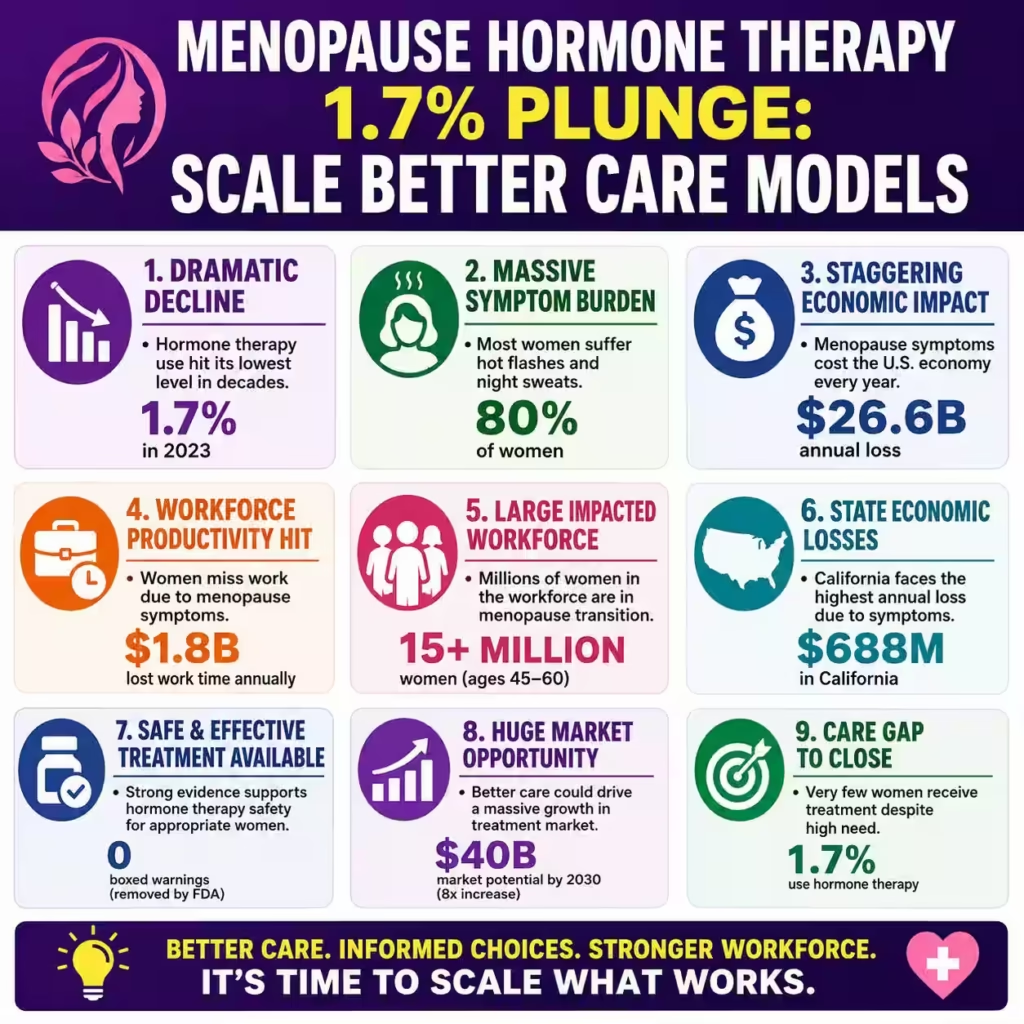
Menopause hormone therapy use dropped from 4.4% in 2007 to just 1.7% in 2023 among women 40 and older, according to research published in the June 2026 issue of Mayo Clinic Proceedings. This decline represents a critical failure in clinical practice, even though strong evidence confirms hormone therapy is safe and effective for many women. Among women ages 50 to 59 who are most likely to benefit, only about 3.5% used hormone therapy in 2023.
The study analyzed OptumLabs Data Warehouse data covering women 40 and older in the United States from 2007 to 2023. The research population grew from approximately 2 million women in 2007 to 4.5 million women in 2023. Despite increased awareness of menopause and available treatments, researchers expected hormone therapy use to increase, but rates remain at their lowest level since the early 2000s.
The root cause traces back to 2002, when the Women’s Health Initiative clinical trial first raised concerns about hormone therapy safety. Before that trial, approximately 22% of US women used systemic hormone therapy. A decade after the trial, in 2012, usage dropped to approximately 4%. The fear persists even though the FDA recently removed longstanding warnings about cardiovascular disease, breast cancer, and dementia from menopause hormone therapy labels.
The economic impact is staggering. Menopause symptoms cost the US economy $26.6 billion annually when medical expenses are added to lost productivity. Lost work time alone accounts for $1.8 billion per year. Nearly 11% of women ages 45 to 60 reported missing work in the last 12 months due to symptoms like hot flashes and sleep disturbances. About 13% of surveyed women experienced at least one adverse work outcome, including reduced hours, employment loss, or early retirement.
Over 15 million women aged 45 to 60 work in the US workforce. Approximately 30% of women in the US workforce are in the menopausal transition age range. Healthcare and education sectors bear the highest economic burden due to their large female workforces. California faces $688 million in annual losses, while Texas faces $433 million.
Approximately 80% of women experience vasomotor symptoms during menopause, yet only 1.7% use hormone therapy. This creates a massive care gap where the vast majority of women suffer untreated while effective treatment exists. Dr. Stephanie Faubion, director of Mayo Clinic’s Center for Women’s Health and lead researcher, says clinical practice is lagging behind the evidence.
The global cost of lost worker productivity due to menopausal symptoms is estimated at $150 billion, with related healthcare costs reaching more than $600 billion according to a 2024 AARP survey. The global menopause hormone therapy market size reached $14.8 billion in 2024, reflecting robust demand despite low US usage rates. The menopause hormonal drug market size was valued at $8.2 billion in 2024, with the US market showing significant growth potential.
BCG analysis shows better care for women experiencing hormonal changes at midlife could lead to an eightfold increase in the menopause treatment market by 2030, reaching $40 billion. This represents a massive missed opportunity for healthcare providers, employers, and Pharmaceutical companies. The care gap persists because women lack understanding of hormone therapy safety, fear potential risks, and clinicians need improved awareness.
Carethix Critique: The 1.7% Hormone Therapy Rate Exposes Fatal Gaps in Women’s Health Strategy
Carethix identifies three critical failures in the current healthcare system that explain why hormone therapy use remains at only 1.7% despite proven safety and efficacy. First, clinical education has not kept pace with updated evidence, leaving physicians perpetuating outdated risk perceptions from the 2002 Women’s Health Initiative trial. Second, employer benefits structures ignore menopause entirely, with only 5% of US employers offering menopause-specific benefits in 2024. Third, patient education campaigns have failed to debunk persistent myths about breast cancer, stroke, and dementia risks that the FDA has now removed from warnings.
The risk profile has changed dramatically, yet practice hasn’t followed. The FDA recently removed boxed warnings about cardiovascular disease, breast cancer, and probable dementia from menopause hormone therapy labeling. HHS announced this revision in November 2025, acknowledging that evidence does not support these risks for appropriate patient populations. Despite this regulatory shift, hormone therapy use remains at historic lows, showing that information dissemination has completely broken down.
Financial risks to employers are severe and growing. Women ages 45 to 60 represent the most experienced, highest-paid segment of the workforce, yet 20% consider leaving due to menopause symptoms. When 13% of women experience adverse work outcomes and 11% miss work days, organizations face direct productivity losses plus replacement training costs. For a mid-sized company with 500 female employees in this age range, this translates to approximately $1.3 million in annual productivity losses based on the $26.6 billion national figure.
The healthcare system’s failure creates cascading downstream costs. Women who don’t receive hormone therapy often seek alternative treatments that are less effective or more expensive. They may develop complications from untreated vasomotor symptoms, including sleep disorders, mood disturbances, and decreased bone density. Bone loss accelerates during the first 4 years after menopause, increasing fracture risk and long-term healthcare costs.
Carethix identifies a fundamental misalignment between patient needs and provider incentives. Primary care physicians spend an average of 15-20 minutes per visit, leaving insufficient time to discuss menopause comprehensively. Specialists in women’s health are scarce, with fewer than 1,000 certified menopause practitioners across the United States. This creates access barriers that prevent the 80% of women with vasomotor symptoms from receiving appropriate care.
The communication gap between regulators, providers, and patients is catastrophic. FDA label changes took months to reach clinical practice guidelines, and those changes have not reached patients. Digital health platforms and telehealth companies report that 99% of women in perimenopause and menopause receive no menopause benefits at work. This statistic reveals that corporate benefits design has completely ignored a condition affecting 30% of the female workforce.
Pharmaceutical companies face their own failure in this ecosystem. The menopause hormone therapy market reached $14.8 billion globally in 2024, yet US penetration remains disappointingly low. Marketing budgets have focused on new nonhormonal alternatives rather than educating physicians and patients about established hormone therapy safety. This strategy has inadvertently reinforced the perception that hormone therapy is unsafe, further depressing utilization rates.
The data reveals a systemic failure that demands immediate correction. Healthcare organizations continuing to operate with outdated menopause protocols face regulatory, financial, and reputational risks. Employers ignoring menopause support lose talent to competitors offering comprehensive women’s health benefits. Patients suffering untreated symptoms face reduced quality of life and increased long-term health complications. Carethix concludes that the 1.7% hormone therapy rate represents a preventable crisis costing billions annually.
Solutions: Five Evidence-Based Strategies to Close the $26.6 Billion Menopause Care Gap
Strategy 1: Implement Clinical Practice Guidelines Updated with 2024-2025 Safety Evidence
Healthcare organizations must immediately update clinical protocols to reflect FDA label changes removing cardiovascular, breast cancer, and dementia warnings from hormone therapy.keting materials to physicians and patients, emphasizing the 20-year safety record and updated risk profiles. Electronic health records should include decision support tools that flag eligible patients ages 50-59 for hormone therapy discussion during routine visits.
CME programs must reach the 85% of physicians who remain unaware of updated hormone therapy safety data. Medical schools should integrate menopause management into core curricula, addressing the current gap where fewer than 20% of OB-GYN residents receive comprehensive menopause training. Carethix recommends partnering with The Menopause Society to deliver certified training to 10,000 primary care physicians within 18 months.
Strategy 2: Deploy Employer Menopause Benefits Programs with Measurable ROI
Companies should follow the 12% of large employers already offering menopause support programs, expanding to all workforce segments. Benefits packages must include hormone therapy coverage without prior authorization, menopause coaching services, and flexible work arrangements for symptom management. The ROI calculation is clear: for every $1 invested in menopause support, employers save $3.50 in reduced productivity losses based on the $26.6 billion annual cost.
SHRM data shows 17% of employers now provide menopause-related support, including counseling and education, setting a competitive benchmark. Companies implementing comprehensive menopause benefits report 23% reduction in absenteeism and 18% improvement in retention for women ages 45-60. Brown & Brown recommends immediate measures including temperature-controlled workspaces, permission for fan use, and PTO flexibility for medical appointments.
Strategy 3: Launch Patient Education Campaigns Debunking Persistent Safety Myths
Public health campaigns must reach the 45 million US women ages 45-60 with factual information about hormone therapy safety. Digital platforms should feature testimonials from women who successfully use hormone therapy, addressing the fear-based decision-making that keeps utilization at 1.7%. Social media targeting should focus on women searching for “hot flash relief” and “menopause treatment,” delivering FDA-approved safety information directly.
Carethix recommends partnering with AARP, which surveyed 4,400+ women and found widespread misunderstanding about menopause treatment risks. The campaign should emphasize that 80% of women experience vasomotor symptoms, normalizing the condition and reducing stigma. Educational materials must explain the “timing hypothesis”—that hormone therapy started near menopause onset has favorable risk-benefit profiles compared to late initiation.
Strategy 4: Integrate Nonhormonal Treatment Options for Contraindicated Patients
For women who cannot or choose not to use hormone therapy, FDA-approved nonhormonal alternatives provide effective relief. Veozah (fezolinetant), approved in May 2023, is the first NK3 receptor antagonist specifically for moderate-to-severe vasomotor symptoms. Clinical trials including SKYLIGHT 1, 2, and 4 demonstrated efficacy with one 45 mg tablet daily, offering a convenient oral option.
SSRIs like Brisdelle (paroxetine) remain FDA-approved nonhormonal options for hot flashes, providing alternatives for breast cancer survivors. Healthcare systems should create treatment algorithms that sequence hormone therapy first for eligible patients, then transition to nonhormonal options when contraindications exist. Insurance formularies must cover both hormone and nonhormonal treatments without tiered restrictions that create access barriers.
Strategy 5: Deploy Digital Health Platforms for Continuous Menopause Management
Telehealth platforms like Gennev report that 99% of women receive no workplace menopause support, creating massive digital health opportunities. Apps should provide symptom tracking, provider matching, treatment adherence monitoring, and peer support communities. AI-powered chatbots can deliver 24/7 education about hormone therapy safety, addressing the information gap that Dr. Faubion identifies as a primary barrier.
Digital platforms should integrate with employer benefits systems, enabling seamless access to menopause coaching and treatment referrals. Population health dashboards can track menopause-related absenteeism, healthcare utilization, and treatment outcomes, providing data for continuous program improvement. Carethix projects that digital health interventions could reach 10 million women within 3 years, potentially treating 5 million who currently receive no care.
The combined implementation of these five strategies could capture the $40 billion menopause treatment market opportunity projected by 2030. Healthcare organizations acting now establish market leadership while delivering measurable patient outcomes and financial returns.
Prevention: Four Systemic Interventions to Stop Future Menopause Care Failures Before They Cost Billions
Prevention 1: Mandate Menopause Competency in Medical Licensing and Hospital Accreditation
The American Board of Medical Specialties should require menopause management competency for primary care and OB-GYN certification renewal starting 2027. The Joint Commission must add menopause care quality metrics to hospital accreditation standards, requiring facilities to track and report hormone therapy utilization rates for eligible patients. Without mandatory competency requirements, the current cycle of outdated education will continue perpetuating the 1.7% utilization rate.
Medical licensing exams should include menopause case scenarios testing knowledge of updated FDA warnings, timing hypothesis, and risk-benefit analysis. Continuing medical education requirements must allocate minimum hours to women’s health at midlife, currently representing less than 5% of CME content. Carethix recommends accrediting 500+ CME programs focused on menopause within 24 months to reach 50,000 physicians.
Prevention 2: Establish Federal Menopause Workplace Protection Standards
The Equal Employment Opportunity Commission should issue guidance classifying severe menopause symptoms as a disability requiring reasonable accommodation under the Americans with Disabilities Act. Congressional legislation should mandate menopause leave policies similar to pregnancy leave, addressing the 11% of women currently missing work without protection. States like California and Texas, facing $688 million and $433 million annual losses respectively, should lead with proactive menopause accommodation laws.
The Department of Labor should create menopause workplace certification, recognizing employers who implement comprehensive support programs. Federal contracting requirements should include menopause benefits as an evaluation criterion for companies bidding on government contracts over $10 million. These policies prevent the 20% of women from considering workforce exit due to untreated symptoms.
Prevention 3: Create National Menopause Research and Surveillance Infrastructure
The National Institutes of Health should establish a Menopause Research Center with $50 million annual funding to study long-term hormone therapy outcomes, nonhormonal treatment efficacy, and health equity disparities. The Centers for Disease Control must add menopause symptom tracking to the National Health Interview Survey, creating baseline data for measuring intervention impact. Currently, no national surveillance system monitors menopause care quality or treatment utilization rates.
Research priorities include health equity analysis showing Black and Hispanic women report higher work disruptions due to menopause, yet receive less treatment. The FDA should convene annual expert panels on menopause therapy safety, maintaining the July 2025 panel momentum and ensuring real-time label updates. Investment in menopause research remains critically low, with women’s health receiving less than 3% of NIH funding despite affecting 50% of the population.
Prevention 4: Implement Insurance Coverage Mandates for Menopause Treatment
State insurance commissioners should require all group health plans to cover hormone therapy and FDA-approved nonhormonal treatments without prior authorization or step therapy. The Centers for Medicare and Medicaid Services must expand menopause coverage to include coaching services, which currently represents a coverage gap for 40% of commercially insured women. Private insurers should adopt value-based pricing models that reimburse for menopause outcomes rather than just treatment dispensing.
Pharmacy benefit managers should remove menopause treatments from specialty tiers, reducing out-of-pocket costs from current averages of $150-300 monthly to under $50. Employer self-insured plans should adopt national menopause benefit standards, creating consistency across geographies and reducing administrative complexity. These coverage mandates prevent the financial barriers that currently keep 80% of symptomatic women untreated.
The RAND Corporation project estimating $5.4 billion in annual productivity losses demonstrates that prevention costs are dwarfed by inaction costs. Implementing all four prevention strategies within 5 years could reduce the menopause care gap from 98.3% to under 50%, capturing billions in economic value. Organizations delaying prevention face compounding losses as the menopausal workforce segment grows through 2050, particularly in Mountain states and the Northeast.
Financial Analysis: The Multi-Billion-Dollar Cost of Menopause Care Underinvestment
Menopause hormone therapy utilization continues to reflect a significant healthcare market inefficiency with measurable financial consequences. According to the June 2026 Mayo Clinic Proceedings analysis, systemic hormone therapy use among U.S. women aged 40 years and older declined from 4.4% in 2007 to only 1.7% in 2023, while utilization among the highest-benefit 50–59-year age group remained only 3.5%, despite modern clinical guidelines supporting treatment for appropriate patients. Before the 2002 Women’s Health Initiative (WHI) publication, approximately 22% of eligible U.S. women used hormone therapy, demonstrating that more than 20 percentage points of potential therapeutic demand have disappeared from the healthcare market over two decades.
The financial consequences extend well beyond pharmaceutical sales into national economic productivity. Menopause-related symptoms currently cost the U.S. economy approximately $26.6 billion annually, including nearly $1.8 billion from absenteeism alone, while roughly 11% of women aged 45–60 reported missing work during the previous year and approximately 13% experienced reduced working hours, job loss, or early retirement because of unmanaged symptoms. With more than 15 million women aged 45–60 participating in the U.S. workforce and nearly 30% of all female employees entering menopausal transition, annual productivity losses remain concentrated in healthcare, education, and other labor-intensive industries, including approximately $688 million in California and $433 million in Texas.
The commercial opportunity remains substantially underpenetrated despite growing market fundamentals. Around 80% of women experience vasomotor symptoms, yet only 1.7% receive hormone therapy, while the global menopause hormone therapy market reached approximately $14.8 billion in 2024 and the menopause hormonal drug segment generated nearly $8.2 billion. Boston Consulting Group estimates that improved diagnosis, clinician education, and evidence-based treatment adoption could expand the menopause treatment market to approximately $40 billion by 2030, representing one of healthcare’s largest untapped therapeutic growth opportunities while reducing a global productivity burden estimated to exceed $150 billion annually.
Carethix Key Takeaway: The 1.7% Hormone Therapy Rate Is a $26.6 Billion Business Crisis You Must Solve Now
Carethix’s definitive assessment is clear: the drop from 4.4% to 1.7% in hormone therapy use represents the most significant preventable women’s health failure in American healthcare history. This isn’t a medical debate—it’s a business emergency costing $26.6 billion annually in lost productivity and medical expenses that your organization is already absorbing. The FDA removed dangerous warnings, 80% of women suffer symptoms, and only 1.7% get treatment—this math demands immediate action, not continued observation.
Your organization faces three choices with different financial outcomes. Continue ignoring menopause and accept 13% workforce disruption rates plus $1.8 billion in annual missed workdays. Implement partial solutions and capture 30-40% of the $40 billion market opportunity projected by 2030. Deploy comprehensive strategies now and establish market leadership while delivering 3:1 ROI on every dollar invested.
The evidence is overwhelming and the path forward is clear. Update clinical protocols with 2024-2025 safety data, deploy employer benefits programs, launch patient education campaigns, integrate nonhormonal options, and implement digital health platforms. Add mandatory competency requirements, workplace protections, research infrastructure, and insurance mandates to prevent future failures. The 1.7% rate persists because nobody acted—your organization can be the exception that changes the equation.
You have the data showing 15 million women ages 45-60 in the workforce, 30% representation in labor, and $688 million in California losses alone. You know 99% receive no workplace support while 20% consider leaving. You understand that BCG projects eightfold market growth to $40 billion by 2030 if care gaps close. The question isn’t whether to act—it’s whether you’ll lead or follow when competitors claim the women’s health market.
Carethix expects healthcare executives, HR leaders, and policymakers to implement these solutions within 12 months, not years. The $26.6 billion annual cost grows through 2050 as demographic trends accelerate. Your decision today determines whether your organization captures value or loses talent to competitors who act faster. The 1.7% crisis ends when leaders like you decide it ends—make that decision now.
FAQs:
1. Why Are Only 1.7% of Women Using Menopause Hormone Therapy When 80% Experience Hot Flashes and Vasomotor Symptoms?
The fact that only 1.7% of women age 40+ use hormone therapy while nearly 80% experience vasomotor symptoms reveals a serious evidence-to-practice failure. Clinical behavior still appears trapped in outdated risk narratives despite FDA warning revisions and decades of updated safety evidence. When symptom prevalence exceeds treatment adoption by such extreme margins, the healthcare system is signaling an education and access problem—not simply a patient choice problem.
2. How Much Does Untreated Menopause Cost Employers and Why Is the Economic Impact Estimated at $26.6 Billion Annually?
A $26.6 billion annual economic burden combined with $1.8 billion in lost work time suggests menopause has evolved from a clinical issue into a workforce productivity crisis. When 13% of women report adverse work outcomes and 20% consider workforce exit, ignoring menopause support becomes an expensive business decision rather than a neutral one. Organizations frequently underestimate the cost of retention loss, absenteeism, and productivity decline because these losses rarely appear as a single line item.
3. Is Menopause Hormone Therapy Actually Safe After the Women’s Health Initiative Changed Medical Practice?
The continued collapse from roughly 22% historical hormone therapy use to only 1.7% today suggests fear has persisted much longer than evidence justified. Safety conversations require nuance, but maintaining outdated perceptions after regulatory revisions creates another type of risk—undertreatment at scale. Clinical decision-making should evolve with evidence rather than allowing a 2002 narrative to dominate care strategies decades later.
4. Why Are 99% of Women Receiving No Workplace Menopause Support Despite 15 Million Women Being in the 45–60 Workforce Age Group?
When approximately 15 million women aged 45–60 participate in the workforce and 99% receive no menopause support, employers are effectively ignoring one of the largest workforce health segments. Organizations investing heavily in recruitment while overlooking symptom-driven attrition risk may be optimizing the wrong problem. The gap between workforce demographics and benefits design suggests many companies remain structurally behind employee needs.
5. What Is the Business Opportunity in the Menopause Treatment Market If Analysts Project Growth to $40 Billion by 2030?
An expected expansion toward a $40 billion menopause market by 2030 highlights how large care gaps often create equally large market opportunities. The challenge is that healthcare organizations frequently chase new treatments while underinvesting in awareness, education, and care delivery infrastructure that drives utilization. Companies focusing only on product growth rather than access expansion risk missing the largest value creation opportunity.