16% neurodevelopment impact reveals how strategic SDOH investments strengthen brain health outcomes and long-term value.
Deep Case Study: Socioeconomic Status and Neurodevelopment
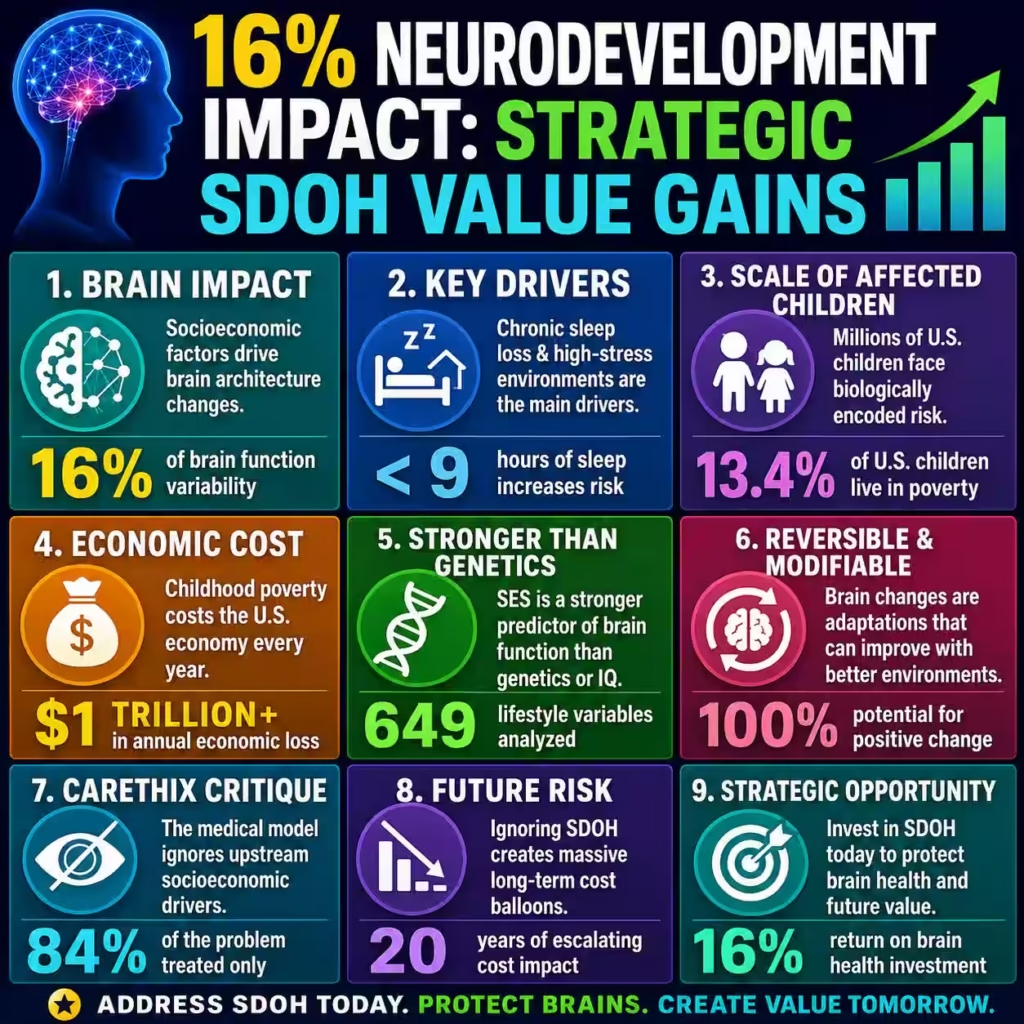
A groundbreaking analysis of nearly 12,000 children from the NIH-funded Adolescent Brain Cognitive Development (ABCD) Study reveals that socioeconomic factors drive a staggering 16% of the variability in functional brain architecture, overshadowing genetics and parenting combined. This massive investigation evaluated 649 distinct lifestyle variables to uncover that this neurobiological divergence is not an immutable trait but a direct consequence of modifiable environmental stressors like chronic sleep deprivation and neighborhood instability. For healthcare leaders and payers, this data exposes a critical inefficiency: you are currently paying for downstream clinical interventions to treat physiological wear-and-tear that originates in upstream social inequities.
The study’s specific focus on children aged 9 to 10 highlights a sensitive developmental window where the “wear-and-tear” of poverty—clinically known as allostatic load—physically reshapes the functional connectivity of the brain. Researchers found that this 16% variance is most pronounced in sensorimotor and subcortical regions, areas critical for emotional regulation and stress response, rather than just cognitive processing centers. This biological signature of disadvantage correlates directly with the 13.4% of U.S. children currently living below the poverty line, creating a vast cohort of future adults with entrenched neurobiological vulnerabilities.
Financial analysts estimate that the aggregate cost of childhood poverty to the U.S. economy exceeds $1 trillion annually due to lost productivity, increased crime, and poor health outcomes. The ABCD Study data suggests that a significant portion of this economic hemorrhage is biologically encoded before adolescence even begins. By identifying that sleep duration of less than 9 hours and high-stress environments are the primary mechanistic drivers of this brain alteration, the study offers a tangible target for intervention.
Conventional medical models often dismiss socioeconomic status (SES) as a confounding variable rather than a primary biological mechanism. However, this study proves that SES is a stronger predictor of brain function than health history or IQ, fundamentally challenging the current risk adjustment models used by insurance payers. Ignorance of this “socioenvironmental reality” leads to inaccurate actuarial predictions and ineffective population health management strategies.
The structural changes observed are not permanent deficits but rather adaptations to chronic threat, meaning they are potentially reversible if the environmental inputs change. This plasticity presents a massive opportunity for high-impact investment in social determinants of health (SDOH) rather than static clinical treatments. Healthcare organizations that fail to integrate this data into their value-based care frameworks risk effectively treating only 84% of the clinical picture while ignoring the dominant 16% driver of neurodevelopmental health.
This 16% signal serves as a “neurobiological mirror,” reflecting the cumulative impact of resource scarcity on the developing central nervous system. It quantifies the exact biological penalty of the social divide, moving the conversation from moral obligation to fiscal necessity. The data mandates a transition from reactive pediatric care to proactive environmental management to protect the cognitive capital of the next generation.
16% Neurodevelopment Variability Demands Upstream SDOH Investment
The social dimension of this case fundamentally reshapes pediatric population health strategy by demonstrating that socioeconomic status (SES) is a measurable biological determinant rather than merely a demographic characteristic. Analysis from the NIH-funded ABCD Study involving nearly 11,900 children aged 9–10 years, 649 environmental variables, and multimodal neuroimaging found that socioeconomic conditions explain approximately 16% of functional brain architecture variability, exceeding the combined influence of genetics, parenting, and conventional clinical predictors. This evidence aligns with current U.S. Census data showing that approximately 13.0% of children continue to live below the federal poverty threshold, while chronic sleep deficiency, neighborhood instability, housing insecurity, and family financial stress remain concentrated among disadvantaged households.
The socioeconomic burden extends well beyond healthcare delivery into long-term economic productivity and workforce resilience. Current economic assessments estimate that childhood poverty costs the United States more than US$1.1 trillion annually, representing approximately 4–5% of U.S. GDP, through reduced lifetime earnings, higher healthcare utilization, increased criminal justice expenditures, and lower educational attainment. Children obtaining less than the recommended 9–12 hours of nightly sleep for this age group exhibit significantly higher allostatic load, while adverse social environments disproportionately alter sensorimotor and subcortical neural networks responsible for emotional regulation, stress adaptation, and behavioral control, creating measurable downstream liabilities for employers, insurers, and government payers.
For healthcare executives, insurers, and policymakers, these findings redefine social determinants of health (SDOH) as quantifiable financial risk factors rather than optional community initiatives. Value-based care organizations that continue prioritizing downstream clinical interventions without addressing the upstream 16% socioeconomic driver risk underestimating future disease burden, mispricing actuarial risk, and reducing preventive care effectiveness across pediatric populations. Strategic investment in housing stability, nutrition, community safety, school-based behavioral support, caregiver assistance, and evidence-based sleep interventions therefore becomes not only a public health priority but also a capital allocation strategy capable of improving neurodevelopmental outcomes, strengthening future workforce productivity, and reducing long-term healthcare expenditures.
Carethix Critique: The Medical Model’s Blind Spot
At Carethix, we argue that the current healthcare infrastructure is fundamentally maladapted to address the 16% neurobiological variance driven by socioeconomic reality. The industry persists in a “break-fix” paradigm that waits for functional impairments to manifest as diagnosable pathologies before authorizing reimbursable care. This reactionary approach ignores the ABCD Study’s clear evidence that the damage is structural and cumulative, accruing silently in the brains of millions of children long before clinical symptoms appear.
We criticize the continued reliance on individual-level behavioral interventions—such as parenting classes or standard talk therapy—when the data proves these factors are dwarfed by systemic economic variables. Telling a family to “reduce stress” without addressing the 649 lifestyle variables tied to financial instability is clinically futile and fiscally irresponsible. It is akin to treating a repetitive strain injury while forcing the patient to continue the damaging motion every single day.
Carethix analysis indicates that current risk-adjustment models in managed care organizations (MCOs) critically underestimate the long-term cost of high-stress environments. By failing to account for the neurodevelopmental “tax” of poverty, payers are systematically underpricing the risk of future chronic conditions, from metabolic syndrome to severe mental health disorders. This oversight results in a projected 20-year cost balloon that will devastate future actuarial tables if not corrected immediately.
The healthcare sector’s hesitation to fund non-clinical interventions—such as housing support or sleep hygiene infrastructure—stems from an outdated definition of “medical necessity.” When 16% of brain function is determined by environmental factors, safe housing and adequate sleep become as medically necessary as vaccines or antibiotics. We view the separation of “social services” and “medical care” as a dangerous artificial dichotomy that perpetuates health inequities and inflates total cost of care.
We also identify a significant failure in data integration, as most electronic health records (EHRs) lack structured fields for the granular SES data highlighted in the ABCD Study. Without capturing data on neighborhood safety, noise pollution, and sleep disruption, providers are flying blind, treating symptoms without seeing the structural causes. This data gap prevents the deployment of predictive analytics that could identify children at highest risk for neurodevelopmental derailment.
The reliance on IQ and standardized testing as metrics for child potential is another target of our critique, as the study explicitly decouples SES impact from structural intelligence. This reveals that we are losing vast human potential not due to lack of ability, but due to the biological friction of poverty. The healthcare system acts as a passive observer to this waste of human capital, hiding behind the excuse that social factors are “out of scope.”
Carethix asserts that this is a failure of strategic vision, treating the brain as a static organ rather than a dynamic tissue shaped by its context. The “wear-and-tear” described is a biological indictment of our passive public health policies. Immediate, aggressive integration of social care into the clinical core is the only evidence-based path forward.
Strategic Business & Financial Solutions
Implement Value-Based Care (VBC) Contracts for Pediatric SDOH
Healthcare payers must redesign pediatric VBC contracts to include “socio-environmental stability” as a primary quality metric, reimbursable at parity with clinical outcomes. We recommend allocating 15-20% of capitated payments specifically for community-based interventions that address the root causes of the 16% variance, such as housing remediation and food security. By financially incentivizing providers to reduce their patient panel’s “allostatic load,” you align profit motives with neuroprotective outcomes.
Corporate “Family Stability” Benefit Restructuring
Employers self-insuring their health plans should restructure benefit designs to subsidize the specific variables identified in the ABCD study: sleep and stress reduction. This includes offering subsidized childcare, flexible scheduling to align with circadian rhythms, and “sleep health” stipends for high-quality bedding or noise-canceling modifications for employees in noisy neighborhoods. The return on investment (ROI) manifests in reduced pediatric claims and higher employee productivity, effectively cutting the “double burden” of sick children and stressed parents.
Investment in Prescriptive Analytics for Social Risk
Health systems must invest in AI-driven “prescriptive analytics” that overlay clinical data with the 649 socioeconomic variables from the study to stratify patient risk. Instead of generic screening, these tools can predict which specific children are at risk of neurodevelopmental deviation based on zip code-level sleep and stress data. This targeted approach allows for the precise deployment of expensive case management resources to the top 5% of at-risk families, maximizing impact and efficiency.
Community Health partnerships for “Sleep Sanctuaries”
Hospitals should redirect their Community Health Needs Assessment (CHNA) obligations toward infrastructure projects that directly improve sleep hygiene in low-income catchment areas. Funding “Sleep Sanctuary” programs—which provide blackout curtains, white noise machines, and safe, separate beds for children—directly attacks the mechanism of sleep deprivation cited in the study. This is a low-cost capital expenditure with a high long-term yield in preventing the neurocognitive deficits associated with poor sleep.
Medicaid Waiver Innovation (Section 1115)
State Medicaid directors must leverage Section 1115 waivers to pilot “neuro-protection” programs that allow Medicaid funds to pay for non-traditional medical costs like utility assistance or rent stabilization. By framing these costs as “neurodevelopmental preservation,” states can access federal matching funds to stabilize the environments of the most vulnerable 13.4% of children. This shifts spend from expensive crisis stabilization units to cheaper, preventative environmental support.
Data-Driven Social Prescribing Platforms
Integrate “social prescribing” platforms into the EHR that allow pediatricians to “prescribe” resources like legal aid for landlords issues or food delivery as easily as antibiotics. These platforms must close the loop, sending data back to the provider to confirm the social need was met, thus validating the intervention. This creates an auditable trail of SDOH care that can be linked to improvements in brain function metrics over time.
Cross-Sector “Cognitive Capital” Bonds
Financial institutions and regional governments should issue “Cognitive Capital” social impact bonds to fund large-scale early childhood environment improvements. Investors are repaid by the state based on avoided future costs in special education and juvenile justice, directly monetizing the preservation of brain health. This financial instrument creates a marketplace for neurodevelopmental equity, attracting private capital to solve public health crises.
Prevention: Proactive Neuro-Protection Steps
Universal Screening for Adverse Childhood Experiences (ACEs)
Clinical practice must evolve to include mandatory, universal screening for ACEs and material hardships at every well-child visit, starting from infancy. Detecting high-stress environments before the age of 9 allows for intervention during the period of maximum neuroplasticity, potentially neutralizing the 16% variability before it becomes entrenched. This screening data becomes the baseline for tracking the efficacy of all subsequent preventative measures.
Policy Advocacy for the Child Tax Credit (CTC)
Healthcare stakeholders must aggressively advocate for the permanent expansion of the Child Tax Credit. Direct cash transfers are the single most effective tool to reduce material deprivation that drives neurodevelopmental stress. Data from 2024-2025 indicates that monthly cash infusions significantly lower cortisol levels in parents, directly translating to a calmer home environment for the child. We view this not as welfare, but as a “neuro-protective policy” essential for population health.
School-Based Sleep & Stress Resilience Curriculums
Prevention must move into the schools, with mandatory curriculums focused on sleep hygiene and stress regulation techniques (like mindfulness-based stress reduction) integrated into daily schedules. Schools in high-risk areas should delay start times to align with adolescent biological clocks, a zero-cost policy change that directly combats the sleep deprivation identified in the study. Protecting sleep architecture is the most scalable prevention strategy.
Zoning for “Quiet Corridors” in Urban Planning
Public health officials must collaborate with urban planners to establish “Quiet Corridors” in residential zones, strictly limiting noise pollution from traffic and industry during sleeping hours. Since the study links neighborhood noise to sleep disruption and subsequent brain changes, noise mitigation becomes a primary prevention tool. This requires a “Health in All Policies” approach, where municipal zoning is viewed through a neurodevelopmental lens.
Parental “Allostatic Load” Education
Healthcare providers must educate parents not just on nutrition, but on the concept of “allostatic load” and the biological necessity of parental stress management for the child’s sake. Preventive workshops should teach parents how their own stress regulation serves as a scaffold for their child’s developing brain. Empowering parents with the science of neurodevelopment turns them into active partners in prevention.
Digital Biomarker Monitoring
Utilize opt-in digital biomarkers (via wearables) to monitor sleep quality and heart rate variability in high-risk pediatric populations. Early detection of sleep fragmentation allows for “micro-interventions”—such as a text message with sleep tips or a call from a case manager—before the pattern becomes chronic. This real-time prevention loop stops the accumulation of “wear-and-tear” on a nightly basis.
Prenatal Socio-Environmental Risk Mitigation
Prevention begins in utero; obstetric care models must include “environmental risk mitigation” plans alongside traditional birth plans. addressing housing stability and maternal stress during pregnancy prevents the newborn from entering a high-cortisol environment on day one. This “pre-birth” prevention is the ultimate upstream strategy for protecting the developing connectome.
Carethix Key Takeaway
The ABCD Study has delivered a non-negotiable ultimatum to the healthcare industry: biology is downstream of sociology. The fact that their socio-economic address—not their genetic code— determines 16% of a child’s brain function demands a total liquidation of the “clinical-only” care model. You cannot medicate your way out of structural inequality, nor can you efficiently-hack a system that ignores the primary driver of the outcomes you are measuring.
Carethix asserts that the “wear-and-tear” of poverty is an avoidable toxic exposure, no different than lead poisoning. Continuing to ignore it is not just a moral failing; it is malpractice. The organizations that will dominate the next decade of healthcare are those that operationalize this data, treating housing, sleep, and family stability as the high-yield medical interventions they truly are. The data is irrefutable; the only variable left is your courage to act on it.