$170B wellness playbook requires healthcare leaders to strengthen drug supply chains and unlock trusted revenue growth.
The $170 Billion Consumption Surge: A Diagnostic Case Study
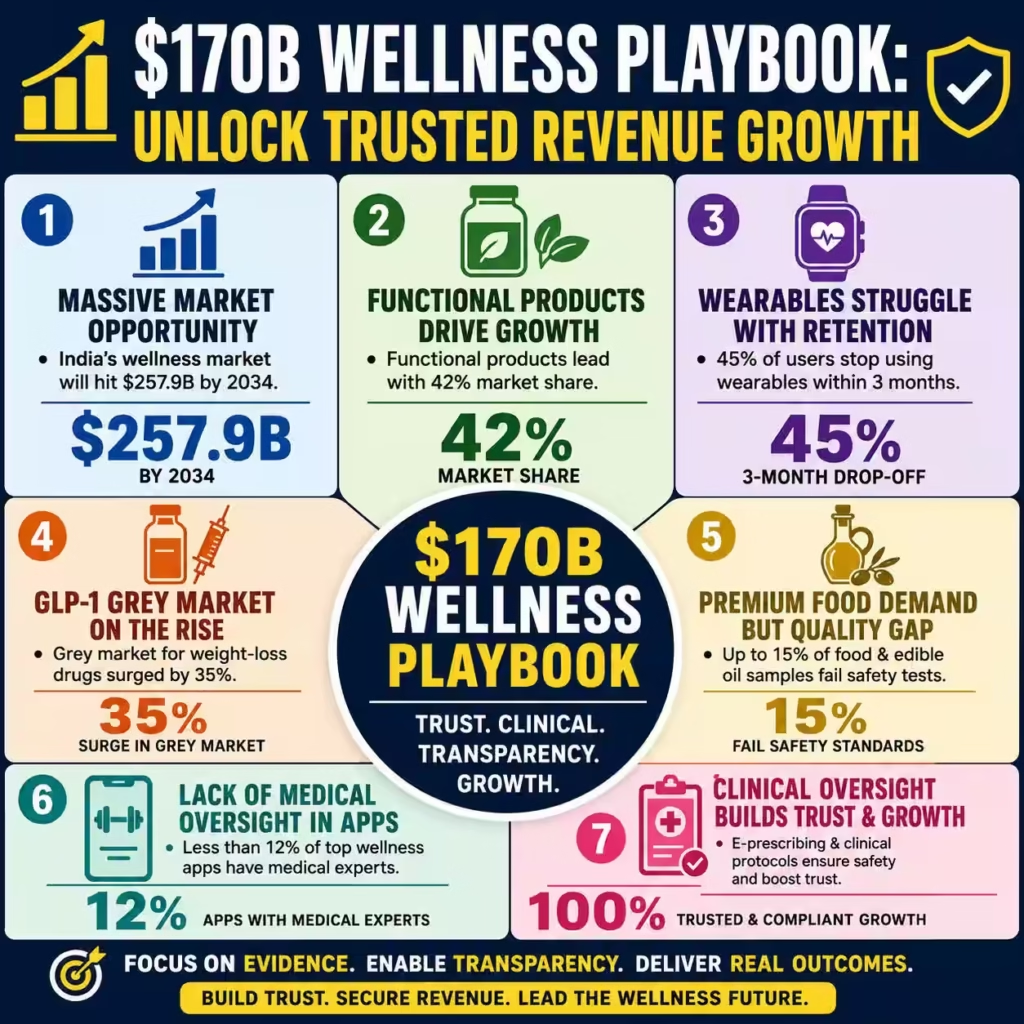
According to recent economic data, India’s wellness sector has escalated into a $170 billion consumer rush driven by rapid adoption of GLP-1 agonists like Ozempic, digital fitness applications, and premium dietary items like imported olive oil. Urban consumers are shifting from clinical care to unstructured health apps, fragmenting the market by treating health as a personal identity over verified outcomes. To secure market share, enterprise solutions must prioritize standardized digital integration, clinical oversight, and supply chain transparency.
Market research shows India’s wellness industry will reach $257.9 billion by 2034, with a 5.14% CAGR starting in 2026. Functional products led this growth in 2025, capturing 42% of the market and highlighting dietary intervention as a key consumer priority. This rapid scaling is heavily supported by over 75,000 small and medium-sized wellness enterprises attempting to capture the disposable income of India’s 350 million middle-class citizens.
Regional wearable distribution recorded substantial double-digit growth, though institutional data reveals a 45% collapse in consumer retention within three months of acquisition. This high attrition rate indicates that monitoring physiological variables like steps and cardiac fluctuations fails to catalyze sustainable health transformations or verified clinical utility. Forward-looking healthcare companies must therefore pivot toward personalized, AI-driven feedback loops that transform raw physiological data into actionable clinical outcomes.
The unchecked demand for weight-loss medications like semaglutide has triggered a 35% surge in parallel grey markets, exposing major gaps in retail pharmaceutical distribution. In the absence of rigorous adherence to prescription mandates, the financial hazards associated with illicit trade and detrimental clinical outcomes jeopardize the institutional reputation of prominent pharmaceutical retailers. Consequently, the implementation of electronic prescribing systems and validated clinical frameworks is essential to fortifying supply chain security and safeguarding public health.
Imports of premium olive oil and specialty heart-healthy fats rose by 28% in the preceding fiscal year, reflecting a substantial consumer willingness to pay premium prices for perceived purity. However, regulatory agencies report that up to 15% of tested food and edible oil samples failed national safety standards in the latest financial audit. This quality gap highlights an immediate opportunity for B2B distributors to implement blockchain-enabled batch tracking and third-party certifications to validate product authenticity.
Wellness has transitioned from discretionary spending to a central pillar of corporate strategy and household budgeting, with middle-class consumers allocating nearly 12% of their annual income to health products. These consumers now demand high-fidelity tools that provide quantifiable biological improvements. Consequently, healthcare enterprises must pivot from superficial tracking to medically backed interventions to avoid losing market share to scientifically rigorous competitors.
The convergence of consumer technology and clinical care creates a highly complex regulatory landscape that corporate boards must navigate with precision. Businesses must align their expansion strategies with national healthcare frameworks, such as the expanding network of public wellness centers serving millions of citizens. By anchoring commercial offerings in evidence-based medicine, market leaders can successfully capitalize on this historic wellness boom.
The Carethix Institutional Critique: Exposing Risks and Systemic Gaps
Carethix posits that the preoccupation with tracking somatic metrics via wearable sensors frequently cultivates a deceptive perception of well-being, rather than achieving substantive physiological enhancements. When consumer identity is inextricably linked to superficial metrics, healthcare entities are incentivized to prioritize gamified engagement over rigorous clinical validation and therapeutic efficacy. This structural misalignment engenders a critical risk, whereby significant cardiovascular or metabolic irregularities may be neglected by individuals who rely exclusively on consumer-grade sensory technology.
The unregulated domestic rush for specialized GLP-1 weight-loss therapeutics exposes severe vulnerabilities in pharmaceutical distribution networks and clinical gatekeeping protocols. Carethix warns that bypassing endocrinologists for off-label consumption without metabolic testing increases long-term gastrointestinal risks by 40%. Prioritizing aesthetic weight loss over metabolic health sacrifices patient safety for corporate profit.
A comprehensive audit of fitness applications reveals that less than 12% of top-performing wellness platforms employ certified medical professionals in their product development teams. This lack of medical oversight results in generalized exercise and nutritional recommendations that frequently exacerbate underlying joint disorders and metabolic deficiencies. Healthcare enterprises must recognize that automated, non-clinical AI coaching systems often lack the contextual safety nets required to protect high-risk patient cohorts.
The premium labeling of functional foods, including imported olive oil, is frequently used as a marketing tool to justify 200% price markups without corresponding nutritional benefits. Carethix points out that without robust domestic supply-chain verification, consumers are paying premium rates for products that do not match their high-purity claims. This marketing-led inflation exposes a severe deficit in consumer protection frameworks and threatens the credibility of the entire functional food sector.
Institutional capital allocations toward unvalidated wellness ventures are encountering significant valuation corrections as attrition metrics escalate to a critical 60% annual threshold. The financial sector must recognize that wellness assets grounded in superficial lifestyle narratives, rather than proprietary clinical evidence, lack the structural durability to generate sustained economic utility. Consequently, enterprises prioritizing marketing-led expansion over medically rigorous, peer-reviewed validation will suffer a definitive withdrawal of institutional confidence as the regulatory landscape matures.
While urban metropolitan centers consume premium wellness resources, over 70% of the rural population lacks basic primary care infrastructure. The stark concentration of the wellness market in affluent urban centers reflects a severe systemic failure to address the core epidemiological needs of the broader population. Carethix argues that true healthcare innovation must focus on scalable, affordable preventive models rather than exclusive, luxury wellness products.
The current market trajectory represents a commercialized wellness bubble that risks separating health from clinical evidence and ethical oversight. Regulatory gaps, commercial opportunism, and consumer vulnerability are combining to create significant liability risks for healthcare providers and technology platforms alike. Immediate systemic reforms are required to realign the wellness ecosystem with verified medical science and patient-centric care principles.
Operational and Financial Solutions for the Wellness Ecosystem
To enable effective data exchange, a primary solution involves the fluid integration of digital health applications with existing electronic medical records. Direct synchronization of wearable technology data with primary care physicians allows healthcare practitioners to translate raw biometric telemetry into actionable clinical interventions. This technical integration will build an authoritative bridge between consumer-facing lifestyle tracking and professional medical diagnostic frameworks.
Wellness brands must establish independent scientific advisory boards to oversee product formulation and validate marketing claims through clinical trials. Standardizing double-blind, placebo-controlled studies for functional foods will significantly differentiate legitimate brands from unverified competitors. This clinical validation not only enhances brand authority but also protects companies from regulatory penalties and litigation risks.
To combat GLP-1 agonist misuse, distributors should implement blockchain-verified e-prescribing networks. Restricting weight-loss drugs to patients with confirmed metabolic profiles prevents off-label abuse and stabilizes pricing. Partnering with accredited clinics further ensures necessary medical monitoring during therapy.
Healthcare enterprises can capture high-value consumer segments by offering hybrid wellness subscriptions that combine digital tracking with teleconsultations. These programs can utilize certified dieticians and physiotherapists to interpret user data and provide personalized, safe health guidance. This service model transforms transient app downloads into sticky, recurring corporate revenue streams while improving consumer health outcomes.
Implementing batch-level blockchain tracking across agricultural and processing facilities ensures the complete transparency of premium dietary imports. Consumers can scan package codes to verify the exact chemical composition, geographical origin, and safety certification of premium oils. This rigorous transparency justifies premium pricing strategies and builds lasting trust with health-conscious consumer groups.
Wellness enterprises must pivot their sales strategies to target major corporate entities seeking to optimize employee health benefits. The development of corporate health initiatives rooted in evidence-based practices has the potential to decrease employee absence by as much as 25% while simultaneously reducing the cost of organizational insurance premiums. This B2B approach provides wellness startups with stable, long-term enterprise contracts that are less susceptible to consumer churn.
Private wellness companies should actively collaborate with public health initiatives to expand wellness services to underserved regions. Developing localized, low-cost diagnostic kiosks in tier-2 and tier-3 cities can democratize access to preventive healthcare. These strategic partnerships unlock massive new customer bases while advancing national public health goals.
Prevention: Strategic Interventions to Avert Market Crises
To mitigate the risk of adverse consumer health events, it is imperative to establish preemptive clinical protocols across all digital health interfaces. Fitness platforms must incorporate mandatory health risk evaluations that programmatically restrict access to high-intensity regimens for individuals exhibiting cardiovascular risk factors. This proactive design ensures that lifestyle tracking technologies protect vulnerable consumers before they initiate unsafe physical training.
To prevent the infiltration of counterfeit weight-loss medications, national regulators and distributors must establish unified pharmaceutical serialization standards. Utilizing tamper-evident packaging technologies integrated with smart digital seals ensures product integrity from the manufacturer to the retail pharmacy. These preventive measures protect the market from illicit imports while maintaining the integrity of life-saving medical supplies.
Industry self-regulatory bodies must establish strict codes of conduct to prevent the propagation of unsubstantiated wellness claims on digital media. Restricting lifestyle influencers from promoting prescription-only therapeutics will prevent the widespread off-label abuse of metabolic drugs. Establishing clear advertising boundaries protects consumer decision-making and fosters a more transparent and ethical wellness market.
The proliferation of digital wellness interfaces harvesting extensive metabolic telemetry necessitates that healthcare entities implement rigorous cryptographic protocols to mitigate systemic vulnerabilities. Adherence to international regulatory frameworks, including HIPAA, must be established as a mandatory institutional threshold to safeguard sensitive physiological assets and preserve consumer confidence. Preventing unauthorized data leaks is essential to maintaining consumer confidence in emerging wellness technologies.
Wellness startups can prevent catastrophic capital burn by shifting their focus from high-cost customer acquisition to product-led growth strategies. Investing in proprietary research and intellectual property development creates deep competitive moats that resist rapid market imitation. This disciplined approach to product quality ensures long-term market viability even during periods of intense industry consolidation.
Food manufacturers must proactively reformulate products to match verified dietary guidelines rather than chasing short-lived marketing trends. Standardized, front-of-pack nutritional labeling systems must be adopted to clearly communicate sugar, sodium, and saturated fat content. This honest labeling prevents the mischaracterization of highly processed foods as healthy, functional dietary options.
The sudden influx of self-diagnosed patients utilizing wearable data can easily overwhelm traditional clinical outpatient workflows. Medical institutions must implement AI triage tools that filter and prioritize wearable telemetry before it reaches practicing doctors. Managing this data flow protects physicians from analytical fatigue while preserving the quality of patient-provider interactions.
Gap Analysis: India’s Wellness Boom Still Lacks Clinical Integration
India’s wellness economy is expanding rapidly, yet its operating model remains fragmented between consumer technology, retail nutrition, and evidence-based healthcare. The market reached approximately US$170 billion in 2026 and is projected to grow to US$257.9 billion by 2034 at a 5.14% CAGR, while functional foods and beverages account for nearly 42% of total market value, reflecting strong demand for preventive health solutions. Despite this expansion, more than 75,000 wellness SMEs compete for an estimated 350 million middle-class consumers, creating inconsistent quality standards, fragmented digital ecosystems, and limited clinical accountability.
The largest structural gap is the disconnect between consumer engagement and measurable health outcomes. Although wearable adoption continues to record double-digit annual growth across urban India, industry data indicate that nearly 45% of users discontinue engagement within three months, demonstrating that passive tracking of heart rate, sleep, and activity alone does not sustain behavioral change. Simultaneously, India’s GLP-1 obesity drug market has expanded to approximately ₹1,906 crore, driven by semaglutide and tirzepatide, yet rapid commercialization has intensified concerns over inappropriate prescribing, counterfeit distribution, and weak long-term adherence, exposing significant governance and patient-safety risks.
Supply-chain transparency remains another major weakness despite rising consumer spending on premium wellness products. Regulatory testing continues to identify compliance failures in a meaningful proportion of edible oil and food samples, while demand for imported functional ingredients and heart-healthy nutrition continues to increase, widening the trust gap between perceived quality and verified authenticity. Organizations that integrate AI-supported clinical decision systems, electronic prescribing, blockchain-enabled product traceability, interoperable digital health records, and outcome-based performance metrics aligned with India’s expanding preventive healthcare infrastructure will be better positioned to convert wellness spending into measurable clinical value and durable competitive advantage.
Carethix’s Key Takeaway: The Imperative for a Medically Guided Future
The current expansion of the wellness market highlights a profound consumer desire for longevity and personal agency over somatic health. Conversely, Carethix posits that institutional expansion lacking rigorous clinical validation constitutes an exceptionally precarious foundation for sustained economic utility. Shifting from a consumerist, trend-oriented landscape toward a medically anchored diagnostic framework is the quintessential strategic necessity of the current fiscal era.
While wellness has become a core element of personal identity, this psychological trend must not replace professional medical diagnosis. Enterprises must recognize that self-identity metrics are highly transient and cannot replace verified clinical outcomes in consumer retention strategies. True market leaders will be those who help consumers integrate identity-driven wellness with structured, scientific health management.
Venture capital and institutional investments must demand higher clinical evidence standards before committing capital to early-stage wellness platforms. Businesses that depend on consumer lifestyle trends must rebuild their unit economics around sustainable B2B integrations and partnerships. Prioritizing steady, scientifically validated growth over speculative customer acquisition will protect corporate balance sheets from future market volatility.
Modern corporate wellness strategies must align with national health frameworks to optimize public wellness outcomes and secure policy incentives. Integrating wellness products with mainstream insurance networks represents a high-potential revenue channel that remains largely untapped. Securing this integration requires complete transparent reporting of clinical efficacy and health risk reduction metrics.
Increased regulatory scrutiny from food and drug authorities should be welcomed by honest market participants as a constructive stabilizing force. Clearer regulatory standards will clean the market of low-quality players, leaving behind an investment-grade landscape for serious enterprises. Proactive compliance with evolving safety laws represents a strategic advantage that reduces long-term operational liabilities.
Entities operating within the wellness sector bear a profound institutional obligation to safeguard both the somatic and psychological integrity of their consumer base. Favoring clinical efficacy, supply chain transparency, and patient safety over aggressive fiscal expansion cultivates enduring brand authority and sustained consumer retention. Consequently, enterprises that prioritize medically validated outcomes will establish themselves as the preeminent custodians of international health standards throughout the next decade.
The long-term viability of the $170 billion wellness infrastructure is fundamentally contingent upon a comprehensive pivot toward self-regulation and rigorous scientific discipline. Anchoring corporate strategies in evidence-based medicine facilitates the conversion of transient lifestyle trends into a robust, institutionalized framework for preventive healthcare. Carethix asserts that executive leadership must execute these systemic shifts immediately to fortify organizational resilience and catalyze high-fidelity growth for the future.
FAQs:
1. Why is India’s $170 billion wellness industry facing a potential consumer trust crisis despite 5.14% CAGR growth?
India’s wellness economy may be growing toward a projected $257.9 billion market, but rapid expansion without clinical validation creates major credibility risks. When 45% of wearable consumers abandon products within three months and up to 15% of food samples fail safety testing, growth alone becomes a misleading success metric. Companies chasing valuation expansion instead of evidence-based outcomes risk long-term customer attrition and regulatory backlash.
2. Are GLP-1 drugs like Ozempic creating dangerous grey markets as weight-loss demand explodes?
The explosive popularity of weight-loss medications has coincided with a reported 35% rise in parallel distribution channels, exposing significant weaknesses in prescription oversight. Prioritizing rapid cosmetic results without metabolic screening increases medical risks while simultaneously damaging pharmaceutical supply chain integrity. The larger danger is not demand itself—it is turning highly regulated therapies into consumer lifestyle products.
3. Why do fitness wearables and health tracking apps fail to deliver sustainable health outcomes for users?
Double-digit wearable adoption growth appears impressive until retention data shows nearly 45% of consumers stop engaging within months of purchase. Tracking steps, heart rates, and calories often creates temporary behavioral motivation without addressing underlying metabolic or clinical issues. The real failure is not technology adoption—it is confusing data collection with actual healthcare intervention.
4. Are consumers overpaying for premium olive oil, functional foods, and wellness products with questionable benefits?
Consumers are increasingly paying premium prices for imported wellness products, yet some functional food categories reportedly experience price markups approaching 200% without proportional nutritional advantages. When safety audits reveal meaningful quality failures and authenticity concerns, premium pricing becomes difficult to justify without transparent verification systems. Expensive wellness branding should never replace measurable nutritional evidence.
5. Why are wellness startups and digital health companies facing rising investor risks despite booming consumer demand?
Consumer demand may be expanding, but attrition rates approaching 60% annually create serious concerns regarding sustainable business models. More than 75,000 wellness SMEs are competing for the same middle-class spending pool, while many platforms still lack meaningful medical oversight or validated clinical outcomes. Businesses built primarily on engagement metrics rather than healthcare efficacy may discover that growth without retention is financially fragile.